Cylinder Head vs King Alternative: Sourcing Comparison
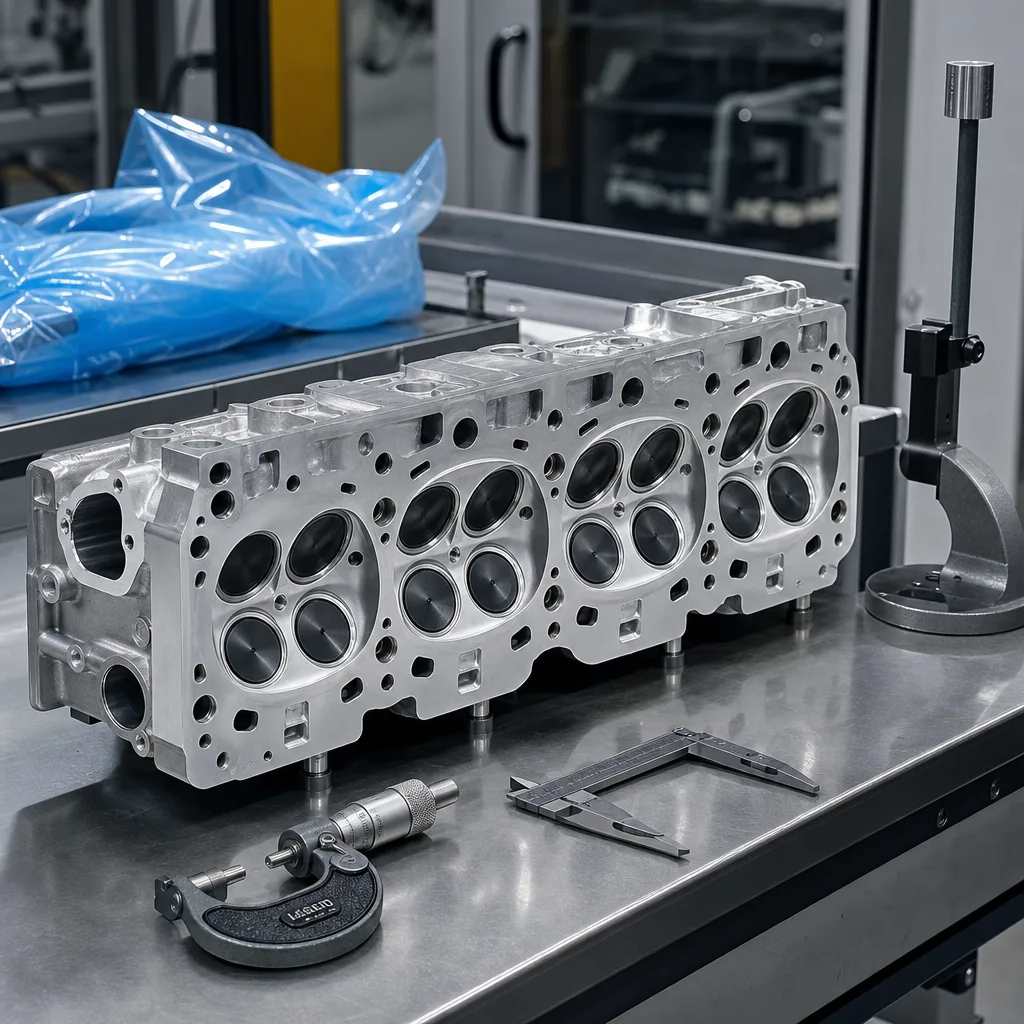
For procurement teams, the choice between a direct cylinder head replacement and a king alternative is usually about fitment risk, validation cost, and supply continuity. A direct replacement is the closest match to the original design. A king alternative is a broader substitute that may fit the same engine family but differs in casting detail, valve train configuration, port geometry, or machining provisions. That difference matters when you are buying for aftermarket distribution, repair chains, or export programmes where returns and downtime are costly. Driventus is an independent aftermarket manufacturer; brand names are referenced for fitment only. Our parts are produced under IATF 16949:2016 and ISO 9001:2015 systems, with material and process controls aligned to documented customer requirements. This article compares the two sourcing paths, the checks buyers should request, and the commercial trade-offs to review before you place an order.
What buyers mean by direct replacement and king alternative
In procurement terms, a direct replacement cylinder head is built to match the OE application as closely as possible on mounting face, combustion chamber layout, valve count, coolant passages, and sensor or camshaft provisions. A king alternative usually means a broader fitment option. It may cover several engine variants, model years, or aftermarket rebuild cases, but it is not always a one-for-one dimensional copy.
For buyers, the distinction affects three areas:
Fitment confidence: fewer modifications with a direct replacement.
Inventory reach: a king alternative may cover more SKUs with fewer part numbers.
Validation load: the broader the substitute, the more testing you should request.
If your catalogue spans multiple regions, the supplier should document OE cross-reference logic clearly, such as OE 06A107065 where applicable, and state any exclusions by engine code, emissions version, or head casting revision.
Side-by-side comparison for sourcing teams
Item
Direct replacement cylinder head
King alternative
Fitment scope
Narrow, OE-specific
Broader, may cover several variants
Installation risk
Lower
Moderate to higher
Inventory complexity
Higher SKU count
Lower SKU count
Validation effort
Standard dimensional check
Extended fit and function review
Application control
Stronger
Depends on supplier documentation
Price position
Often higher per SKU
Can improve cost coverage
</tr></thead><tbody> </tbody></table>Use the direct replacement route when your channel needs predictable fitment and low return rates. Use the alternative route when you need to consolidate stock, support mixed fleets, or manage long-tail applications where OE inventory is no longer practical.
The trade-off is simple: wider coverage usually means more diligence on dimensions, port shapes, gasket sealing surfaces, and valve train geometry.
Technical checks that matter before purchase
A cylinder head should be reviewed against the engine’s critical interfaces, not only the headline part number. Ask for these checks in the quotation stage:
Deck flatness: confirm machining tolerance and inspection method.
Valve seat condition: ask for seat material, concentricity, and pressure test results.
Camshaft bore alignment: critical on OHC designs.
Combustion chamber volume: important for compression ratio control.
Coolant and oil passage alignment: especially on multi-port aluminium heads.
Surface finish: specify gasket face finish where required.
Pressure testing: request leak test evidence after casting and machining.
If you are comparing a direct replacement with a broader substitute, request measured data, not just a fitment statement. For example, ask for bore spacing, valve stem diameter, spring pocket depth, and injector or glow plug port details where relevant. That level of information reduces the risk of installation delays and claim disputes.
Materials, machining, and validation standards
Most aftermarket cylinder heads are aluminium alloy or cast iron, depending on engine design and thermal load. Aluminium is common in modern passenger car and light-duty applications because it reduces weight and improves heat transfer. Cast iron remains relevant for some heavy-duty and high-temperature platforms.
Driventus aligns production and inspection with published standards and customer specifications. Relevant references may include:
IATF 16949:2016 for automotive quality management
ISO 9001:2015 for general quality management
REACH (EC) No 1907/2006 for chemical compliance in the EU
ECE R-83 where emissions-related fitment controls apply at vehicle level
SAE J2527 for durability-oriented test context where customer programmes require it
For procurement, the key is not the standard name alone. It is whether the supplier can show process control, traceability, and repeatable dimensional output across batches.
When a king alternative makes commercial sense
A king alternative can make sense when:
1. The OE part is discontinued or slow-moving. 2. Several engine codes share the same head architecture. 3. Your customers accept an approved aftermarket fitment matrix. 4. You want to reduce dead stock across multiple markets. 5. The supplier can document all exclusions clearly.
It is less suitable when the application is sensitive to chamber volume, emissions equipment location, or variable valve timing hardware. In those cases, a direct replacement usually reduces returns and workshop confusion.
What to ask your supplier
Which engine codes are covered
Which OE 06A… or 11251… references are confirmed by data
Whether the head is supplied bare or fully assembled
Whether valve, spring, and seal specifications are included
What inspection records are available for each batch
For buyers who need mixed catalogue support, review our catalog and the broader engine components range before deciding whether to stock one fitment group or multiple exact-match SKUs.
Supplier controls and customisation options
A reliable sourcing decision depends on manufacturing control, not just the part description. Review the supplier’s quality system for incoming material checks, machining inspection, pressure testing, and final release records. For programmes that require special porting, revised valve seat angles, packaging marks, or export-specific documentation, ask about custom manufacturing.
A competent supplier should be able to support:
dimensional inspection reports
material certificates on request
batch traceability
sample approval before mass shipment
export packing suitable for sea and air freight
Driventus manufactures from Taizhou, Zhejiang, and ships to more than 60 countries. For procurement teams, that matters because lead time, documentation quality, and claim handling are part of total landed cost. If you need a direct replacement or a broader fitment option, ask for a sample, measured report, and application list before confirming volume orders.
Frequently asked questions
No. It may fit the same engine family, but it can differ in casting, machining, or accessory provisions. Always verify dimensions and exclusions before buying.
Ask for fitment data, dimensional inspection records, pressure test results, material details, and batch traceability. For EU supply, request REACH-related information where relevant.
Yes. We support custom programmes for validated aftermarket and OEM/Tier-1 supply chains. Share your specification and request a quote through our contact page.
If you are comparing fitment options for a cylinder head programme, send your engine code, OE reference, and target market for review. Request a quote at /contact.html.