Cylinder Head Porsche Wholesale: Sourcing Guide for Buyers
If you are sourcing cylinder head Porsche wholesale, the main question is not price alone. Procurement teams need fitment control, repeatable machining, and documentation that survives supplier audits and inbound inspection. A cylinder head must match the engine family at the gasket face, valve train interface, coolant routing, and sensor provisions, or the part becomes a returns problem rather than a stock item. Driventus is an independent aftermarket manufacturer; brand names are referenced for fitment only. For buyers serving distributors, repair networks, or OEM-linked programs, the safest approach is to define the engine code, material, assembly level, tolerance band, and test method before placing volume orders. That is the standard way to turn a complex casting into a predictable wholesale line item.
What Wholesale Buyers Should Specify First
Start with the exact engine family, cylinder count, valve layout, and fuel system configuration. For Porsche-fit programmes, that usually means confirming the head casting variant, camshaft layout, intake and exhaust port geometry, combustion chamber volume, and all threaded or sensor interfaces. Small differences at these points create large mismatch risk.
For buyers, the commercial question is whether the supplier can hold the same geometry across reorders. A supplier should be able to link each line item to a controlled drawing set, revision status, and inspection record. See our catalog for the broader range, and the related engine components page for adjacent programmes that often share the same sourcing controls.
If your programme needs non-standard machining, port changes, or bundled gasket sets, use custom manufacturing rather than treating the order as a generic stock purchase.
Specification Points That Prevent Rejection
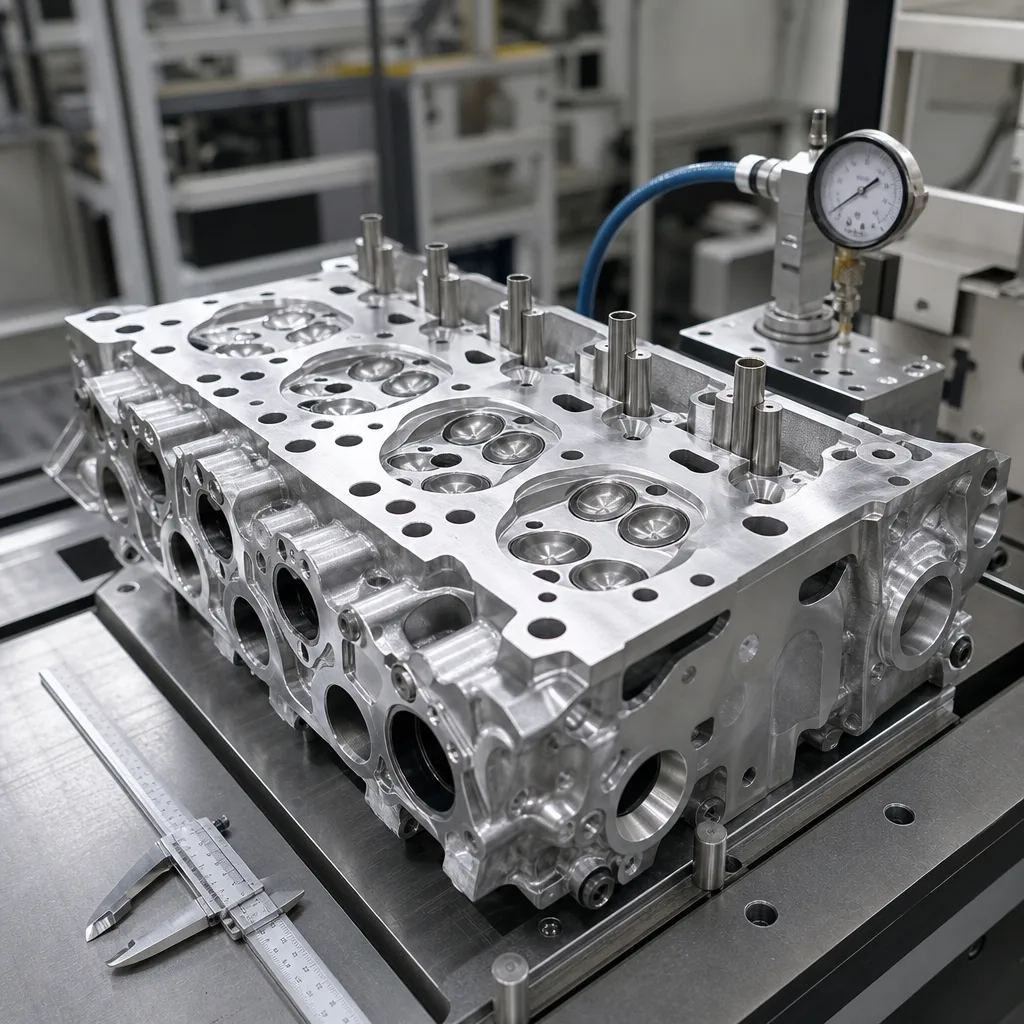
A cylinder head can look correct and still fail fitment checks. Wholesale buyers should ask for measurable acceptance criteria, not generic claims.
Checkpoint
Typical buyer request
Why it matters
Deck flatness
0.03-0.05 mm across the gasket face, per drawing
Controls head-gasket sealing
Valve guide clearance
Stated by engine family and measured by lot
Affects oil control and valvetrain noise
Seat concentricity
Measured to the centreline of the guide
Prevents sealing loss and hot spots
Pressure/leak test
100% test before packing
Finds casting porosity or machining defects
Surface finish
Defined Ra on deck and mating surfaces
Improves repeatability in assembly
</tr></thead><tbody> </tbody></table>The exact tolerances must follow the engine drawing, but buyers should insist that each value is documented before shipment. If a supplier cannot state the inspection method, the part is not procurement-ready.
Materials, Machining, and Assembly Control
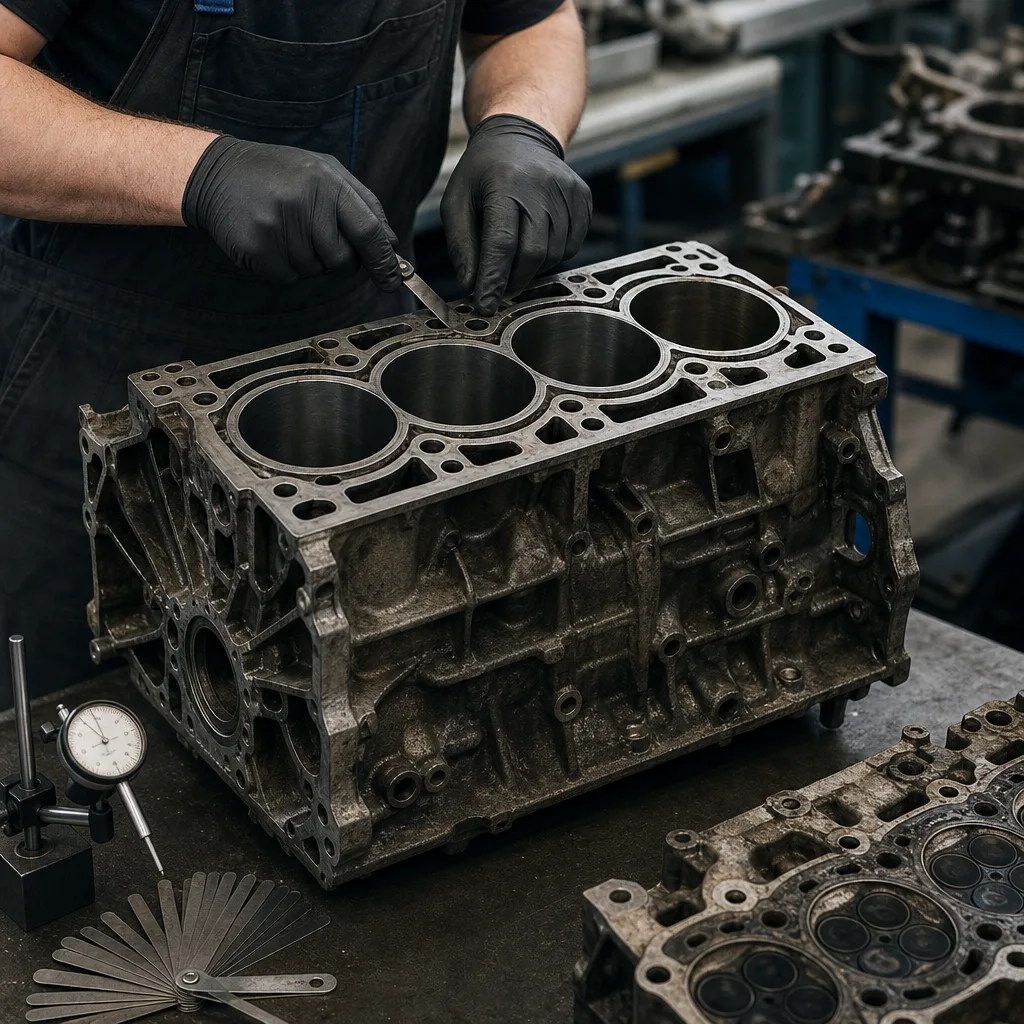
Cylinder head supply is determined as much by process control as by raw material. A credible wholesaler should identify the alloy family, casting route, heat treatment where applicable, and CNC operations used to finish the deck, valve seats, guide bores, and threaded ports. This is where dimensional stability is won or lost.
Key controls to request:
Casting traceability by heat and batch.
CNC programme revision control for every machining stage.
Valve seat and guide dimensions recorded by lot.
Cleanliness control for oil galleries and coolant passages.
Packaging that protects gasket faces, threads, and critical bores.
If the part is sold assembled, confirm whether valves, springs, retainers, seals, cam caps, and plugs are included. Many returns start with a packaging assumption rather than a material defect. Clear BOM control is more useful than broad compatibility language.
Standards and Validation Buyers Should Ask For
For international supply, the baseline documents should include IATF 16949:2016, ISO 9001:2015, material declarations, and a clear statement on REACH (EC) No 1907/2006 where the programme touches EU market requirements. Those standards do not replace fitment testing, but they prove the supplier has a defined quality system.
For durability and environmental confidence, buyers may also ask for thermal-cycle evidence, coolant pressure testing, and programme-specific validation references such as SAE J2527 or ECE R-83 where relevant to the broader engine package. A head supplier should be able to explain which tests apply to the component itself and which belong to the finished powertrain.
Review the quality system before you build a supplier shortlist. That is the fastest way to separate documented production from informal workshop output.
How to Compare Supply Options
Wholesale cylinder head offers usually fall into three formats. The right choice depends on stocking strategy, installation labour, and the level of machine work your distribution channel can absorb.
Supply format
Best use
Buyer trade-off
Bare casting
High-volume machine shops and remanufacturers
Lowest unit price, highest downstream labour
Machined head
Distributors and repair chains
Better consistency, moderate SKU complexity
Fully assembled head
Fast-fit wholesale and export stock
Higher unit cost, lower installation risk
</tr></thead><tbody> </tbody></table>For most export buyers, the machined head is the practical midpoint. It reduces local processing cost without forcing the buyer to manage seat cutting, guide fitting, or surface finishing in-house. If you need family-specific packaging, kitting, or branded cartons, ask for it at quotation stage rather than after order confirmation.
Before approval, request: MOQ, lead time by batch size, sample policy, carton dimensions, pallet count, and the inspection report format. Then validate one sample lot against the engine code and document the result in your internal vendor file.
Frequently asked questions
Send the engine code, required assembly level, annual volume, target market, and any special machining or packaging needs. If you have drawings or a sample part, include those as well.
Yes, if the fitment is defined clearly and the commercial terms are suitable. Brand names are referenced for fitment only, and Driventus is an independent aftermarket manufacturer.
Ask for material declarations, inspection reports, traceability details, test method definitions, and quality certificates. For EU-bound supply, confirm REACH-related documentation where applicable.
If you are building a sourcing list for a specific engine family, send the target fitment, volume, and documentation requirements through our [request a quote](/contact.html).