Choosing a **cylinder head Mitsubishi OEM supplier** is, above all, a risk-management decision. Buyers need proof of dimensional consistency, alloy control, leak integrity, machining capability, and dependable export execution over repeat orders. Unit price matters, but bigger costs usually come from claims, line stoppages, warranty returns, sorting, and delayed replenishment.
Whether you are sourcing bare heads or assembled cylinder heads, the key questions are practical: which casting route is used, how are valve-seat and guide bores controlled, what leak-test parameters apply, what machining and cleanliness standards are followed, and how quickly can the supplier move from sample approval into serial production? Documentation matters too, especially for customs, compliance, and customer audits.
This guide provides a practical framework for evaluating a cylinder head Mitsubishi OEM supplier, with attention to MOQ, lead times, inspection methods, certifications, and factory-audit points relevant to aftermarket distributors, OEM programmes, and repair-chain purchasing teams.
What procurement teams should verify first
A cylinder head is a tolerance-sensitive component that directly affects compression sealing, coolant containment, valve-train geometry, combustion stability, and emissions performance. Before commercial terms even come up, buyers should confirm whether the supplier controls the full production chain: casting, machining, washing, inspection, leak testing, and final packing. That first review quickly separates trading-only offers from manufacturers with the process depth needed for repeatable quality.
When reviewing a cylinder head Mitsubishi OEM supplier, first clarify exactly what is made in-house and what is outsourced. Some suppliers offer bare castings, others supply semi-machined heads, fully machined heads, or assembled heads with valve seats, guides, valves, springs, retainers, collets, and seals already installed. The more complete the supply scope, the broader the validation requirement and the greater the need for process control.
Key points to confirm:
Manufacturing scope: bare casting supply, semi-machined heads, or fully machined/assembled heads
Material specification: aluminium casting alloy grade, heat-treatment status, and hardness target where applicable
Critical machining capability: valve-seat counterbores, guide bores, cam bore or cam tunnel alignment, deck flatness, thread location and depth
Pressure testing: whether leak test is 100% or sampling, plus test medium, pressure, hold time, and reject criterion
Traceability: batch identification linked to casting lot, machining line, operator or shift, inspection record, and packing list
Documentation: dimensional reports, material certificates where applicable, control plan, and PPAP-style documents when requested for OEM programmes
Export readiness: pallet standard, VCI or anti-corrosion protection, barcode labelling, and documented claim-handling procedure
It also helps to ask how the supplier defines critical characteristics. On cylinder heads, these typically include deck flatness, gasket-face surface finish, valve-seat concentricity, guide-to-seat positional relationship, cam tunnel or cam bore alignment where applicable, injector or glow-plug seating features on diesel variants, and threaded-hole positional accuracy for manifolds and covers. These controls are often held to hundredths of a millimetre rather than general casting tolerances, so the supplier should be able to explain both the tolerance values and how they are measured.
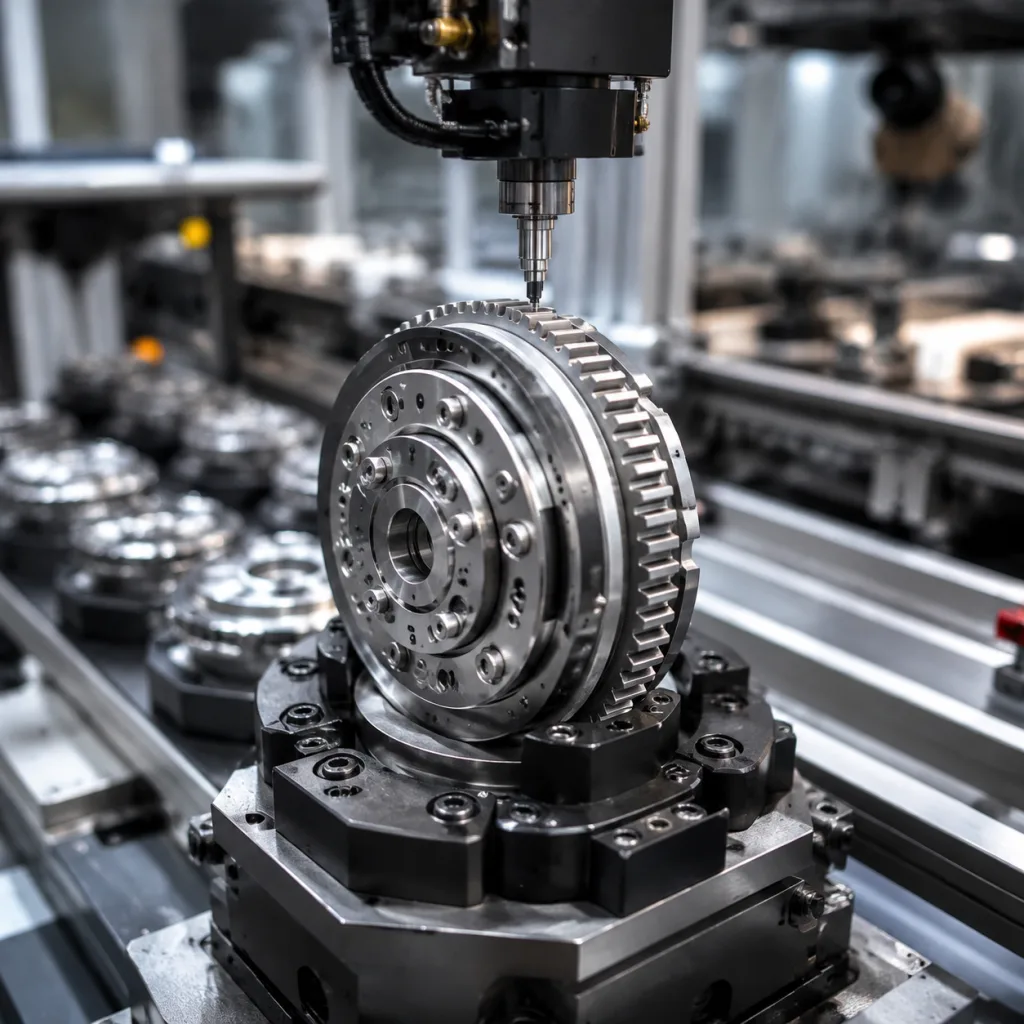
Procurement teams should also check whether inspection is built into the process or concentrated only at the end. Process-based control is generally stronger because it catches drift before an entire batch is affected. A capable supplier should be able to explain tool-wear monitoring, fixture repeatability, offset correction, first-off inspection, patrol inspection during production, and final release checks for CNC operations.
Finally, confirm whether the supplier has experience in the target market. Export-aftermarket suppliers often already understand carton drop resistance, corrosion protection on machined faces, English-language documentation, barcode standards, and mixed-SKU pallet management. Those details may seem small, but they have a direct effect on receiving efficiency, stock accuracy, and claim rates.
For buyers managing multiple SKUs, it is useful to review the supplier's wider engine-component range through our catalog, especially where cylinder heads are sourced alongside gaskets, valve train parts, or related engine components.
Supplier audit criteria for Mitsubishi cylinder heads
A factory audit should focus on process control, not presentation. For this product family, the most useful findings are usually on the shop floor, in inspection records, and in the way nonconforming material is handled. A polished meeting room does nothing to reduce porosity, poor deck finish, or unstable guide-bore size.
For a cylinder head Mitsubishi OEM supplier, the audit should follow the actual part flow: incoming castings, machining preparation, fixture loading, CNC processing, in-process gauging, washing, leak testing, final inspection, packing, and shipment release. Walking the route in order makes it easier to see where defects can enter the process and how they are contained.
</tr></thead><tbody> </tbody></table>Beyond the table, ask for evidence. For casting control, review incoming or in-house foundry inspection standards, including porosity acceptance, visual criteria, and any X-ray, pressure-impregnation policy, or section-check practice used for validation. Ask whether the supplier tracks casting rejection by defect type such as shrinkage, gas porosity, sand inclusion, core shift, or crack indication. Monthly or batch trend data is far more useful than a general statement that quality is "stable."
For machining control, look past machine nameplates and ask how the process is actually maintained. Useful questions include:
How are fixtures qualified and requalified?
How often are cutting tools changed on critical operations?
Are offset corrections recorded by shift, by batch, or automatically by SPC feedback?
Which features are checked 100%, and which are sampled?
What happens when a dimension trends toward the control limit but remains technically in tolerance?
Inspection capability deserves close attention. A strong supplier should be able to show which gauges are used for which features and how calibration is managed. CMM reports are valuable for first-article approval, but production also requires practical shop-floor gauges for frequent checks. Verify whether gauge R&R has been completed for critical measurement devices and whether operators understand acceptance criteria, datum references, and sampling frequency.
Leak testing is another major audit point because internal coolant and oil passage defects may not be visible from the outside. Buyers should confirm the test medium, pressure, hold time, reject criteria, and record-retention period. Depending on programme needs, suppliers may use air-under-water, dry-air decay, or helium-based methods. If the test is statistical rather than 100%, ask why that approach is considered sufficient and what historical defect data supports it.
Cleanliness and packing are often underestimated. Chips left in oil galleries or threaded holes can create installation problems, while poor drying after washing can lead to corrosion on machined surfaces. Inspect the washing area, filtration control, drying method, rust-prevention step, protective caps if used, and the packing flow from final inspection to carton sealing.
If the supplier states compliance with IATF 16949:2016 or ISO 9001:2015, ask how those requirements appear in daily practice: control plans, calibration status, gauge R&R, operator training, corrective action closure, layered process audits, and lot traceability. Certifications are useful. Process evidence is what actually reduces sourcing risk.
For buyers who need project-specific machining, packaging, or private-label support, custom manufacturing should be reviewed alongside the standard product offer.
MOQ, lead time, and programme planning
Commercial fit depends on whether the source is intended for spot buys, rolling aftermarket demand, or scheduled OEM supply. Cylinder heads are relatively heavy, machining-intensive parts, so MOQ and lead time often shift with casting availability, machining-cell loading, purchased-component supply, and assembly scope.
When discussing a cylinder head Mitsubishi OEM supplier, it is important to go beyond the minimum order quantity alone. MOQ only becomes meaningful when viewed together with production frequency, safety stock, container planning, and whether the reference is already active on the line. A low quoted MOQ is not especially useful if the supplier only runs the part once every 6 to 8 weeks.
Typical commercial planning factors
MOQ for standard references: often lower when castings, tooling, and fixtures are already active
MOQ for new references: usually higher due to fixture setup, trial machining, and first-article validation cost
Lead time for repeat orders: depends on machining capacity, component availability, and export packing schedule
Lead time for new development: includes drawing review, sampling, dimensional validation, and approval cycle
Safety stock options: useful for importers serving multiple warehouses or urgent workshop demand
Packaging format: individual carton, master carton, or export pallet depending on channel requirements
In practice, lead time should be broken into stages. Buyers should ask how many days are needed for casting preparation, machining, assembly if applicable, final inspection, export packing, and booking. This kind of detail shows whether the supplier has a real production plan or is simply quoting a generic number. It also helps purchasing teams see where expediting may be possible and where it is not.
A practical sourcing discussion should cover these variables early:
1. Forecast by SKU for 3 to 6 months 2. Whether the order is for bare or assembled cylinder heads 3. Required inspection level and reporting format 4. Labelling, palletisation, and destination market 5. Reorder trigger and buffer stock strategy
Forecast accuracy matters because cylinder heads often share machine time with other engine components. If demand is highly variable, buyers should ask whether the supplier can hold raw castings, semi-finished stock, or finished goods. Each option changes both replenishment speed and inventory cost:
Raw casting stock lowers foundry risk but still requires full machining lead time.
Semi-machined stock shortens final production time but ties up more supplier capacity and WIP value.
Finished stock offers the fastest response but requires higher capital commitment and stricter stock-rotation control.
Programme planning should also cover packaging density and shipment economics. Because cylinder heads are heavy and sensitive to impact on machined faces, packaging design affects freight cost, warehouse handling, and claim frequency. Buyers should confirm unit weight, carton dimensions, pieces per pallet, pallet gross weight, stacking limit, and whether corner protection, VCI protection, foam inserts, or custom dunnage are available.
For distributor and aftermarket import programmes, it makes sense to agree on reorder points and emergency replenishment rules in advance. This may include split-shipment terms, partial-delivery approval, or pre-agreed substitute packing methods for urgent orders. In day-to-day supply, these details often influence service level more than a small difference in unit cost.
For a reliable supply plan, buyers should also review the supplier's quality system to understand how production control links to shipment release.
Technical validation before supplier nomination
Even for established references, sample validation is necessary before nomination or distributor launch. Dimensional match alone is not enough. The part must also show stable sealing surfaces, correct oil and coolant passage integrity, assembly compatibility, and repeatability from batch to batch.
For a cylinder head Mitsubishi OEM supplier, validation should be structured to confirm not just one acceptable sample, but the supplier's ability to reproduce that sample under normal production conditions. One good piece built with exceptional manual attention is not the same as a stable manufacturing process.
Recommended validation checks include:
Deck flatness measurement against drawing requirement using a defined datum method
Surface finish verification on gasket-contact areas, typically by Ra measurement where specified
Valve-seat concentricity and installed depth checks
Guide-bore size and position confirmation
Cam bore alignment or line-bore verification where applicable
Thread quality for manifolds, covers, injectors, and ancillary mounting points
Pressure or vacuum leak test on internal coolant and oil passages
Hardness check where the specification requires it
Visual inspection for casting inclusions, porosity breakout, machining burrs, and handling damage
Buyers should request a first-article package that clearly links the sample part number, revision level, lot number, and measurement report. Ideally, the supplier should provide ballooned drawings or characteristic lists showing exactly how each critical dimension was measured. That reduces the chance of later disputes when production begins and different measurement references are used.
Where heads are supplied in assembled form, validation becomes broader. In addition to the machined base component, the buyer should confirm:
valve and seat contact quality
installed spring height
valve stem protrusion where specified
seal fit and retention
guide material compatibility
component-origin consistency for valves, springs, retainers, collets, and seals
For some programmes, functional validation may include trial installation onto the target engine family, torque-sequence confirmation, manifold fit check, rocker or cam-train compatibility review, and coolant/oil circuit verification after assembly. This is especially helpful when replacing an incumbent source and trying to avoid workshop-level surprises.
Surface integrity should not be overlooked. Burrs around oil holes, poor thread chamfers, or local deck damage from handling may pass a simple dimensional review and still create installation problems. Visual and tactile inspection by an experienced reviewer remains important, even in well-documented programmes.
Where customer requirements call for broader validation, additional test planning may reference process and control principles aligned with IATF 16949:2016. For materials and market access, procurement teams may also need declarations relevant to REACH (EC) No 1907/2006 depending on destination and customer policy.
If a referenced application includes OE-style identifiers in the sourcing file, use standard cross-reference formatting such as OE 06A107065 only where that identifier already exists in the buyer's documentation. Avoid uncontrolled interchange assumptions based only on visual similarity.
Questions to ask a cylinder head Mitsubishi OEM supplier
A short, technical questionnaire can quickly show whether a supplier is equipped to support long-term purchasing requirements. The aim is not to collect marketing language. It is to get clear answers on process ownership, quality controls, delivery discipline, and commercial flexibility.
When comparing more than one cylinder head Mitsubishi OEM supplier, use the same questionnaire and the same scoring method for every source. That makes the comparison more objective and helps procurement, quality, and engineering teams align on supplier selection.
Suggested supplier questionnaire
What is the production route: gravity casting, low-pressure casting, or sourced casting plus in-house machining?
Which dimensions are classified as critical and how are they checked?
What are the specified tolerances for deck flatness, seat concentricity, guide bore, and thread features on this reference?
Is leak testing performed on 100% of units or by sampling, and at what pressure and hold time?
What are the standard MOQ and lead time for active references?
Can you provide first-article dimensional reports, control plans, and batch traceability?
What export markets do you currently serve?
Are private-label cartons and customer barcodes available?
How are warranty claims analysed, contained, and closed?
What is the contingency plan for capacity peaks, machine breakdown, or tooling maintenance?
These core questions should be followed up where needed. If the supplier says leak testing is done by sampling, ask for the sampling frequency, historical failure rate, and corrective action used when a leak is found. If assembled heads are offered, ask which subcomponents are made in-house and which are purchased. If short lead times are promised, ask whether that depends on finished inventory or reserved machine capacity.
A useful supplier questionnaire often covers five areas:
Buyers comparing several sources should score responses across technical, operational, and commercial categories rather than looking at unit price alone. A supplier with stronger traceability, clearer process control, and better corrective-action discipline will often deliver a lower total landed cost over a 12-month buying cycle.
It is also good practice to ask for examples of past problem solving. A capable manufacturer should be able to describe a previous defect, how it was detected, what containment was used, what root cause was identified, and what permanent corrective action prevented recurrence. Answers like that are usually more revealing than a generic quality presentation.
Driventus is an independent aftermarket manufacturer; brand names are referenced for fitment only.
Frequently asked questions
MOQ depends on whether the reference is already in production, whether the head is bare or assembled, and whether custom packaging is needed. Repeat-order MOQ is usually lower than new-development MOQ because tooling, fixtures, and validation are already in place. Buyers should also ask how often the supplier runs the part, because production frequency can matter as much as the quoted MOQ.
Ask for certification details, dimensional inspection reports, leak-test method and parameters, traceability format, packing specification, and the claim-handling procedure. For some programmes, buyers may also request PPAP-style records, material declarations, sample approval documents, control plans, and first-article reports linked to the exact part revision and lot number.
Use pre-shipment approval with critical-dimension reporting, define leak-test requirements with pressure and hold time, confirm chip-free cleanliness standards, and agree on traceability at lot level. A supplier with controlled machining, calibrated gauges, clear nonconforming-product handling, and stable packing standards will generally reduce claim frequency and simplify root-cause analysis if a field issue occurs.
If you are qualifying a new cylinder head source or benchmarking current supply, we can review your drawing, forecast, and inspection requirements. Send your RFQ or audit checklist to [request a quote](/contact.html).