Cylinder Head Material: Selection and Sourcing Guide
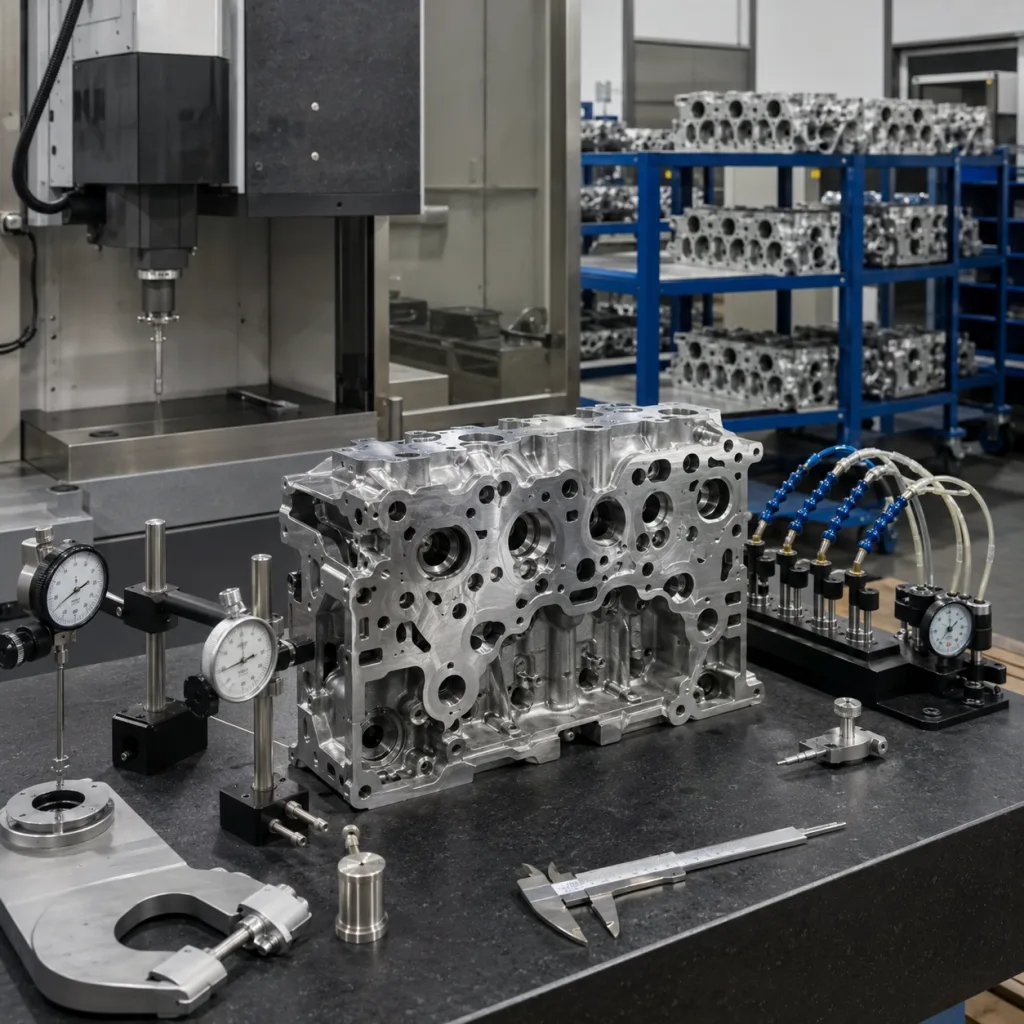
Cylinder head material affects heat transfer, combustion-chamber stability, gasket loading, valve-seat retention, machining control, and repair cost. For procurement teams, the choice is not only aluminium versus cast iron. It also influences casting process, heat treatment, machining allowance, pressure-testing requirements, packaging, and the risk of warped decks, cracked ports, or loose inserts in service. Driventus is an independent aftermarket manufacturer; brand names are referenced for fitment only. We support distributor, OEM, and repair-chain programs under IATF 16949:2016 and ISO 9001:2015, with export documentation aligned to REACH (EC) No 1907/2006 where applicable. The right specification depends on engine family, boost level, duty cycle, coolant control, target market, and whether the part must match OE geometry or be adapted for a regional program. This guide compares the main cylinder head material choices, the technical checks buyers should request, and the situations where custom manufacturing is the safer sourcing route.
How material changes the part
A cylinder head is not a simple casting with machined holes. It is a structural, thermal, and sealing component that must keep combustion pressure, coolant, oil, and valve-train geometry under control at the same time. Material choice changes how the part expands, how quickly it moves heat away from the chamber, how well it holds thread load, and how it behaves after repeated thermal cycles.
For buyers, the material decision affects several practical outcomes:
Deck flatness retention after machining, assembly, and heat cycling.
Valve-seat and guide stability under combustion and valve-train load.
Gasket sealing margin at the fire ring, oil feeds, and coolant passages.
Thread strength for head bolts, cam caps, manifolds, injectors, and accessories.
Rework cost if the head needs skimming, insert repair, welding, or pressure re-test.
Scrap risk when porosity, shrinkage, or local hardness variation is not controlled.
A strong purchasing specification should therefore define more than the base metal. It should cover alloy designation, heat treatment state, casting route, machining datum strategy, critical dimensions, and final inspection controls. The same external geometry can perform very differently if one supplier has better control of porosity, deck finish, seat insertion, and pressure testing. Drawings, process controls, and inspection reports are just as important as the cylinder head material itself.
Material options and trade-offs
Most sourcing programs compare two broad cylinder head material families: aluminium alloys and cast iron. Each can be the correct choice when it matches the engine design, production process, and service environment.
Factor
Aluminium head
Cast iron head
Mass
Lower, useful for fuel economy, handling, and packaging
Higher, which can be acceptable on stationary, industrial, and some heavy-duty engines
Heat rejection
Faster heat transfer helps manage combustion-chamber temperature
Slower heat movement, with more thermal mass
Thermal expansion
Higher expansion, so heat treatment, machining sequence, and gasket design matter more
Lower expansion, so dimensions can remain more stable across temperature changes
Wear behaviour
Depends heavily on seat, guide, insert, and thread quality
Strong inherent wear resistance and good robustness on older platforms
Repairability
Often repairable, but sensitive to distortion, cracks, and porosity near weld areas
Often easier to machine or repair on legacy engines, though weight and corrosion remain considerations
Typical use
Passenger cars, turbo petrol engines, many light-duty diesels, performance and modern emissions-focused platforms
Legacy engines, heavy-duty applications, agricultural, industrial, and some stationary engines
Main buyer risk
Warpage, thread pull-out, seat movement, or local cracking if casting and machining controls are weak
Weight, slower warm-up, reduced suitability for many modern vehicle platforms, and limited availability for newer designs
</tr></thead><tbody> </tbody></table>Aluminium is widely used because it reduces weight and moves heat quickly from the combustion chamber into the coolant. That can support higher specific output, compact packaging, and improved thermal management. However, aluminium heads demand disciplined control of alloy chemistry, heat treatment, insert design, bolt loading, and gasket-face finish because thermal expansion is higher.
Cast iron remains valuable where stiffness, wear resistance, durability, and legacy fitment are the priorities. It can tolerate some severe-duty environments well, but the weight penalty and slower warm-up make it less attractive for many newer passenger-vehicle programs.
The correct answer is application-specific. A well-made aluminium head can outperform a poorly controlled cast-iron part, while a properly specified cast-iron head may be the safest choice for an older diesel, industrial engine, or low-speed high-load application. For high-boost or high-thermal-load engines, cooling-path design, chamber shape, bridge thickness, insert retention, and gasket strategy are often as important as the base material.
Procurement data to request
When comparing suppliers, ask for a data set that can be checked against the drawing and the application requirements, not just a catalogue listing. A low quoted price is not useful if the head arrives with uncertain alloy, inconsistent machining, weak traceability, or an unverified pressure test.
Minimum inspection package
Alloy designation and melt certificate.
Casting process, heat treatment state, and any impregnation or repair process used.
Deck flatness, deck thickness, valve-seat concentricity, guide position, and cam-bore alignment where applicable.
Pressure-test method, test pressure, hold time, medium, and acceptance limit.
Surface roughness on the gasket face after final machining.
Guide and seat material specification, including interference or retention method where relevant.
Thread inspection plan for high-load holes such as head bolts, injectors, glow plugs, spark plugs, and cam caps.
Critical wall-thickness checks around ports, valve bridges, injector bosses, and coolant jackets.
Traceability lot code from casting to finished part.
Packaging method if the head is shipped with plugs, valves, springs, seals, or other components installed.
If the part is for OE-equivalent fitment, request first-article inspection, CMM results, and a clear list of critical characteristics. These typically include combustion-chamber volume, port location, valve angle, gasket-surface finish, bolt-hole position, cam-bore geometry, and coolant-passage alignment. For assembled heads, also request valve installed height, spring data, seal specification, and leak-check results.
This level of documentation separates a part that merely looks correct from one that can enter production, distribution stock, or repair-chain use with predictable quality. It also gives purchasing, quality, and engineering teams a common reference if a field issue or dimensional question appears later.
Validation and standards
Validation should match the engine duty cycle, target market, and risk level of the program. A replacement head for a low-volume legacy engine does not need the same validation plan as a new regional variant for a boosted platform, but both need clear acceptance criteria. For export programs, the sourcing file should reference IATF 16949:2016 and ISO 9001:2015, with REACH (EC) No 1907/2006 checks where chemical compliance applies. If the application is close to emissions-control boundaries, align the test plan with the vehicle and engine context instead of treating a bench result as full approval.
Useful validation items include:
Thermal cycling to reveal distortion, stress movement, and valve-seat shift.
Leak testing for water-jacket, oil-gallery, plug, and threaded-port integrity.
Bolt-load retention checks after heat exposure and repeated torque cycles.
Hardness and microstructure checks to confirm heat treatment and casting consistency.
Dyno or engine-room verification for combustion stability, sealing, and coolant control.
Corrosion or exposure testing when the duty cycle includes long storage, salt air, poor coolant maintenance, or extended idle.
Assembly trials with the intended gasket, fasteners, manifolds, valve train, injectors, and sensors.
SAE J2527 can be useful when planning durability or exposure testing, and ECE R-83 may be relevant where the engine package affects emissions compliance. The key is to connect each test to a real failure mode: warped decks, coolant leakage, seat movement, thread failure, cracking between valves, or unstable combustion. See our quality system for the control points we use to support traceable inspection and export documentation.
When custom manufacturing is justified
Stock replacement is usually the best route when chamber volume, port layout, coolant routing, mounting points, gasket interface, and valve-train geometry already match the target engine. In that case, the sourcing focus should be dimensional accuracy, material control, pressure testing, and reliable availability.
Custom manufacturing becomes justified when the existing market part cannot meet fitment, performance, compliance, or supply requirements. Typical reasons to use custom manufacturing include:
A different combustion-chamber volume for a regional engine variant.
Revised injector angle, glow-plug position, or spark-plug location.
A unique coolant jacket to manage local hot spots or known crack areas.
Port changes for emissions calibration, airflow targets, or manifold compatibility.
Reinforced bosses, revised wall thickness, or insert changes for severe-duty use.
A platform that needs a one-off casting because no acceptable OE-equivalent part exists.
Private-label requirements where packaging, marking, inspection, or documentation must match a distributor program.
For sourcing teams, the shortest path to a usable quotation is a complete drawing pack, annual volume target, sample or reference part, target cylinder head material, validation scope, and an agreed inspection plan. If the drawing is incomplete, a sample reverse-engineering phase may be needed before tooling and pricing can be confirmed. Review our catalog for current coverage and our engine components for adjacent part families. Driventus is an independent aftermarket manufacturer; brand names are referenced for fitment only.
Frequently asked questions
No. Aluminium reduces mass and rejects heat quickly, but it expands more and needs tighter control of casting quality, heat treatment, machining, inserts, and gasket loading. Cast iron can be better where stiffness, wear resistance, repairability, or legacy fitment matter. The right cylinder head material depends on duty cycle, cooling capacity, engine design, and the drawing specification.
Provide the OE reference if available, annual volume, target market, material preference, inspection standard, packaging requirement, and any machining or assembly details. If you need OE-equivalent fitment, include gasket, fastener, valve-train, injector, sensor, and manifold constraints so the supplier can confirm the correct geometry and validation plan.
Yes, when the drawing pack and validation scope are clear. Custom work is most efficient when chamber volume, ports, coolant paths, material choice, and inspection criteria are defined before tooling release. That keeps the quote, tooling plan, sampling, and production inspection aligned.
If you need a cylinder head material review, dimensional match check, or custom quote for a head program, send the drawing set, reference sample if available, and target annual volume. Start with [request a quote](/contact.html).