cylinder head · 2026-05-29

Cylinder Head Isuzu Wholesale: Supplier Guide for Buyers

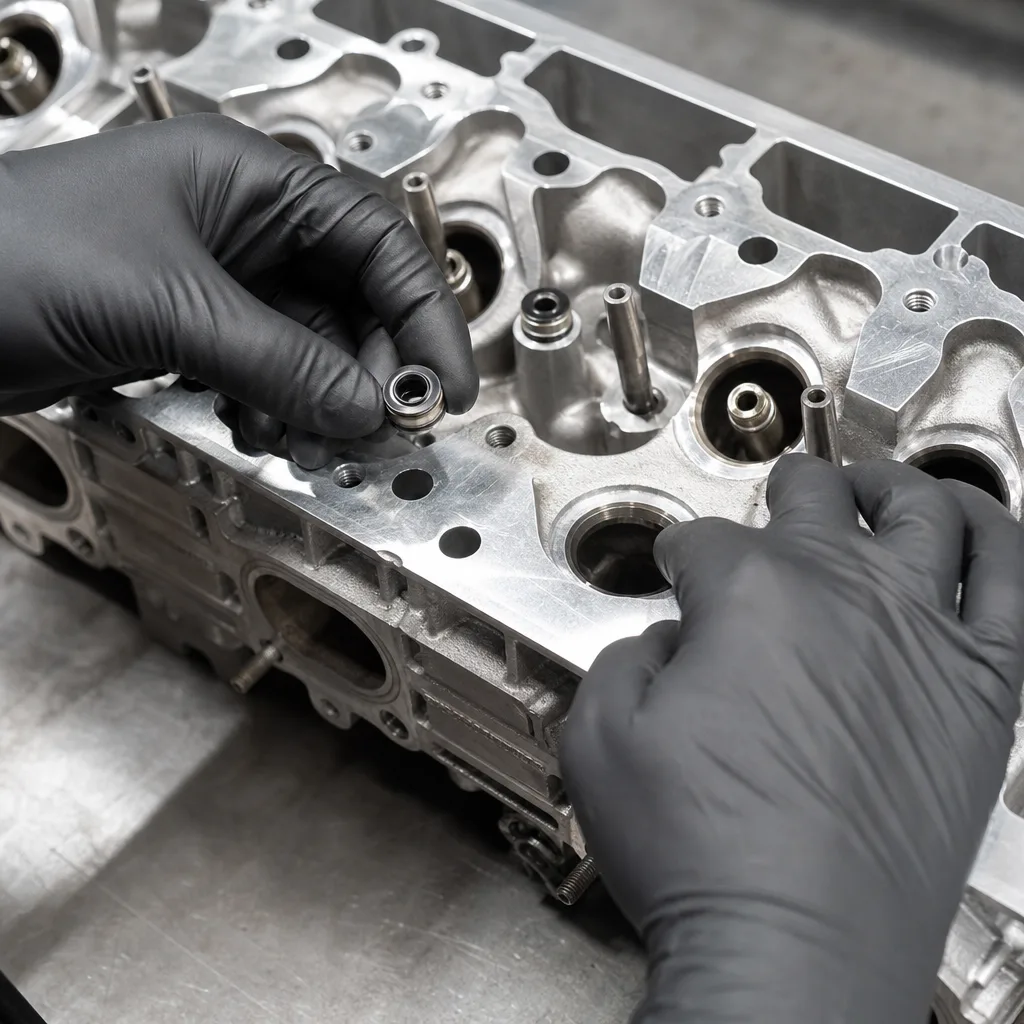
Buyers searching for a cylinder head Isuzu wholesale source usually need three things: fitment confidence, repeatable machining quality, and export-ready supply. Driventus supplies aftermarket engine components from Taizhou, Zhejiang, with IATF 16949:2016 and ISO 9001:2015 systems, and ships to 60+ countries. For cylinder heads, the buying decision is not only about casting quality. It also depends on valve-seat concentricity, deck flatness, pressure integrity, and whether the supplier can support OE cross-references without claiming vehicle-maker approval. Driventus is an independent aftermarket manufacturer; brand names are referenced for fitment only. The sections below explain what procurement teams should verify before placing a trial order, how production is controlled, and what information shortens RFQ turnaround. If you buy for distributors, repair networks, or OEM/Tier-1 channels, use this as a sourcing checklist rather than a sales pitch.

Fitment Data That Stops Returns

For cylinder heads, the first sourcing error is usually not price. It is incomplete fitment data.

Before you issue an RFQ, confirm:

  • Engine family and displacement
  • Valve count and cam layout
  • Fuel type and emissions variant
  • Bare head or complete head assembly
  • Required gaskets, valves, springs, and plugs
  • OE cross-reference status and market use

If the buyer cannot define those points, warranty claims rise quickly. A distributor may need a complete head with valves and spring package, while a repair chain may prefer a bare casting for local assembly. The commercial requirement changes the machining scope, packing method, and inspection plan.

For part-number verification and adjacent engine hardware, see our catalog. If the programme needs matching components around the head, our engine components page helps narrow the search before samples are ordered.

Specs Buyers Should Audit

A cylinder head is an assembly of sealing, thermal, and machining controls. Procurement teams should ask for part-level records, not only a sales datasheet.

</tr></thead><tbody> </tbody></table>If the application includes a specific OE reference, ask for the cross-reference logic in writing before you approve a trial batch. That is more useful than a generic compatibility statement.

Quality Controls and Compliance

A serious supplier should be able to show the process behind the part. At Driventus, cylinder head production is managed under IATF 16949:2016 and ISO 9001:2015 controls, with inspection gates for incoming material, machining, cleaning, and final release. For buyers, the important point is not the certificate alone. It is whether the supplier can show consistent records from one lot to the next.

Review our quality system if you need a supplier file for internal approval. For program-specific changes, machining variants, or export labelling, custom manufacturing may be the faster route than trying to force a standard part into a non-standard application.

Compliance should also be treated as a document question, not a slogan. For EU shipments, buyers often ask about REACH (EC) No 1907/2006 status for relevant substances and packaging materials. If a customer asks for additional market documentation, build that requirement into the RFQ at the start.

MOQ, Lead Time, and Export Packing

Wholesale sourcing is usually decided by landed cost, not ex-works price alone. The cheapest unit can become expensive if packing fails, cartons are not scannable, or the supplier cannot hold the ship date.

Key commercial points to confirm:

  • MOQ by engine family and machining level
  • Trial order size for market validation
  • Standard lead time and peak-season lead time
  • Pallet count, carton count, and net weight
  • Label format for warehouse receiving
  • Export documents for customs clearance

Because Driventus ships to 60+ countries, packing needs to work for different warehouse systems and different import rules. For distributors, that means the label must match the purchase order, the carton must protect gasket faces and threaded ports, and the packing list must align with the invoice. If those details are missing, the warehouse becomes the place where margin is lost.

How To Evaluate A Supplier Before RFQ

A supplier audit for cylinder heads should be short and factual. Ask questions that force process evidence.

1. Can the supplier show a sample inspection report for flatness, pressure test, and valve-seat machining? 2. Can it support OE cross-references without claiming endorsement by a vehicle manufacturer? 3. Are drawings, revisions, and packaging specs controlled, or handled informally by email? 4. Can the factory support a pre-shipment inspection by your third party? 5. Can the supplier scale from trial volume to repeat purchase without changing the manufacturing route?

Those questions matter because the head is a high-consequence part. A small machining drift can create a large field failure cost. If you need a procurement file, a drawing review, or a sample plan, the fastest path is a clear RFQ with target market, engine code, finish level, and annual volume.

Driventus is an independent aftermarket manufacturer; brand names are referenced for fitment only.

Frequently asked questions

Send the engine code, OE cross-reference if available, bare or complete head requirement, target market, annual volume, and any packaging or labelling rules. A drawing or sample photo helps reduce back-and-forth.

Both, depending on the part family and machining scope. Buyers should define whether valves, springs, seats, and plugs are required, because that changes cost, lead time, and inspection.

Yes. We can support private-label packaging and fitment cross-reference work, but we do not claim manufacturer approval or endorsement. Brand names are referenced for fitment only.

If you need a quotation, drawing review, or supplier file for a cylinder head program, send your part list and target market through [request a quote](/contact.html).

Request a Quote
Buyer check What to request Why it matters
Deck flatnessDimensional report against the drawing limitReduces head-gasket failure risk
Pressure integrityLeak-test record for coolant and oil passagesConfirms casting soundness
Valve-seat machiningSeat concentricity and runout recordSupports compression stability
Guide conditionValve-guide clearance measurementAffects oil control and noise
Surface finishGasket-face finish recordSupports sealing performance
TraceabilityBatch code and heat or lot referenceHelps with claims and recalls