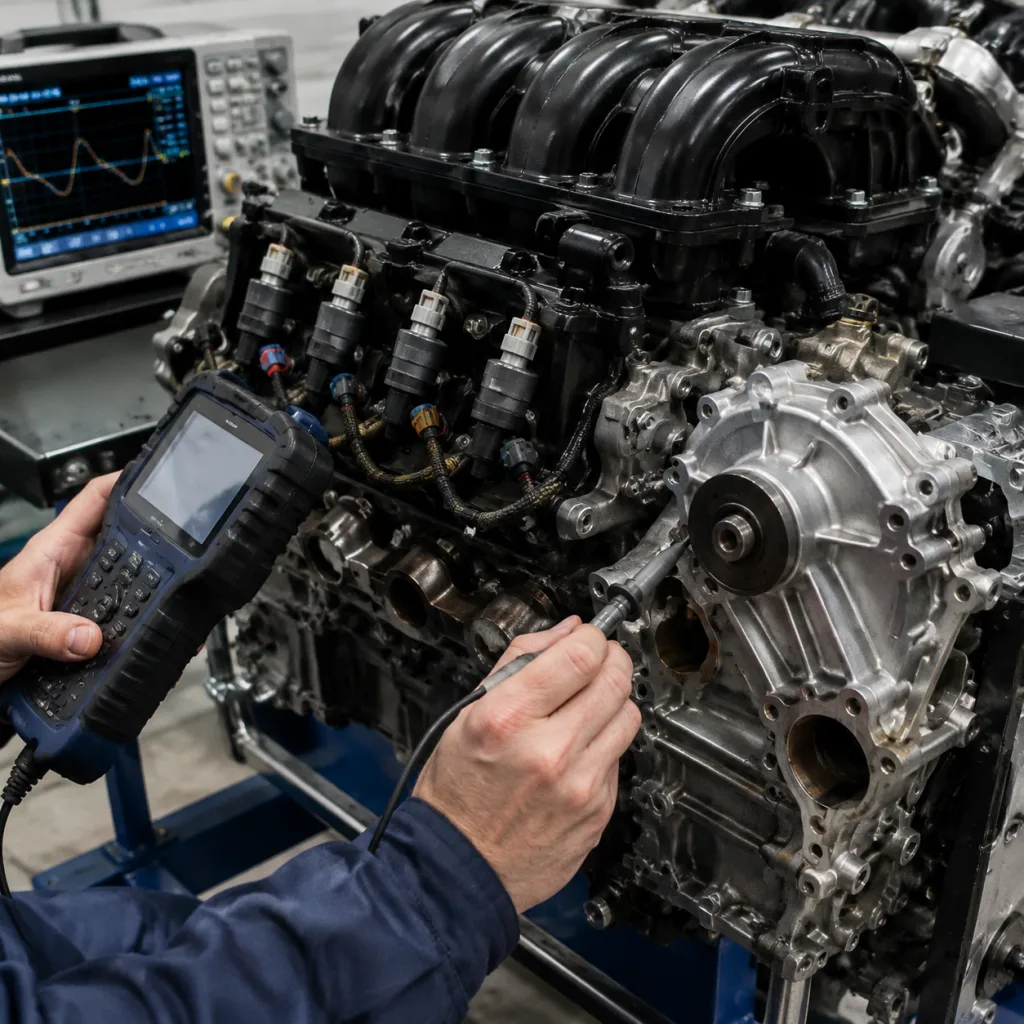
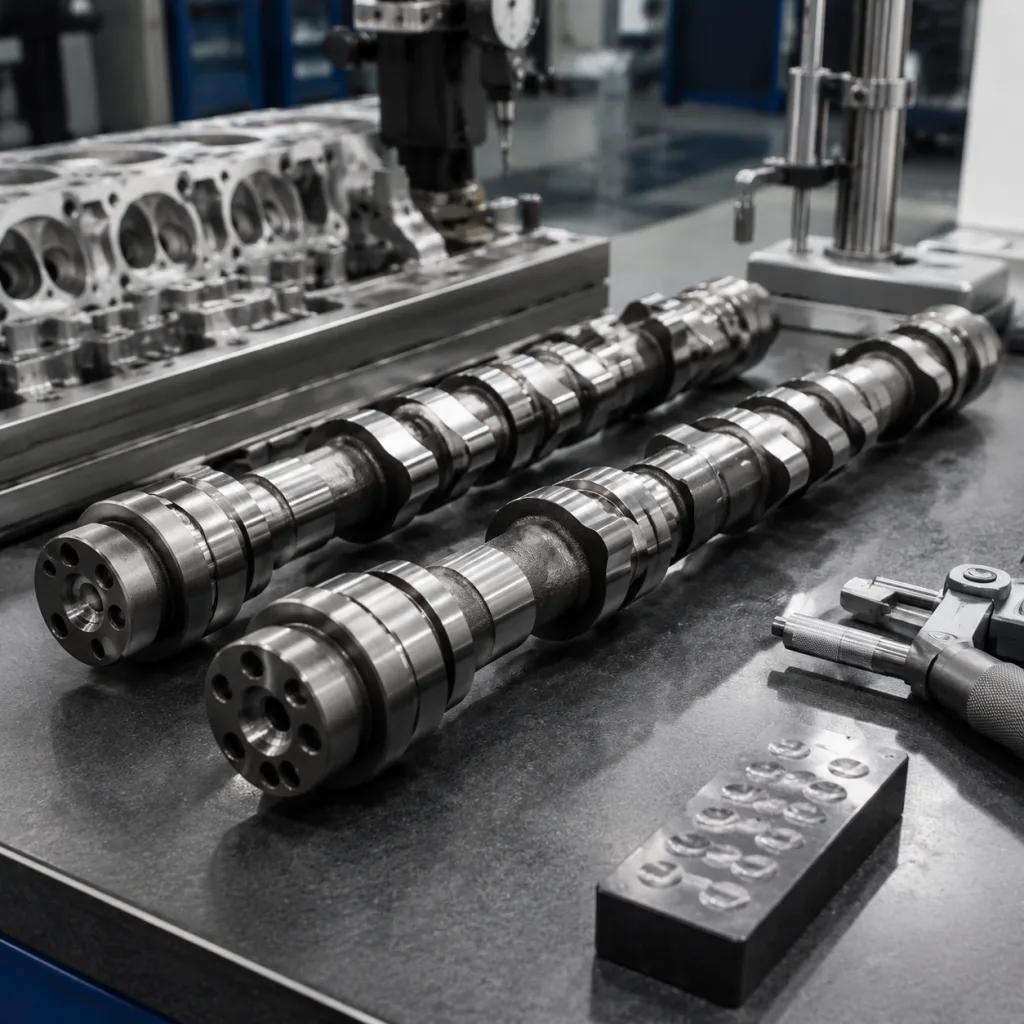
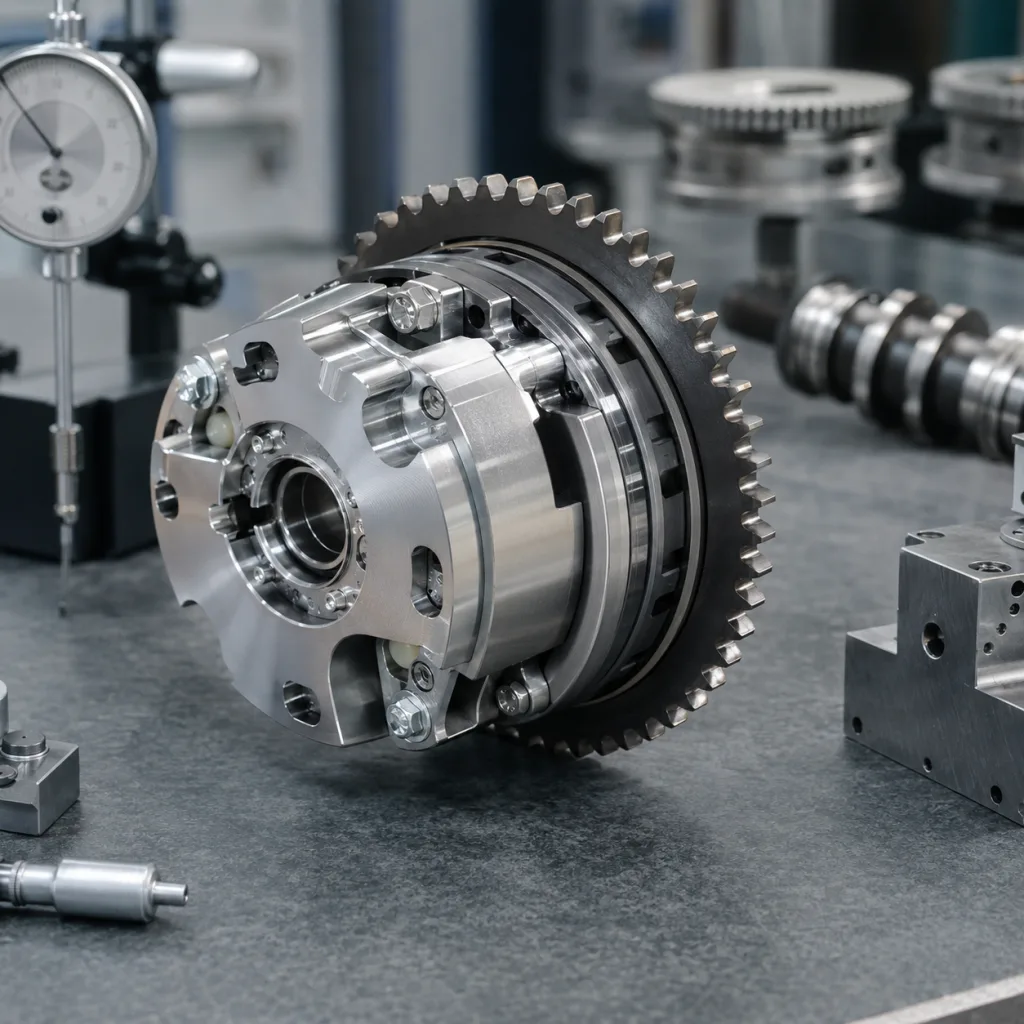
Cylinder Head Ford Manufacturer China: Sourcing Guide
Choosing a cylinder head Ford manufacturer China supplier is not a unit-price exercise. Cylinder heads carry high warranty risk because casting soundness, valve-seat accuracy, gasket-face flatness, coolant-passage sealing, machining consistency, and export packaging all affect field performance. For distributors, repair-chain buyers, and Tier-1 sourcing teams, supplier approval should combine application confirmation, factory evidence, process capability, batch traceability, validation records, and realistic lead-time planning.
Driventus Auto Parts manufactures engine and powertrain components in Taizhou, Zhejiang, and exports to more than 60 countries. We supply B2B buyers with Ford-fitment aftermarket cylinder heads, related engine components, and project-specific development support. Driventus is an independent aftermarket manufacturer; brand names are referenced for fitment and interchange only.
This guide explains how to evaluate Chinese cylinder head suppliers, what technical documents to request, and which commercial controls to settle before production approval.
Sourcing Criteria for Ford-Fitment Cylinder Heads
Start the sourcing project with application coverage and production control, not just sample price. Confirm the engine code, fuel type, valve count, cam layout, emissions market, model-year range, and supply format. A bare casting, machined bare head, fully assembled head, and head kit carry different machining, testing, packing, and warranty responsibilities.
For distributor inventory planning, also confirm whether the supplier can combine several Ford-fitment applications in one shipment without losing traceability by reference. Mixed orders can improve container utilisation, but each application still needs clear labels, inspection records, and batch identification.
Driventus typically supports B2B programmes through drawing review, sample validation, pilot production, and batch shipment. Buyers can review adjacent engine lines in our catalog, including cylinder heads, pistons, crankshafts, gaskets, water pumps, and turbocharger-related components.
Documentation: dimensional report, leak-test result, hardness record, material certificate, control plan, and packaging specification.
For mature references, MOQs depend on machining load, assembly configuration, packaging requirements, and shipment mix. For new development, tooling, fixtures, gauges, prototype validation, and approval parts should be quoted separately before commercial production begins.
Factory Audit Points and Quality System Evidence
A supplier audit should test both the quality system and the discipline on the production floor. Certification is useful, but it does not prove that a specific cylinder head line is stable. Ask for process flow charts, control plans, inspection instructions, calibration records, nonconformance handling, corrective-action examples, and recent internal audit actions.
Driventus operates under IATF 16949:2016 and ISO 9001:2015 frameworks. Buyers can review our quality system before requesting project documents. For EU and UK importers, material declarations may also need to consider REACH (EC) No 1907/2006 depending on customer compliance requirements.
Seat concentricity, guide clearance, press-fit control, spring and valve checks where assembled
Compression loss, oil consumption, assembly noise
Leak testing
Test pressure, hold time, acceptance criteria, equipment calibration
Field leakage and warranty returns
Final inspection
CMM or gauge reports, flatness checks, thread gauges, visual criteria
Mixed quality and shipment rejection
Packaging
VCI use, machined-surface protection, impact resistance, carton drop strength
Transit damage, corrosion, customer claims
</tr></thead><tbody> </tbody></table>For high-volume importers, request a remote or on-site audit before the first purchase order. A practical audit also checks whether the supplier has enough machining capacity, gauge availability, trained operators, and maintenance control to meet the promised lead time without relying on last-minute outsourcing.
Technical Specification and Validation Checklist
Cylinder head validation should combine dimensional, material, sealing, surface, and assembly checks. The exact values depend on the engine family and approved drawing, so buyers should avoid generic inspection sheets that do not reference the ordered application.
Typical specification items for Ford-fitment aftermarket cylinder heads include:
Aluminium alloy grade or cast-iron material specification, confirmed by material certificate.
Cylinder-head deck flatness checked against the approved drawing requirement.
Camshaft bore alignment and diameter verified by gauge or CMM method.
Valve guide inner diameter, seat angle, seat width, and seat runout controlled by operation record.
Coolant and oil passage sealing verified by pressure leak test with defined pressure and hold time.
Threaded holes checked with go/no-go gauges for critical fastener positions.
Surface finish on the gasket face controlled to match the gasket design and sealing requirement.
Hardness and heat-treatment condition recorded for the production batch.
Critical plug, insert, and dowel positions verified before packing.
For replacement-market use, the buyer should define OE-equivalent fitment requirements and installation interfaces. If a procurement file uses an OE-style cross-reference such as OE 06A… or OE 11251…, confirm that the number is used only for identification and fitment matching, not as a claim of vehicle manufacturer approval.
Validation can include sample installation on a reference engine, compression testing after assembly, thermal cycling where required, and review of field-return history for similar applications. For repair chains, the most useful approval package often includes installation notes, torque-sequence guidance where applicable, gasket compatibility confirmation, and a clear record of what is included in the box.
MOQ, Lead Time, Tooling, and Commercial Controls
A reliable quotation should separate recurring product price from non-recurring engineering cost. Tooling, machining fixtures, assembly gauges, packaging moulds, prototype parts, and first-article inspection are not the same cost category as serial production components. Keeping these lines separate makes later price reviews cleaner and avoids confusion when volumes change.
For existing cylinder head references, Driventus can normally quote based on annual volume, batch quantity, assembly level, shipment terms, and packaging format. For a new Ford-fitment development project, the timeline should include design review, tooling preparation, prototype casting, machining validation, leak testing, first-article inspection, packaging confirmation, and pilot-run approval.
Commercial items to define before purchase order release:
Item
Buyer decision needed
Why it matters
MOQ
Per reference, per shipment, or mixed container
Controls inventory, production planning, and freight efficiency
Lead time
Sample, pilot lot, and mass production schedule
Prevents launch delays, backorders, and stock-outs
Assembly level
Bare, semi-assembled, or complete head
Changes labour, test scope, packaging, and warranty risk
Incoterms
FOB, CIF, DAP, or agreed alternative
Defines freight cost, insurance, customs responsibility, and handover point
Packaging
Neutral, private label, palletised, or bulk
Affects warehouse handling, brand presentation, and damage claims
Inspection
AQL level, full check, or buyer witness
Aligns acceptance criteria before shipment
</tr></thead><tbody> </tbody></table>Buyers should also clarify warranty handling, claim evidence requirements, debit-note process, replacement shipment policy, and response time for corrective actions. For multi-location repair chains, consistent carton labels, barcode data, pallet marks, and batch traceability can reduce receiving errors at branch level.
Custom Manufacturing and Private-Label Support
Not every sourcing project is a catalogue order. Distributors may need private-label packaging, mixed engine-component programmes, or application coverage that is not available from standard stock. OEM and Tier-1 customers may need drawing-based production, special machining features, defined material controls, or PPAP-style documentation depending on their internal requirements.
Driventus supports custom manufacturing for engine and powertrain components, including cylinder head development where the technical file is complete enough for feasibility review. A typical project review covers the 2D drawing or 3D model, material requirement, target annual volume, test criteria, packaging standard, destination market, quality documentation, and regulatory-documentation needs.
Private-label support can include neutral cartons, customer part numbers, barcode labels, pallet marks, and multilingual installation inserts where required by the buyer. Packaging should be approved with photos, dimensions, gross weight, stacking limits, label position, and corrosion-protection method before the first shipment.
For buyers consolidating engine parts, cylinder heads can be sourced with related components from engine components lines such as head gaskets, bolts, pistons, timing parts, and water pumps. Consolidation can reduce supplier count and simplify logistics, but it should not weaken inspection discipline. Each component type still needs its own acceptance criteria, batch records, and packaging approval.
How to Compare a Chinese Supplier Shortlist
When comparing a cylinder head Ford manufacturer China shortlist, use a weighted matrix rather than a lowest-price table. The cheapest quotation may exclude leak testing, assembly inspection, export packaging, material verification, or proper traceability. It may also depend on outsourced machining that is not visible in the supplier’s first profile.
A practical evaluation scorecard should include:
Technical capability: casting control, CNC machining, valve-seat processing, heat treatment where applicable, and leak-test equipment.
Quality documentation: IATF 16949:2016, ISO 9001:2015, control plan, inspection report, material record, and batch record.
Commercial fit: MOQ, lead time, payment terms, tooling cost, aftersales policy, and mixed-shipment flexibility.
Communication: drawing review speed, technical question handling, corrective-action response, and English documentation quality.
Risk control: sample approval process, claim handling, subcontractor management, and continuity of key production equipment.
Before awarding volume, request production samples from the intended serial process, not hand-finished samples from a development bench. Keep one approved master sample at the buyer site and one at the supplier site. For the first three shipments, consider tightened inspection and require pre-shipment photos, leak-test summaries, packing confirmation, and carton-label approval.
Driventus is an independent aftermarket manufacturer; brand names are referenced for fitment only. We do not claim approval or endorsement by any vehicle manufacturer.
Frequently asked questions
Request the drawing or application confirmation, material certificate, dimensional report, leak-test record, process flow, control plan, packaging specification, and quality certificates. For new references, also request prototype validation results, first-article inspection, and pilot-run data before serial purchase.
Yes. For qualified B2B orders, Driventus can support neutral or private-label packaging, barcode labels, customer part numbers, pallet marks, and agreed carton specifications. Requirements should be confirmed before quotation because packaging affects MOQ, lead time, and unit cost.
No. OE-style references are used only to identify fitment and interchange. Driventus is an independent aftermarket manufacturer; brand names are referenced for fitment only, and no vehicle manufacturer approval or endorsement is implied.
If you are shortlisting suppliers for Ford-fitment cylinder heads, share your application list, annual volume, target assembly level, and inspection requirements. Driventus can review the project and help you [request a quote](/contact.html).