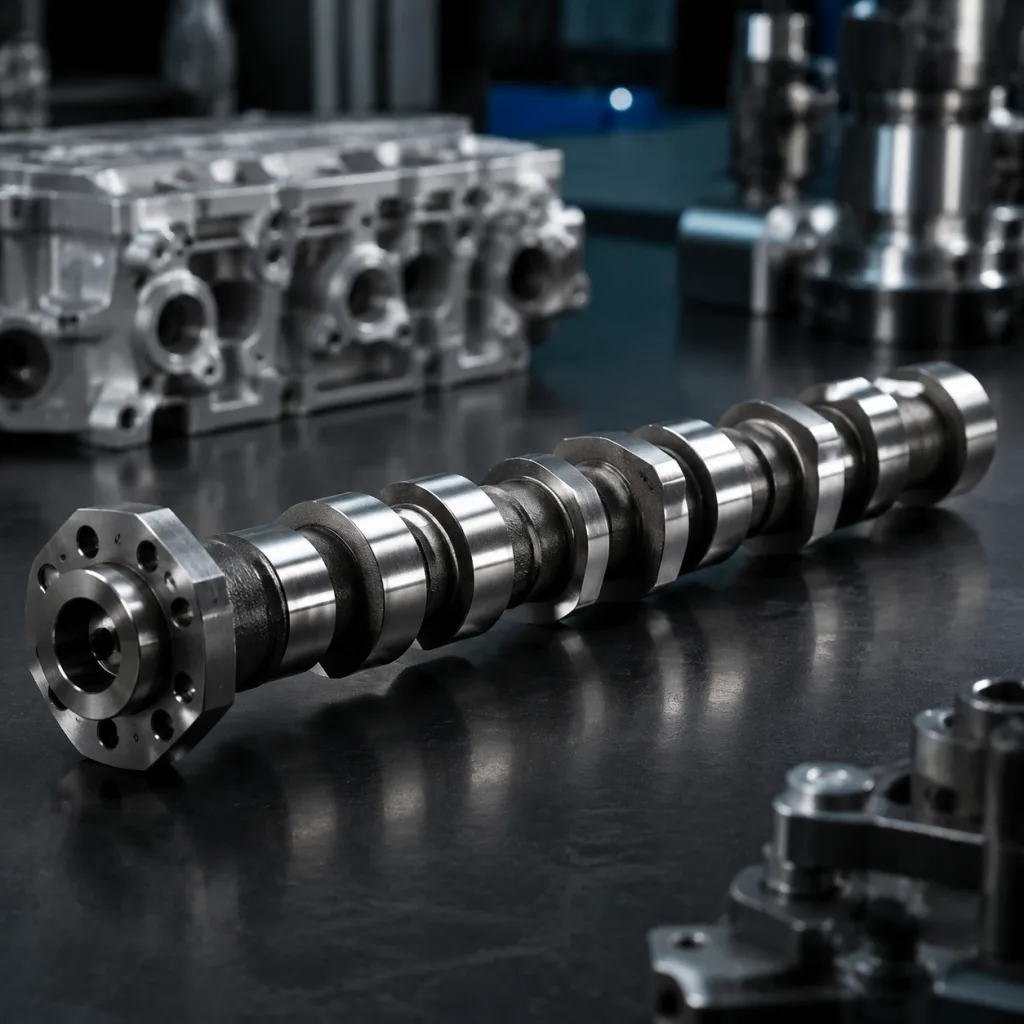
Buyers searching for a crankshaft vs Glyco alternative are usually trying to solve two issues at the same time: verified fitment and repeatable supply. Fitment is not just a catalogue cross-reference. The crankshaft has to match the engine family’s journal layout, thrust location, stroke, flange or pilot detail, oiling features, timing interface, and bearing system. Supply repeatability depends on controlled material, heat treatment, machining datum strategy, balancing, washing, preservation, packaging, traceability, and documented change control across repeat batches. For procurement teams, the right comparison is therefore not brand name versus brand name. It is the approved engineering condition of the part: forged steel, cast iron, or nodular iron construction; journal diameter and roundness; fillet radius; surface hardness; surface roughness; oil-hole deburring; dynamic balance; cleanliness; corrosion protection; and the supplier’s ability to support recurring export programmes without uncontrolled variation. Driventus is an independent aftermarket manufacturer; brand names are referenced for fitment only. This guide explains how to evaluate a Glyco alternative from a sourcing perspective, what technical evidence to request, and how to build an approval file before issuing a purchase order. Published standards such as IATF 16949:2016, ISO 9001:2015, REACH (EC) No 1907/2006, and applicable customer or engine-component validation plans should form part of the supplier review where relevant.
What buyers mean by a Glyco alternative
A Glyco alternative is usually a replacement crankshaft selected for the same engine platform, machining envelope, bearing arrangement, and service application as a catalogued reference part. In B2B sourcing, the term should not be treated as a simple brand substitution. It should describe a verified component that can perform the same mechanical role in the same engine family, under the same installation and service conditions.
Procurement teams should confirm three layers of compatibility before treating any item as a valid alternative:
Dimensional match: main journal diameter, rod journal diameter, overall length, stroke, flange dimensions, pilot bore, thrust face position, oil-hole location, keyway or reluctor features, gear seat, and counterweight clearance where applicable
Service match: OEM replacement, independent aftermarket repair, remanufacturing programme, fleet maintenance, private-label distribution, or controlled dual-sourcing project
This distinction matters because two crankshafts can share a catalogue cross-reference but differ in a feature that affects installation or durability. A thrust width outside the bearing set’s end-play target, an oil-hole chamfer that does not match the bearing overlay, an incorrect pilot bore, or a flange runout issue can create field claims even when the part appears visually similar.
If you are comparing options for engines sold across the EU, UK, US, Canada, Australia, Brazil, or other export markets, verify against a controlled drawing revision, retained sample, or approved first article rather than catalogue text alone. For multi-SKU sourcing, align the part number, packaging label, inspection record, carton mark, barcode, and internal ERP description before approval. That keeps the commercial file, warehouse label, and quality documentation tied to the same physical part condition.
Crankshaft vs Glyco alternative: side-by-side comparison
The comparison below is practical for sourcing and quality review. It does not assume vehicle manufacturer approval, and it should be used as a supplier-qualification checklist rather than a statement that one source is automatically interchangeable with another.
Criteria
Typical branded reference part
Typical aftermarket alternative
Dimensional control
Defined by OE or service drawing
Must be verified by sample measurement, drawing review, and first-article inspection
Material
Specified to engine family requirements
May be forged steel, cast iron, or nodular iron depending on load case and application
Heat treatment
Controlled by validated process route
Should state induction hardening, nitriding, or other treatment where specified
Journal hardness
Controlled to drawing requirement
Should be documented by hardness readings at defined locations
Journal surface finish
Controlled for bearing compatibility
Should be measured on main and rod journals, commonly reported as Ra values
Roundness and taper
Controlled by final grinding process
Should be checked with defined measurement positions on every critical journal
Fillet radius
Matched to fatigue design and bearing clearance
Must be checked because small radius differences affect stress concentration and bearing edge contact
Oil-hole geometry
Designed around bearing and lubrication path
Must be verified for angular position, chamfer, deburring, and internal cleanliness
Dynamic balance
Controlled for engine NVH and bearing load
Should be supported by balance record or final inspection statement
Traceability
Batch or serial traceability expected
Lot traceability should link material, machining batch, inspection, and packing date
Packaging
Standardized by channel
Should protect journals, threads, flange, reluctor features, and timing seats during export handling
Lead time
Dependent on distributor stock
Can be planned through direct factory production, MOQ, and rolling forecast
Commercial risk
Higher if source is limited
Lower when the factory supports repeat production, deviation control, and documented change notification
</tr></thead><tbody> </tbody></table>For buyers, the key question is not whether the alternative is cheaper. It is whether the part can hold journal geometry, fillet radius, surface finish, oil-passage quality, and dynamic balance across repeat orders. A low unit price can become expensive if the supplier cannot reproduce the same grinding, washing, and balancing condition after the first batch.
A practical comparison should include at least one measured sample from the incumbent reference and one sample from the proposed alternative. Record the critical dimensions in the same format, using the same measurement method where possible. Where drawings are not available, use a controlled sample measurement plan that covers main journals, rod journals, thrust faces, stroke, flange, pilot, keyway, oil holes, and runout. If differences are found, classify them as approved, rejected, or requiring engineering concession before mass order release.
Technical points to verify before replacement approval
A crankshaft is a rotating fatigue component. Small deviations can cause bearing wipe, low oil pressure, vibration, rear seal leakage, timing error, noise, or premature fracture. Replacement approval should therefore combine dimensional inspection, material evidence, process review, cleanliness control, and packaging assessment.
Before PO release, verify the following technical points:
Main journal diameters, tolerance band, measurement position, roundness, taper, and surface finish
Rod journal diameters, crankpin width, taper, out-of-round condition, and journal parallelism where applicable
Stroke and crankpin indexing relative to cylinder layout, including angular accuracy on multi-throw crankshafts
Thrust width, thrust face finish, and engine end-play requirement after bearing installation
Runout, straightness, and concentricity across the crankshaft length, measured on specified datum journals
Fillet radius at journal transitions and compatibility with bearing chamfer clearance
Surface roughness on bearing contact surfaces, commonly specified as Ra or Rz depending on the drawing
Flange, pilot bore, keyway, gear seat, reluctor, dowel, threaded holes, or timing-related features where applicable
Dynamic balance condition, balance correction method, and whether balancing occurs after final machining
Nitriding, induction hardening, or other surface treatment where specified by the application
Hardness depth or case-depth evidence when the drawing requires hardened journals
Cleanliness and residual machining debris after washing, drying, and preservation
Thread condition, protective oil, anti-rust treatment, end caps, journal sleeves, and handling marks
Typical procurement documents to request
1. Dimensional inspection report covering critical-to-function dimensions and measurement equipment used 2. Material certificate identifying grade, heat number, or batch where available 3. Hardness test result and surface-treatment confirmation where applicable 4. Balance record or final inspection statement for rotating balance 5. Process flow or control-plan summary for forging or casting, machining, heat treatment, washing, inspection, and packing 6. Traceability label sample showing part number, lot number, production date, and country-of-origin information where required 7. Packaging specification, including journal protection, corrosion protection, carton strength, pallet format, and drop-handling assumptions 8. First-article inspection report for new or revised part numbers 9. Deviation or concession record if any measured item differs from the reference sample or drawing
If you are replacing a catalogued reference part, ask for an OE-style cross-reference only when the application already uses that identifier in your internal system. Do not approve based on a single cross-reference line. Match the drawing, sample, acceptance criteria, and inspection record, not the label alone. For higher-volume programmes, retain one approved sample and its inspection report from the first released batch so later shipments can be compared against the same baseline.
Standards and compliance for export purchasing
For export programmes, documentation matters as much as the metal. A qualified supplier should support a quality file aligned with IATF 16949:2016 and ISO 9001:2015. These standards do not replace part-level validation, but they help buyers understand whether the manufacturer has controlled procedures for purchasing, production, calibration, inspection, nonconforming material, corrective action, traceability, and change management.
Where applicable, material declarations should support REACH (EC) No 1907/2006 and customer-specific restricted-substance requirements. Importers may also need customs classification support, country-of-origin records, supplier declarations, packaging labels, barcode formats, fumigation or pallet-compliance details, and destination-market carton marks. For validation, buyers should use the customer’s engine or component test plan when one exists. Typical approval evidence may include dimensional first-article inspection, material verification, hardness confirmation, balance confirmation, surface-finish measurement, cleanliness review, corrosion-protection checks, and sample fitment feedback from the target application.
Driventus operates as a vertically integrated manufacturer in Taizhou, Zhejiang, and supplies export customers in multiple regions. Our quality system covers controlled process steps from raw material intake through machining, surface treatment where applicable, washing, final inspection, packaging, and shipment preparation. This helps reduce variation between batches, which matters when a programme needs repeatability across more than one warehouse, distributor branch, or regional sales channel.
If the order requires private label, packaging changes, language-specific labels, carton marks, barcode formats, pallet patterns, anti-corrosion period targets, or a dimensional variant for a regional application, review custom manufacturing before RFQ submission. These requirements should be frozen before first-article approval so the part, label, inspection sheet, and shipping documents all describe the same finished product.
When a direct replacement is better than a brand cross-reference
A direct replacement is usually the better sourcing choice when the part is already validated in the target engine family and the buyer needs supply security. A brand cross-reference can help identify the search universe, but it is not enough to approve a crankshaft for production, resale, fleet repair, or remanufacturing. The direct replacement route gives procurement and quality teams a clearer way to document exactly which dimensions, material condition, inspection criteria, packaging format, and change-control rules have been accepted.
This approach is common for:
Independent aftermarket distributors building a stable catalogue line
Multi-location repair chains that need consistent fitment across branches
OE and Tier-1 supply programmes that need dual sourcing or supply-risk reduction
Importers managing long replenishment cycles, container consolidation, and safety stock
Remanufacturing operations that require predictable bearing, seal, gasket, and fastener compatibility
Private-label programmes where the external label must be backed by repeatable manufacturing data
A direct replacement can reduce dependence on one distributor channel, but it should still be validated against the same acceptance criteria used for the incumbent part. The most common mistake is treating a brand cross-reference as sufficient approval. In practice, procurement should require first-article data, sample fitment confirmation, packaging review, and a documented deviation log if anything differs from the reference sample.
When comparing crankshaft vs Glyco alternative options, build a compact approval matrix. Include the reference part number, proposed replacement part number, engine code, critical dimensions, material and heat-treatment notes, required documents, approved sample date, retained-sample location, packaging version, and responsible reviewer. This gives purchasing, engineering, warehouse, and sales teams a shared record and reduces the risk of mixing similar but non-identical crankshafts in the same stocking location.
Driventus supplies crankshafts and related engine components with export-oriented documentation and repeat-production control. For sourcing teams comparing crankshaft vs Glyco alternative options, the goal is to reduce uncertainty before the first volume order. That means confirming fitment evidence, inspection expectations, labelling requirements, corrosion-protection period, carton specification, pallet format, and replenishment planning before the programme moves from sample stage to mass shipment.
For sourcing teams, the main value points are:
Controlled manufacturing under IATF 16949:2016 and ISO 9001:2015 aligned procedures
Batch traceability and inspection records for approved part numbers
Support for dimensional confirmation before mass order release
Sample-based or drawing-based review for defined engine applications
Journal, thrust-face, oil-hole, balance, and packaging checks tied to agreed approval criteria
Export packaging and label customisation for distributor and private-label programmes
Stable production planning for recurring orders, MOQ management, and multi-SKU replenishment
Coordination across related engine components when a repair kit or matched programme is required
If your team is comparing a Glyco alternative against another supplier, ask for a sample set, inspection sheet, and carton specification before confirming volume. If the part family requires multiple matched components, use a common approval file across bearings, seals, gaskets, bolts, and the crankshaft itself to avoid mismatch at the warehouse level. This is especially important for distributors handling multiple engine families with similar-looking parts.
For RFQ preparation, include the engine code, reference number, annual demand estimate, destination market, required packaging format, label requirements, target order quantity, and any available drawings, photos, or sample measurements. Clear input helps shorten the review cycle and reduces avoidable sample revisions. For pricing, samples, or engineering review, use request a quote.
Frequently asked questions
No. Interchangeability depends on journal diameters, thrust location, stroke, runout, balance, oil-hole geometry, surface finish, fillet radius, flange or pilot features, and any required surface treatment. Always confirm against the engine drawing, approved sample, or first-article inspection before approval.
Ask for dimensional inspection data, material certification, hardness results, surface-treatment confirmation where applicable, balance records, traceability information, and packaging specifications. For export purchasing, quality-system evidence, compliance declarations, country-of-origin support, and carton or pallet specifications may also be required.
Yes. We support drawing-based and sample-based manufacturing for defined applications, including export packaging, label, barcode, and private-label requirements. Driventus is an independent aftermarket manufacturer; brand names are referenced for fitment only.
If you need a validated replacement path or a quotation for a specific engine family, send your drawings, sample photos, target cross-reference, destination market, packaging requirements, and estimated annual demand. We will review the fitment file with you: /contact.html