Crankshaft Pulley Toyota OEM Supplier: Sourcing Guide
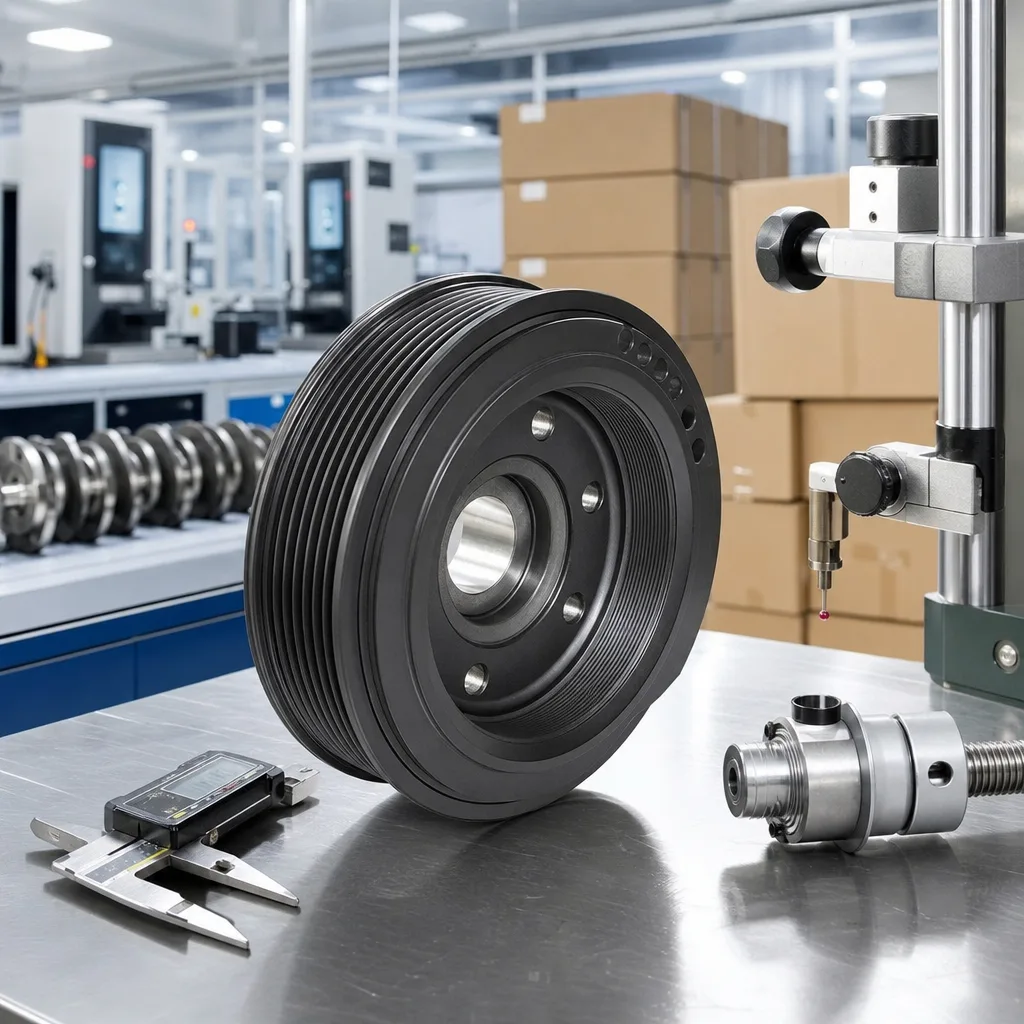
Procurement teams sourcing a crankshaft pulley for Toyota applications need more than a part number match. The pulley must fit the crank nose, hold dimensional stability under torsional load, and maintain belt alignment across the service life of the engine. For aftermarket distribution, repair chains, and Tier-1 supply, the commercial decision usually comes down to OE cross-reference control, material consistency, test data, and supply continuity. Driventus manufactures engine and powertrain parts in Taizhou, Zhejiang, and exports to more than 60 countries. We work to IATF 16949:2016 and ISO 9001:2015, with traceability and process control designed for B2B sourcing. Driventus is an independent aftermarket manufacturer; brand names are referenced for fitment only. If you are evaluating a crankshaft pulley Toyota OEM supplier, the points below show what to verify before placing a production order or approving a second source.
What buyers should verify before sourcing
A crankshaft pulley is not a simple turned component. It carries the accessory drive load, damps vibration in some designs, and must remain concentric at engine speed. For Toyota fitment, buyers should confirm:
OE reference and engine code match
Bore, keyway, bolt circle, and offset dimensions
Material specification and surface finish
Runout and balance limits
Belt track geometry and groove profile
Whether the pulley includes an elastomer damper, pressed hub, or integrated ring
A supplier should provide dimensional inspection records and material certification with each batch. If the part is supplied against OE 06A107065-style references or another cross-reference cited in the enquiry, the drawing control must show the exact revision used for production.
Buyers usually compare suppliers on the same set of variables. The table below summarises the items that should be checked during RFQ, audit, or sample approval.
Item
Typical buyer requirement
Why it matters
Material
Cast iron, ductile iron, or machined steel, depending on design
Affects mass, damping, and fatigue life
Concentricity
Controlled to drawing, commonly within low-tolerance ranges
Prevents belt walk and vibration
Radial runout
Measured on critical datum surfaces
Reduces accessory drive noise and wear
Surface treatment
Phosphate, e-coat, black oxide, or equivalent
Corrosion resistance in storage and service
Marking
Batch traceability and lot code
Supports recall control and warranty claims
Packaging
VCI or protective wrap, export-grade cartons
Prevents transit damage and rust
</tr></thead><tbody> </tbody></table>For validation, ask for test evidence aligned to internal standards and applicable methods such as ISO 9001:2015 process control, plus corrosion or durability methods when relevant to your programme. If your market requires regulatory checks, confirm material compliance with REACH (EC) No 1907/2006 for restricted substances.
Lead time, MOQ, and supply continuity
For procurement teams, supply continuity is often more important than the unit price alone. A stable crankshaft pulley programme needs defined minimum order quantities, predictable machining capacity, and controlled raw material sourcing.
Driventus supports B2B purchasing with the following sourcing model:
MOQ set by part family and machining complexity
Sample lead time agreed before mass production
Batch production with lot traceability
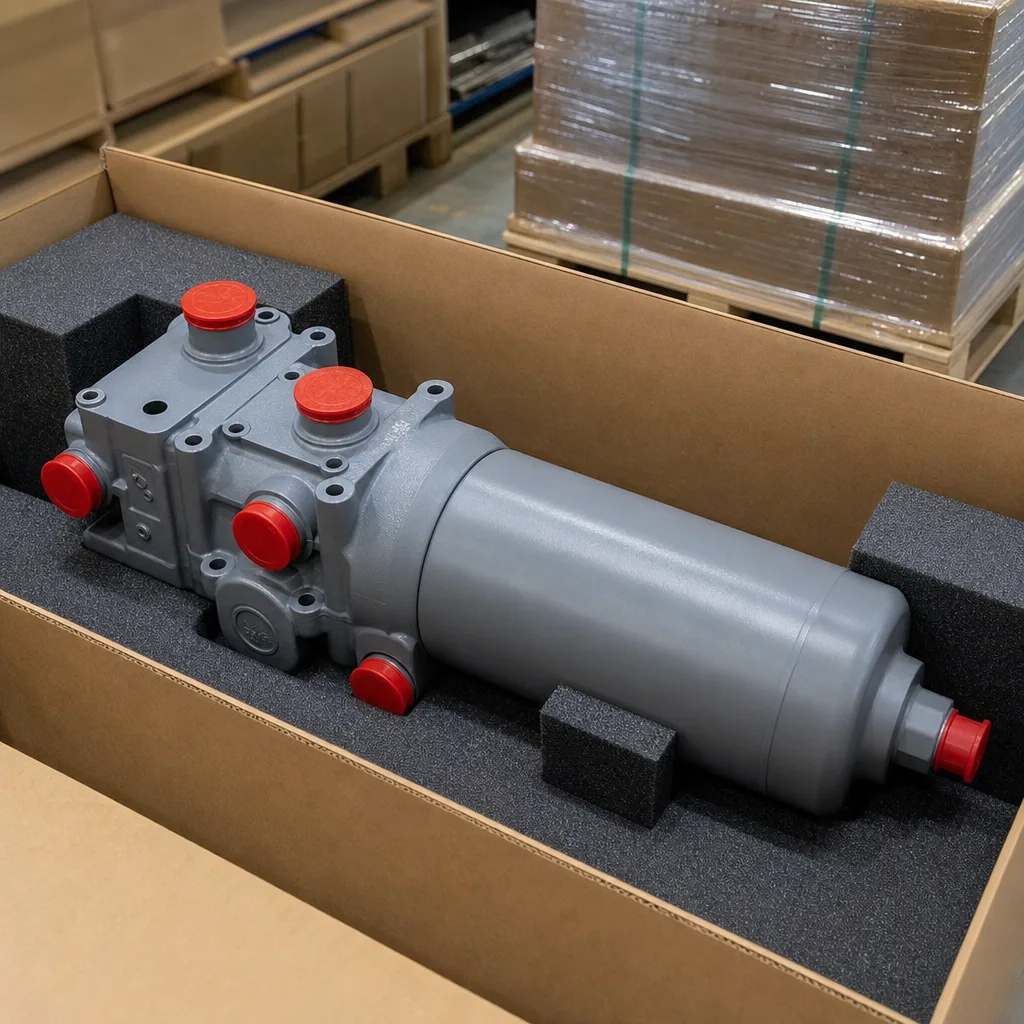
Export packing suitable for container or palletised freight
Reorder planning based on forecast and safety stock discussions
If you are consolidating vendors, ask whether the supplier can maintain the same forging or casting route across repeats. Changes in substrate or balancing method can alter NVH performance. For aftermarket and repair-chain supply, this is often the main reason a previously low-cost source becomes expensive after returns and claim handling.
Quality controls used for export supply
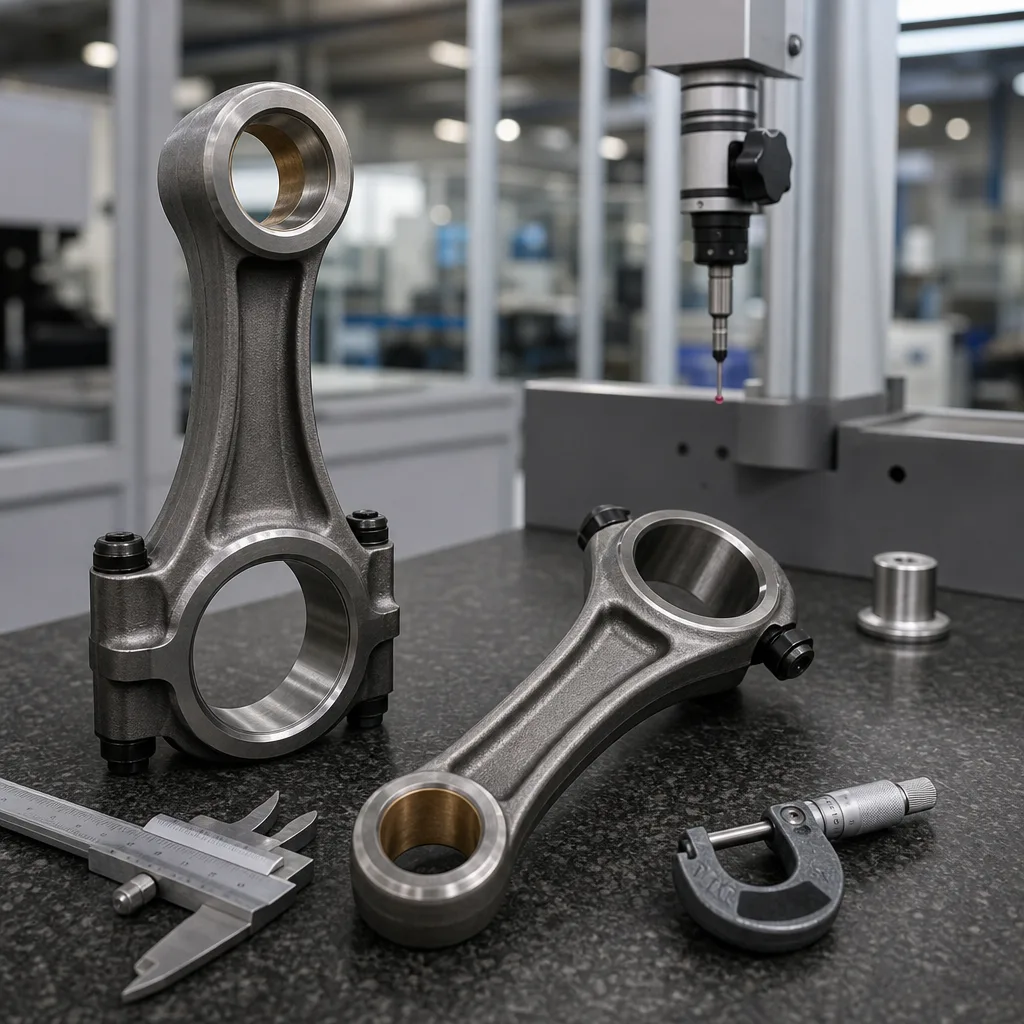
A credible supplier should show how the part is controlled from incoming material to final pack-out. At minimum, the quality file should cover drawing approval, first article checks, in-process inspection, final dimensional sampling, and packaging verification.
Driventus operates a documented quality system aligned with IATF 16949:2016 and ISO 9001:2015. For crankshaft pulley production, the practical controls usually include:
1. Incoming material verification 2. Machining datum control and tool wear monitoring 3. Balance or runout inspection on defined samples or 100% critical checks, depending on programme 4. Coating thickness and appearance checks where specified 5. Traceability label confirmation before shipment
If your programme requires special engineering changes, drawings, or private label packaging, our custom manufacturing page explains the available development route. This is useful when a buyer needs a Toyota-compatible pulley programme with controlled revision management and documentation for internal approval.
How to evaluate a supplier during RFQ and audit
An RFQ should not stop at price and delivery date. Procurement teams should ask for evidence that the supplier can support repeat orders without fitment drift.
RFQ checklist
OE reference or engine code supplied by the buyer
Sample quantity and target order volume
Required material and surface treatment
Tolerance call-outs from the buyer drawing
Packaging standard and labelling format
Inspection report format required at shipment
Country of destination and any documentation needs
Factory audit questions
Which process is in-house and which is outsourced?
How is tool life monitored?
What is the control plan for runout and balance?
How are nonconforming lots quarantined?
Can the factory support PPAP-style documentation where required by the customer?
For buyers comparing sources across Asia, Europe, or North America, the key question is whether the supplier can repeat the same physical part and paperwork every time. That matters as much as the initial sample.
Why Driventus is used for B2B pulley sourcing
Driventus manufactures engine and powertrain components for distributors, OEM and Tier-1 buyers, and multi-location repair networks. Our export business is structured for commercial buyers that need controlled part identity, predictable replenishment, and technical communication in English.
What buyers typically ask us for:
OE cross-reference confirmation based on the buyer’s reference list
Sample submission for fitment and dimensional review
Export packaging to the target market
Batch traceability and inspection records
Programme support for replacement or private-label sourcing
We do not claim vehicle manufacturer approval or endorsement. Instead, we focus on dimensional control, documentation, and export readiness. If you need to request pricing or start a sourcing review, use request a quote.
Frequently asked questions
Yes. We supply B2B customers in multiple export markets and can support OE cross-reference review, sample approval, and batch production. Brand names are referenced for fitment only.
Ask for dimensional inspection data, material confirmation, batch traceability, packaging details, and any coating or balance records required by your programme. If relevant, request REACH compliance information.
Yes. Driventus can support custom manufacturing, labelling, and export packaging for distributors or repair-chain supply. Share your artwork, carton spec, and annual volume for review.
If you are qualifying a crankshaft pulley Toyota OEM supplier, send your OE reference, target volume, and destination market. We will review the fitment data and respond with a sourcing proposal at /contact.html