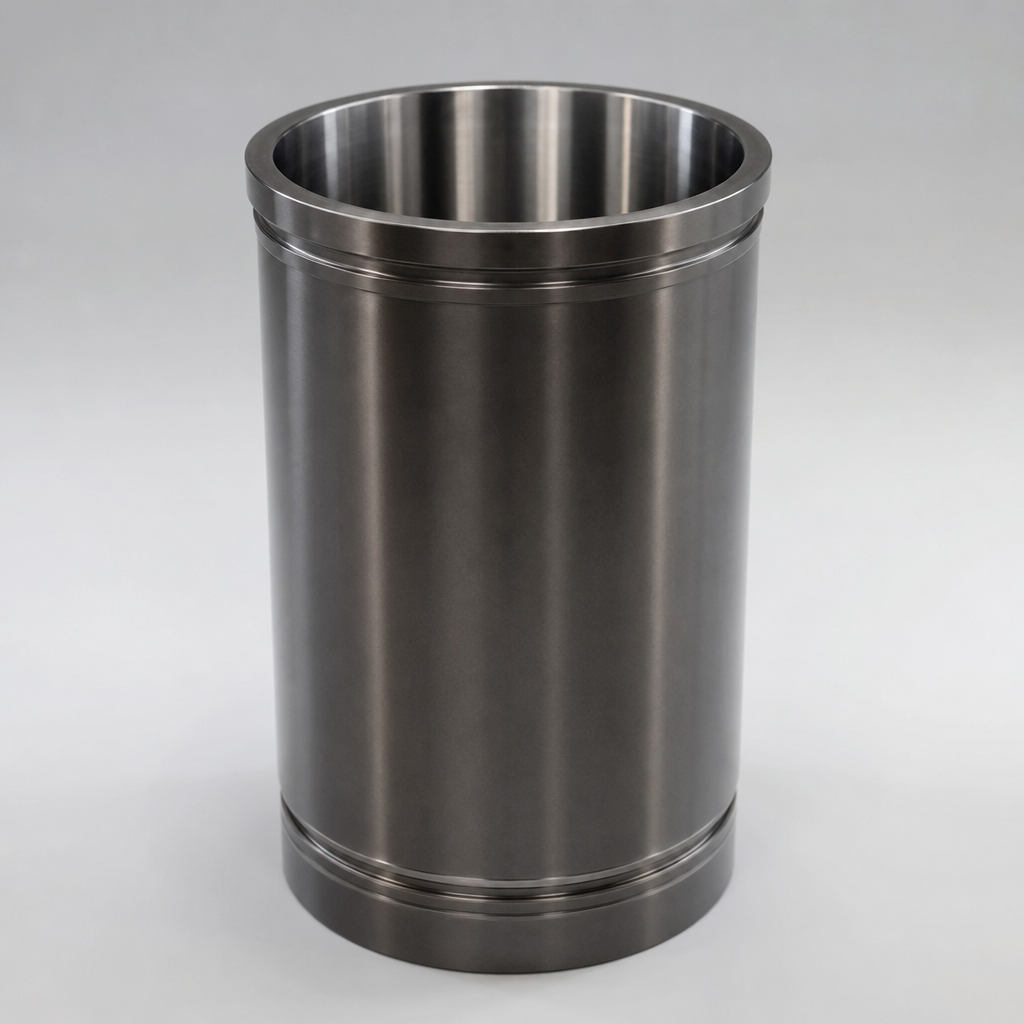
A crankshaft pulley does not fail a program just because it looks rusty in a lab photo. The sourcing risk is narrower and more practical: coating breakdown can trigger rust bleed in storage, visible finish complaints, fit issues at the bore or mounting face, and avoidable returns in coastal or winter-salt markets.
That is why a crankshaft pulley salt spray test standard should be reviewed as a buying decision, not a box-ticking exercise. The useful questions are straightforward: which test method was used, how the parts were prepared, what counted as failure, and whether that result actually fits the vehicle market you are serving.
This article reframes the topic around those decisions. Instead of repeating a generic corrosion guide, it focuses on what buyers and quality teams need at RFQ and approval stage: where salt spray data is useful, where it gets misread, what must appear in a report, and how corrosion targets affect coating route, MOQ, lead time, and revalidation scope. Driventus is an independent aftermarket manufacturer; brand names are referenced for fitment only.
Start with the decision: what corrosion risk are you actually buying down?
A crankshaft pulley lives at the front of the engine. It sees splash, salt, thermal cycling, and impact from debris. On damped designs, the hub, outer ring, and bonded elastomer must also remain stable after exposure.
For a buyer, corrosion testing matters because it answers a few specific questions:
Will the coating stay intact on phosphate, e-coat, zinc-flake, or painted surfaces?
Will the part survive storage and sea freight without flash rust or rust bleed?
Will the finish hold up in de-icing-salt markets?
Will the part still look sellable in visible aftermarket packaging?
Will future lots match the approved one after coating or curing changes?
The important caveat: salt spray is a comparative lab method. It is not a direct service-life forecast. A 240 h result under one method does not mean 240 hours in the field, and it does not prove two coating systems will behave the same on the road.
That matters on pulleys because corrosion is not only cosmetic. Rust at the bore, keyway, or mounting face can affect assembly feel. Rust creep at coating edges can drive customer complaints. Damage in groove or ring areas can contribute to belt-noise concerns if those surfaces are specified as coated. On damped pulleys, rust growth near the bond edge is also watched because it can accelerate edge lift or visible separation.
A practical way to frame requirements is by market scenario:
Dry-climate or standard domestic aftermarket: often 96-168 h NSS with no red rust on key visible surfaces
Mixed-climate export programs: often 240 h NSS with limited edge corrosion only
Coastal or winter-road programs: often 480 h NSS or a customer-specific equivalent with tighter finish and packaging control
Those bands change sourcing economics. Moving from oil-phosphate to e-coat or zinc-flake plus sealer usually raises unit cost, increases the economical batch size, and can add 7-21 days to launch timing because coating validation, fixturing, and first-article testing must be completed.
If you source several pulley variants through our catalog, do not copy one corrosion target across every SKU. Tie it to substrate, coating route, and destination market.
Comparison first: which published standards actually show up on pulley RFQs?
Most crankshaft pulley corrosion requirements point to ISO 9227 or ASTM B117.
ISO 9227 is the reference many global buyers know first. It defines neutral salt spray (NSS), acetic acid salt spray (AASS), and copper-accelerated acetic acid salt spray (CASS). For pulleys, NSS is usually the default unless the drawing or coating specification says otherwise.
ASTM B117 is also widely used, especially in North American sourcing. It follows the same broad idea, but it should not be treated as automatically interchangeable with ISO 9227. If an RFQ says only “salt spray 240 h,” the quote is still underspecified.
What should a supplier state? At minimum:
Named method: ISO 9227 NSS or ASTM B117
Salt concentration: typically 5% NaCl by mass
Chamber temperature: typically 35°C ± 2°C
pH range: commonly around 6.5-7.2 for NSS, depending on the procedure used
Collection rate: logged within the standard-defined range
Specimen angle: commonly 15-30° from vertical, unless part fixturing requires otherwise
Standards and controls to check
Item
What to verify
Typical note
Test method
ISO 9227 NSS or ASTM B117
Method should be named on the report
Sample quantity
Number of parts tested
Commonly 3-5 pcs per lot; 5 pcs is stronger for PPAP-style review
Surface condition
As-produced, no rework
Cleaning method should be stated; solvent wipe only unless otherwise defined
Scribe requirement
With or without intentional cut
Depends on coating spec; many finished pulleys are tested unscribed
Exposure duration
Hours to end point or first red rust
96 h, 240 h, and 480 h are common checkpoints
Failure criterion
Red rust, white rust, blistering, base-metal attack
Must be tied to significant surfaces
Report photos
Before and after exposure
Needed for traceability and audit review
Chamber verification
pH, temperature, fallout rate
Should be logged per run
</tr></thead><tbody> </tbody></table>If a customer-specific corrosion requirement is in play, it should sit inside a documented quality system with traceability, process-change approval, and nonconformance control aligned to IATF 16949:2016 and ISO 9001:2015.
Commercially, the method name alone rarely drives cost. The acceptance threshold does. A supplier quoting 240 h NSS on a cast-iron pulley may stay on a routine coating line. A requirement such as 480 h NSS with zero red rust on all visible surfaces may force different pretreatment chemistry, more film build, lower rack density, or another finish route entirely. Ask suppliers to price corrosion levels separately rather than hiding them in one average number.
Spec deep-dive: what a usable pulley salt spray requirement must include
A workable requirement is more than an hour figure. If the RFQ says only 240 h salt spray, the supplier still has too much room to interpret the job.
A usable specification should define:
base material: cast iron, steel, or machined steel assembly
surface finish: e-coat, black phosphate plus oil, zinc-flake, paint, or combined system
coating thickness: for example 8-15 μm e-coat or 5-12 μm zinc-flake basecoat
test method: ISO 9227 NSS or ASTM B117
duration: for example 240 h or 480 h
acceptance: no red rust on significant surfaces before the end point
edge allowance: for example corrosion within 2 mm of sharp edges reviewed separately if the drawing permits it
exclusions: bores, keyways, or intentionally uncoated contact faces where applicable
post-test condition: no flake-off affecting belt contact or assembly function
dimensional reconfirmation: bore, pilot, and groove dimensions remain within tolerance after test
Typical acceptance approach
For crankshaft pulleys, the cleanest acceptance rule is usually based on red rust on significant surfaces rather than on the total absence of any visual change. Sharp edges often age differently from broad coated surfaces. If edge effects are acceptable, say so explicitly.
You also need a definition of significant surface. In many pulley programs that means:
customer-visible outer faces,
front flange area,
belt grooves if they are coated by design,
and any sealing or mounting face where corrosion can affect installation.
Post-test dimensional or functional checks often include:
Total indicated runout: often ≤ 0.20-0.30 mm, depending on size and application
Bore diameter tolerance: often within ±0.02-0.05 mm on machined fits
Face wobble: often ≤ 0.15-0.25 mm on belt-alignment surfaces
Bonded ring displacement on damped pulleys: sometimes limited to values such as ≤ 0.5 mm circumferential shift
One more detail gets missed often: is the belt groove coated, or does it have a controlled bare-metal finish? If the friction surface is treated separately, the report should separate groove evaluation from cosmetic outer-face evaluation.
From a sourcing standpoint, corrosion requirements should be tied to annual volume. A supplier may accept 100-300 pcs for a standard-finish trial. A higher-performance finish with outside lab testing often becomes commercially smoother at 500-1,000 pcs per SKU because setup, fixturing, and lab cost are spread across the lot. Below that level, expect either a one-time validation charge or a higher piece price.
If you need market-specific variants, custom manufacturing should lock the corrosion spec during quotation, not after tooling approval.
Step-by-step review: how to tell whether a supplier report is decision-ready
A salt spray report is only useful if it lets you approve, reject, or compare suppliers without guessing. Use this sequence.
1. Confirm the method The report should state ISO 9227 NSS or ASTM B117. “Salt spray tested” is not enough.
2. Check traceability Each sample should link back to lot number, coating batch, and production date. For PPAP-style review, ask for casting heat, machining batch, and coating subcontractor where relevant.
3. Review sample condition Samples should represent serial production or a clearly identified pilot run. Reworked or hand-touched parts can give misleading results.
4. Read the pre-test preparation The report should state whether parts were solvent wiped, air dried, degreased, or aged before chamber loading. If samples were cured for 24 h before test, that should be recorded.
5. Check exposure duration and checkpoints Better reports log observations at 96 h, 168 h, 240 h, and final completion. On a 480 h run, checkpoint photos every 120 h are useful.
6. Read the failure definition carefully Terms such as red rust, blistering, delamination, and coating lift should be spelled out. A bare pass/fail line is weak. Better reports quantify affected area, such as 0% red rust on significant surfaces or <1% edge corrosion on non-significant surfaces.
7. Verify significant surfaces and masking rules If bores or contact faces are masked or excluded, the drawing should authorize that exclusion.
8. Review the photo set Ask for front, rear, side, and close-up views of grooves, bore, and edge transitions. One clean-angle photo proves very little.
9. Look for post-test measurements For functional pulleys, request remeasurement of bore size, runout, groove width, and mounting-face flatness against drawing tolerance.
10. Connect corrosion approval to the rest of validation For damped pulleys especially, corrosion should be reviewed alongside bond integrity, ring position, dimensional stability, and torque-transfer performance.
That last point is easy to underestimate. A pulley can “pass salt spray” and still be a weak sourcing choice if the bond line degrades after environmental exposure or if post-test runout drifts.
Report quality also affects lead time. A supplier with in-house chamber capability may issue a 96 h report in 4-6 working days and a 240 h report in roughly 2 weeks including prep and review. Outsourced testing adds transport and queue time. A 480 h program can easily add 2-4 more weeks before quote confirmation is realistic.
Failure modes buyers miss when comparing corrosion claims
Most sourcing mistakes are not technical mysteries. They come from comparing results that were never equivalent.
Common failure modes include:
Comparing hour figures without method details: a 240 h claim is incomplete without the named standard and evaluation rules
Ignoring coating-thickness variation: sharp edges, stampings, and recesses do not coat like flat coupons
Accepting coupon data as if it were part data: finished pulley geometry matters
Mixing up white rust and red rust: zinc-based coatings and ferrous substrates fail differently
Skipping post-test functional review: bore fit, groove condition, or appearance can still be unacceptable
Using one threshold for every market: inland and winter-salt regions do not present the same risk
Forgetting packaging control: a part can pass chamber testing and still arrive with flash rust if VCI or sealing is poor
Missing process-change triggers: new paint source, altered phosphate chemistry, or a curing change can invalidate old data
A better comparison pack is short and specific: coating spec, thickness control, adhesion check if relevant, corrosion report, and dimensional inspection. Chemical compliance belongs in its own lane under REACH (EC) No 1907/2006 and customer restricted-substance requirements.
Another common mistake is assuming an OE cross-reference such as OE 06A107065 says anything meaningful about corrosion. It does not. Fitment interchangeability and finish validation are separate controls.
Buyers should also separate test cost from piece price. In the market, that usually means:
low-volume validation may carry a one-time lab charge,
regular production lots are tested by control-plan frequency rather than part-by-part,
tighter corrosion targets increase coating and inspection cost faster than raw material cost.
In practice, moving from basic black phosphate plus oil to export-grade e-coat or zinc-flake can be a modest upgrade on a high-volume SKU and a noticeable premium on a low-volume service part, especially when MOQ is below the coating line’s efficient load size.
Driventus is an independent aftermarket manufacturer; brand names are referenced for fitment only.
RFQ scenario: what to lock in before suppliers quote different things
If you want comparable quotations, the corrosion requirement has to be built into the RFQ package. Otherwise, suppliers will fill in the blanks differently.
Recommended RFQ inputs:
part number and revision level
base material and hardness where relevant
coating system and nominal thickness range
test method: ISO 9227 NSS or ASTM B117
exposure duration and acceptance criteria
significant-surface definition drawing
required report format with photographs
post-test dimensional checks and tolerance list
retest rule after process changes
packaging requirement for export humidity control
commercial split between tooling, test fee, and piece price
target annual volume, release MOQ, and Incoterm
A useful RFQ converts corrosion targets into quoting logic. For example:
Requirement level
Typical finish route
Typical MOQ logic
Typical lead-time effect
96-168 h NSS
Phosphate + oil or entry paint
Lowest MOQ, often flexible for service parts
Minimal added time if process is already approved
240 h NSS
E-coat or controlled paint system
Usually more stable from mid-size batches upward
Often adds sample-test time of about 1-2 weeks
480 h NSS
Higher-build e-coat or zinc-flake + topcoat
Economics improve at larger batch quantities
Often adds 2-4 weeks including validation
</tr></thead><tbody> </tbody></table>For supply agreements, include change-notification rules for paint source, pretreatment chemistry, curing parameters, and plating or coating subcontractor. Under IATF 16949:2016, those are process variables that can change corrosion performance and should not move without review.
Revalidation is commonly triggered by:
coating material or chemistry change,
curing time or temperature-window change,
line relocation,
fixture redesign that affects drainage or film build,
substrate source change,
or field complaints related to rust or finish failure.
If you are qualifying a new finish on an existing pulley, the timing is usually more realistic than many RFQs assume:
sample preparation: 3-7 days
coating and curing: 2-5 days
240 h test cycle and reporting: roughly 10-14 days total
480 h test cycle and reporting: roughly 3-5 weeks total
mass-production launch after approval: often 2-6 weeks depending on MOQ and coating-line loading
If you are qualifying a new crankshaft pulley source, we can support drawing review, sample validation, and batch documentation through our quality system and production planning process. You can also review related engine parts in our catalog before you request a quote.
Frequently asked questions
It can be enough as a baseline if the RFQ also defines coating type, coating thickness or film-build target, exposure duration, significant surfaces, and failure criteria. The method name alone does not create a complete requirement, and buyers should also ask whether samples are tested in as-produced condition, unscribed or scribed, and whether post-test dimensional checks are required.
A common criterion is no red rust on significant coated surfaces up to the specified hour point under ISO 9227 NSS or ASTM B117. Many buyers also define exclusions for bores, edges, or uncoated functional faces, and some add limits such as no blistering, no flaking in belt-contact areas, and no post-test dimension shift outside drawing tolerance.
No. It indicates better laboratory corrosion resistance under the stated method, but buyers should also review dimensional accuracy, runout, bond durability for damped pulleys, coating thickness consistency, packaging protection, and process consistency across lots. A higher-hour finish may also increase MOQ, lead time, and unit cost, so the target should match the actual market and warranty risk.
If you need a reviewable corrosion specification or test-report template for crankshaft pulleys, we can help you align RFQ language with production controls, tolerance checks, and quoting assumptions for MOQ, price, and lead time. Contact Driventus to discuss your program requirements at /contact.html