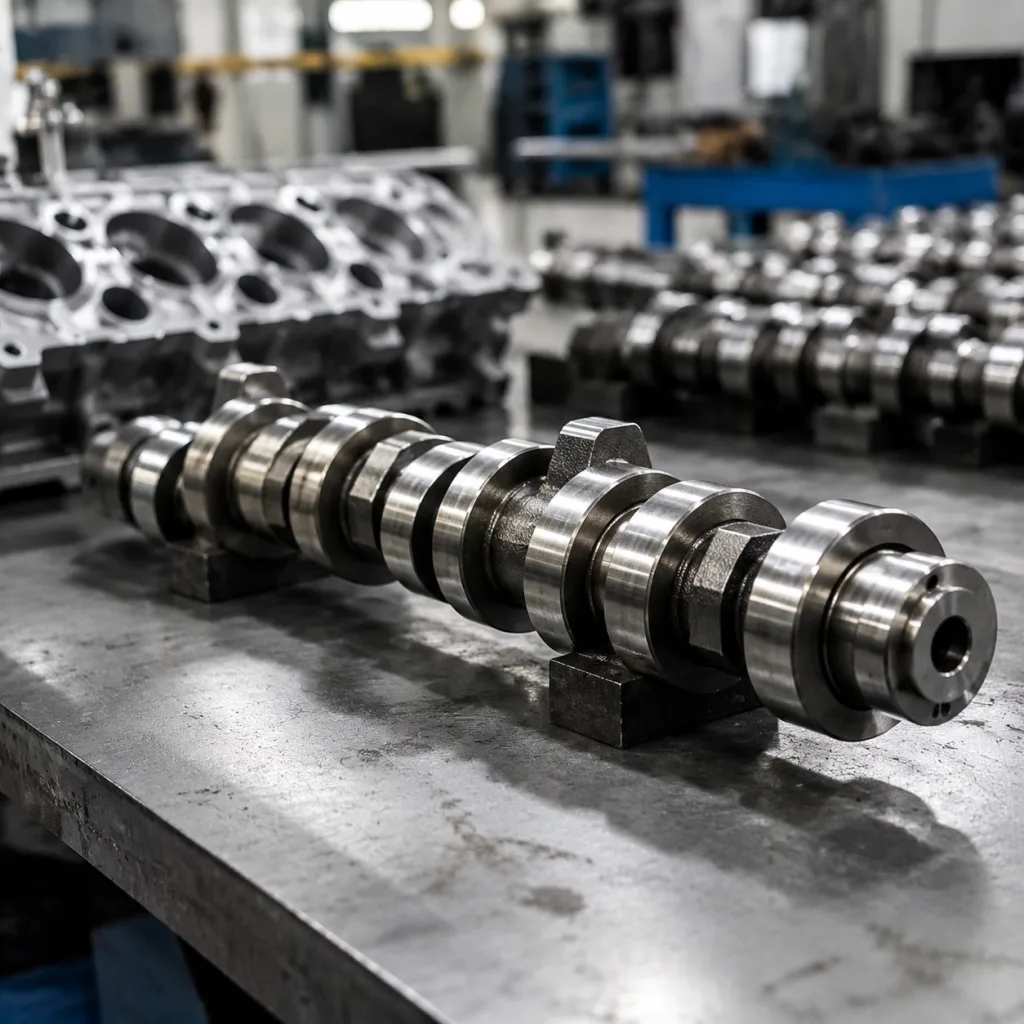
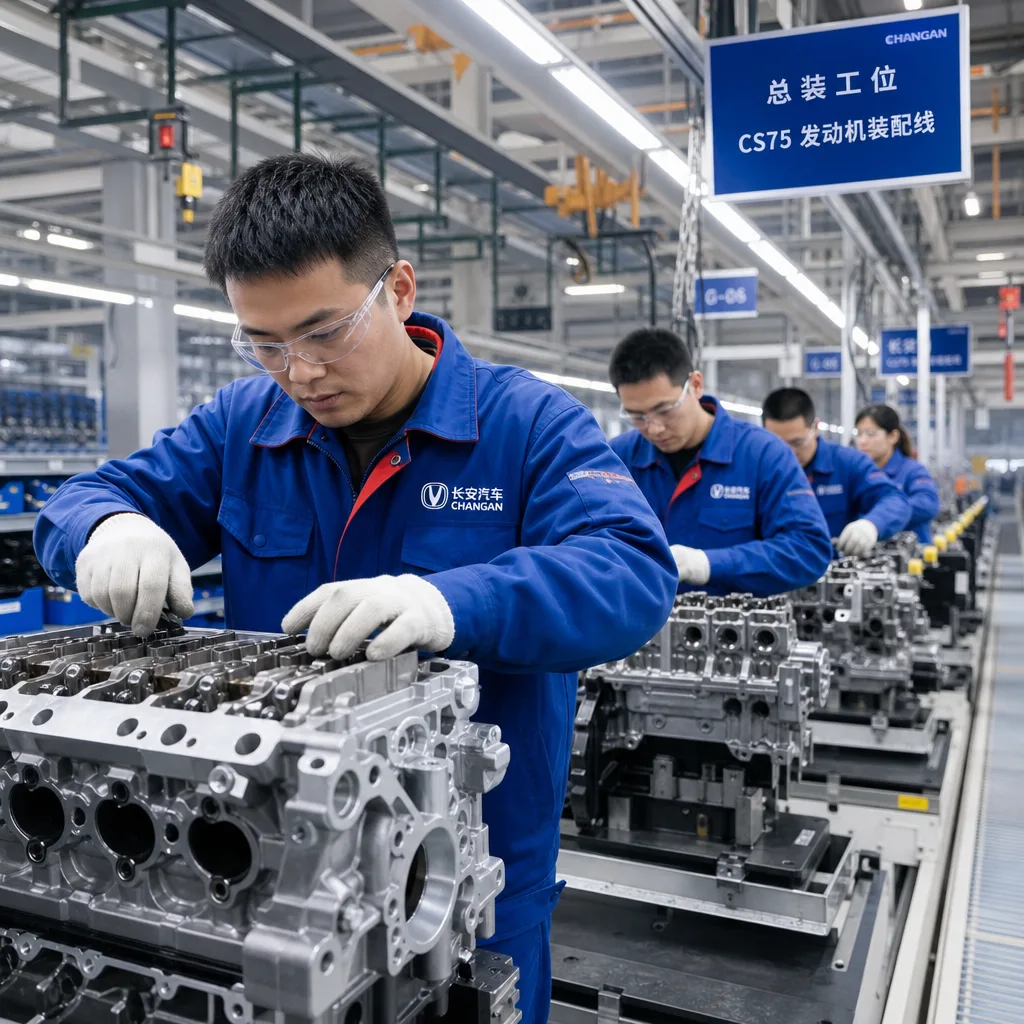
A crankshaft Nissan supplier should not be judged by price and part-number coverage alone. The real test is whether the supplier can hold journal geometry, control heat treatment, document inspection, protect parts through export logistics and resolve claims without disrupting your inventory plan. Distributors usually need coverage, MOQ flexibility, private-label packing, stable replenishment and clean cross-reference data. OEM, OES and Tier-1 buyers need a different operating model: APQP discipline, PPAP evidence, capability data, revision control and formal change notification. Driventus manufactures engine and powertrain components in Taizhou, Zhejiang, and supplies B2B customers in more than 60 countries. Crankshafts are produced alongside pistons, gaskets, water pumps, turbochargers and related engine parts, giving buyers a single export-capable source for broader engine repair ranges. Driventus is an independent aftermarket manufacturer; vehicle brand names are referenced for fitment identification only.
Start with the buying decision, not the quote
The first decision is not “Which crankshaft is cheapest?” It is “Which supplier can carry the risk profile of this programme?” A catalogue distributor order, a regional fleet repair line and a drawing-controlled development project do not need the same evidence package. Treating them as the same purchase is how small price savings turn into warranty debits, air-freight recovery, customs delays and customer chargebacks.
For Nissan-fit crankshaft sourcing, a low quote is only useful after the supplier proves control of the basics: metallurgy, runout, journal hardness, oil-hole finish, cross-reference accuracy and corrosion protection. If those controls are weak, the landed cost will rise after shipment.
A first-pass supplier screen should answer three questions:
1. Who owns the process? Is the company a direct manufacturer, a trading company or a mixed-source consolidator? Who is responsible when a claim appears? 2. What is the production route? Forged, cast or billet-based? Normalized, quenched and tempered, induction hardened, nitrided or another specified route? 3. What data exists from the last batch? Not a brochure. A recent inspection record with real dimensions, batch references and acceptance criteria.
If the supplier cannot explain the manufacturing sequence in order, the risk is usually too high for replenishment or project approval. For a Nissan-fit crankshaft, buyers should ask how the blank is produced, how heat treatment is controlled, whether final machining is run on dedicated CNC lines, and whether end-of-line inspection covers runout, main journal diameter, rod journal diameter, thrust face, flange or keyway features, and oil-hole condition.
Key verification points include:
Business model: direct manufacturer, trading company or mixed-source consolidator, with clear quality-claim responsibility.
Quality certification: current IATF 16949:2016 and ISO 9001:2015 certificates, with scope matching engine component production or relevant manufacturing processes.
Process ownership: forging or casting control, CNC machining, heat treatment coordination, grinding, balancing and final inspection.
Traceability: batch records linking raw material, heat treatment, machining route, operator or line data, and inspection results.
Export capability: cartons, anti-corrosion protection, palletisation, export labels and documents suitable for EU, UK, US, Canada, Australia and Brazil.
Part coverage: passenger car, light commercial and selected commercial engine references, supported by OE-style cross-reference data where applicable.
Application data discipline: fitment tables, engine codes, model years and interchange notes checked before publication or bulk ordering.
For procurement qualification, request at least one recent dimensional report covering main journals, rod journals, thrust face, flange face, total runout and oil-hole position. A practical aftermarket acceptance target often keeps total indicated runout in a low single-digit hundredths of a millimetre range, commonly 0.02-0.05 mm depending on application and bearing package. Journal diameter should stay within drawing tolerance. Journal surface roughness is normally specified in the low Ra micrometre range. Hardness targets should follow the base material and heat-treatment route, not assumptions copied from catalogue data.
Driventus supports catalogue-based sourcing through our catalog, including crankshafts and related engine components. Buyers consolidating engine repair lines can also review the wider engine component range at /products/engine-components.html.
Where crankshaft programmes usually fail
Crankshaft problems rarely start with one dramatic mistake. They usually come from small gaps in control: a journal ground near the edge of tolerance, a heat-treatment record that is not linked to the batch, a polished surface that looks acceptable but carries the wrong roughness, or an oil hole with a burr that was missed during final inspection. A serious crankshaft Nissan supplier should be able to show how these failure modes are prevented, detected and contained.
Crankshaft performance depends on material integrity, journal geometry, surface finish, heat treatment consistency and fatigue resistance. To compare suppliers fairly, define the evidence before quotation. This matters whether you are buying existing catalogue references, checking reverse-engineered samples or running a drawing-controlled project.
Typical control points for Nissan-fit crankshafts are:
Control item
Typical procurement requirement
Why it matters
Main journal diameter
Drawing-based tolerance, checked at multiple angular positions
Controls bearing oil clearance
Rod journal diameter
Drawing-based tolerance with roundness and taper checks
Reduces bearing wear and vibration risk
Runout
100% or sampling inspection depending on programme
Supports smooth rotation and assembly fit
Surface roughness
Measured after grinding and polishing
Affects oil film stability
Hardness
Verified after heat treatment or surface hardening
Supports wear resistance
Dynamic balance
Required for selected applications
Reduces NVH and bearing load
Oil-hole position and finish
Checked against drawing or approved sample
Maintains lubrication and reduces stress risers
Magnetic particle inspection
Applied where specified
Detects surface-breaking cracks
</tr></thead><tbody> </tbody></table>For higher-volume or project work, ask for the control plan, process flow diagram, gauge list, MSA status and capability data. Also agree the inspection frequency. Which dimensions are checked 100%? Which are first-off and last-off? Which are batch sampled? Which are treated as special characteristics?
Do not accept “inspection OK” as a report. Ask for the actual fields: lot number, inspector ID, measuring equipment, calibration date, readings by journal, rejection criteria and disposition of nonconforming parts.
Before placing a purchase order, confirm these process details:
Blank preparation: forging die family, casting route or billet source.
Heat treatment: normalizing, quenching and tempering, induction hardening, nitriding or other specified route.
Machining sequence: rough turning, finish turning, drilling, grinding, polishing, washing and final packing.
Critical gauges: micrometers, air gauges, CMM, roundness tester, hardness tester, balance machine and MPI equipment.
Rework policy: whether journal regrinding or correction is permitted, and under what conditions.
Nonconformance handling: containment time, root-cause method and replacement shipment trigger.
The most common procurement failure is approving a supplier from a clean sample and then receiving production without the same controls. Prevent that by linking sample approval to a frozen inspection plan, batch traceability and change-notice rules.
Driventus aligns manufacturing management with its quality system, including documented inspection stages and batch-level record retention. Where a buyer requires modified geometry, a material change, private-brand specification or application extension, the project should be handled through custom manufacturing rather than as a standard catalogue purchase.
Build the order around risk: sample, stock or programme
A useful ordering structure separates engineering risk from inventory risk. Trial orders, replenishment lots and annual supply agreements should not be managed as one transaction. Each stage needs different pricing logic, lead-time expectations and approval criteria.
Typical B2B ordering structure:
Sample or pilot order: dimensional confirmation, packaging review, application checking and market validation.
Initial commercial order: several references combined to test demand and reduce per-unit freight cost.
Scheduled replenishment: monthly or quarterly call-offs based on distributor sales velocity and minimum stock rules.
Lead time depends on raw material status, forging or casting availability, machining capacity, surface treatment, inspection workload and packing configuration. Catalogue references already in production planning normally move faster than newly developed parts. Custom crankshafts take longer because drawing review, tooling, sample production, validation and correction loops must be completed before release.
As a working planning range:
Stocked catalogue item: about 15-30 days after order confirmation.
Non-stock catalogue replenishment lot: about 30-45 days, depending on production queue and packing schedule.
New development or sample-to-production project: about 45-90 days to first approved sample, then another 15-30 days to production after release if no tooling or inspection changes are needed.
Buyers should provide an annual forecast, destination port, preferred Incoterms, packing requirements and mixed-container needs. MOQ is usually more flexible when crankshafts are ordered with related components such as pistons, gasket sets, oil pumps or water pumps, because production planning and export packing can be consolidated.
A realistic MOQ framework for catalogue programmes is often 20-50 pcs per reference for standard export runs. Private-label packaging or mixed-SKU orders may work better at 100-300 pcs across a range rather than high volume in one part number. Final MOQ should reflect the supplier’s batch size, carton configuration and whether the part is already in production.
Price should be compared by order scenario, not just by piece price. Request tiered quotations at sample, MOQ, one pallet, half-container and full-container levels. This shows whether the supplier’s price is based on production efficiency or on a one-off commercial offer. Also confirm whether export cartons, labeling, oiling, VCI bags and mixed loading are included or charged separately.
For distributors, classify references before ordering:
Fast movers: keep about 1.5-2.0 months of cover.
Slow movers: keep about 3-4 months of cover if they support range credibility.
Project-only or very low-volume items: avoid stock unless they are strategic coverage parts.
This classification lets the supplier recommend which parts should be stocked, produced to order or bundled into mixed shipments. It also prevents a common mistake: filling a container with attractive unit-price items that tie up cash but do not turn.
Document pack: what auditors and import teams will ask for
A crankshaft Nissan supplier serving regulated export markets should be ready for document review before purchase order release. Even when the product is not directly type-approved, procurement teams in the EU, UK, US, Canada, Australia and Brazil often need evidence for supplier onboarding, internal audits and customer tenders.
The document pack should match the buying route. A distributor stock order may not need full PPAP, but it still needs traceability, inspection evidence, packing standards and a claim process. An OEM or Tier-1 programme needs formal control of drawings, special characteristics, capability and change notification.
Common audit and compliance documents include:
Valid IATF 16949:2016 and ISO 9001:2015 certificates.
Company profile, manufacturing site details and process scope.
Process flow chart, PFMEA and control plan for project supply.
Material certificate and heat treatment record where specified.
Dimensional inspection report, hardness report and runout data.
Packaging specification and corrosion-prevention method.
REACH (EC) No 1907/2006 declaration where relevant to EU import requirements.
IMDS or material disclosure support when required by OEM or Tier-1 customers.
8D or corrective-action format for warranty and nonconformance handling.
For aftermarket distributors, a practical supplier file normally includes the purchase order, commercial invoice, packing list, batch identification, inspection summary and carton label standard. For higher-risk references, ask for one retained master sample and one sealed approved sample for receipt comparison.
For OEM and Tier-1 buyers, define PPAP submission level, drawing revision control, special characteristics, annual layout inspection and change-notification timing before development starts. For crankshafts, this normally includes dimensional layouts, material evidence, hardness and microstructure results where required, capability studies on critical journals, and a written definition of process change.
Examples of process changes that should trigger review include:
steel mill source change,
forging die revision,
heat-treatment parameter change,
grinding wheel or grinding process change,
critical gauge replacement,
production site transfer,
subcontracted process change.
Buyers should also ask whether the supplier can support:
Lot coding: unique batch identifier on part, label or carton.
Record retention: inspection and traceability files kept for at least 3-5 years, or longer if the customer contract requires it.
Containment response: replacement stock or sortation support within 24-72 hours for confirmed issues.
Change notice: written advance notice before any material, process, tooling or site change.
Driventus does not claim approval or endorsement by any vehicle manufacturer. Driventus is an independent aftermarket manufacturer; vehicle brand names are referenced for fitment identification only.
Compare suppliers by landed cost, not ex-works price
Two suppliers can quote the same crankshaft reference and produce very different financial outcomes. One price may exclude export cartons, anti-rust protection and label work. Another may include better inspection, stronger packing and faster claim response. The cheaper ex-works line is not always the cheaper delivered part.
A fair comparison includes both purchase cost and risk cost: defect rate, repacking labour, stockout exposure, urgent replacements, customer chargebacks and warranty administration.
A balanced sourcing scorecard can look like this:
Evaluation factor
Weighting suggestion
Evidence to request
Dimensional capability
25%
Inspection reports, CMM or gauge records, capability data
Metallurgy and heat treatment
20%
Material certificates, hardness reports, process records
Delivery reliability
15%
Lead-time history, capacity statement, production plan
Drop-test evidence if available, pallet photos, corrosion protection
Quality response
10%
8D format, claim timing, corrective action examples
Range coverage
5%
Cross-reference list, catalogue structure, application data
</tr></thead><tbody> </tbody></table>For Nissan-fit applications, cross-reference management needs discipline. OE-style references may be used for fitment comparison when applicable to a buyer’s database, but brand-owned references should not be presented as vehicle manufacturer approval. The quotation should state whether the part is built to catalogue specification, customer drawing or sample-based reverse engineering.
If the supplier has reverse-engineered an original part, ask how the benchmark was measured. Was geometry checked against an OEM sample, customer sample or reverse-engineered CAD model? Which features were verified? This matters because a crankshaft can fit the basic engine architecture and still fail on offset, counterweight mass, thrust width or oil-hole indexing.
For import managers, a useful quotation includes:
EXW and FOB options,
carton dimensions,
gross and net weight,
units per pallet,
HS code guidance,
production lead time,
sample cost,
MOQ by part number,
private-label packing cost where required.
If the quotation covers several engine component categories, confirm how mixed-SKU loading, pallet stability and label separation will be managed at shipment level.
A practical landed-cost review should include:
inland trucking to port,
export documentation fees,
container loading and palletisation cost,
marine freight and insurance,
duty and local handling,
expected defect rate and claim reserve.
In many real programmes, a supplier that reduces defect rate from 1.5% to 0.3% or cuts claim handling time from two weeks to 72 hours can save more than the apparent unit-price difference.
Catalogue supply or custom development? Use this split
The fastest route is not always the right route. Catalogue supply works when the buyer needs range coverage and repeatable replenishment. Custom development works when the buyer needs control over specification, validation and change management.
Catalogue supply is usually suitable when:
the part already exists in the supplier’s range,
the buyer is serving aftermarket distribution or repair-chain demand,
the priority is coverage, stable quality and export packing,
fitment data can be confirmed through engine code, model year and cross-reference checks,
the buyer does not need a unique drawing-controlled specification.
This route is faster and normally has lower development cost because the product specification, inspection approach and packing method are already established.
Custom development is more appropriate when:
the crankshaft is for a specific engine programme, regional application, remanufacturing line or fleet requirement,
the buyer has a private specification,
material grade, heat treatment, oil-hole design or counterweight geometry must be defined,
balancing, journal finish or inspection frequency needs to be controlled by contract,
PPAP, capability evidence or formal change control is required.
For custom crankshafts, the technical discussion should cover material grade, heat treatment, oil-hole design, counterweight geometry, balancing requirement, journal finish, inspection frequency, validation method and packaging endurance. For high-mileage or high-load service, buyers may also request torsional vibration considerations, fillet radius control and surface residual stress evidence where available.
A typical custom development workflow includes:
1. Buyer submits drawing, sample or target application data. 2. Driventus reviews feasibility, tooling need and inspection method. 3. Commercial terms, MOQ and validation plan are agreed. 4. Samples are produced with inspection records. 5. Buyer validates fit, assembly and performance. 6. Production release follows agreed revision and change-control rules.
At sample stage, define what approval means. A useful sample approval pack includes dimensional report, hardness report, runout reading, surface finish result, balance data where applicable, and photos of the marked part and packaging. If the sample is approved only for fit and not for mass-production release, write that into the commercial record.
This split prevents disputes. A catalogue crankshaft should not be treated as a fully validated OEM programme part unless the buyer has specified and approved that validation route. A custom project should not rely on catalogue assumptions; it needs defined drawings, inspection records, approval samples and change-control rules before recurring production starts. For long-term programmes, also define revalidation timing, such as annual dimensional audit, material recheck after any steel-source change, and first-article approval after tooling maintenance or process transfer.
Frequently asked questions
Provide the target application, engine code if available, OE-style cross-reference, annual volume, destination market, packaging requirement, preferred Incoterms and whether the order is for catalogue supply or custom development. Drawings or physical samples are needed for non-catalogue parts. For a clean commercial quote, also include target MOQ, required carton quantity, whether palletisation is needed, and whether you want EXW, FOB or CIF pricing.
Yes. Private-label cartons, neutral packaging and mixed-SKU export packing can be discussed for distributor programmes. Artwork, label format, barcode requirements, carton strength, corrosion protection and destination compliance should be confirmed before mass production. If needed, ask for label proofs, carton mock-ups and a packing specification before the first commercial order so the approved format is frozen before shipment.
No. Driventus manufactures independent aftermarket and custom engine components for fitment-based sourcing. It does not claim approval or endorsement by any vehicle manufacturer, and brand names are referenced for fitment identification only.
For MOQ, lead time, audit documents or a cross-reference review, send your sourcing list and target market details. You can [request a quote](/contact.html).