crankshaft · 2026-05-30

Crankshaft Mazda Supplier for B2B Sourcing

Buyers sourcing a Mazda crankshaft need more than a part number match. They need a supplier that can document material grade, machining control, balance requirements, surface finish, and batch traceability, then repeat that result across container loads and replenishment cycles. Driventus supports aftermarket, OEM, and Tier-1 purchasing teams with crankshaft programmes built around fitment verification, stable production planning, and export packaging for international delivery. We work from OE cross-references where available and confirm application data before release. Driventus is an independent aftermarket manufacturer; brand names are referenced for fitment only. For buyers building a shortlist, the priority is not only price. It is whether the factory can pass audit questions on process control, inspection records, certification, and change management without relying on vague claims. That is the standard this article uses.

What buyers need from a Mazda crankshaft supplier

A procurement team should treat a crankshaft as a controlled rotating component, not a simple forging. The supplier must be able to confirm application coverage, journal dimensions, fillet radii, heat treatment route, and final inspection method.

For Mazda programmes, that usually means checking:

  • Engine code and vehicle application before quoting
  • OE cross-reference, where the catalogue already cites one
  • Casting or forging route, depending on the part family
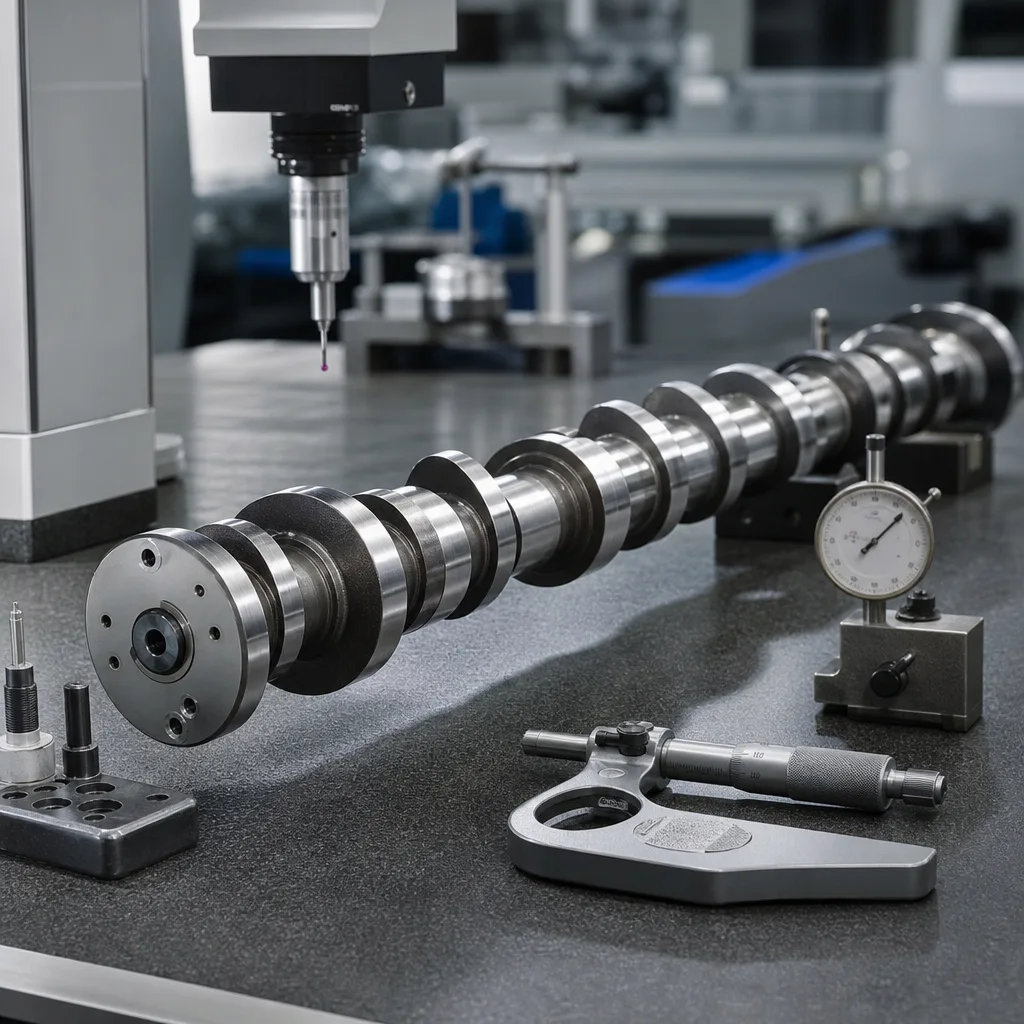
  • Machining capability for main journals, rod journals, oil holes, and thrust faces
  • Dynamic balance control and runout measurement
  • Packaging that prevents journal damage in transit

A useful starting point is our catalog and, for related powertrain items, engine components. Buyers who need a broader procurement view can also map adjacent parts such as bearings, gaskets, and water pumps into the same sourcing programme.

Specification checks before you issue a PO

Before purchase order release, buyers should confirm the technical and commercial record is complete. The list below is the minimum set we recommend for a crankshaft buy:

</tr></thead><tbody> </tbody></table>If the programme includes a new application or a private-label requirement, custom manufacturing is the route to use. That allows drawing review, sampling, PPAP-style documentation, and a controlled approval plan before mass production.

How Driventus controls production quality

A credible supplier should be able to explain how each step is controlled, not just say the line is automated. At Driventus, quality control starts with incoming material verification and continues through machining, cleaning, inspection, and packing.

Our quality framework is documented on the quality system page and is built around:

  • Process control points for critical dimensions
  • Batch traceability from incoming material to finished shipment
  • Inspection records for journals, keyways, and oil passages where relevant
  • Final verification for runout, balance, and surface condition
  • Corrective action tracking when a process drifts

Published standards matter because buyers need an audit trail. For engine components, customers commonly ask for evidence against IATF 16949:2016 and ISO 9001:2015, and in regulated markets they may also ask about chemical compliance against REACH (EC) No 1907/2006. If your internal supplier questionnaire requires additional testing, we can align the documentation package to the buyer’s format.

MOQ, lead time, and supply continuity

For crankshaft sourcing, the commercial model matters as much as the technical one. Buyers typically want a supplier that can support regular replenishment without long gaps between lots.

Practical planning points:

  • MOQ should reflect machining setup, heat treatment batch size, and packaging efficiency
  • Lead time should be discussed separately for sample parts and production lots
  • Forecast visibility helps stabilise raw material purchase and capacity booking
  • Container consolidation can reduce landed cost when crankshafts ship with related components
  • Change control should be written into the supply agreement so dimensional revisions are not made without approval

If you are consolidating multiple engine part lines, the same sourcing method can cover piston sets, cylinder head gaskets, water pumps, and turbocharger-adjacent components through one export programme. That reduces vendor count and simplifies inbound inspection.

Why factory audit questions should be specific

A supplier audit should test the process, not the brochure. Buyers evaluating a Mazda crankshaft source should ask direct questions:

1. Which dimensions are controlled as key characteristics? 2. How is balance verified, and what is the acceptance limit? 3. What is the heat-treatment verification method? 4. How are nonconforming parts segregated and recorded? 5. How long are traceability records retained? 6. What happens when a drawing revision is issued mid-contract?

These questions reveal whether the factory is structured for repeat business or only for one-off sales. For procurement teams in the EU, UK, US, Canada, Australia, and Brazil, that distinction affects warranty exposure, receiving inspection workload, and line stoppage risk. If you need direct sourcing support, request a quote and include the engine code, target annual volume, and any dimensional or packaging requirements.

Frequently asked questions

Yes, where the application is confirmed and the cross-reference is supported by our catalogue data. We verify fitment details before release and do not claim vehicle manufacturer approval.

Typical files include product specification, inspection data, traceability information, and quality certifications. Additional documents can be aligned to customer audit requirements and market rules.

Yes. Custom packaging, labeling, and programme-specific documentation can be managed through our OEM workflow when the purchase volume and approval plan justify it.

If you are building a qualified Mazda crankshaft supply list, send the engine code, annual volume, and target market details through [request a quote](/contact.html) so we can confirm fitment and commercial terms.

Request a Quote
Checkpoint What to confirm Why it matters
ApplicationEngine family, OE cross-reference, and revision levelPrevents misfit across similar Mazda engines
MaterialSteel or cast route, heat treatment condition, hardness rangeAffects fatigue resistance and machining stability
GeometryJournal diameter, stroke, fillet radius, oil passage layoutControls bearing life and assembly clearance
Quality dataRunout, balance, surface finish, inspection recordsReduces vibration and field returns
PackagingRust prevention, end protection, carton strengthProtects finished journals during export
ComplianceIATF 16949:2016, ISO 9001:2015, REACH (EC) No 1907/2006 where applicableSupports supplier approval and customer audits