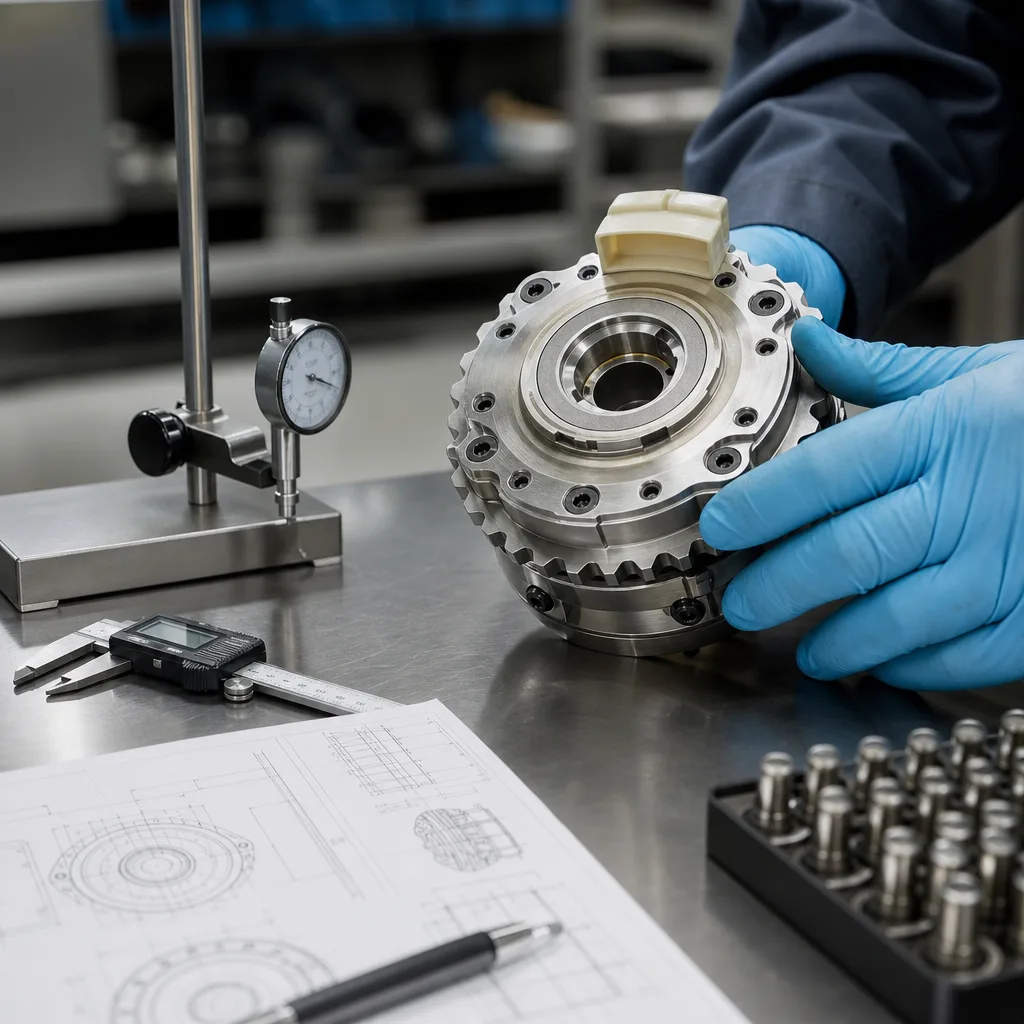
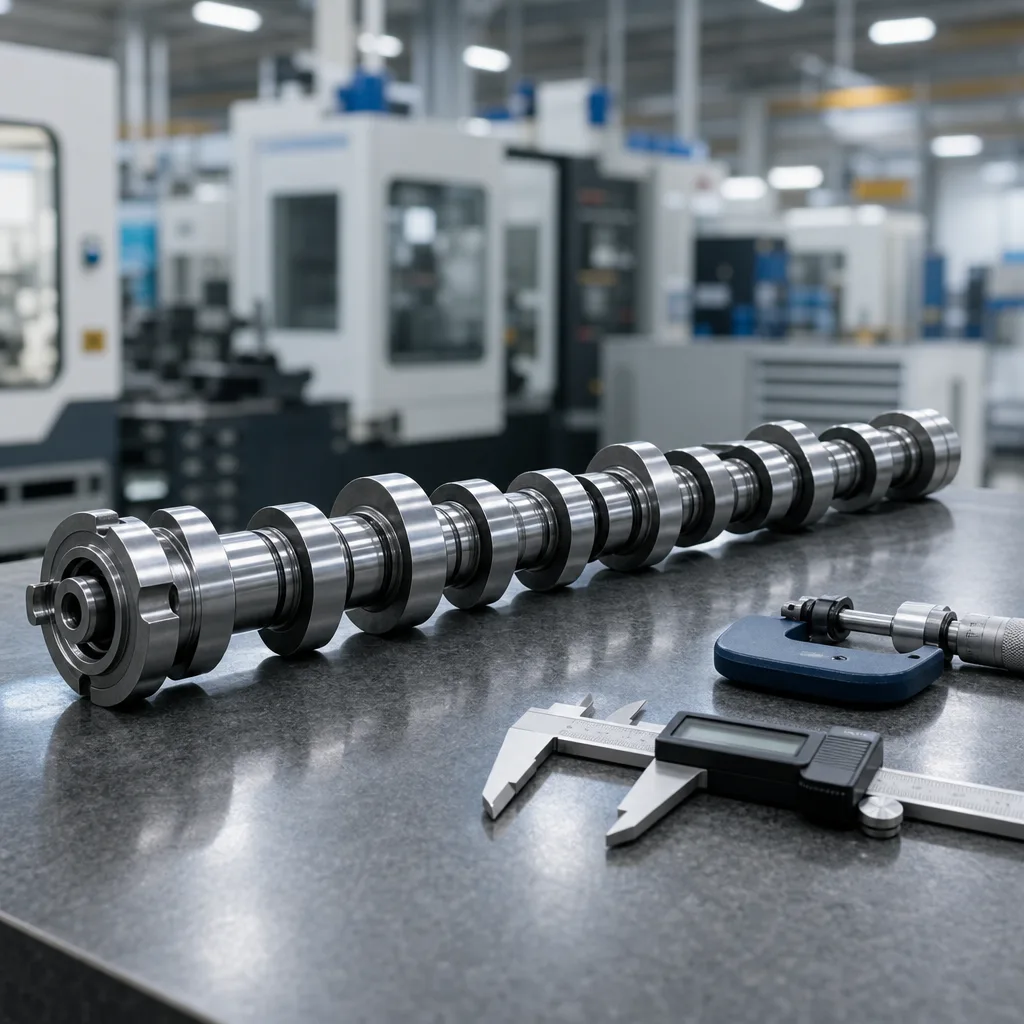
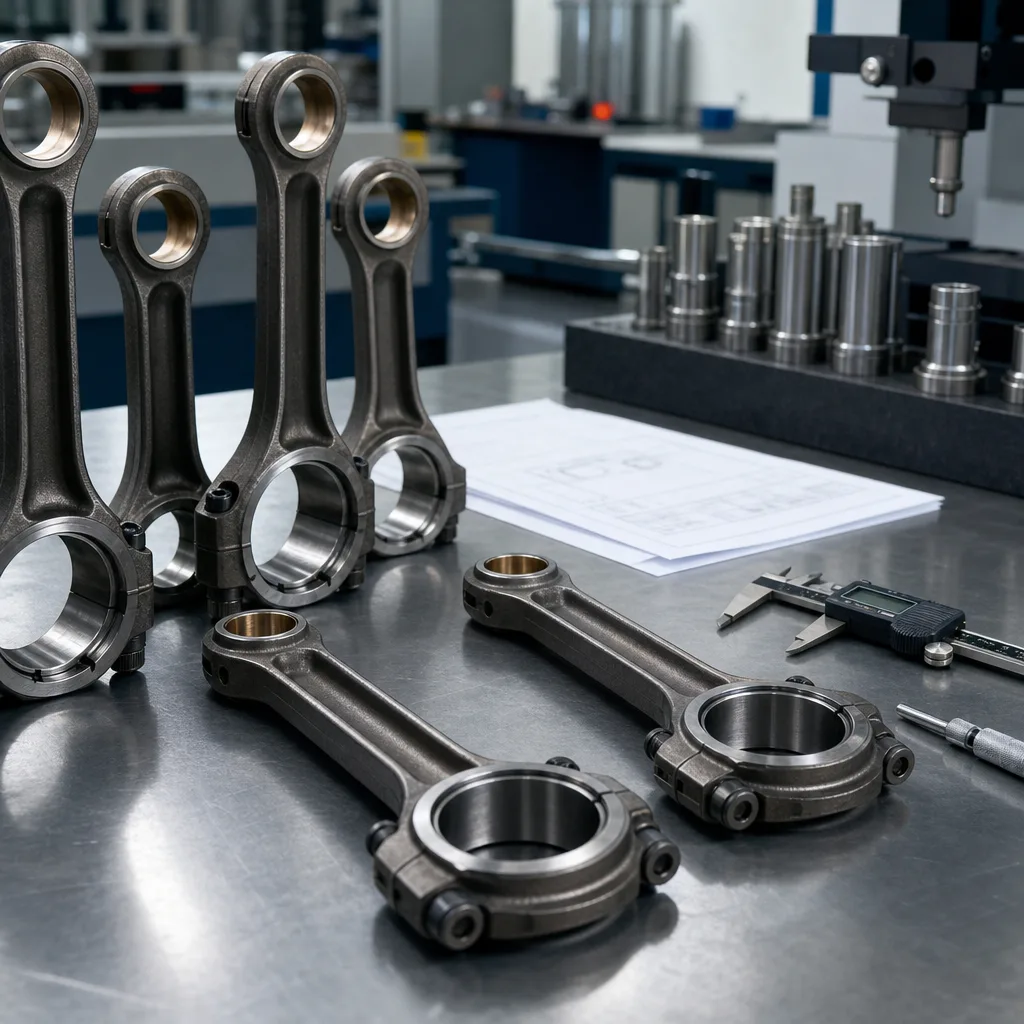
For procurement teams sourcing a crankshaft Chevrolet OEM supplier, the main requirements are dimensional consistency, traceable materials, and controlled delivery. Chevrolet applications span passenger cars, light trucks, and commercial engines, so buyers need a supplier that can manage OE cross-references, machining accuracy, and validation at batch level. Driventus is an independent aftermarket manufacturer; brand names are referenced for fitment only. We manufacture engine and powertrain components in Taizhou, Zhejiang, and supply B2B customers in more than 60 countries with IATF 16949:2016 and ISO 9001:2015 systems in place. This matters when you are comparing vendors on PPAP support, inspection data, and lead-time reliability. The right source should be able to quote by OE 06A107065-style reference where applicable, confirm material and heat treatment, and support repeat orders without dimensional drift.
What procurement teams should verify first
When sourcing a crankshaft Chevrolet OEM supplier, start with the part definition and the control plan, not the price. Confirm engine family, journal sizes, stroke, counterweight design, thrust location, and whether the part is forged or cast. For aftermarket and OE-aligned programs, the supplier should also confirm balancing grade, fillet radius, surface hardness, and finish on the main and rod journals.
Minimum data to request:
OE reference or application code, such as OE 06A107065 where applicable
Material spec and heat-treatment route
Journal diameters, taper, and roundness limits
Straightness, concentricity, and runout report
Packaging method and anti-corrosion protection
Sampling plan and final inspection records
A supplier that cannot provide these items is not suitable for a regulated buying process. If you need a broader view of available engine components, review our catalog and the engine range in our products/engine-components.html.
Comparison of sourcing options
Procurement teams usually choose between direct factory sourcing, trading-company sourcing, and local inventory distributors. The trade-offs are cost, technical control, and lead time.
Sourcing route
Technical control
MOQ
Lead time
Best fit
Direct factory
High
Medium to high
Stable, schedule-driven
OEM and Tier-1 buyers
Trading company
Medium
Low to medium
Variable
Mixed-line importers
Local distributor
Low to medium
Low
Fast
Urgent replacement demand
</tr></thead><tbody> </tbody></table>Direct factory sourcing gives better control over process capability, inspection documents, and engineering changes. It also reduces the risk of mismatched OE references when you are managing multiple Chevrolet applications. For buyers that need part-number reconciliation, a supplier should maintain controlled documentation and revision tracking under a defined quality system.
Manufacturing controls that reduce claim risk
A crankshaft is a rotating fatigue-critical part. Failures usually start with poor metallurgy, inconsistent machining, or inadequate dynamic balancing. Buyers should ask how the supplier controls these variables at scale.
Key process controls
1. Material verification: chemistry check against the approved grade before machining. 2. Rough machining: controlled stock allowance to protect final geometry. 3. Heat treatment: hardness and depth verification after process completion. 4. Finish grinding: journal size, ovality, and taper held within the approved tolerance band. 5. Dynamic balancing: measured to the application requirement before packing. 6. Final inspection: 100% visual check plus sampled dimensional audit.
For export buyers, REACH (EC) No 1907/2006 compliance matters for restricted substances in coatings, oils, and packaging materials. For validation in certain markets, ask for test references aligned with SAE J2527 for corrosion-related exposure where relevant, and confirm that any emissions-adjacent application requirements are handled according to the vehicle programme, not assumed by the supplier.
MOQ, lead time, and repeat-order planning
Supplier selection is not only technical. It is also a planning exercise. For Chevrolet crankshaft programmes, MOQ should match your demand curve and warehouse strategy. If the MOQ is too high, inventory risk increases. If it is too low, the supplier may not be able to hold process efficiency or material allocation.
Typical points to confirm before placing an order:
Standard MOQ by part number and by machining family
Tooling ownership and amortisation terms
Forecast window required for raw material purchase
Standard lead time for first order and repeat order
Packing quantity per carton and pallet
Incoterms and export documentation scope
Buyers with multi-country demand should also confirm whether the supplier can support staggered shipment dates and consolidated packing lists. Stable export execution is often more valuable than a slightly lower unit price.
Why certification and auditability matter
For sourcing engineers and category buyers, certification is a screening tool, not a substitute for product validation. IATF 16949:2016 and ISO 9001:2015 indicate that the factory operates with documented process control, corrective action discipline, and traceability procedures. That supports repeatability when you are buying a crankshaft Chevrolet OEM supplier relationship rather than a one-time shipment.
Audit topics should include:
Incoming material control
Gauge calibration status
Nonconformance segregation
Final release authority
Traceability to heat number or batch number
Corrective action closure time
If your programme requires engineering changes, drawing revisions, or private-label packaging, use custom manufacturing only after the base part has passed dimensional and functional review. Driventus is an independent aftermarket manufacturer; brand names are referenced for fitment only.
How Driventus supports Chevrolet crankshaft sourcing
Driventus manufactures crankshafts and related engine components in Taizhou, Zhejiang, with export experience across 60+ countries. For B2B buyers, the practical value is controlled production, clear technical communication, and consistent repeat orders.
We support procurement teams with:
OE reference matching by application
Batch traceability and inspection records
Packaging for ocean and air freight
Engineering review for dimensional compatibility
Private-label and export documentation support
If you are comparing suppliers, ask for sample data before you commit to volume. We can quote by application, review drawing requirements, and align the part to your market. Start with request a quote if you need pricing, lead time, or technical confirmation.
Frequently asked questions
Yes, where an OE reference is provided in the enquiry, we can cross-check fitment and production feasibility. We do not claim vehicle manufacturer approval. Brand names are used for fitment only.
Ask for material confirmation, dimensional inspection results, hardness data, traceability records, and certification to IATF 16949:2016 or ISO 9001:2015 where applicable. For regulated markets, also request relevant compliance statements.
Yes. We support custom manufacturing and packaging for B2B orders, subject to part validation and order terms. Share your drawing, target market, and forecast to begin the review.
If you are comparing suppliers or planning a new sourcing programme, send your OE reference, target quantity, and delivery window. We will review fitment and commercial terms with you at /contact.html.