connecting rod · 2026-06-10

Connecting Rod Jeep Supplier for B2B Sourcing

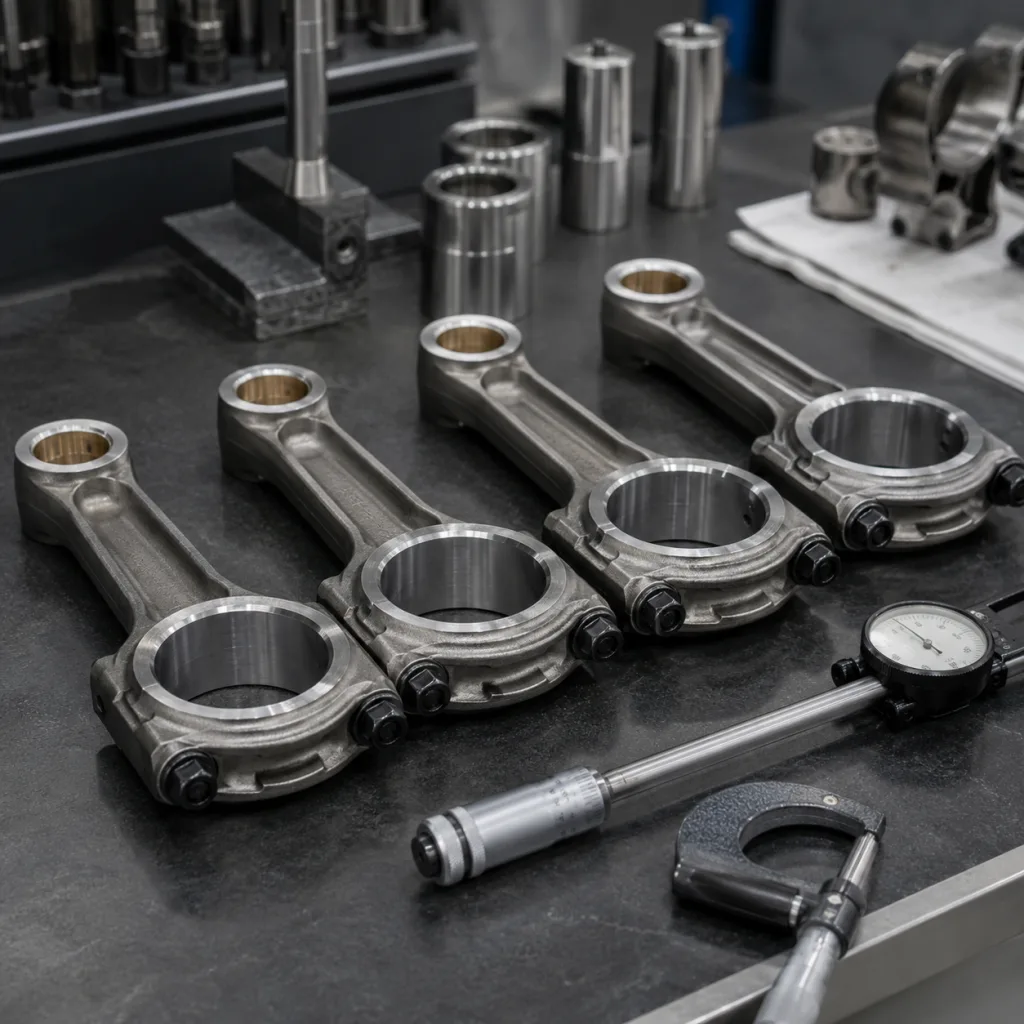
A connecting rod Jeep supplier is judged on more than catalogue fitment. For distributors, Tier-1 buyers and repair-chain procurement teams, the critical questions are whether the rod geometry matches the target engine family, whether material and heat treatment are controlled, whether inspection records are traceable, and whether repeat shipments hold dimensional consistency. Driventus manufactures engine and powertrain components in Taizhou, Zhejiang, with export supply to more than 60 countries. For Jeep-fitment connecting rods, we support aftermarket sourcing programmes, private-label distribution and engineered-to-sample projects where buyers need controlled drawings, batch inspection and packaging suitable for long-distance freight. Driventus is an independent aftermarket manufacturer; brand names are referenced for fitment only.

Sourcing Scope for Jeep-Fitment Connecting Rods

Procurement teams usually source connecting rods in three ways: direct replacement rods for established engine applications, complete piston and rod service kits, or custom-manufactured rods based on buyer drawings and sample parts. Driventus supports all three routes through standard product supply, our catalog, and project-based custom manufacturing.

For Jeep-fitment applications, sourcing should begin with the engine family, bore and stroke programme, big-end housing diameter, small-end pin diameter, centre-to-centre length, bolt specification and bearing interface. Vehicle model names alone are not enough for procurement because the same nameplate can use different engines across regions and production years.

Typical commercial supply formats include:

  • Single connecting rods for repair-market distribution
  • Matched sets packed by engine quantity
  • Rod and piston assemblies where pin fitment is controlled
  • Buyer-branded packaging with neutral export cartons
  • Sample-based development for discontinued or regional applications

Where the buyer provides an OE part-number cross-reference, it should be treated as a fitment reference and verified against measured dimensions. Generic references such as OE 06A107065 or OE 11251… must not replace drawing-level confirmation.

Manufacturing Controls Buyers Should Audit

A sourcing audit for connecting rods should cover process capability, material traceability and inspection discipline. Connecting rods operate under cyclic tensile and compressive loads, so inconsistency in forging, machining or heat treatment can create field failures even when initial dimensions appear correct.

Driventus operates under IATF 16949:2016 and ISO 9001:2015 frameworks. Buyers can review our quality system for information on manufacturing controls, incoming inspection, process records and corrective action discipline.

</tr></thead><tbody> </tbody></table>For higher-volume programmes, buyers may request PPAP-style documentation, control plans and initial sample inspection reports. The exact package should be agreed before tooling, sampling or mass production.

Technical Specification Points for RFQ Files

A clear RFQ reduces sampling loops and prevents disputes after delivery. For a connecting rod Jeep supplier, the buyer’s file should include both fitment data and measurable engineering requirements. If a drawing is not available, a physical sample set can be measured and digitised, but final approval should still be based on confirmed dimensions.

Recommended RFQ data:

  • Engine code or engine family, with market and production year range
  • Required quantity per set and annual forecast
  • Centre-to-centre length tolerance requirement
  • Big-end bore diameter and housing width
  • Small-end bore or bush inner diameter
  • Wrist-pin type: press-fit, floating pin or bushed design
  • Bolt thread, bolt grade and torque or angle-tightening requirement if specified
  • Material requirement, such as forged steel grade or buyer-approved equivalent
  • Hardness range and heat-treatment requirement
  • Surface finish, shot-peening or balancing requirements
  • Packaging format, barcode label and carton weight limit
  • Compliance requirements for destination market

For export programmes into the EU, UK or North America, buyers may also require declarations related to REACH (EC) No 1907/2006 for substances of concern in materials, coatings or packaging. Exhaust and emissions standards such as ECE R-83 may be relevant to vehicle compliance programmes, but they do not define connecting rod dimensions. They should not be used as a substitute for component drawings.

MOQ, Lead Time and Sampling Expectations

MOQ depends on whether the rod is already in production, requires tooling, or requires a new machining fixture. Existing aftermarket applications usually have the shortest lead time because blanks, inspection gauges and packaging formats are already defined. New or low-volume Jeep-fitment rods require more engineering confirmation.

Audit area What procurement should verify Typical record
Raw materialSteel grade, mill certificate, batch identityMaterial certificate and incoming inspection report
Forging or blank preparationGrain flow, flash removal, visual defectsProcess sheet and batch traveller
Heat treatmentHardness range, furnace control, quench recordsHeat-treatment chart and hardness report
MachiningBig-end bore, small-end bore, centre distance, side widthDimensional inspection report
Surface treatmentShot peening, cleaning, corrosion protectionProcess confirmation and appearance check
Final releaseBatch sampling, packaging, label traceabilityOutgoing inspection report

</tr></thead><tbody> </tbody></table>For new projects, buyers should allow time for sample production, dimensional approval and any required fitment trial. A practical sequence is RFQ review, drawing or sample confirmation, quotation, sample order, inspection report, buyer approval, pilot lot and then repeat production. For regular distributors, forecast sharing improves material planning and reduces emergency freight cost.

Driventus can provide commercial terms for mixed engine-component orders where connecting rods are purchased alongside pistons, gaskets, water pumps or other parts listed under engine components.

Quality Validation and Shipment Documentation

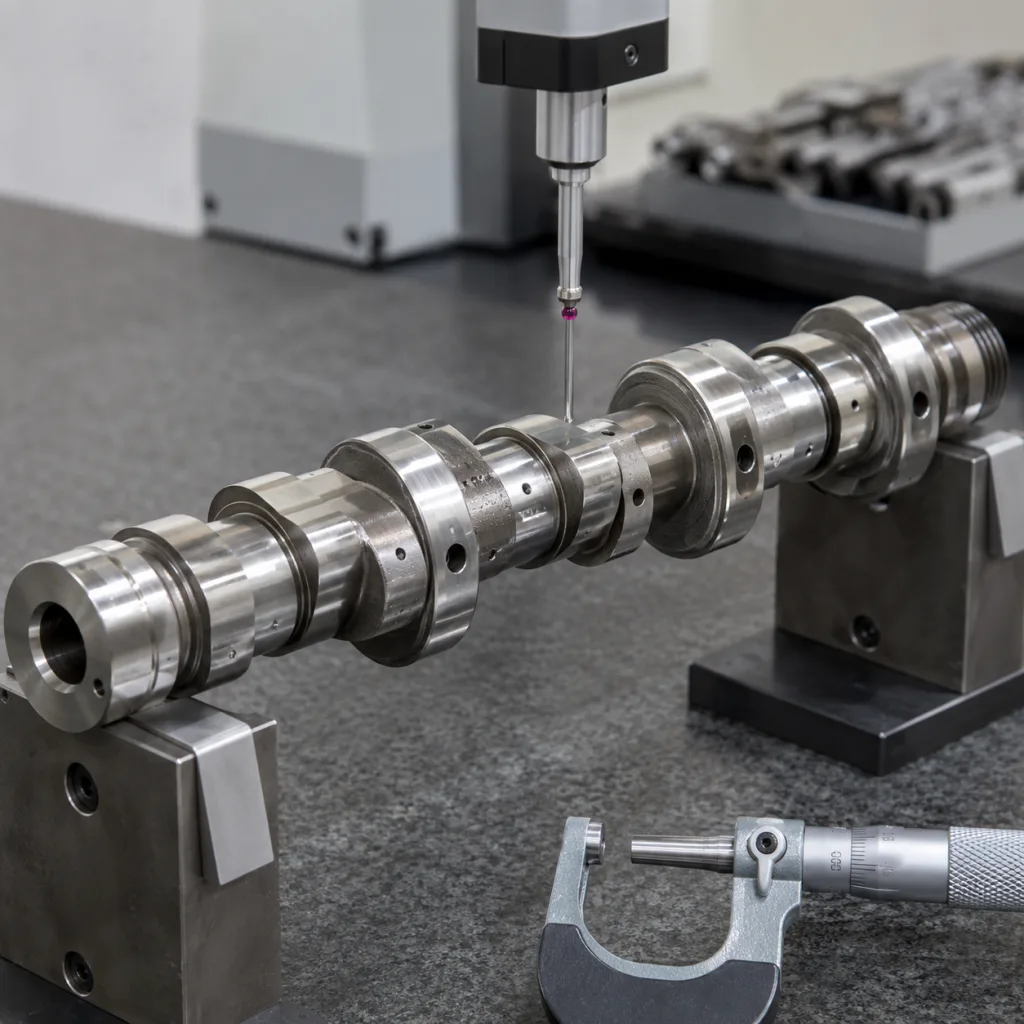
Connecting rod validation should be matched to programme risk. A repair-market replenishment order for a mature part may require batch dimensional inspection and hardness confirmation. A new engineered part may require expanded validation, including material confirmation, torque retention checks, bore roundness after cap assembly, weight matching and fatigue-related evaluation where specified by the buyer.

Common shipment documentation includes:

  • Commercial invoice and packing list
  • Certificate of origin when required by the destination market
  • Material certificate or declaration based on agreed scope
  • Outgoing inspection report with batch traceability
  • Packaging photos before shipment
  • Buyer label or carton marking confirmation
  • Corrective action report if any deviation was agreed and closed

For brake-related products, SAE J2527 is often referenced for friction performance testing, but it is not a connecting rod standard. Procurement teams should use standards only where they apply directly to the product or to the quality-management system. For rods, drawing control, material records, heat-treatment evidence and dimensional inspection are usually more relevant than unrelated vehicle-system standards.

Driventus does not claim approval or endorsement by any vehicle manufacturer. Fitment references are used only to identify aftermarket compatibility.

How to Compare Suppliers Before Award

A price comparison should be tied to engineering evidence. A low unit price has limited value if the supplier cannot document material, repeat dimensions or export packing quality. Buyers should compare quotations on a like-for-like basis, including tooling, samples, inspection reports, packaging, payment terms, incoterms and expected annual call-off volume.

A practical supplier scorecard can include:

  • Certification: IATF 16949:2016 and ISO 9001:2015 status
  • Process ownership: forging, machining, heat treatment and inspection control
  • Traceability: batch records linked to material and production dates
  • Engineering support: drawing review, reverse measurement and sample reports
  • Export experience: documentation for EU, UK, US, Canada, Australia and Brazil
  • Commercial reliability: MOQ clarity, lead-time discipline and claim response
  • Communication: technical replies in measurable terms, not generic assurances

When buyers need a connecting rod Jeep supplier for a multi-country aftermarket programme, the most stable results usually come from early specification alignment. Provide target applications, sample photos, annual volume estimate, destination markets and packaging requirements. Driventus can then confirm whether the programme fits existing production, modified machining or a new development route.

Frequently asked questions

Yes. Driventus supports buyer-branded packaging, neutral cartons and distributor label requirements where artwork, barcode rules and destination-market requirements are confirmed before production.

Depending on the order scope, Driventus can provide inspection reports, material certificates, packing records, origin documents and quality-system information aligned with IATF 16949:2016 and ISO 9001:2015.

Yes. Sample-based development is possible, but dimensions, material, heat treatment and acceptance criteria must be confirmed before production approval.

For RFQ review, send engine application details, drawings or samples, annual volume and packaging requirements. Driventus can confirm the suitable supply route through [request a quote](/contact.html).

Request a Quote
Supply scenario Typical MOQ factor Lead-time driver Procurement note
Existing catalogue rodLowerStock position and packing scheduleBest for distributor replenishment
Existing blank, new machiningMediumFixture setup and first-article inspectionUseful for regional engine variants
New forged rodHigherTooling, sample approval and validationSuitable for planned programmes
Private-label setMediumLabel, carton and pallet specificationConfirm artwork and barcode rules early