connecting rod · 2026-05-31

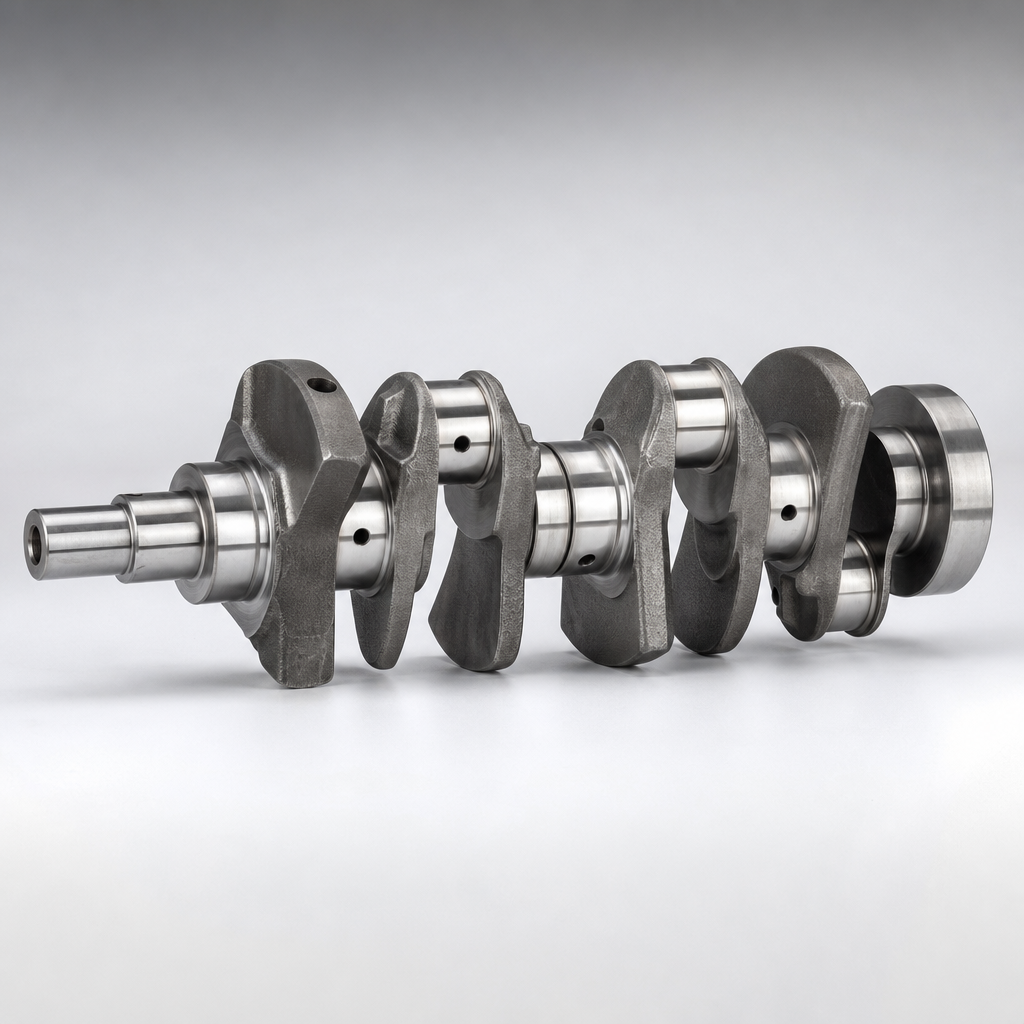
Connecting Rod for Iveco Eurocargo OE Equivalent

A connecting rod for Iveco Eurocargo engines must match the original component where it counts: centre-to-centre length, big-end housing bore, small-end bush geometry, piston-pin fit, rod weight class, and bolt clamp specification. For anyone replacing a worn or failed rod, the issue is not the badge on the box. It is whether the part will assemble cleanly, hold the specified bearing oil clearance, and withstand the same medium-duty diesel load cycle as the original service component.

Driventus supplies OE-equivalent parts for diesel engine rebuilds, fleet maintenance, distributor stock, and export aftermarket programmes. Driventus is an independent aftermarket manufacturer; brand names are referenced for fitment only.

For procurement teams, sourcing a connecting rod for Iveco Eurocargo OE equivalent applications means checking the drawing envelope, material route, machining controls, fastener data, and batch records before the part reaches the rebuild bench. A well-specified replacement reduces receiving-inspection uncertainty, supports repeat ordering, and gives technicians a rod that behaves as expected during torque-up, rotation checks, and first run-in.

What OE-Equivalent Means on This Part

For a medium-duty diesel engine, OE-equivalent has to mean more than a visual match or a catalogue cross-reference. The rod must fit the crank pin and piston pin without forcing the builder into non-standard bearing shells, line honing, pin-bush rework, or selective assembly outside the repair manual. Once installed with the intended piston, pin, bolts, and shells, it also has to maintain bearing crush, specified oil clearance, cap alignment, side clearance, and rotating mass balance.

On a connecting rod for Iveco Eurocargo OE equivalent use, the meaningful comparison is with the functional design of the original part. The replacement must reproduce the dimensions that transfer combustion load from piston to crankshaft, and it must use a compatible fastener system to keep the big end closed under repeated acceleration, deceleration, and firing loads. A rod may look similar and still be wrong. Differences in cap register, bolt seating face, small-end bush specification, oil-hole orientation, or weight class can lead to knock, bearing distress, uneven cylinder loading, or early fatigue.

In practice, buyers should confirm:

  • Centre-to-centre length against the engine drawing or validated sample
  • Big-end housing bore after cap torque, including roundness and taper
  • Small-end bore or bush inside diameter after finish sizing
  • Bearing shell width, tang location, side clearance, and crush condition
  • Small-end bush material, oil-hole position, and piston-pin fit where applicable
  • Rod cap split-face condition, register quality, and cap-to-rod matching marks
  • Fastener type, thread form, under-head radius, seating face, and clamp-load requirement
  • Rod total mass, big-end mass, small-end mass, and balance spread within the set
  • Surface finish at bearing bores, thrust faces, bolt seats, and machined transitions
  • Batch marking method and traceability back to inspection records

The aim is predictable assembly. When the replacement rod matches the drawing envelope and the validated manufacturing route, it can work as a direct service part for rebuilds, depot stock, and distributor supply. Normal engine checks still apply: technicians should verify clearances with plastigauge or micrometers and follow the correct torque procedure. The difference is that the rod itself is no longer an avoidable variable in the rebuild. For a wider view of the product family, see our catalog and engine components.

Fitment Checks Before You Place the Order

A correct listing is useful, but it is not the full check. Two Eurocargo engines can share the same family name and still differ by build date, emissions package, piston compression height, crankshaft journal specification, or connecting-rod revision. Before purchase, verify the engine code, serial range, vehicle application, and the removed part whenever it is reliable enough to measure. This is especially important for fleets with mixed rebuild histories, imported vehicles, or engines that have already received non-original service parts.

Start with identification, then move to measurement. Record the engine code, any visible casting or forging marks, the part number on the removed rod if present, and the bearing shell references used in the engine. Also decide whether the rod is being replaced as a single service item, as a cylinder set, or as part of a complete rotating-assembly overhaul. Replacing only one rod may be possible, but mass class and dimensional match need close control so the engine does not leave the shop with avoidable imbalance or inconsistent cylinder-to-cylinder piston protrusion.

Minimum checks

1. Measure the rod centre distance and compare it with the service dimension. 2. Measure big-end housing bore with bolts torqued to the specified procedure. 3. Check small-end bore or finished bush inside diameter after cleaning. 4. Confirm bearing shell width, tang position, and standard or undersize crank journal status. 5. Confirm whether the application uses a pressed or finished small-end bush. 6. Check oil-hole position, bush orientation, and piston-pin clearance. 7. Record bolt length, head style, thread form, shank type, and tightening method. 8. Confirm whether bolts are reusable or torque-to-yield service items. 9. Weigh the rod and, where required, compare big-end and small-end mass against the rest of the set. 10. Inspect for twist, bend, heat discolouration, fretting at the cap joint, and crushed bearing tang areas. 11. Check crankshaft journal size, journal roundness, and bearing undersize or oversize status. 12. Confirm piston compression height and pin diameter before final approval.

If the engine has already failed, treat the damaged rod with caution as a reference. A seized bearing, hydraulic lock, overspeed event, or lubrication failure can distort the big end and make the measurement misleading. Use the service manual, piston protrusion data, crankshaft journal size, and bearing shell specification together. That is the safest way to avoid ordering a rod that assembles, but fails to hold the correct oil film after the first heat cycle.

Materials, Process, and Inspection

An OE-equivalent rod needs a controlled material route and repeatable machining. The exact alloy, forging method, and heat treatment depend on the engine design, but buyers should expect documented process control rather than a broad claim of strength. Connecting rods operate under alternating tensile and compressive loads, so fatigue performance depends on steel cleanliness, grain flow, heat-treatment consistency, shot-peening or surface conditioning where specified, machining accuracy, and the avoidance of sharp stress transitions.

For a connecting rod for Iveco Eurocargo OE equivalent replacement, procurement teams should look past the headline material grade. A capable supplier should be able to explain how forgings are controlled, how caps are machined and matched, how big-end and small-end bores are finished, how bolt holes are controlled, and how parts are protected after inspection. Small variations in bore roundness, cap seating, side-face parallelism, or bolt clamp load can shorten bearing life even when the basic steel grade is acceptable.

</tr></thead><tbody> </tbody></table>Inspection should combine dimensional and visual checks. Common control points include centre distance, big-end housing bore after torque, small-end bore, bore roundness and taper, parallelism, twist, bend, side-face finish, bolt-hole condition, bush oil-hole alignment, and marking legibility. For matched sets, the supplier should also control weight spread and keep rods grouped through packing, so the receiving team does not have to rebuild the set from loose stock.

At Driventus, production controls are aligned with IATF 16949:2016 and ISO 9001:2015, and material documentation can support REACH (EC) No 1907/2006 requests where applicable. This matters for distributors, repair chains, and fleet workshops that need a stable approval file, not just a usable part. It also makes repeat orders easier because the same technical requirements can be referenced by batch, specification, drawing revision, and inspection record.

How Buyers Compare Replacement Options

Most sourcing decisions come down to three routes: a direct OE-equivalent part, a generic aftermarket rod, or a custom-built piece for a specific fleet or channel requirement. Each can be valid, but each carries a different level of verification work, stock risk, and rebuild labour. The right choice depends on whether the engine is standard, how much documentation the buyer needs, and whether the order is for an urgent repair, distributor inventory, or a private-label programme.

  • OE-equivalent: best when the engine is standard, the BOM is known, and the buyer needs low rework risk with repeatable fitment.
  • Generic aftermarket: useful for price-driven channels, but only if dimensional control, fastener data, bush specification, and balance information are available.
  • Custom manufacturing: appropriate when a fleet has mixed revisions, a private-label requirement, a special packaging spec, a defined inspection report, or a consolidated kit programme.

For procurement teams, the lowest unit price is not always the lowest landed cost. Extra bearing selection, balancing time, pin-bush correction, assembly delays, or field returns can quickly erase the saving. A direct-fit part reduces work at the rebuild bench and lowers the risk of an avoidable comeback. It also simplifies receiving inspection because the buyer can compare the same control points on every shipment instead of reopening dimensional questions with each batch.

A useful comparison should cover total cost, not only purchase price. Check whether the supplier can hold repeatable lead times, provide dimensional inspection records, pack rods as matched sets, maintain consistent laser or stamped marking, and support claims with traceability. For export distributors, packaging strength and corrosion protection also matter because parts may spend time in sea freight, bonded warehouses, and regional stockrooms before installation.

If you need a standard connecting rod for Iveco Eurocargo OE equivalent service, a controlled catalogue part is usually the cleanest route. If you need a non-standard drawing, private-label packaging, a special inspection report, a defined weight-matching range, or a bundled engine repair kit, custom manufacturing is the better route because the technical and commercial requirements can be approved together before production.

Sourcing Notes for Distributors and Rebuilders

Distributors usually need stable lead times, clear paperwork, and enough consistency to protect repeat orders. Rebuilders need matched parts that behave the same way from one job to the next. For both groups, sourcing should be built around inspection data, packing control, and a defined reorder specification. A connecting rod is not a cosmetic inventory item; it is a load-bearing engine component that has to arrive clean, protected, identifiable, and ready for controlled assembly.

For distributors, the ordering file should define the application, accepted part reference, packing quantity, marking method, corrosion protection, carton label, pallet format, and documents required at shipment. For rebuilders, the same file should also include the measurement points that matter at incoming inspection: centre distance, big-end housing bore, small-end bore or bush ID, bolt specification, bush status, weight range, and whether rods are supplied individually, in cylinder sets, or in engine sets. Agreeing these details early gives the warehouse team, quality team, and sales team one specification to work from.

Use our quality system to review the documentation structure before you approve supply. If you are building a broader diesel programme, we can align the rod with adjacent engine parts such as pistons, liners, bearings, bushings, bolts, and gaskets, so the set arrives as a coherent kit rather than as isolated SKUs. That can reduce picking errors, simplify export documentation, and make the product easier for regional distributors to quote.

For procurement, the practical questions are direct: what mass range is controlled, what inspection points are recorded, what is the minimum order quantity, how is the part protected in transit, and how are future batches tied back to the approved specification? Buyers should also ask whether trial orders can be packed separately, whether matched sets can be labelled by cylinder set, whether inspection reports can show actual measured values instead of pass/fail only, and whether private-label cartons can include the required neutral or customer-specific identifiers.

When those answers are clear, the part is easier to stock, receive, and reorder. For fleets and repair chains, that consistency is often the difference between a rebuild programme that stays on schedule and one that loses time at the inspection bench.

Frequently asked questions

Yes, if the centre distance, housing bore, small-end fit, weight class, and fastener specification match the engine drawing and the rest of the rotating assembly is checked. Bearing clearance, crank journal condition, piston condition, pin fit, and bolt procedure still need verification before assembly.

Ask for material declaration, batch traceability, dimensional inspection data, fastener specification, heat-treatment or hardness records where applicable, and packaging details. For regulated supply chains, REACH (EC) No 1907/2006 declarations may also be needed where applicable.

Yes. We can support set matching, private-label packs, defined carton labels, and non-standard packaging through a controlled OEM route when the standard catalogue item is not enough.

If you need confirmation on dimensions, documentation, or a trial batch, [request a quote](/contact.html).

Request a Quote
Attribute What to verify Why it matters
Material routeForged steel or specified steel grade with controlled sourcing and mill traceabilityStrength, fatigue resistance, and repeatability
Heat treatmentControlled hardening, tempering, hardness range, and batch recordsConsistent mechanical properties across production lots
Forging qualityGrain flow, flash control, decarburisation control, and absence of laps or cracksResistance to high-cycle fatigue
Finish machiningHousing-bore geometry, face parallelism, side clearance, and surface finishBearing life, alignment, and stable oil film
Small-end detailBush material, press fit, bore finish, oil feed, and pin clearancePiston-pin durability, lubrication, and noise control
Big-end cap controlMatched cap, register integrity, split-face condition, and cap markingHousing roundness and bearing retention
FastenersGrade, coating, thread quality, under-head geometry, and torque/angle procedureClamp-load retention and joint security
Balance controlRod total mass plus big-end and small-end mass distributionSmooth operation and reduced vibration
TraceabilityBatch code, inspection record, operator or line reference, and production dateWarranty review and repeat supply
PackagingVCI or oil protection, cap protection, separator trays, and set controlWarehouse handling, kitting, and export transport