connecting rod · 2026-06-18

Connecting Rod for Hyundai Sonata Aftermarket Replacement Sourcing

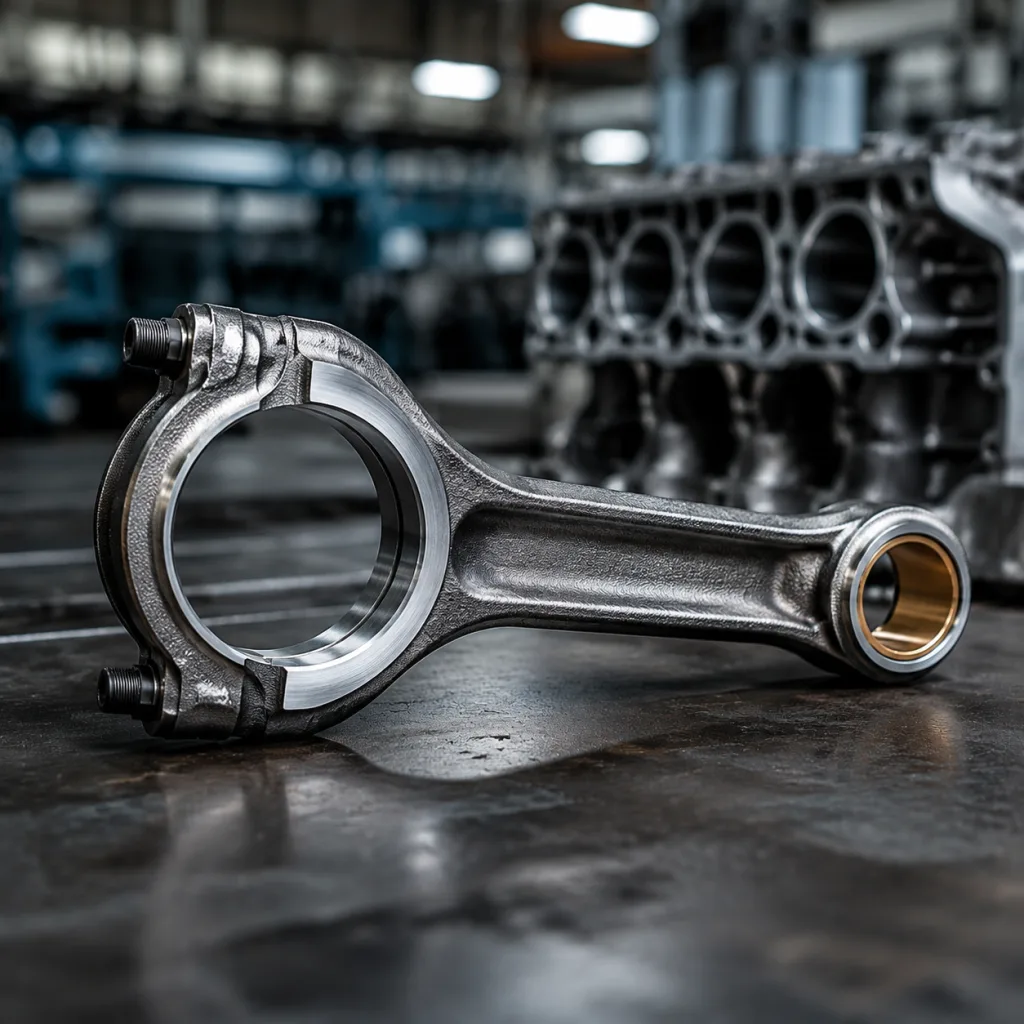
A connecting rod for Hyundai Sonata aftermarket replacement is not a line item to buy from the vehicle name alone. It is a loaded engine part whose length, big-end geometry, small-end bore, cap match, bolt clamp load, and weight spread can decide whether a rebuild runs smoothly or comes back with noise, seizure, or bearing failure. For distributors, engine rebuild suppliers, and repair-chain buyers, the practical question is simple: which specification prevents the wrong rod from entering the programme? This article turns that question into a sourcing framework. It covers fitment inputs, OE-equivalent performance criteria, machining controls, validation evidence, batch risks, shipment documents, and a sample RFQ structure. Driventus manufactures engine and powertrain components in Taizhou, Zhejiang, under IATF 16949:2016 and ISO 9001:2015 systems, with exports to more than 60 countries. Driventus is an independent aftermarket manufacturer; brand names are used only to identify fitment.

Start With the Fitment Decision, Not the Sonata Name

Hyundai Sonata applications vary by model year, sales market, displacement, and engine family. A vehicle-name order can look efficient, but it often hides the details that matter at installation: crankpin journal size, piston pin diameter, rod length, cap design, and bearing interface.

Use a decision gate before quoting or sampling. If the buyer cannot confirm the engine code and the critical dimensions, the programme is not ready for production release.

Required buyer inputs:

  • Vehicle application: Hyundai Sonata, sales market, and model-year range
  • Engine family, engine code, and displacement verified from service data
  • Centre-to-centre connecting rod length
  • Big-end bore diameter after cap assembly and the specified bolt-tightening sequence
  • Small-end bore or bush inner diameter
  • Big-end width and small-end width
  • Crankpin journal diameter and piston pin diameter
  • Rod bolt size, grade, and tightening method
  • Supply format: individual rods or balanced engine sets
  • Required quantity, forecast volume, and packaging format

For this product group, OE-equivalence means functional equivalence in dimensions, material performance, lubrication features, cap construction, bolt behaviour, and assembled mass range. It does not mean approval, endorsement, or supply authorisation from the vehicle manufacturer.

Buyers can review related engine parts in our catalog or check broader engine component coverage at /products/engine-components.html.

Spec Deep-Dive: Where a Rod Must Match the Original

A connecting rod can pass a quick visual check and still fail the programme. The controlling features are small, measurable, and unforgiving. Material route is one of them. Passenger-car rods may use forged steel or high-strength powder metal, depending on the original engine design, loading profile, and cost target. Aftermarket replacement should follow the strength requirement and cap style of the intended application, including fracture-split or machined-cap construction where applicable.

</tr></thead><tbody> </tbody></table>Driventus controls forging, heat treatment, CNC machining, honing, cleaning, and final inspection through documented process plans. Critical-to-function dimensions are checked during incoming material inspection, in-process inspection, and final release. For B2B orders, inspection reports can be aligned with buyer sampling plans, including AQL-based checks when specified in the purchase contract.

Validation Evidence That Separates a Good Sample From a Safe Programme

A sample that fits on the bench is only the first proof point. The rod also has to survive repeated tensile and compressive loads from combustion pressure and reciprocating mass. That requires evidence on material strength, heat-treatment consistency, hardness, surface integrity, and bolt preload stability.

A practical validation package includes:

  • Material certificate with chemical composition and heat number
  • Hardness test record after heat treatment
  • Metallographic inspection where required
  • Tensile or mechanical property verification for controlled batches
  • Magnetic particle or equivalent crack inspection for forged parts
  • Big-end bore stability check after the defined bolt-tightening sequence
  • Surface protection or corrosion-resistance check where specified
  • Assembly trial with piston pin, bearing shell, and crankpin reference gauges

Quality planning should reference IATF 16949:2016 for automotive production controls and ISO 9001:2015 for quality management. Where export markets require substance declarations, suppliers should support REACH (EC) No 1907/2006 and RoHS Directive 2011/65/EU documentation when relevant to packaging, coatings, or supplied assemblies.

Driventus maintains a documented quality system covering APQP-style development, PPAP-style documentation when agreed, traceability, nonconforming product control, and corrective action management.

Failure Modes Buyers Usually Discover Too Late

The most expensive connecting rod problems rarely announce themselves at goods receiving. They appear during engine assembly, after a short service period, or across multiple repair locations when technicians start seeing the same complaint. The fix is to define acceptance criteria, inspection points, and claim-handling rules before production starts.

Failure pattern

  • Wrong application caused by incomplete fitment data
  • Big-end bore distortion after bolt tightening
  • Small-end bush misalignment causing piston pin seizure
  • Excessive rod weight variation across an engine set
  • Inconsistent bolt thread quality, seating, or clamp load
  • Burrs, abrasive residue, or insufficient post-machining cleaning
  • Cap-to-body mix-up during packing or repair handling
  • Packaging that allows corrosion, impact marks, or surface contamination

Controls that prevent repeat claims

  • Confirm drawings or samples before mass production
  • Approve first articles before serial shipment
  • Keep rod caps matched to their original rod bodies
  • Request batch traceability by carton or pallet
  • Confirm anti-rust oil, VCI bag, desiccant, or export packaging method
  • Define inspection limits and replacement procedures for nonconforming pieces

For multi-location repair chains, set-level consistency is especially important. One engine rebuild may use four or six rods, depending on the engine configuration. Rods supplied as a balanced set reduce installation sorting time and lower the risk of vibration complaints after repair.

Importer File: Documents That Keep Reorders Clean

Importers in the EU, UK, US, Canada, Australia, Brazil, and other regulated markets need more than commercial paperwork. A connecting rod programme should leave a record trail that supports customs classification, product liability review, incoming inspection, warranty handling, and future reordering.

Build the shipment file around documents that someone can use six months later, not just papers that clear the first container.

Useful documents for each shipment include:

  • Commercial invoice and packing list
  • Country of origin statement
  • Material and heat-treatment records
  • Final inspection report with critical dimensions
  • Batch or lot traceability code
  • Fitment list controlled by revision date
  • Packaging specification and carton label format
  • Warranty and claims process agreed in writing

If the buyer needs private-label packaging or drawing-based production, Driventus can support custom manufacturing for application-specific connecting rods, piston assemblies, crankshafts, gaskets, water pumps, turbochargers, and related engine parts. Custom work should begin with a controlled drawing, sample part, or complete technical data package. Reverse engineering from a sample is possible, but buyers should allow time for measurement, prototype approval, validation, and packaging approval before serial shipment.

RFQ Blueprint for a Sonata Connecting Rod Programme

A strong RFQ for a connecting rod for Hyundai Sonata aftermarket replacement should make the supplier prove fitment and process control. It should not ask the supplier to infer engineering data from a broad vehicle description.

Control item What the buyer should specify How it is checked
Centre-to-centre lengthDrawing-defined tolerance, normally held in a tight micrometre rangeCMM or dedicated rod gauge
Big-end bore roundnessVerified after cap assembly and the defined tightening sequenceAir gauge or bore gauge
Small-end bore finishCompatible with the piston pin and bush designSurface roughness tester
Rod weight spreadBatch-controlled for engine balancePrecision scale
Bolt seating faceFlatness and perpendicularity controlledHeight gauge or optical inspection
Oil hole positionMatched to the engine lubrication requirementVisual and dimensional inspection

</tr></thead><tbody> </tbody></table>Separate development approval from recurring orders. First-article samples confirm fitment, machining quality, assembly behaviour, and packaging suitability. Serial orders should then use the approved drawing revision, packaging revision, inspection plan, and traceability format. That separation reduces dispute risk when market applications overlap across different Sonata engine variants.

Frequently asked questions

No. Sonata applications differ by engine family, displacement, market, and production year. Buyers should confirm engine code, rod length, journal size, pin size, cap design, and bolt specification before ordering. Vehicle name alone is not enough for procurement.

Recommended documents include material records, heat-treatment records, final dimensional inspection reports, batch traceability, packing lists, and a revision-controlled fitment list. For regulated markets, substance documentation such as REACH (EC) No 1907/2006 may also be requested where applicable.

No. Driventus is an independent aftermarket manufacturer; brand names are referenced for fitment only. Products are supplied for replacement and distribution programmes according to agreed drawings, samples, specifications, and quality documentation.

For fitment confirmation, sample review, or volume pricing, send your engine data, drawings, or reference samples and [request a quote](/contact.html).

Request a Quote
Specification field Example buyer input
ProductEngine connecting rod assembly
ApplicationHyundai Sonata aftermarket replacement programme
Engine dataEngine code, displacement, market, and model years confirmed by buyer
Cross-referenceBuyer-provided OE or aftermarket reference only; supplier should not assume fitment
MaterialForged steel, powder metal, or equivalent to approved sample/drawing
Critical dimensionsRod length, big-end bore, small-end bore, widths, bolt size, and set weight range
Supply formatIndividual rods or balanced engine sets
PackagingNeutral, private label, or repair-chain kit packaging
Quality documentsInspection report, material record, traceability label, and fitment revision
ComplianceIATF 16949:2016 production controls; ISO 9001:2015 quality management