Connecting Rod for Ford Focus Replacement Sourcing
A connecting rod for Ford Focus replacement programme has to do more than match a catalogue line. It must suit the exact engine architecture, bearing interface, piston-pin arrangement, bolt design, and reciprocating weight range. For distributors, engine rebuilders, and repair-chain procurement teams, the sourcing risk is not simply whether the rod can be installed. The bigger question is whether every production batch maintains dimensional stability, fatigue strength, and traceable quality records across the Ford Focus engine variants being served.
Driventus manufactures forged and precision-machined connecting rods for aftermarket engine repair applications, including Ford Focus replacement demand across petrol and diesel families where fitment data is validated by the buyer. This guide explains what procurement teams should verify before placing volume orders: OE-equivalence, material and heat treatment, bore geometry, bolt retention, testing records, packaging controls, and import documentation. Driventus is an independent aftermarket manufacturer; vehicle and brand names are referenced for fitment identification only.
Replacement fitment: what must match
A connecting rod is not a generic engine part. A small variation in centre-to-centre length, big-end bore roundness, pin-bush clearance, cap location, or rod mass can affect compression height, oil film stability, vibration, and bearing life. When sourcing for Ford Focus engine repair programmes, buyers should confirm the exact engine code, displacement, fuel type, production year range, crankshaft journal dimensions, and piston-pin specification before approving a replacement rod.
The correct replacement part should be assessed against the original rod on dimensional and functional criteria, not only by catalogue description. Where OE part-number cross-references are used, they should appear as buyer-supplied references only when applicable to the confirmed engine family. Similar model names can cover different engines by market and year, so cross-reference files should be controlled and reviewed before quotation. Driventus does not claim approval or endorsement by any vehicle manufacturer.
Key fitment checks include:
- Centre-to-centre length measured on calibrated fixtures
- Big-end bore diameter after cap assembly and bolt torque
- Big-end width, side clearance, and crank journal compatibility
- Small-end bore or bronze bush internal diameter
- Piston pin diameter and interference or floating-pin design
- Bearing shell locating tang position, if used
- Rod orientation, oil jet holes, chamfer direction, and cap match marks
- Weight band and balance requirements for multi-cylinder sets
- Bolt thread form, torque method, and replacement requirement
For buyers consolidating multiple engine references, our engine component range can be reviewed in our catalog and the dedicated engine components page at /products/engine-components.html.
OE-equivalence and dimensional controls
For a connecting rod for Ford Focus replacement supply programme, OE-equivalence means the part performs the same mechanical function within the intended engine. It does not mean the component is supplied by, approved by, or endorsed by the vehicle manufacturer. The rod must preserve crankshaft journal compatibility, piston travel geometry, bearing crush, cap clamping, and lubrication paths.
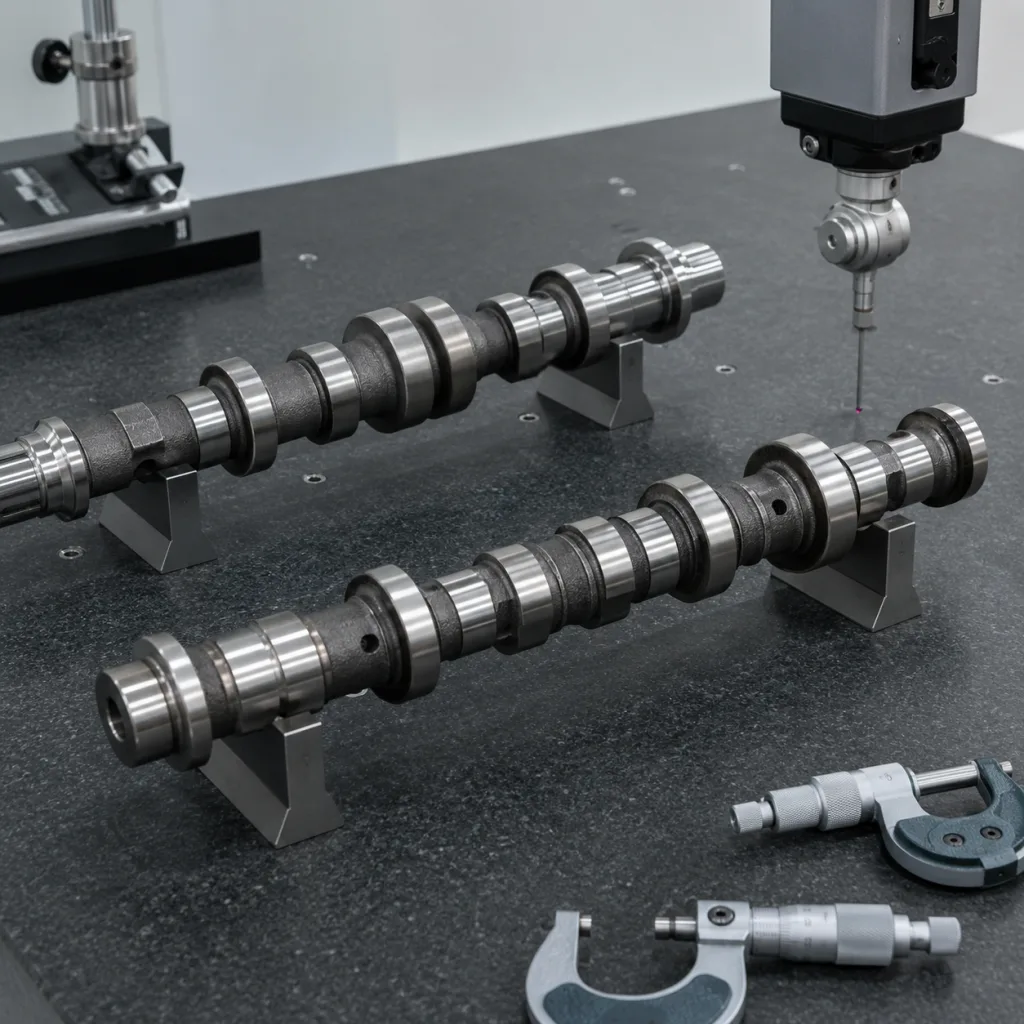
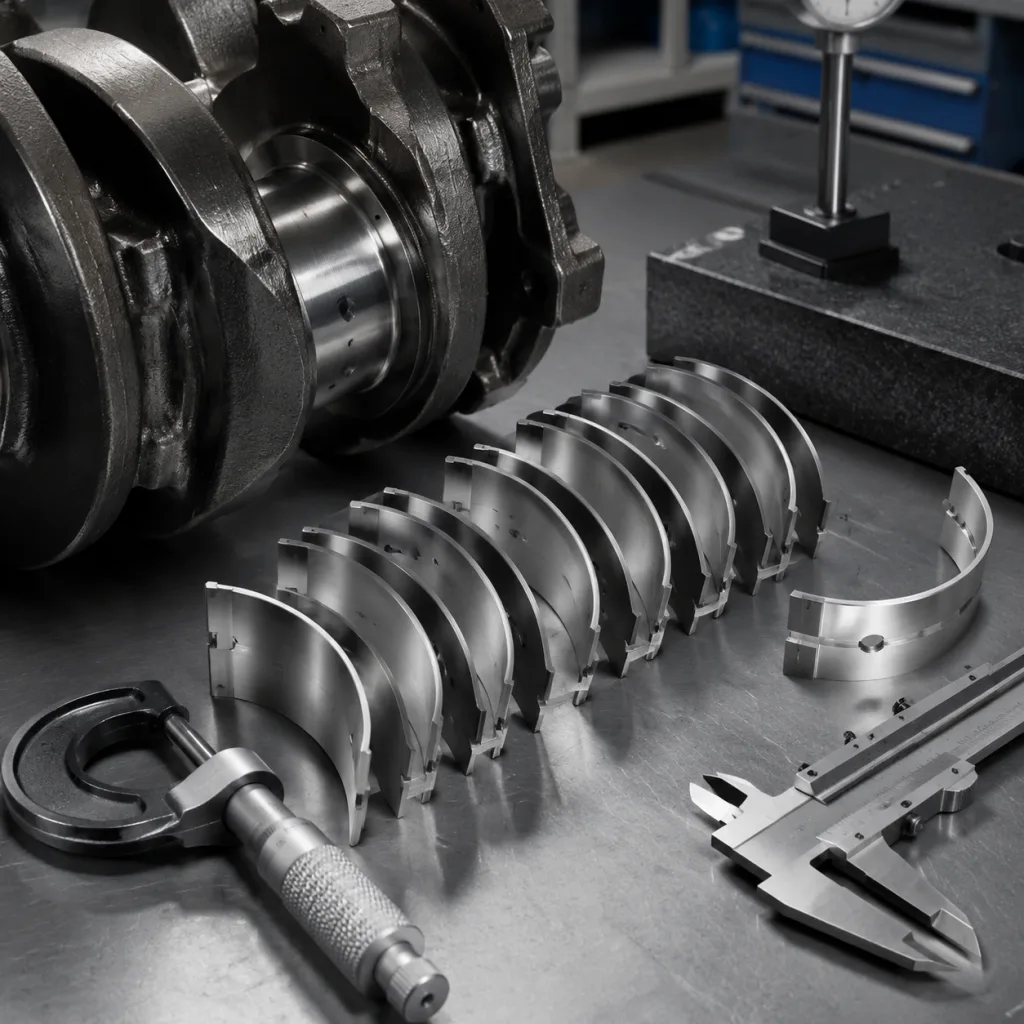
Driventus controls connecting rod geometry through forged blank inspection, CNC machining, cap assembly, honing, surface finishing, and final gauging. Critical dimensions are typically verified using coordinate measuring machines, air gauges, bore gauges, height gauges, hardness testers, and torque-angle assembly checks. Final tolerance targets depend on the engine reference, buyer drawing, approved sample, and service requirement, but procurement teams should expect documented control of bore size, parallelism, twist, bend, surface finish, and mass variation.
| Control point | Procurement relevance | Typical verification method | |
|---|---|---|---|
| Big-end bore geometry | Bearing fit, oil film stability, crankshaft journal life | Bore gauge, roundness check after bolt torque | |
| Small-end bore or bush | Piston pin clearance, wear control, noise reduction | Plug gauge, bore gauge, surface finish check | |
| Centre distance | Compression position and cylinder-to-cylinder consistency | CMM or dedicated rod fixture | |
| Cap joint integrity | Clamp load retention under combustion load | Torque-angle audit, thread inspection | |
| Parallelism, twist, and bend | Piston alignment, skirt wear, and bore loading | CMM, alignment fixture, comparative gauging | |
| Weight grouping | NVH and rotating assembly balance | Digital weighing and set matching | |
| Surface condition | Fatigue performance and crack-risk reduction | Visual inspection, magnetic particle inspection where specified |
| Supply route | Suitable buyer | Main requirement | Output |
|---|---|---|---|
| Catalogue supply | Distributor or wholesaler | Confirmed engine application and quantity | Quotation, lead time, batch inspection |
| Sample-based matching | Importer or repair-chain buyer | Physical OE or approved aftermarket sample | Reverse measurement, trial sample, approval report |
| Drawing-based production | OEM/Tier-1 or technical buyer | Controlled drawing and specification | PPAP-style documentation where agreed |