Connecting Rod for Kia Sportage OE Equivalent: Buyer Guide
A connecting rod for Kia Sportage OE equivalent must match the engine family, centre-to-centre length, big-end and pin-end dimensions, mass, and bolt specification used in the original application. For procurement teams, “equivalent” is not a marketing term. It means the part can be installed with the same fit and function when the correct OE reference, engine code, and production date are confirmed. For aftermarket supply, the main risks are mix-ups across engine variants, incorrect bolt stretch values, and inconsistent heat treatment. Driventus is an independent aftermarket manufacturer; brand names are referenced for fitment only. We supply engine and powertrain components under controlled production systems aligned with IATF 16949:2016 and ISO 9001:2015, with export-focused documentation for B2B buyers in the EU, UK, US, Canada, Australia, and Brazil. This article explains what to verify before you place a replacement order, and how to compare OE-equivalent rods against your sample or cross-reference data.
What OE-equivalent means for a Sportage connecting rod
For replacement sourcing, OE-equivalent means dimensional and functional compatibility with the original rod used in the specific Kia Sportage engine application. It does not mean the part is OEM-branded or vehicle-manufacturer approved.
Key checks before purchase:
Engine code and displacement, because Sportage engines vary by market and model year.
OE cross-reference, such as an OE 06A107065 format when the customer already has a valid reference.
Rod length, bore size, pin-end bore, and cap bore.
Rod bolt type and tightening method, including torque-plus-angle or stretch-controlled assembly.
Total mass and pair matching for balanced assembly.
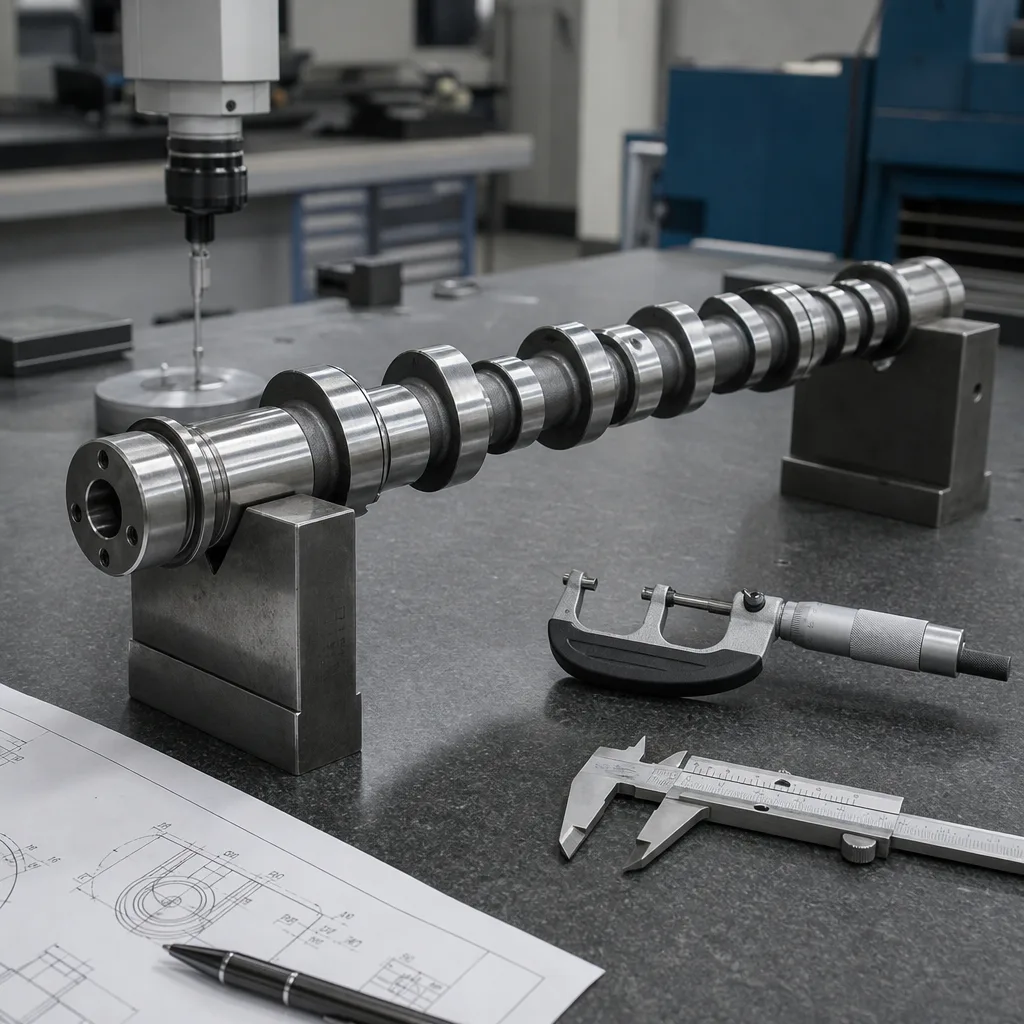
If the sample is available, measure against a master part and confirm the parting line condition, surface finish, and bore geometry before releasing a bulk order. For buyers managing multiple SKUs, a controlled cross-reference file reduces return risk and prevents mixed applications across similar engine families.
Dimensional checks buyers should request
A replacement rod should be evaluated by measurable features, not by appearance alone. The following table lists the main checks used in purchasing and incoming inspection.
Check item
What to verify
Why it matters
Centre-to-centre length
Match to OE drawing or verified sample
Affects compression height and reciprocating geometry
Big-end bore
Diameter and roundness after cap torque
Controls bearing fit and oil film stability
Pin-end bore
Diameter, alignment, and finish
Prevents pin seizure and noise
Rod mass
Individual and matched set weight
Supports balance control
Bolt specification
Thread, grade, stretch method
Critical for cap retention
Material and heat treatment
Typically forged steel with controlled hardness
Supports fatigue resistance
Surface finish
Shot peen, bore finish, parting line quality
Impacts durability and crack resistance
</tr></thead><tbody> </tbody></table>For procurement teams, a dimensional report is more useful than a verbal claim. Ask for inspection records on the first article and a production lot summary. When comparing alternative sources, use the same metrology method for each sample, otherwise small differences in gauge setup can hide a real fit issue.
Materials, heat treatment, and validation testing
Most Sportage replacement rods are specified in forged steel, with heat treatment selected to achieve the required strength and fatigue resistance. Some engine families may also use powder-forged or fractured-cap style designs, but the correct choice depends on the exact engine code and OE design.
Typical validation points include:
Hardness mapping across the beam and cap area.
Magnetic particle or equivalent crack inspection on critical surfaces.
Fatigue and bending verification on representative samples.
Bolt retention verification under specified tightening procedure.
Dimensional stability after heat treatment and machining.
Published standards matter in trade supply. Driventus operates under IATF 16949:2016 and ISO 9001:2015, and material compliance can be aligned with REACH (EC) No 1907/2006 for EU shipments when required by the customer specification. For warranty-sensitive programmes, ask whether the supplier can provide PPAP-style documentation, batch traceability, and controlled inspection records.
What to ask your supplier
Heat-treatment method and hardness range
Material certificate and traceability batch
Incoming and final inspection plan
Sample approval process
Packaging method for export and corrosion control
Fitment risks across Sportage engine variants
The Sportage nameplate covers multiple engines, markets, and model years. That creates sourcing risk if the part is selected only by vehicle model.
Common causes of mismatch:
1. Same vehicle model, different displacement or fuel type. 2. Different piston pin height or crankshaft stroke. 3. Alternate rod bolt design between revisions. 4. Market-specific engine codes and emissions packages. 5. Previous repair using a non-original replacement part.
Before release to warehouse stock, confirm the engine number, OE reference, and sample comparison. If the buyer cannot confirm the engine code, use physical measurements and photos of the removed part to narrow the application. This is especially important for mixed fleets and repair-chain distribution, where one shelf label may cover several incompatible variants.
Driventus is an independent aftermarket manufacturer; brand names are referenced for fitment only.
How Driventus supports B2B replacement sourcing
We support buyers who need stable supply, consistent dimensions, and export-ready documentation. For catalogue browsing, see our catalog and related engine items in engine components. Our quality system outlines production control, inspection, and traceability practices, while custom manufacturing is available when you need a private-label or programme-specific build.
What procurement teams typically receive:
Sample or drawing review before mass production
OE reference cross-check where the customer provides a valid number
Dimensional inspection records
Export packing suitable for carton and pallet handling
Consistent lot coding for traceability
If your team needs to qualify a new source, ask for a comparison sample against your current rod, plus a measured report for bore size, centre length, and bolt data. That reduces the chance of field failure after rollout. We also support low-volume pilot orders before contract supply.
Ordering checklist for buyers
Use this checklist before you issue a PO for a connecting rod for Kia Sportage OE equivalent:
Confirm engine code, year range, and fuel type.
Confirm OE cross-reference from the customer record or sample.
Verify whether the rod is standard size or matched to an oversize/undersize service part.
Request material, hardness, and dimensional inspection records.
Confirm bolt type and whether bolts are supplied installed or separate.
Agree packaging, labelling, and corrosion protection.
Set acceptable tolerance limits for critical dimensions.
Define sample approval and claims handling terms before shipment.
For import managers, the lowest-risk approach is a sample-to-production process with documented approval. It is faster to resolve a dimension issue before shipping than after a warehouse intake failure.
Frequently asked questions
No. OE-equivalent means it matches the required fit, function, and dimensions for the specified application. It is not OEM-branded and should not be described as manufacturer-approved.
Confirm engine code, OE cross-reference, centre length, bore sizes, rod bolt specification, and the supplier’s inspection records. A physical sample comparison is strongly recommended.
Yes. If you need a programme-specific or private-label version, use our custom manufacturing service and share drawings, samples, or confirmed OE data for review.
If you need help matching an OE-equivalent rod to a specific Sportage application, send your reference, sample photos, or drawing details. Request a quote at /contact.html