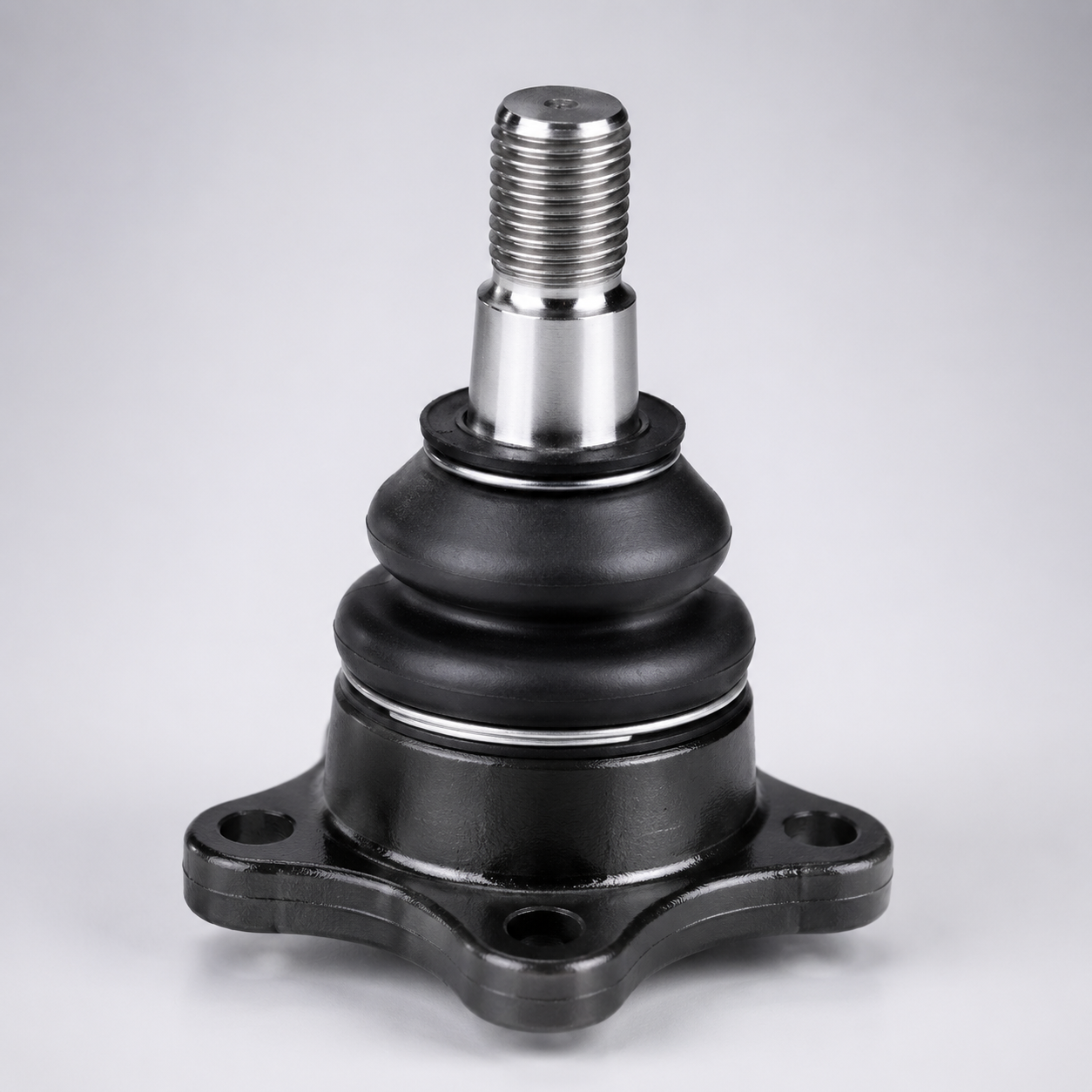
Connecting Rod for Jeep Cherokee Replacement Guide
A **connecting rod for Jeep Cherokee replacement** programme is won or lost before the first carton ships. The rod may look simple, but it controls bearing crush, piston travel, balance, and fastener load inside an engine that has already absorbed expensive rebuild labour. For distributors, remanufacturers, and fleet rebuild operations, the sourcing question is not “will it fit?” It is: will every batch hold the same geometry, weight window, material condition, and documentation standard after repeated production runs?
This article takes a procurement view of the part. It shows how to define the buying decision, where replacement programmes usually fail, how to compare OE-equivalent claims, what to ask about materials and validation, and how to qualify a supplier before volume release. Driventus is an independent aftermarket manufacturer; brand names are referenced for fitment only.
Decision Framework: Define the Replacement Rod Before You Price It
Demand for a connecting rod for Jeep Cherokee replacement often starts after bearing failure, oil starvation, hydrolock, over-rev damage, or fatigue in a high-mileage engine. Those causes matter. A shop replacing one damaged rod may care mainly about immediate fit. A remanufacturer building repeat long-block inventory needs predictable machining, balancing, traceability, and packaging.
Start the RFQ with the supply format, not the unit price. State whether the requirement is for a bare rod body, a rod with bolts installed, a bushed small end, or a matched engine set. Confirm whether nuts are included. Specify whether the supplier must sort by total weight only or by both total weight and end weight. If rods are packed as sets, define the set-level weight spread instead of assuming the supplier will infer it.
The commercial target should match the channel:
- Repair-market spot supply: standard inspection, standard rust protection, lower opening quantity, faster replenishment
- Premium reman supply: tighter bore and weight data, matched sets, stronger traceability, more robust corrosion protection
- Private-label distribution: carton artwork, label control, application mapping, set packaging, higher launch MOQ
- Fleet rebuild programme: batch continuity, warranty documentation, controlled engineering changes, repeatable lead times
Critical buying criteria usually include centre-to-centre length, big-end bore size and roundness under torque, small-end bore finish, rod weight consistency, bolt grade and clamp-load repeatability, surface finish, shot peening status where specified, and traceability through forging, heat treatment, machining, and packing.
Typical export enquiries may start around 100-300 pcs per application for standard packaging. Private-label boxed sets often need a higher opening MOQ because carton design, print setup, and stock segregation add cost before production scale is reached.
When the rod is part of a wider rebuild package, buyers can compare related items in our catalog and the wider engine components range.
Failure Modes: Where Cherokee Rod Programmes Go Wrong
Most costly problems do not come from obvious visual defects. They come from small mismatches that pass a quick catalogue check and then appear during assembly, engine balancing, or warranty review.
| Failure mode | Usual cause | Result in the field |
|---|---|---|
| Bearing distress after rebuild | Big-end bore not round or not sized under correct bolt torque | Oil-film instability, bearing wear, teardown labour |
| Piston height variation | Centre-to-centre length drift | Compression inconsistency, noise, uneven combustion behaviour |
| Pin noise or scuffing | Small-end bore or bushing control too loose | Cold-start noise, wrist-pin wear, rejected assemblies |
| Vibration complaint | Rod weight or end weight spread too wide | Extra balancing time, NVH concerns, customer dissatisfaction |
| Cap distortion | Bolt source or tightening method not controlled | Bore movement after assembly, fastener claim exposure |
| Dead stock | Wrong application mapping across year or engine variants | Return cost, installer complaints, slow-moving inventory |
| Rust at receipt | Weak oiling, VCI, bag, carton, or pallet specification | Cleaning labour, shelf-life loss, quality dispute |
| Weak containment after a claim | Mixed lots or poor traceability | Slow root-cause analysis and broader stock quarantine |
| Checkpoint | Why it matters | Typical control focus |
|---|---|---|
| Centre-to-centre length | Sets piston deck position and compression consistency | Common buyer target is +/-0.03 mm to +/-0.05 mm, verified by fixture or CMM |
| Big-end bore diameter | Determines bearing fit and oil-clearance behaviour | Final machining after cap alignment, often controlled within about 0.01-0.02 mm to drawing |
| Big-end bore roundness | Prevents localised bearing load | Measured under specified bolt torque, frequently limited to <=0.005-0.01 mm depending on design |
| Big-end width | Controls side clearance on the crank journal | Parallel, burr-free side faces with stable cap mating |
| Small-end bore diameter | Controls pin fit and noise | Honing consistency, often within roughly 0.005-0.015 mm of target depending on bushing design |
| Twist and bend | Protects piston skirt and ring life | Fixture inspection by batch, commonly specified in hundredths of a millimetre over fixture length |
| Total weight and end weight | Supports balance and repeatable assembly | Sorting or matched-set supply, for example total-weight spread within 2-4 g where required |