connecting rod · 2026-05-26

Connecting Rod for Honda HR-V OE Equivalent: Sourcing Guide

For procurement teams sourcing a connecting rod for Honda HR-V OE equivalent, the key requirement is not branding. It is dimensional match, material consistency, and repeatable validation across batches. A replacement rod must fit the engine family, meet the required centre-to-centre length, big-end and small-end bore tolerances, and hold the correct mass balance for the application. If those variables drift, the result is noise, bearing wear, or repeat failure after assembly.

Driventus supplies engine components for aftermarket and B2B channels, including replacement rods for applications where OE cross-reference and process control matter. Driventus is an independent aftermarket manufacturer; brand names are referenced for fitment only. We manufacture under IATF 16949:2016 and ISO 9001:2015 systems, with material traceability and inspection controls suited to export procurement. Below is a practical guide to what buyers should verify before placing a production order or stocking for regional distribution.

What OE-equivalent means for a Honda HR-V connecting rod

OE-equivalent does not mean branded by the vehicle maker. It means the part matches the functional and dimensional requirements of the original design well enough to install and perform correctly in the intended engine.

For a connecting rod, buyers should verify:

  • Centre-to-centre length
  • Big-end bore diameter and roundness
  • Small-end bore or bushing size
  • Beam profile and overall mass
  • Big-end cap fit and fastener spec
  • Surface finish at bearing seats and pin end

When a listing references an OE code such as OE 06A107065, use it only as a fitment reference and confirm the engine code, year range, and piston-pin diameter before ordering. Driventus is an independent aftermarket manufacturer; brand names are referenced for fitment only.

Key technical checks before you approve a replacement part

A procurement review should include the following checks, especially for repair chains and distributors that need low return rates.

</tr></thead><tbody> </tbody></table>For export programmes, request dimensional reports by lot, incoming material certificates, and final inspection records. A sample approval process should include at least one physical part check against the engine sample or technical drawing.

Materials, forging, and heat treatment

Most OE-equivalent connecting rods for passenger engines are made from forged alloy steel or, in some applications, fracture-split powder metal. The correct choice depends on engine load, packaging, and original design.

Typical controls include:

  • Forging direction aligned with the beam load path
  • Heat treatment to achieve the required strength and toughness
  • Shot peening on the beam surface where specified
  • Machining of big-end and small-end bores after heat treatment
  • Cap mating control to maintain alignment after assembly

If your programme requires customisation, see our custom manufacturing service for drawing-based production. For standard replacement programmes, buyers should ask whether the rod is supplied as a fully machined assembly or as a semi-finished component requiring local finishing.

Validation testing expected by procurement teams

Replacement claims should be backed by test data, not only dimensional pictures. For a connecting rod for Honda HR-V OE equivalent, buyers commonly request the following validation package:

  • Metallographic or chemistry confirmation of the base material
  • Hardness test records after heat treatment
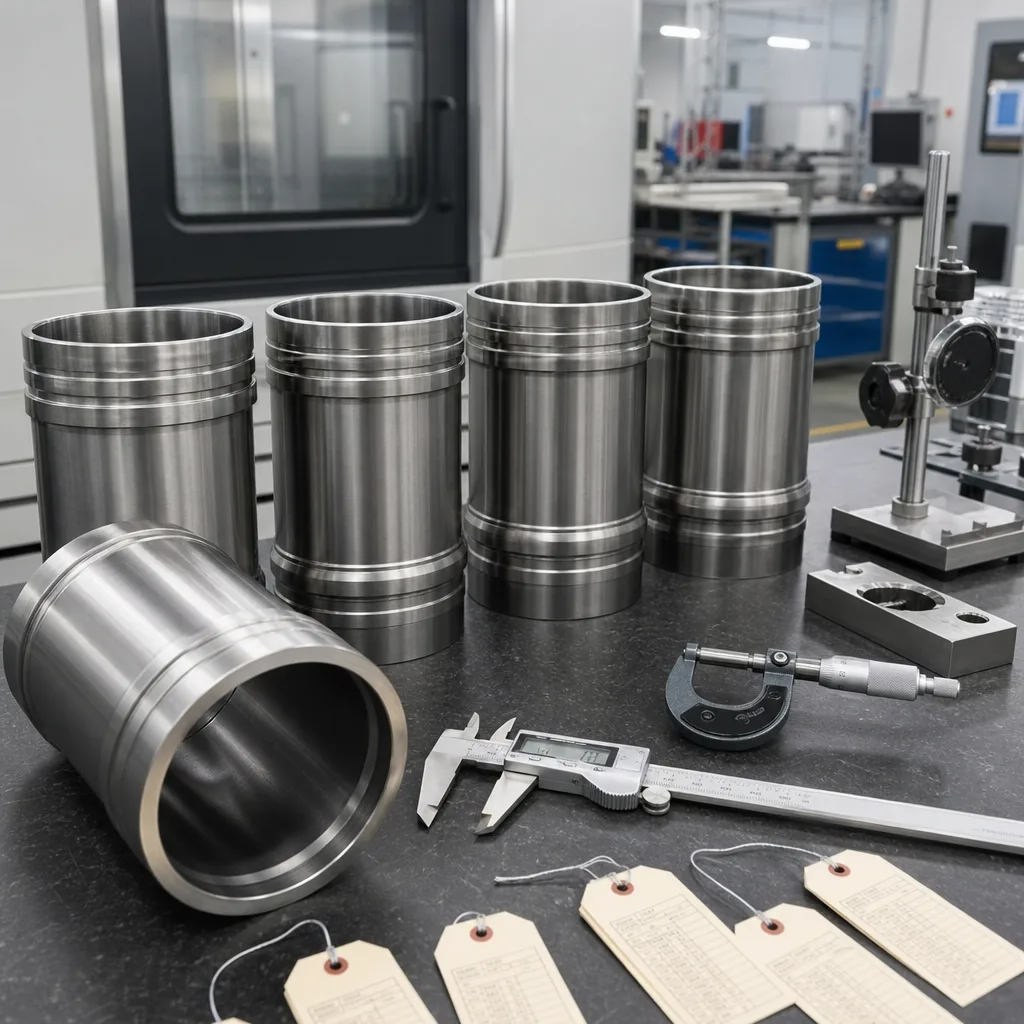
  • Dimensional inspection report for critical features
  • Magnetic particle or crack inspection where applicable
  • Fatigue or load verification based on internal or customer-specific methods
  • Traceability by lot number and production date

Published standards help define the quality system and test framework. Driventus operates under IATF 16949:2016 and ISO 9001:2015. For corrosion-related expectations on metal components in transport environments, REACH (EC) No 1907/2006 may also be relevant to material compliance documentation, depending on the destination market and component content.

How buyers should compare suppliers

A supplier should be compared on process control, export capability, and documentation quality, not only unit price.

Use this short comparison framework:

1. Fitment control — Can the supplier confirm engine code, model year, and OE cross-reference logic? 2. Inspection depth — Are critical dimensions measured on every lot or only by sampling? 3. Traceability — Are heat numbers, batch numbers, and inspection reports available? 4. Packaging — Is the part protected against corrosion and transit damage? 5. Lead time — Can the supplier support distributor replenishment and service stock?

You can review our catalog and the broader engine components range to align one sourcing platform across rods, pistons, gaskets, and related powertrain parts. For internal QA alignment, see our quality system.

Frequently asked questions

No. OE-equivalent means the part matches the required fit, function, and critical dimensions. It is an aftermarket replacement reference, not an endorsement by a vehicle maker.

Ask for dimensional inspection data, material certificates, heat-treatment records, lot traceability, and packaging details. For larger programmes, request a sample approval against the engine drawing or sample part.

Yes. For drawing-based or modified programmes, use our custom manufacturing service. We can support specification review, prototype runs, and repeat production under controlled quality checks.

If you are building a replacement programme or need a verified cross-reference for this application, please [request a quote](/contact.html). We can review drawings, samples, and target tolerances before production.

Request a Quote
Check item What to confirm Why it matters
Centre-to-centre lengthMatch to the engine drawing or verified sampleAffects compression height and piston position
Big-end boreDiameter, roundness, and surface conditionControls bearing clearance and oil film stability
Small-end borePin fit and bushing condition, if applicablePrevents pin scuffing and noise
Rod weightMatch within batch toleranceSupports balanced assembly
FastenersGrade, thread quality, and torque specificationPrevents cap separation and stretch loss
MaterialForged steel or powder metal, as specifiedInfluences fatigue resistance