connecting rod · 2026-06-18

Connecting Rod for BMW 3 Series Aftermarket Replacement

When sourcing a connecting rod for BMW 3 Series aftermarket replacement, procurement teams need more than a catalogue match. The rod must correspond to the correct engine family and meet the required center-to-center length, big-end bore, small-end bore, pin interface, bearing housing geometry, and rod bolt specification. A reliable replacement also needs consistent mass control, repeatable tightening behavior, stable bearing fit, and fatigue resistance under cyclic combustion load.

Driventus manufactures engine components in Taizhou, Zhejiang, under IATF 16949:2016 and ISO 9001:2015 quality management systems. We supply aftermarket distributors, OEM supply-chain customers, and repair networks in more than 60 countries. Driventus is an independent aftermarket manufacturer, and any vehicle or brand names are used only to identify fitment. Before releasing stock, buyers should confirm OE cross-references, verify material and heat-treatment records, and review validation data against the target application.

What buyers should verify first

Start with the engine code, then compare the rod against the technical data for that engine family. The BMW 3 Series spans many petrol and diesel applications across different generations, so model name alone is not enough. An incorrect rod length, big-end width, journal match, or pin bore can create bearing stress, piston height errors, oil-clearance problems, and early engine failure.

Verify these points before ordering:

  • OE cross-reference, where available from the application list or customer sample
  • Engine code, displacement, fuel type, and model year range
  • Center-to-center length and big-end width
  • Big-end bore, small-end bore, and wrist-pin compatibility
  • Bearing shell interface and housing bore finish
  • Rod bolt grade, thread specification, tightening torque, and angle requirement
  • Weight range and mass matching across the complete set
  • Surface finish on bearing seats and thrust faces

A suitable replacement should be interchangeable at the dimensional and functional level, not merely similar in shape. For export purchasing, request inspection records, sample approval results, and lot traceability linked to the purchase order so receiving teams can control claims and reorders.

Replacement criteria for procurement teams

A connecting rod for BMW 3 Series aftermarket replacement should meet the functional requirements of the original assembly used in the target engine family. For B2B buyers, the strongest sourcing decisions come from controlled drawings, measured dimensions, material evidence, and repeatable production records. Driventus focuses on OE-equivalent geometry, controlled machining, and stable batch-to-batch consistency.

</tr></thead><tbody> </tbody></table>The purchase decision should not rely on appearance or a broad application claim. Ask for hardness reports, dimensional inspection data, material confirmation, and a sample approval lot before moving to volume purchase. If the rod is intended for a repair-chain program, define the acceptable tolerance band and packaging standard before production release.

Validation tests that reduce warranty risk

Validation should reflect how the connecting rod works inside the engine. A part can pass a basic visual check and still fail if the forging quality, heat treatment, bearing housing, or bolt behavior is unstable. For high-volume replacement programs, validation records help buyers reduce warranty exposure before parts enter regional distribution.

Common checks used for aftermarket release:

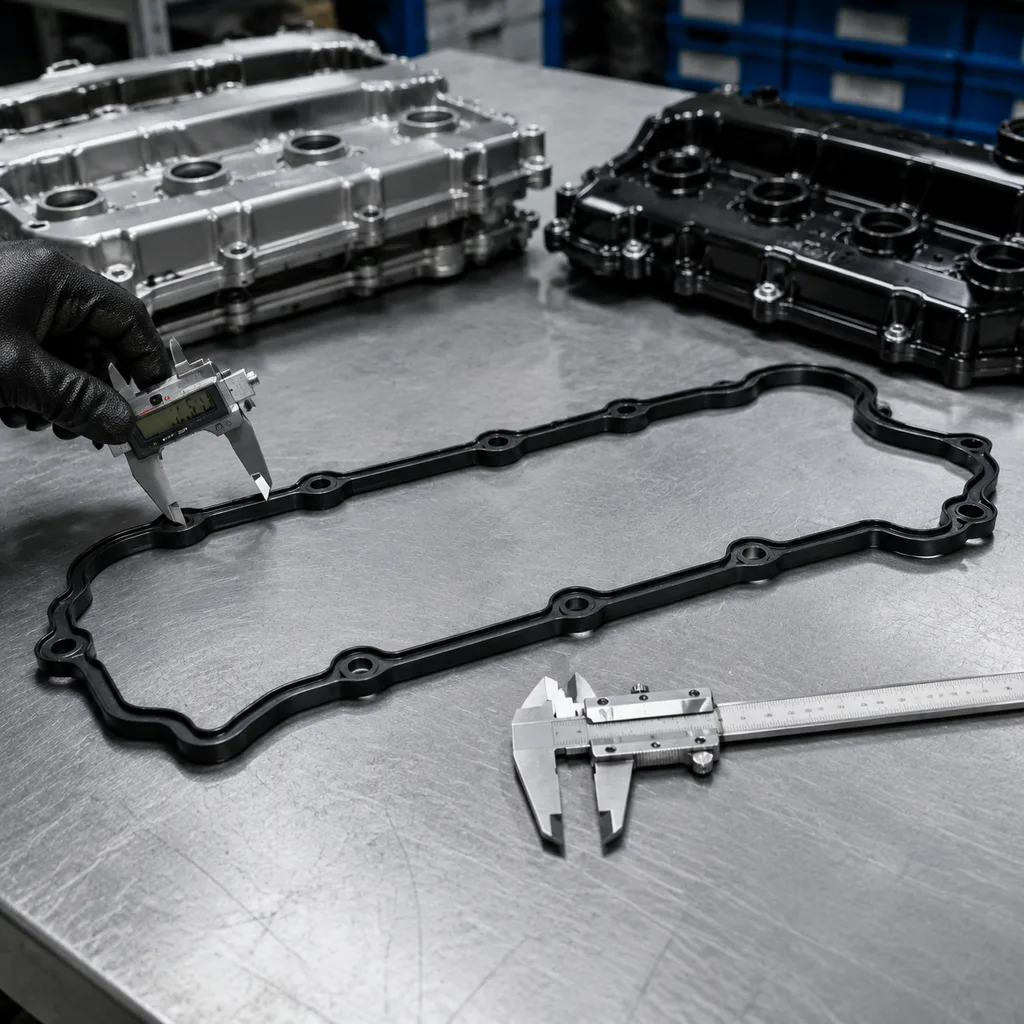
  • Dimensional inspection using calibrated gauges and CMM where required
  • Hardness testing after heat treatment and final processing
  • Magnetic particle inspection or other crack detection on critical forged areas
  • Metallographic review when the material specification or customer plan requires it
  • Load, endurance, or fatigue validation on approved samples or agreed lots
  • Bolt torque, angle, and stretch verification against the assembly procedure
  • Bearing housing roundness and surface finish checks after cap assembly
  • Packaging, oiling, and corrosion-protection checks for export transit

Where applicable, align the control plan with IATF 16949:2016, ISO 9001:2015, REACH (EC) No 1907/2006, and customer-specific validation requirements. ECE R-83 is an emissions regulation for vehicle-level or engine-system compliance, not a normal standalone approval for a connecting rod; buyers serving regulated markets should confirm whether downstream engine packages require related documentation.

Supply options for distributors and repair chains

Distributors and repair chains usually need stable specifications, predictable replenishment, and reliable cross-reference control. A narrow, verified application range is often more useful than a wide catalogue claim that increases fitment risk.

Driventus supplies connecting rods within a broader engine-component range that includes pistons, crankshafts, gaskets, water pumps, and turbochargers. Teams consolidating suppliers can review our catalog, the quality system, and custom manufacturing options for private-label or specification-driven programs.

For multi-branch buyers, the main commercial variables are minimum order quantity, carton quantity, packing format, barcode or label requirements, and lead time. We can also support OEM-style drawing review when the replacement must match a non-standard rod profile, revised bearing interface, customer-specific marking, or updated packaging requirement.

How Driventus supports fitment control

Fitment control begins with the application data pack. Our team reviews engine code, OE references, customer samples, photos, measurements, and required packing details before production release. When a sample is available, we compare the requested part against critical dimensions such as center distance, bore sizes, big-end width, pin interface, cap joint, and bolt specification before confirming the production route.

Driventus is an independent aftermarket manufacturer; brand names are referenced only to identify compatibility. This matters in procurement because it keeps the sourcing process focused on technical equivalence, documented validation, and continuity of supply rather than trademark assumptions.

For programs that need special rod geometry, upgraded material, private-label packing, or pack-level labelling, our custom manufacturing service supports drawing-based production. For standard replacement sourcing, we can cross-check part numbers, confirm fitment details, and prepare a quotation aligned with export documentation, inspection records, and target delivery schedules.

Frequently asked questions

Match the engine code, OE cross-reference, and complete dimensional profile, including center distance, big-end bore, small-end bore, width, and bolt specification. Do not rely on the 3 Series model name alone because different engine families use different rod designs.

Request dimensional inspection records, hardness data, heat-treatment evidence, material confirmation, and lot traceability. For formal supply chains, also ask for quality-system certificates such as IATF 16949:2016 and ISO 9001:2015 where applicable.

Yes. Driventus supports drawing-based programs, private-label packing, sample comparison, and OE-style cross-reference control through our OEM service workflow.

If you need a fitment check, sample comparison, or volume quotation, send your application data and target quantity through our contact page: /contact.html

Request a Quote
Check item What to confirm
MaterialForged steel or the specified alloy grade for the engine family
GeometryCenter distance, bore sizes, widths, chamfers, and oil-hole details match the application
MachiningBig-end roundness, small-end concentricity, and housing bore finish remain within drawing limits
Heat treatmentHardness, microstructure, and process controls are documented after forging and finishing
Weight balanceRod sets are matched within the agreed tolerance band for the order
Bolt retentionBolt grade, thread engagement, stretch behavior, and tightening procedure are documented
Surface integrityCritical faces are free from cracks, folds, burrs, dents, and machining damage
TraceabilityLot numbers connect production, inspection, packing, and shipment records