Connecting Rod for Chevrolet Suburban Aftermarket Replacement
Choosing a connecting rod for Chevrolet Suburban aftermarket replacement starts with fitment control, not brand claims. The rod must match the engine family, center-to-center length, pin diameter, big-end bore, bolt size, and weight range used in the original application. Driventus is an independent aftermarket manufacturer; brand names are referenced for fitment only. For procurement teams, the real risk is not just a poor fit. It is mismatch in geometry, heat treatment, surface finish, or bolt quality that raises noise, oil contamination, or bearing wear after installation. A correct replacement should be documented with dimensional inspection, material traceability, and packaging that preserves part identification through inbound receiving. This article explains what to verify before ordering, how OE-equivalent parts are validated, and how our catalog, quality system, and custom manufacturing support repeatable sourcing across repair networks and export programs.
What to verify before ordering
For procurement, the first control is application data. A Chevrolet Suburban uses different engine families across model years, so the rod cannot be selected from vehicle name alone. Confirm the engine code, model year, emission package, and whether the engine has been rebuilt before.
Use a receiving checklist that captures:
- Center-to-center length
- Big-end bore and small-end bore
- Beam width and side clearance
- Rod bolt thread, grade, and tightening method
- Weight class and balance pairing
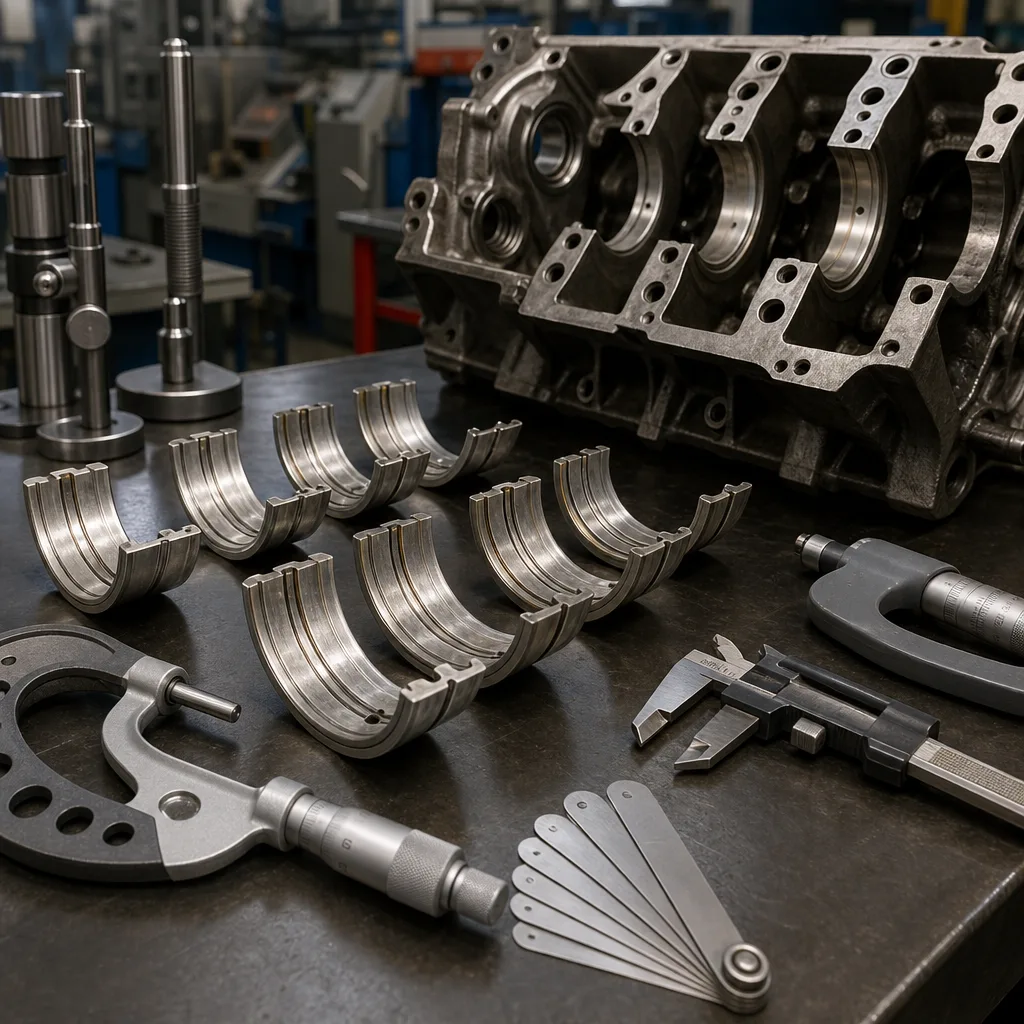
- Bearing shell specification, if supplied as a matched set
If the removed rod is still available, compare it against the new part before installation. A correct aftermarket replacement should duplicate the original geometry and allow standard bearing fitment without extra machining. For fleet buyers, that is the difference between a part that fits the work order and a part that reduces rework in the bay.
OE-equivalent fitment versus generic replacement
A replacement rod should be judged on measurable characteristics. The table below shows the difference between a controlled OE-equivalent part and an unverified low-cost substitute.
| Checkpoint | OE-equivalent aftermarket rod | Unverified replacement |
|---|---|---|
| Geometry | Matches specified length, bore sizes, and beam profile | Dimensional drift is common |
| Fasteners | Rod bolts matched to the fastening method | Bolt grade and preload may vary |
| Bearing support | Designed for the correct journal and clearance target | Can create uneven wear |
| Traceability | Lot code and inspection record available | Limited or no traceability |
| Receiving outcome | Easier acceptance at inbound inspection | Higher reject and return risk |