connecting rod · 2026-06-04

Connecting Rod for Cadillac CTS Aftermarket Replacement

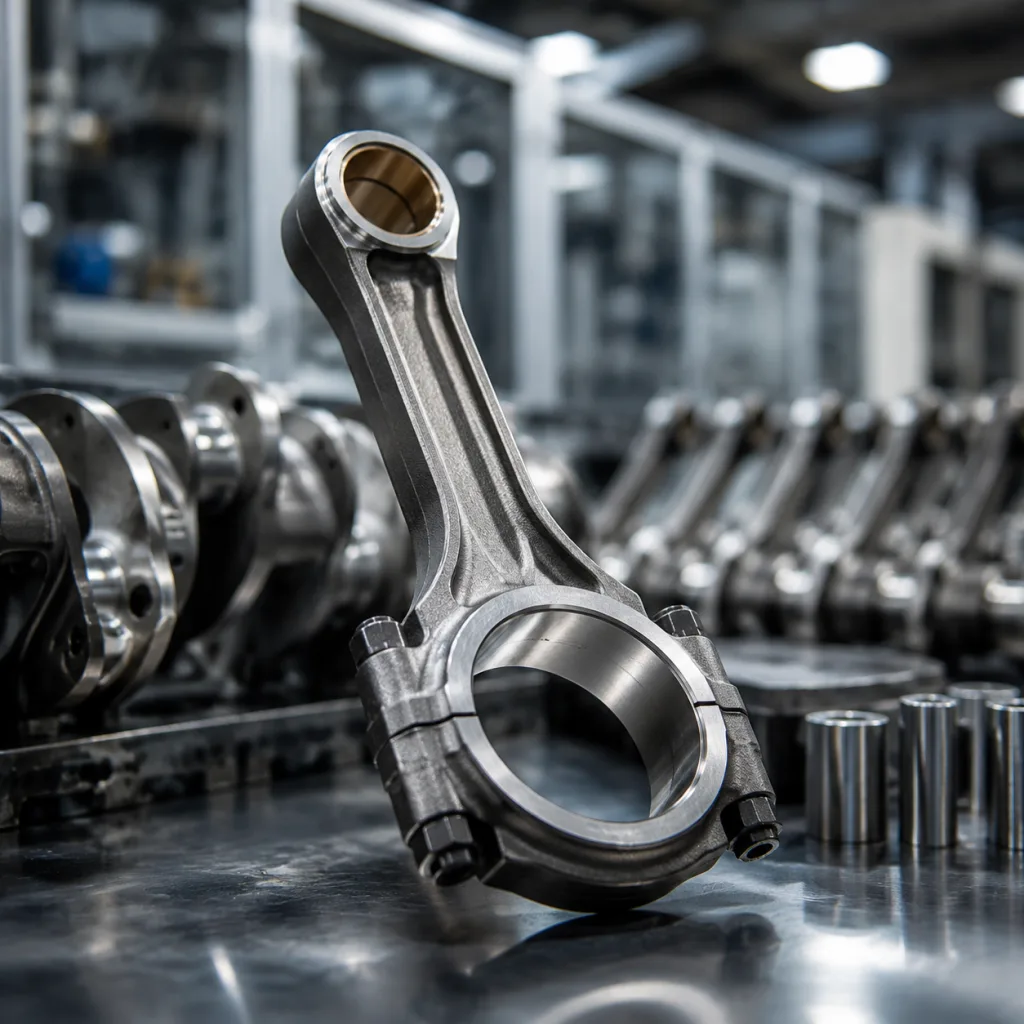
A connecting rod for Cadillac CTS aftermarket replacement has to match the approved engine application in geometry, material class, bearing interface, cap design, and rod-bolt specification before it is released for service. For procurement and quality teams, the practical checks start with centre-to-centre length, big-end and small-end bore diameter, big-end width, piston-pin fit, bearing tang location, bearing crush, cap alignment, bolt thread and tightening method, finished weight, and the exact CTS engine family or OE reference. A part that looks right is not enough. Small deviations can alter piston deck height, rod side clearance, bearing oil film, crankshaft fillet clearance, or rotating-assembly balance after rebuild. Driventus manufactures engine components for B2B buyers who need dimensional consistency, repeatable documentation, and practical support for aftermarket replacement programmes. Driventus is an independent aftermarket manufacturer; Cadillac and CTS names are referenced for fitment identification only. For buyers comparing suppliers, the strongest approval process is still technical: confirm OE cross-reference data, drawing-controlled dimensions, material specification, production controls, and validation records before placing volume orders.

What matters in an aftermarket replacement rod

A Cadillac CTS application can vary by model year, trim, market, production period, and engine family. That means the replacement rod must be matched to the exact engine code, OE reference, and crankshaft/piston combination, not the vehicle name alone. CTS platforms may include different V6 and V8 engine variants, and a rod advertised only as suitable for Cadillac CTS can still be wrong if the crank journal width, piston pin diameter, big-end bore, small-end bore, or centre-to-centre length differs from the approved reference. For B2B sourcing, the goal is simple: preserve the original operating geometry and bearing interface.

For procurement, the core acceptance checks are:

  • Centre-to-centre length to the supplier drawing tolerance, typically controlled in hundredths of a millimetre for production approval
  • Big-end bore size measured with the cap torqued or tightened by the specified torque-angle/stretch method
  • Big-end bore roundness and taper after tightening, not only loose-cap dimensions
  • Small-end bore or bushing inside diameter matched to the piston pin fit class
  • Big-end width and crankshaft side-clearance compatibility
  • Chamfer direction and crankshaft fillet clearance on the journal side
  • Bearing shell seating, tang location, oil-hole alignment, and bearing crush condition
  • Cap split type, dowel/sleeve location where used, and cap-to-rod mating control
  • Rod bolt diameter, thread pitch, property class, under-head radius, and reusable or torque-to-yield policy
  • Finished mass, plus separate big-end and small-end balance where the rebuild programme requires matched sets
  • Surface finish at the beam, cap parting faces, bolt seats, and bore faces
  • Traceability marks that connect the part to the heat, machining lot, and inspection batch

When a buyer is replacing a damaged rod in a rebuild programme, dimensional equivalence matters more than visual similarity. A rod may physically assemble yet still change compression height, side clearance, piston-to-deck position, or bearing crush. Those changes can lead to repeat bearing distress, piston noise, oil pressure variation, or vibration after the engine is returned to service. The same caution applies when only one rod is replaced in a set: the replacement should be weight-matched to the approved sample or balanced with the full rotating assembly.

For this reason, Driventus validates production through controlled manufacturing and inspection processes aligned with IATF 16949:2016 and ISO 9001:2015 expectations. Dimensional inspection, batch control, and lot traceability help export customers compare sample approval results with later production shipments. For broader engine sourcing, see our catalog and engine component range.

Typical specification points buyers should verify

The exact values for a connecting rod for Cadillac CTS aftermarket replacement depend on the CTS engine family and OE reference, so buyers should request a part-specific technical sheet before purchase. The datasheet needs enough detail for engineering, quality, and warehouse teams to identify the correct part without leaning on a sales description. It should also state whether the rod is supplied as an individual service replacement, a weight-matched set, or part of a larger rotating-assembly programme.

A usable supplier datasheet should include the following fields:

</tr></thead><tbody> </tbody></table>For a replacement programme, it is normal to request a control plan summary, inspection report, and material certificate before releasing the part for distribution. A first article inspection report is especially useful when the buyer is adding a new supplier, changing from an OE part to an aftermarket equivalent, or approving a private-label item. The report should show measured values against the drawing, including bore dimensions after cap tightening, rather than only a pass/fail statement.

For distribution orders, packaging deserves the same scrutiny as the part itself. The big-end bore, parting faces, bolt seats, and bolt threads should be protected from impact during transit. A small dent on a machined housing bore or cap face can affect bearing seating even when the rod material is sound. Driventus can support custom labelling, barcode formats, and export-ready packaging through custom manufacturing.

Replacement quality checks before release to stock

A procurement team should not release engine rods into stock without a defined incoming inspection plan. The aim is to catch dimensional drift, wrong-engine shipments, part-number mix-ups, corrosion, and transit damage before the part reaches the workshop or downstream customer. Incoming inspection does not need to duplicate the supplier's full production control plan, but it should verify the features most likely to affect fitment, bearing life, and rebuild reliability.

Recommended checks:

1. Verify OE cross-reference, engine application, quantity, revision level, and interchange notes on the packing list. 2. Confirm that the part number, batch code, carton label, and any matched-set numbers match the approved purchase order. 3. Measure centre-to-centre length, big-end width, small-end width, big-end bore, and small-end bore with calibrated gauges. 4. Tighten the cap using the approved bolt method before checking big-end bore size, roundness, and taper. 5. Confirm rod bolt specification, thread condition, seating face condition, and any required replacement-bolt policy. 6. Check total weight and, where required, big-end and small-end balance against the approved sample or matched-set tolerance. 7. Inspect the parting line, cap face, beam, chamfers, bolt seats, and bore edges for dents, burrs, cracks, or fretting marks. 8. Confirm oil holes, orientation marks, bearing tang positions, and chamfer direction where applicable. 9. Review corrosion protection, individual wrapping, bore protection, thread protection, and packaging condition. 10. Record batch identification, heat/lot information where provided, and traceability marks before release to stock.

Inspection frequency should follow risk. For a new supplier, first shipment, revised drawing, new tooling, or changed material source, buyers often inspect a larger sample size and keep the measured data with the qualification file. Once stable supply is proven, inspection can move to a routine sampling plan, provided the supplier continues to provide batch records, dimensional data, and nonconformance support.

For export markets, the buyer may also request compliance statements for REACH (EC) No 1907/2006 where applicable, plus evidence of process control aligned to ISO 9001:2015. For some engine-component programmes, customers also request fatigue, hardness, metallurgical, or dimensional capability data based on an agreed validation plan. Driventus maintains a documented quality system and can share part-level records during qualification.

When a direct OE-equivalent is the right choice

For rebuilders, distributors, and fleet repair programmes, a direct OE-equivalent rod is usually the starting point when the goal is repeatable fitment and minimum engineering change. This approach keeps the rotating assembly close to the original engine design and helps workshops use standard bearings, pistons, crankshafts, rod bolts, and assembly procedures. It is also easier for distributors to support because the product can be sold by engine application, OE reference, interchange list, and approved packaging format.

A direct OE-equivalent rod is the right option when:

  • The engine remains stock or near-stock
  • The repair must preserve original bearing load, compression height, and operating geometry
  • The customer wants a drop-in replacement without crankshaft, piston, or block machining changes
  • The workshop has limited time for full rotating-assembly rebalancing or custom fit checks
  • The programme needs repeatable coverage across multiple service locations
  • The buyer wants to reduce warranty exposure from unapproved design changes
  • Standard bearings, pistons, crankshaft journals, and rod bolts remain in use

A modified rod may be appropriate only when the programme includes higher power output, increased engine speed, oversize pistons, a different crankshaft, altered compression ratio, or a full rotating-assembly redesign. In those cases, custom length, beam section, pin diameter, bolt size, big-end sizing, and material selection may be required, but the validation scope changes as well. Buyers should define the power target, engine speed range, piston mass, crankshaft journal dimensions, bearing choice, oil-clearance target, and balancing requirements before asking for production pricing.

For most replacement channels, however, the strongest commercial result comes from a controlled OE-equivalent part: correct fitment, clear cross-reference, stable packaging, and consistent production records. Driventus supports both standard replacement and custom manufacturing for private-label and engineered programmes.

Important: Driventus is an independent aftermarket manufacturer; brand names are referenced for fitment only.

Sourcing and supply terms for B2B buyers

Procurement teams typically compare price, lead time, documentation, packaging, and consistency across batches. For connecting rod sourcing, the lowest unit price is not always the lowest landed risk. A supplier that cannot confirm drawing control, material records, bolt data, or dimensional inspection may create higher costs later through returns, rebuild delays, engine failures, and warranty disputes. The cleaner sourcing path is to qualify the part technically first, then negotiate commercial terms around a locked specification.

Ask suppliers for:

  • MOQ by part number, matched set, and packaging type
  • Sample lead time, tooling lead time if applicable, and mass production lead time
  • Country of origin, HS code support, export documents, and carton/pallet packing list format
  • OE cross-reference list, application coverage notes, and excluded engine variants
  • Technical drawing, material certificate, heat-treatment record, and inspection report format
  • Rod bolt specification, tightening method, and replacement-bolt policy
  • Traceability format, batch coding, and record retention period
  • Packaging standard for individual rods, matched sets, cartons, and pallets
  • Corrosion protection method for sea freight and long warehouse storage
  • Warranty terms for dimensional nonconformance or confirmed manufacturing defects
  • Spare capacity for repeat orders, seasonal demand changes, and phased releases
  • Private-label support, barcode rules, carton artwork requirements, and label language options
  • Process for engineering changes, drawing revisions, supplier notifications, and deviation approval

Driventus exports engine and powertrain components to more than 60 countries and works with aftermarket distributors, OEM and Tier-1 suppliers, and multi-location repair chains. Buyers can review our catalog or request a quote when they need confirmed availability, fitment matching, sample support, or programme pricing.

For platform programmes, the preferred approach is to qualify one reference sample, lock the drawing revision and packaging standard, approve the inspection record format, and then release the first bulk shipment. This gives purchasing, quality, and warehouse teams the same reference point when the connecting rod for Cadillac CTS aftermarket replacement moves from sample approval into recurring supply.

Frequently asked questions

Match the exact engine code, OE cross-reference, centre-to-centre length, big-end and small-end bore sizes, rod width, piston pin fit, cap type, bearing tang location, chamfer direction, and rod bolt specification. The vehicle badge alone is not enough for procurement.

Yes, if it is dimensionally equivalent to the OE part and passes incoming inspection. Key checks include bore accuracy after cap tightening, mass match, correct bolt specification, side-clearance compatibility, bearing seating, and traceable production records.

Ask for a technical drawing, material certificate, inspection report, control plan summary, bolt specification, traceability details, and packaging standard. For regulated markets, also request applicable compliance statements and agreed validation or test records.

If you need a verified replacement programme or sample evaluation, contact Driventus for technical confirmation and commercial terms: /contact.html

Request a Quote
Specification item What to confirm
ApplicationExact engine family, displacement, production range, market notes, and OE cross-reference where applicable
Interchange scopeWhether the part replaces one OE number only or multiple superseded references, with exclusions listed
MaterialForged steel, powder-metal steel, or specified OEM-equivalent alloy grade; generic “high strength steel” is not enough
Manufacturing processForging, powder-metal sintering, fracture-split cap process, conventional machined cap, or cap-and-rod machining method
Finished weightUnit weight, matched-set tolerance, and whether bolts are included in the weighed assembly
Big-end/small-end balanceSeparate end-weight values when required by the rebuild or remanufacturing programme
Centre-to-centre lengthNominal drawing value, measuring method, and tolerance band
Big-end boreDimension after cap tightening, plus roundness, taper, and bearing-housing finish requirements
Small-end borePiston pin fit, bushing material if used, clearance class, and oil-hole location if applicable
Rod widthBig-end width, small-end width, chamfer orientation, and crankshaft side-clearance target
Bolt specBolt size, thread form, property class or material, torque value, torque angle, or stretch range
Heat treatmentHardness range, process record, and case/core requirements where applicable
Surface controlShot-peening or blasting status, shot coverage where specified, machining finish, deburring, and edge-break requirements
MarkingBatch code, part number, orientation marks, matched-set numbering, and private-label requirements
PackagingBore protection, thread protection, corrosion inhibitor, individual wrapping, carton format, and pallet standard