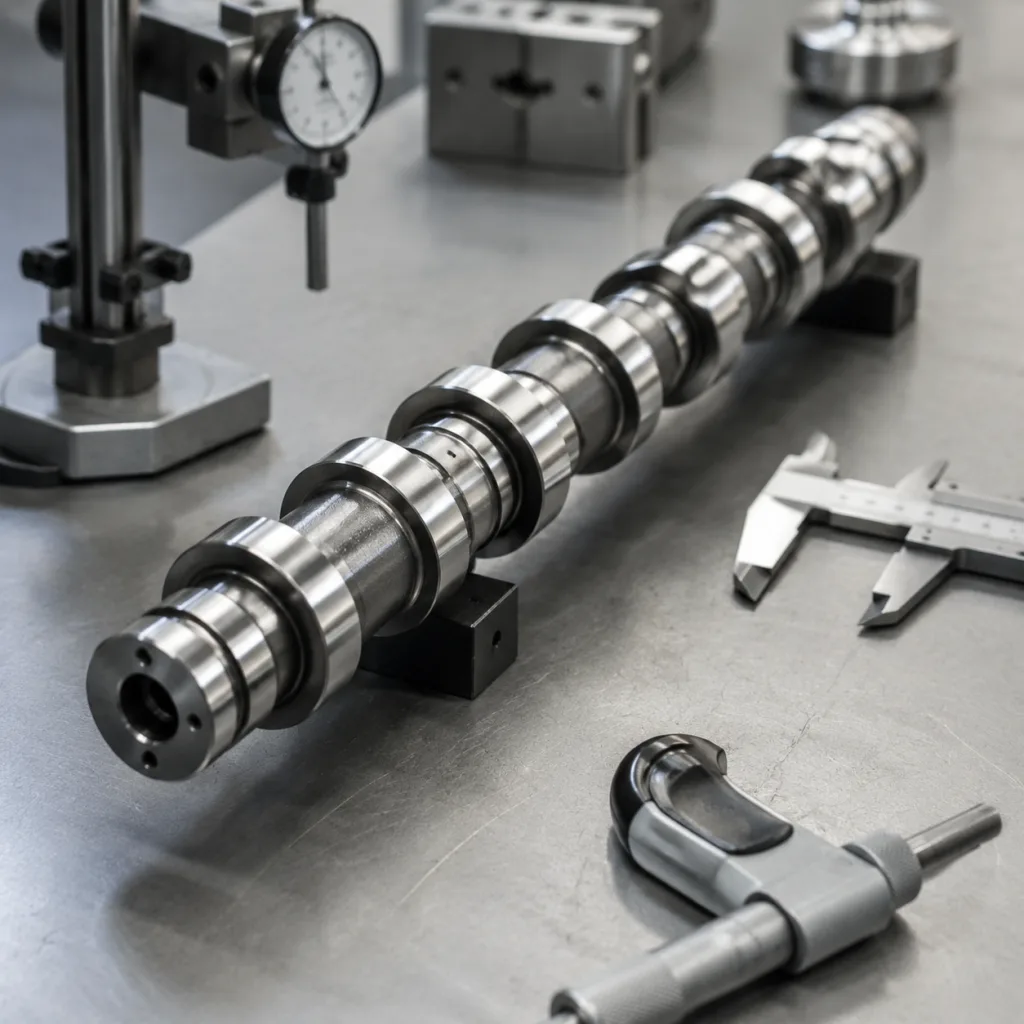
Connecting Rod for Buick Encore Aftermarket Replacement
Buying a connecting rod for Buick Encore aftermarket replacement is less about finding a part number and more about avoiding a costly mismatch. If the rod is off on centre-to-centre length, bore size, weight class, or fastener spec, the engine may assemble cleanly and still fail early.
For procurement teams, the decision usually comes down to three questions: does the rod match the OE geometry, is the material and heat treatment documented, and can the supplier prove lot-level consistency? Driventus supplies engine components from Taizhou, Zhejiang, with production controls aligned to IATF 16949:2016 and ISO 9001:2015. Driventus is an independent aftermarket manufacturer; brand names are referenced for fitment only.
This article is organized as a sourcing checklist, a failure-mode review, and a spec guide so buyers can confirm fit before they place volume orders.
Start with the failure modes, not the catalog listing
A Buick Encore rod replacement goes wrong in predictable ways. The part may physically fit the engine family and still create bearing noise, oil-film failure, or uneven load transfer after installation.
The most common failure points are not dramatic. They are dimensional drift, poor cap alignment, mismatched fastener behavior, and weak traceability across a production lot.
Watch for these risks before ordering:
Centre-to-centre length outside OE tolerance
Big-end bore variation after cap torque
Small-end bore that does not suit the pin fit
Weight spread that forces unplanned balancing work
Heat treatment that is not backed by test data
Driventus is an independent aftermarket manufacturer; brand names are referenced for fitment only. For catalog support, see our catalog and the engine range at /products/engine-components.html.
The fitment checklist buyers should use
For a connecting rod for Buick Encore aftermarket replacement, the cleanest purchasing method is to verify the OE cross-reference first, then compare the physical specification second. That order reduces wrong-part shipments and keeps workshop downtime under control.
Use this checklist before approval:
Check item
Buyer requirement
Centre-to-centre length
Matches OE drawing tolerance
Big-end bore
Verified after cap torque and honing
Small-end bore
Confirmed against pin specification
Beam geometry
No deviation that affects clearance
Fasteners
Correct type, grade, and torque method
Weight matching
Set-to-set balance control
Surface condition
No burrs, cracks, or edge damage
Traceability
Lot number and inspection record
</tr></thead><tbody> </tbody></table>If a supplier cannot document these items, the rod may still be usable in a loose aftermarket sale, but it is not suitable for controlled B2B replacement programmes. For process scope and documentation expectations, review our quality system.
What separates a usable rod from a risky one
The material name alone is not enough. Two rods can both be called forged steel and still behave differently under repeated load if the heat treatment, grain structure, or machining control is inconsistent.
A stronger supplier file should show:
Material specification tied to the application
Hardness results after heat treatment
Microstructure control or equivalent process evidence
CMM or gauging data for bore and length control
Crack detection on forged parts where applicable
For higher-duty programmes, buyers often ask for sampling across production batches rather than a single first-article report. That matters because fatigue performance depends on consistency, not just one good sample.
If your programme needs a non-catalog configuration, Driventus supports custom manufacturing for qualified B2B buyers with drawing and volume data.
How to compare supplier claims side by side
It helps to compare offers as a sourcing decision, not a price sheet. The lowest quote can become the most expensive part once returns, rework, and warranty exposure are counted.
A practical comparison should include:
OE cross-reference clarity
Dimensional documentation depth
Lot traceability and labeling quality
Packaging that protects bores and matched sets
Lead time stability across replenishment cycles
Support for pre-shipment technical confirmation
If you source rods alongside pistons, gasket sets, water pumps, or turbocharger-related parts, a broader engine-components supplier can also reduce vendor count and inbound inspection time. Many buyers combine those purchases to simplify procurement. For a direct sourcing enquiry, use request a quote.
Step-by-step: verify before installation
Even a correct rod can fail early if installation is rushed. Before assembly, the workshop should confirm the mechanical condition of the rest of the engine and check every fit-critical interface.
Follow this order: 1. Confirm bearing clearance with the selected shell size. 2. Verify rod bolt torque or stretch method for the fastener type. 3. Clean oil passages and mating surfaces thoroughly. 4. Match caps to their original rod bodies. 5. Inspect the crankshaft and cylinder condition before final assembly.
If the original rod failed because of oil starvation, hydrolock, or spun bearing damage, the root cause must be fixed first. Otherwise the replacement only postpones the same failure. In rebuild programs, buyers often pair the rod with bearings and gasket sets so the repair is complete rather than partial.
When test data matters more than marketing language
Replacement claims are only useful when they are supported by validation. For B2B procurement, the minimum package should include static dimensions, hardness verification, and a meaningful test trail for the intended duty level.
Common verification methods include:
CMM or dedicated gauging for bore and length control
Hardness testing after heat treatment
Magnetic particle or equivalent crack detection on forged parts
Cap bolt torque retention checks
Sampling for weight variation across production batches
Some buyers also reference SAE J2527 when durability-style corrosion and exposure testing is part of a broader validation plan. Vehicle-level references such as ECE R-83 may appear in context, but they are not rod approval standards.
For platform-specific needs, Driventus can support custom manufacturing when catalogue coverage is not the right fit.
Frequently asked questions
Driventus supplies aftermarket engine components designed for OE-equivalent fitment, subject to confirmed application data. Brand names are referenced for fitment only, and each order should be validated against the target engine code and OE cross-reference.
Request dimensional data, hardness results, lot traceability, and packaging details. For controlled programmes, also ask for inspection records tied to the production batch and the applicable quality system evidence.
Yes. Driventus supports custom manufacturing for qualified B2B buyers when the required specification is outside the standard catalogue. Share drawings, OE reference data, and annual volume through the contact form.
If you need pricing, technical confirmation, or a matched supply plan for this application, contact Driventus through /contact.html and our team will review your requirements.