connecting rod · 2026-06-16

Connecting Rod for BMW X5 Replacement: OE Match Guide

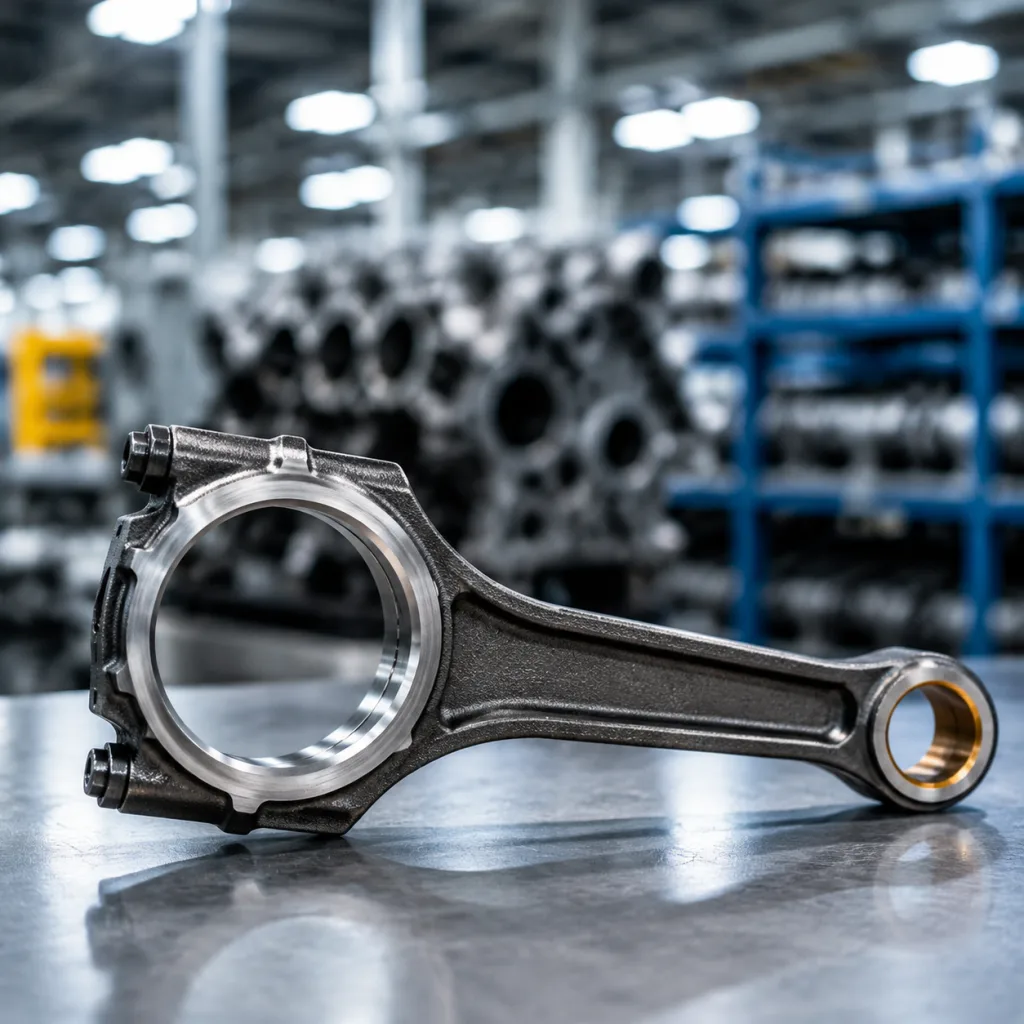
A connecting rod for BMW X5 replacement is not a generic bolt-on purchase. It has to match the engine family, center distance, big-end bore, small-end bore, bearing width, rod bolt specification, and target mass before it goes into service. The real sourcing risk is usually hidden in the details: dimensional drift between batches, inconsistent heat treatment, or a rod that fits the engine family on paper but changes the assembly balance in practice. That is why buyers need to check OE cross-references, metallurgy, hardness, surface finish, and inspection records, then confirm compatibility with the piston, pin, bearing shell, and crankshaft combination. Driventus is an independent aftermarket manufacturer; brand names are referenced for fitment only. For buyers comparing sources, the practical benchmark is OE equivalence backed by traceable inspection, repeatable machining, and batch-level control. Driventus supplies engine and powertrain components from Taizhou, Zhejiang, with IATF 16949:2016 and ISO 9001:2015 systems in place.

Start with the engine code, not the X5 badge

BMW X5 fitment changes by petrol, diesel, turbocharged, and market-specific variants, so the vehicle model alone is not enough to identify the correct rod. The safest starting point is the engine code, followed by the OE reference or supersession path.

Before you approve a purchase order, verify:

  • Engine code and displacement
  • OE reference or supersession path
  • Center-to-center length, usually confirmed to the nearest 0.1 mm
  • Big-end bore and width, checked after cap torque
  • Small-end bore, bush type, and pin fit clearance
  • Rod bolt size, thread form, and tightening method
  • Set mass-match tolerance, typically within 1 to 2 g for matched sets unless your build spec states otherwise
  • Material grade, heat-treatment route, and hardness range

If the engine is already dismantled, measure the removed part and confirm wear has not distorted the reference. For controlled sourcing, keep a sample-approved record tied to the part number, engine code, and production batch. For first articles, record a signed dimensional sheet, measured weight, and photos of the marking and packaging.

What makes one rod equivalent to another

Replacement buying usually comes down to whether the rod preserves the original geometry and load path. A part can look close and still fail the build if it shifts compression height, oil clearance, or reciprocating mass outside the engine builder’s limit.

</tr></thead><tbody> </tbody></table>Where an OE number is available, use it as a cross-reference only. Do not approve substitution on vehicle model alone. Also confirm whether the supplier is quoting per piece, per matched pair, or per full engine set, because that changes sorting, balancing, and receiving inspection requirements.

Spec deep-dive: material, process, and proof

A reliable rod depends on stable forging, controlled machining, and validation testing. Most passenger-car applications use forged steel or powdered-metal variants depending on engine design and load target. Procurement should request the actual material specification, heat-treatment method, and hardness range rather than relying on generic descriptions.

At minimum, ask for:

  • Chemical composition report
  • Heat-treatment record
  • Hardness data by batch, typically with a target and acceptable range such as HRC 28 to 36 or the OE-equivalent spec for that engine family
  • Dimensional inspection report with measured values, not only pass/fail status
  • Concentricity and straightness values
  • Fatigue, proof-load, or tensile test method and sample size
  • Finish requirements for the big-end cap, beam, and small-end bushing

A practical validation package should also identify inspection frequency, gauge calibration status, and the lot size covered by the report. If the application is high-load or modified, validate the full piston, pin, rod, and crank assembly rather than the rod alone. For repeat-build programs, ask for retention of master samples and a clear nonconformance process so rejected lots can be quarantined before assembly.

A practical sourcing sequence for buyers

For distributors, repair chains, and engine remanufacturers, the buying decision usually sits between stock availability and rebuild risk. A rod that is cheaper on paper can create more cost if it forces sorting, balancing, or rework at assembly.

Use this approval flow:

1. Match the OE reference and engine code. 2. Verify dimensions, mass, bolt specification, and surface condition against the sample. 3. Confirm supplier documents, packaging, batch traceability, and carton labeling before release to production.

For MOQ and pricing, ask for tiered quotations at the lot size you actually buy. Compare small-trial MOQ pricing, normal production pricing, and pallet or container pricing separately, because the unit cost can change materially with quantity. If a supplier offers a 50-piece MOQ but your annual demand is 1,000 pieces, request 100-piece, 300-piece, and 500-piece breaks so you can compare landed cost against inventory carrying cost. Lead time should be quoted by order type: sample, stock, standard production, and repeat order. Also ask when the clock starts: artwork approval, technical approval, or deposit receipt.

If you are building a wider engine programme, you may also align this purchase with related parts in our catalog, including the broader engine components range. For buyers needing a non-standard fit or a private-label supply model, custom manufacturing can align dimensions, marking, packaging, and carton configuration to programme requirements.

When to prefer a documented supplier

A replacement rod is a safety-critical engine part, so supplier control matters as much as geometry. The supplier should be able to show inspection records, batch traceability, and a stable production process, not just a catalog listing.

Driventus supports B2B buyers with documented quality control, export experience in 60+ countries, and production focused on engine and powertrain components. For plant audits or supplier onboarding, review the quality system before purchase approval. That makes it easier to compare offers on measurable factors: dimensional conformity, process control, packaging discipline, labeling accuracy, and lead-time reliability.

Before closing the deal, ask for three commercial details up front: quotation validity, payment terms tied to sample approval or production release, and warranty scope for dimensional or material nonconformance. Driventus is an independent aftermarket manufacturer; brand names are referenced for fitment only.

Frequently asked questions

Start with the engine code, not the body model. Then match OE reference, center distance, bore sizes, bolt spec, and mass tolerance against a sample or drawing before ordering. If possible, verify one physical sample with micrometer, bore gauge, and weight scale before approving the lot.

Ask for dimensional inspection data, material and heat-treatment records, hardness results, and batch traceability. For regulated markets, confirm REACH (EC) No 1907/2006 status where relevant. For production approval, also request packaging photos, carton labeling details, and the inspection lot size covered by the report.

Yes. If your program needs a modified dimension, private label, or packaging requirement, use [request a quote](/contact.html) and share the OE reference, engine code, target quantities, tolerance targets, and required lead time. Include whether you need sample pricing, MOQ pricing, or full-production pricing so the quotation matches your buying model.

If you need a documented replacement rod or a batch-based quotation, use [request a quote](/contact.html) and share the OE reference, engine code, required volume, target tolerance, and expected lead time.

Request a Quote
Verification item Typical sourcing check Why it matters
Center distanceCompare with OE sample or drawing; common tolerance target is ±0.05 mm to ±0.10 mmControls compression and geometry
Big-end boreMeasure after cap torque; check roundness and taperAffects bearing clearance and crush
Small-end boreCheck pin fit and bush finish; confirm clearance by pin specPrevents pin seizure and noise
Rod bolt specConfirm grade, thread form, length, and torque or stretch methodCritical for clamp load and fatigue resistance
Weight balanceMatch within the set tolerance; many buyers specify ±1 g or tighterReduces vibration and imbalance
Surface finishInspect machined areas and fillets; record Ra where availableSupports fatigue resistance