connecting rod · 2026-05-31

Connecting Rod for BMW 3 Series Aftermarket Replacement

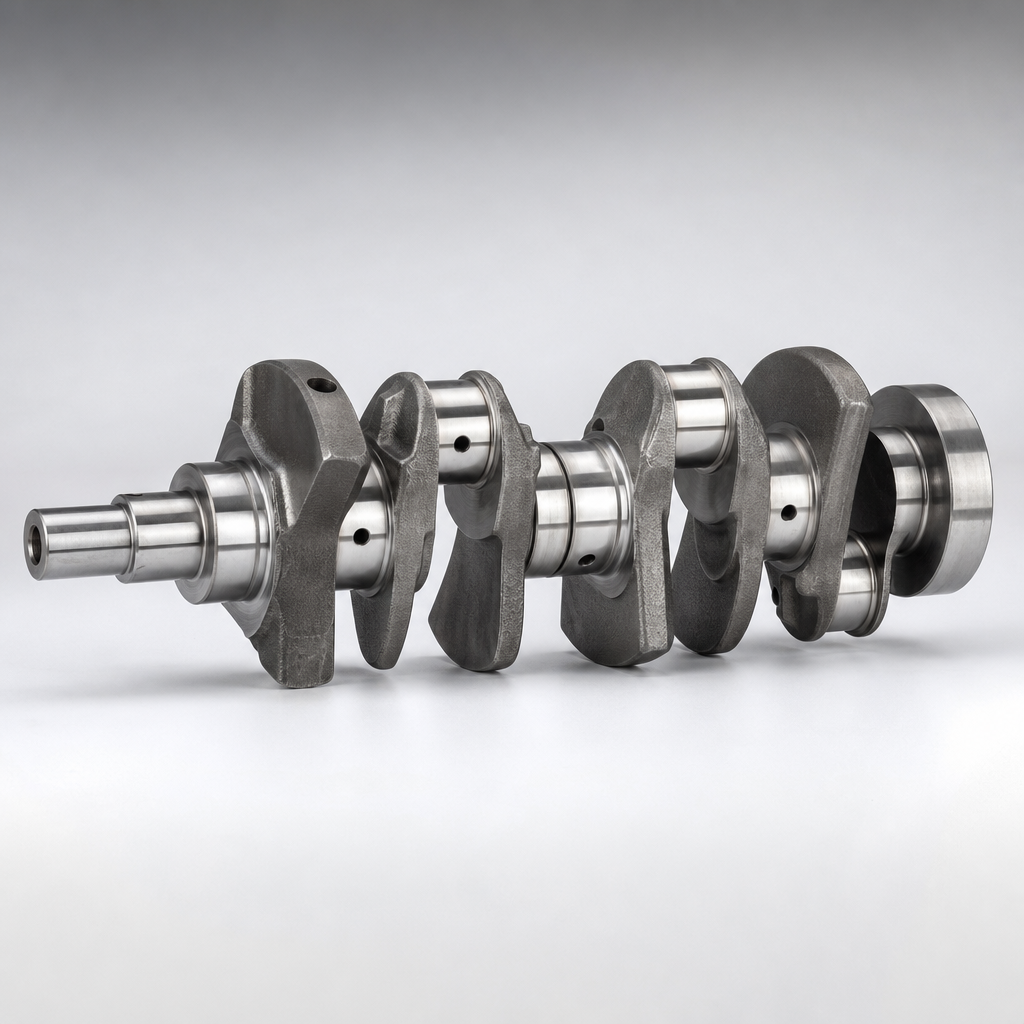
A connecting rod in a BMW 3 Series engine carries combustion and inertia loads between the piston pin and the crankshaft journal while keeping the bearing aligned through thousands of load reversals every minute. For an aftermarket replacement programme, the buying decision cannot rest on visual similarity or a catalogue cross-reference alone. The rod has to match the original geometry, material condition, big-end and small-end dimensions, cap alignment, fastener specification, mass range, and bearing interface closely enough to protect engine balance, oil-film stability, and long-term durability.

For distributors, engine rebuilders, fleet maintenance buyers, and importers, the commercial risk is straightforward: a low-cost rod with weak dimensional control can create warranty claims far beyond the value of the part. Driventus supplies replacement rods for selected BMW 3 Series applications with controlled drawings, batch traceability, inspection records, defined sampling plans, and production workflows aligned to IATF 16949:2016 and ISO 9001:2015 processes. Where export markets require it, we also review restricted-substance compliance under REACH (EC) No 1907/2006.

Driventus is an independent aftermarket manufacturer; BMW and related model names are referenced for fitment identification only. This guide explains what procurement and engineering teams should verify before approving a connecting rod for BMW 3 Series aftermarket replacement, how to compare supplier claims, and how to tell an OE-equivalent replacement component from a part that only looks correct in a catalogue photo.

What Must Match For Fitment

Fitment starts with the exact engine application, not the vehicle name alone. The BMW 3 Series has used multiple petrol and diesel engine families, and rod specifications can vary by engine code, production period, piston design, crankshaft journal diameter, wrist-pin diameter, bushing style, and rod bolt configuration. Buyers should confirm the engine code and part revision before comparing price, because two rods that look similar on a screen may differ in centre-to-centre length, big-end housing width, cap split design, beam offset, tang position, or bolt seat geometry.

A useful fitment checklist includes centre-to-centre length, big-end housing bore after cap tightening, big-end width, small-end bore, pin bushing material, oil-hole arrangement, beam profile, cap alignment method, and rod bolt thread specification. Inspection should focus on micron-level housing-bore control, not only millimetre-level overall dimensions. The bearing housing must also suit the intended bearing shell, including correct bearing crush, side clearance, and journal interface. If a rod is installed with the wrong bearing selection, the engine may show low oil pressure, bearing wipe, start-up knock, abnormal oil temperature, or premature crankshaft damage even when the rod itself appears new.

Procurement teams should also confirm whether the engine is standard or previously rebuilt. A remanufactured engine may have an undersize crank journal, non-standard service bearings, changed piston compression height, honed or rebushed small ends, or aftermarket pistons with a different pin diameter. In those cases, fitment becomes a system decision involving the rod, piston, crankshaft, bearing shell thickness, bearing crush, and bolt clamp load. It is not a single-part purchase. For recurring B2B supply, the safest process is to approve the rod against a signed drawing, a verified OE sample, and the expected service bearing specification.

A practical approval sequence is:

  • Identify the exact engine code, displacement, fuel type, and target model-year range.
  • Confirm OE reference, sample dimensions, and any supersession history.
  • Measure centre-to-centre length, big-end bore, small-end bore, big-end width, and beam offset using calibrated gauges or CMM inspection.
  • Verify rod bolt diameter, thread pitch, under-head seat form, torque method, and whether bolts are reusable or torque-to-yield.
  • Check bearing compatibility, crank journal size, bearing tang position, and piston pin specification.
  • Confirm whether rods are supplied individually, as balanced engine sets, or as part of a piston-bearing-bolt rebuild kit.
  • Approve the production revision and control plan before placing volume orders.

When you need a broader selection, see our catalog or the dedicated engine components range.

Material, Heat Treatment, And Load Path

A connecting rod is not simply a shaped piece of steel. It is a fatigue-critical load path between combustion pressure at the piston crown and rotational force at the crankshaft. In service, the rod is compressed on the power stroke and pulled in tension near top dead centre during exhaust and intake events. At higher rpm, tensile loading from piston inertia can exceed combustion compression load. That is why material condition, grain flow, heat treatment, machining accuracy, and fastener clamp load matter as much as the nominal part number.

For most BMW 3 Series aftermarket replacement applications, forged alloy steel is preferred because forging can align grain flow with the beam and big-end eye and improve fatigue resistance compared with poorly controlled cast or machined-from-bar alternatives. Common production routes include forged carbon or alloy steels, quenched and tempered grades, or micro-alloy grades depending on the OE design. Still, the word “forged” does not prove much by itself. Buyers should ask how the supplier controls raw material chemistry, steel heat number, forging temperature window, die wear, heat-treatment cycle, hardness range, shot peening intensity where specified, machining sequence, cap fracture or dowel/sleeve alignment process, and final bore sizing. Weak control at any of these steps can create local stress concentration, post-machining distortion, or inconsistent bearing housing roundness.

Rod bolts deserve separate attention. The bolt is part of the clamping system that keeps the cap stable under high cyclic load. A rod with acceptable beam strength can still fail if the bolt grade, thread engagement, under-head radius, washer or seat condition, lubrication instruction, or torque-angle method is wrong. For B2B buyers, the supplier should state whether bolts are included, what grade or specification they meet, whether they require stretch measurement or torque-angle tightening, and whether replacement bolts are available for service channels. Fastener instructions should be supplied in the same lot documentation as the rods, not left for the installer to infer.

A practical material and process specification should cover:

  • Controlled alloy chemistry with mill certificate, heat number, and batch-level traceability.
  • Forging process control, flash trimming control, and grain-flow consistency around the beam and big-end eye.
  • Heat treatment with defined hardness range and verification records, including recheck frequency.
  • Shot peening or controlled surface finishing where required for fatigue performance.
  • Small-end bushing material, interference fit, oil-hole position, and final bore finish.
  • Straightness, twist, and cap fit control after rough machining, heat treatment, and finish machining.
  • Big-end housing bore sizing after cap assembly with the specified fastener and tightening method.
  • Consistent beam profile and mass grouping across each engine set.
  • Rod bolt supply matched to clamp-load and tightening requirements.
  • Corrosion protection suitable for sea freight, warehouse storage, and export handling.

For supplier comparison, request process evidence from the quality system, not only a catalogue claim or dimensional drawing. Material claims without inspection data do not reduce risk, especially when the part will be sold into warranty-sensitive rebuild or distribution channels.

Dimensions That Matter

A connecting rod can be close enough to install and still be wrong enough to damage an engine. The dimensions that matter most are the ones controlling piston position, bearing oil film, cap stability, side clearance, and rotating balance. Small deviations may not be visible during assembly, but they can produce uneven bearing loading, piston-to-head clearance variation, skirt noise, vibration, or fatigue cracking after the engine is back in service.

Centre-to-centre length determines where the piston sits in the cylinder at top and bottom dead centre. Big-end bore size, roundness, and taper control bearing crush and oil clearance. Big-end width affects side clearance on the crank journal and the oil escape path. Small-end bore size and bushing finish influence wrist-pin fit, lubrication, and noise. Beam offset determines alignment between piston and crank journal. Weight matching across a set affects engine balance and vibration. Bolt seat geometry affects clamp load and cap movement. Each feature should be measured against the approved drawing, not estimated from a sample photo.

Typical aftermarket approval limits are programme-specific, but critical connecting-rod characteristics are commonly held in tight ranges. Housing-bore roundness and taper are often checked in microns after bolt tightening. Centre distance is commonly controlled within a few hundredths of a millimetre. Engine sets are usually weight grouped so total mass and end-to-end mass do not create balance variation. The exact tolerance must come from the approved drawing and engine application, not from a generic catalogue standard.

</tr></thead><tbody> </tbody></table>For recurring supply, buyers should request CMM data, bore-gauge records, weight records, and a sample approval report for the exact revision being ordered. A generic family drawing is not enough when several engine variants share a similar appearance. If the supplier provides production in sets, ask how rods are weight grouped, marked, and packed so a rebuilder does not receive mismatched units from different batches.

Measurement discipline matters as much as the stated tolerance. Critical bores should be checked with calibrated gauges at defined torque and temperature conditions, typically in a controlled inspection area near 20°C where feasible. Big-end measurements should be taken after the cap is assembled with the specified bolt, lubricant condition, and tightening method, because bore shape can change with clamp load. If the inspection method does not match the assembly condition, the data may look acceptable while the installed part behaves differently.

Validation And Documentation

For B2B aftermarket replacement supply, documentation is part of the product. Importers, distributors, and engine rebuilders need evidence that the connecting rod was produced under a controlled process and that the delivered lot matches the approved sample. Without records, a buyer has limited protection against mixed revisions, uncontrolled material substitution, inconsistent heat treatment, fastener substitution, or dimensional drift between orders.

Driventus structures production and inspection workflows under IATF 16949:2016 and ISO 9001:2015 process principles, including incoming material control, in-process inspection, final release checks, and lot traceability. For Europe and other regulated markets, buyers may also request REACH (EC) No 1907/2006 declarations or restricted-substance statements. These records help importers and distributors answer customer questions before parts reach the warehouse or repair network.

A sound validation pack for a connecting rod for BMW 3 Series aftermarket replacement normally includes:

  • Approved drawing with revision status, critical-to-quality dimensions, datum scheme, and marked inspection frequency.
  • Sample approval or first-article inspection report against the signed drawing.
  • Material certificate showing steel grade, heat number, chemical composition, and supplier traceability.
  • Heat-treatment and hardness records where applicable.
  • Surface-treatment or shot-peening confirmation where specified.
  • Dimensional report for centre distance, big-end bore, small-end bore, width, offset, straightness, and twist.
  • Big-end roundness and taper data after assembly with specified bolts, lubricant condition, and torque or torque-angle procedure.
  • Weight-matching record for sets, including total mass and end-to-end mass where required.
  • Rod bolt specification, tightening instruction, replacement guidance, and service-part availability.
  • Packaging specification, rust-prevention method, desiccant or VCI use where required, and storage recommendation.
  • Lot number, production date, carton identification, and pallet identification for traceability.
  • Compliance statements such as REACH declarations for relevant export markets.

Validation should also cover packaging and handling. Connecting rods have precision-machined bores, cap parting faces, bolt seats, and bearing interfaces that can be damaged by impact, corrosion, or abrasive contamination during shipment. Export packaging should separate parts, protect machined surfaces, prevent cap-to-rod mismatch, maintain identification labels, and support warehouse traceability. For sea freight or long storage periods, anti-corrosion treatment and moisture control should be specified in advance.

If a supplier cannot produce these documents, the part may still be inexpensive, but it is not low-risk. Procurement teams should treat missing records as a quality signal, not an administrative inconvenience. Strong documentation reduces dispute time, supports warranty analysis, and helps buyers maintain consistent supply across repeat orders.

Sourcing For B2B Supply

B2B buyers usually source replacement connecting rods through two routes: catalogue stock for common engine applications, or custom manufacturing for programmes that require a specific dimensional revision, weight range, finish, packaging format, or private-label arrangement. Catalogue supply is useful when speed and standard fitment are the priority. Custom or controlled production is better when the application has multiple engine revisions, when the buyer needs consistent repeat supply, or when the rod must be matched to a rebuild kit that includes pistons, bearings, bolts, and gaskets.

A complete sourcing decision should evaluate engineering capability, manufacturing control, documentation, lead time, packaging, minimum order quantity, and after-sales responsiveness. Unit price matters, but a lower unit price can become expensive if it leads to mixed revisions, inconsistent bolt supply, rejected shipments, or field failures. For distributors and rebuilders, continuity is especially important: the second and third orders must match the approved first order in drawing revision, fastener pack, weight grouping, and carton identification.

Use these questions to qualify a supplier:

  • Can they confirm fitment by engine code, OE reference, production date range, and approved drawing revision?
  • Can they support repeat orders with the same revision and controlled batch traceability?
  • Will they provide dimensional control data for each production lot or an agreed AQL/sampling plan?
  • Are material certificates, hardness data, surface-treatment records, and bolt specifications available on request?
  • Can they supply rods individually or as weight-matched sets according to the buyer’s sales channel?
  • Are rod bolts included, packed separately, or supplied as optional service parts?
  • Do they provide export-ready carton labels, packing lists, pallet labels, and compliance documents?
  • Can packaging protect machined bores, cap faces, and bolt seats while preventing corrosion during sea freight and storage?
  • Can they adapt tooling, bushing specification, surface treatment, or weight window if the platform changes?
  • Do they have an engineering contact who can review samples, drawings, and inspection findings before volume purchase?

For importers, it is also useful to define order quantities, forecast cadence, carton quantities, pallet requirements, Incoterms, barcode or label standards, and country-of-origin marking before production begins. For rebuilders, the key questions are whether the rods are supplied with bolts, whether the bolts require replacement after tightening, how the set is weight matched, and whether undersize bearing scenarios have been considered. For private-label customers, carton artwork, neutral packaging, brand-free cast or forged markings where feasible, and batch-code placement should be agreed before shipment.

If you need a cross-reference conversation with engineering and procurement together, start with custom manufacturing or request a quote. For buyers comparing part families, a stable supply plan matters as much as unit price. The goal is not just to buy a connecting rod; it is to build a repeatable sourcing programme that protects fitment, documentation, margin, and customer trust.

Frequently asked questions

Match the engine code, OE reference, centre-to-centre length, big-end housing bore, small-end dimensions, big-end width, beam offset, bolt type, bearing tang position, and piston pin specification. If the engine was previously rebuilt, also verify crank journal size, bearing selection, and any piston changes. A visual match is not enough.

Yes. An aftermarket rod can be suitable for daily-driver use if it matches the required geometry, material condition, bolt specification, bearing interface, and dimensional tolerances, and if the supplier can document process control and inspection. For a BMW 3 Series engine, failure risk usually comes from poor dimensional control or incorrect application matching rather than the aftermarket label itself.

Ask for the approved drawing, first-article or sample approval report, material certificate, dimensional report, hardness data where applicable, rod bolt specification, tightening guidance, packaging specification, batch traceability, and compliance statements such as REACH declarations when selling into Europe. These records help separate a controlled replacement part from an uncontrolled commodity copy.

If you are qualifying a new source for a BMW 3 Series rod programme, we can review drawings, samples, inspection requirements, weight matching, packaging needs, and export documentation with your team. Start here: [request a quote](/contact.html).

Request a Quote
Check Why it matters What to verify
Centre-to-centre lengthControls piston deck position, compression height, and rod ratioMatch approved drawing and verified OE sample; inspect on fixture or CMM
Big-end bore diameterControls bearing crush and oil clearanceMeasure after cap assembly with specified bolts and calibrated bore gauge
Big-end roundness and taperPrevents uneven bearing load and hot spotsConfirm housing shape at multiple clock positions after final torque or torque-angle tightening
Big-end widthAffects crankshaft side clearance and oil flowVerify width against crank journal and bearing design
Small-end boreAffects pin fit, noise, and oil filmConfirm pin diameter, bushing material, interference fit, oil-hole position, and surface finish
Small-end parallelismPrevents side loading on piston and pinCheck alignment to big-end axis
Beam straightness and twistInfluences piston alignment and stress distributionInspect with fixture or CMM where required
Beam offsetAligns piston centreline to crank journalConfirm offset direction and value for the application
Total and end-to-end massInfluences balance and vibrationConfirm set matching tolerance for reciprocating and rotating mass
Bolt seat geometryDetermines clamp load and cap stabilityVerify bolt grade, seat face, thread, under-head contact, and tightening method