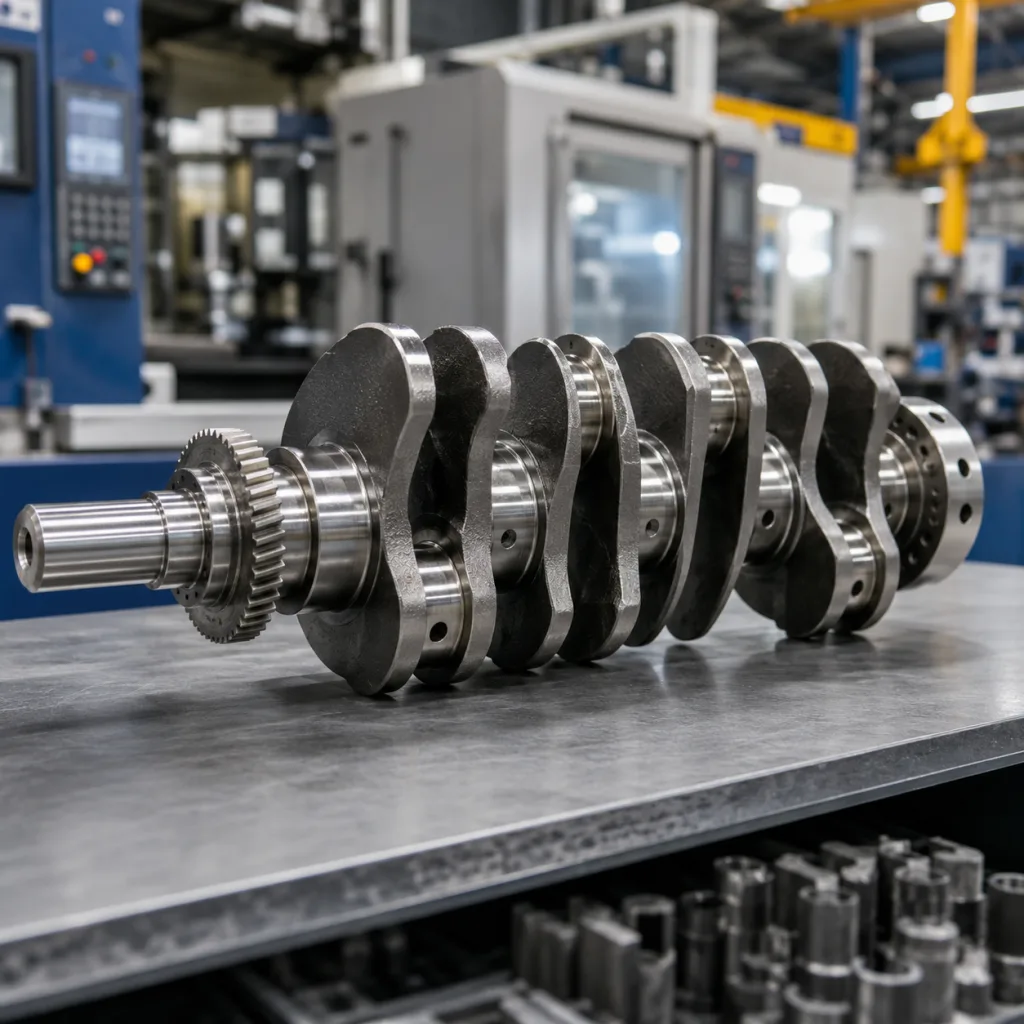
Connecting Rod Alfa Romeo Wholesale: Procurement Guide
Procurement teams sourcing a connecting rod alfa romeo wholesale programme need more than a part number and a unit price. The real variables are engine-code fitment, centre-to-centre length, big-end and small-end bore size, bolt specification, material grade, heat treatment, and the supplier's ability to repeat production without drift. In aftermarket and trade channels, even small differences in length, bore concentricity, or rod weight can lead to balance variation, noise, oiling issues, or premature bearing wear. Driventus is an independent aftermarket manufacturer; brand names are referenced for fitment only. Our approach is to match each rod to the engine family, verify the full measurement set, and control the pack-out so distributors, repair chains, and importers receive consistent stock. If you are comparing suppliers, begin with the documents, the inspection method, and the production system before you focus on price.
What buyers should verify before placing a wholesale order
For Alfa Romeo applications, the part description alone is not enough. A purchasing team should verify the engine code, displacement, model year range, rod length, piston pin diameter, big-end bore, small-end bore, and complete assembly weight before committing to volume. The same vehicle nameplate can cover multiple engine families and revision levels, so fitment has to be confirmed at the engine-code level rather than by badge alone.
Use this procurement checklist:
- Engine family and displacement
- OE or reference number mapping, if available in your internal catalogue
- Centre-to-centre length and journal compatibility
- Big-end and small-end bore tolerance band
- Beam profile, cap design, and connecting-rod bolt specification
- Surface treatment, shot peening, and magnetic particle inspection status
- Packaging format for warehouse and kit assembly
- Pairing rules for weight-matched sets or mixed-service kits
A supplier should be able to provide measured dimensions, incoming material traceability, and the inspection plan used on the production line. For rod buyers, a useful acceptance pack normally includes the sample size, the measuring instruments used, and the pass/fail criteria applied during final inspection. If those records are missing, the lower unit price is usually offset by sorting costs, returns, line interruptions, or customer complaints. For buyers building a wider engine range, our catalog and engine components page are the fastest way to map related part families and identify adjacent SKUs that can be bundled into a broader wholesale programme.
Spec targets that matter in production
A reliable connecting rod is controlled by a limited set of measurable variables. The exact target depends on the engine application, but the following specification areas should always be defined in the purchase order and confirmed against the approved sample. Without explicit targets, even a well-made rod can arrive with small variations that create balancing or assembly problems downstream.
| Control item | Why it matters | Typical buyer request |
|---|---|---|
| Centre-to-centre length | Affects compression height, deck position, and compression ratio | Measured report with stated tolerance band |
| Big-end bore | Controls bearing crush, clearance, and oil film stability | Bore size after final machining and honing |
| Small-end bore | Affects pin fit and pin float | Diameter, roundness, and finish data |
| Rod weight | Impacts balance across the set | Individual weight and matched-set spread |
| Material and heat treatment | Determines fatigue resistance and dimensional stability | Material certificate and heat-treatment record |
| Surface condition | Influences crack resistance and wear life | Shot-peen coverage, finish, and inspection method |
| Bolt specification | Affects clamping force and service life | Fastener grade, torque spec, and lot traceability |
| Sourcing model | Best for | Trade-off |
|---|---|---|
| Stock supply | Fast replenishment, established fitment, and repeat demand | Less flexibility on markings and packaging |
| Custom run | Private label, special packing, non-standard specs, or application-specific labels | Longer lead time and higher MOQ |
| Mixed programme | Core SKUs in stock, slow movers on build-to-order | Requires tighter demand planning and forecast discipline |