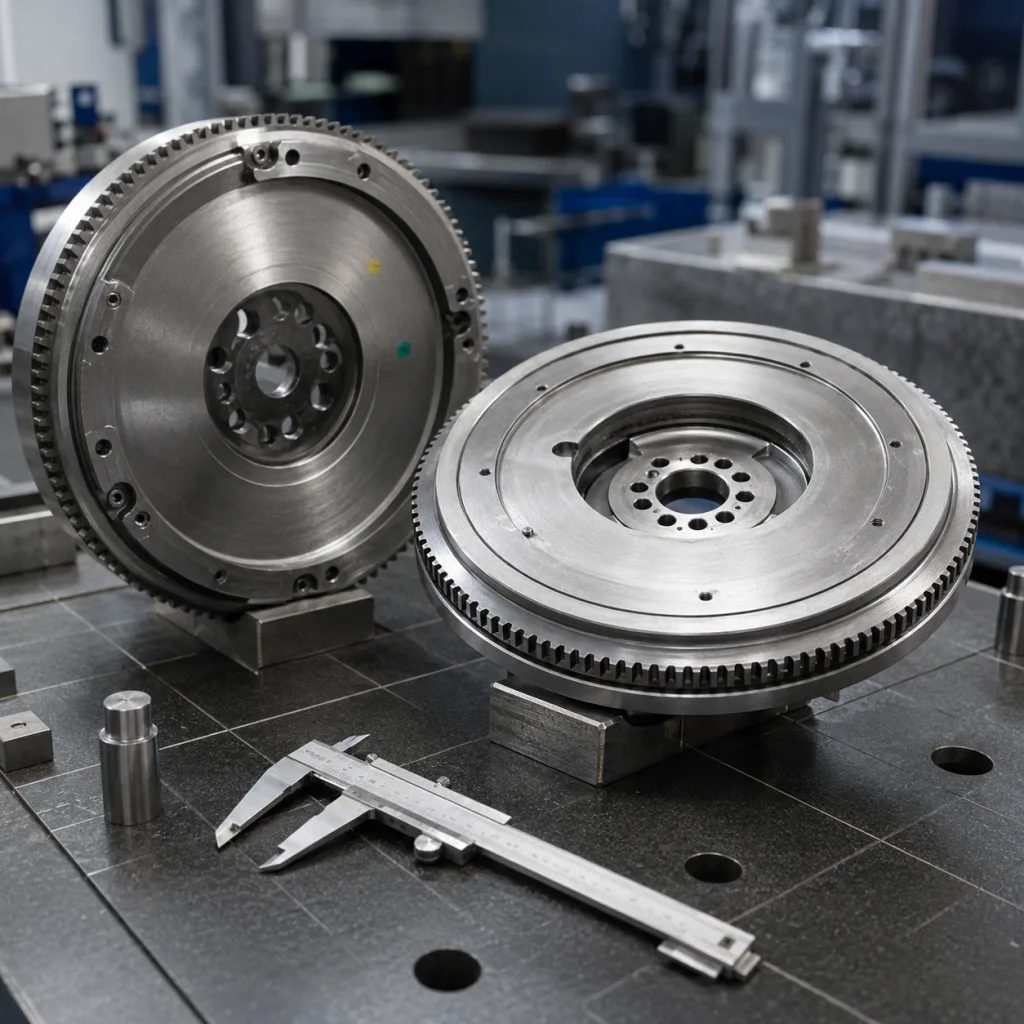
A clutch kit Mercedes-Benz replacement programme has to control more than basic vehicle fitment. For distributors, repair-chain buyers, and import managers, risk often comes from dimensional mismatch, inconsistent clamp load, friction-material variation, incomplete kit contents, or unclear warranty handling. A typical kit includes a clutch cover assembly, driven plate, release bearing or concentric slave cylinder where the application requires it, and specified installation hardware. Each component must match the intended vehicle envelope and be packed as a traceable set. Driventus manufactures powertrain components in Taizhou, Zhejiang, and supplies independent aftermarket clutch kits for export markets. Our focus is OE-equivalent dimensions, repeatable diaphragm spring performance, balanced driven plates, and batch documentation aligned with IATF 16949:2016 and ISO 9001:2015. Driventus is an independent aftermarket manufacturer; vehicle brand names are referenced for fitment identification only.
Fitment Scope and OE-Equivalent Matching
Mercedes-Benz applications include rear-wheel-drive passenger cars, front-wheel-drive compact platforms, SUVs, and light commercial vehicles. Across these platforms, clutch kits may differ by flywheel type, transmission input spline, release system, cover height, hub offset, and market-specific model-year coverage. A replacement range should therefore be built from validated application data, not from clutch diameter alone.
For procurement review, request the following fitment controls from the supplier:
Vehicle application table by model, engine code, transmission code, model year, and market region.
OE part-number cross-reference where applicable, based on buyer-supplied references and verified application conventions.
Clutch cover bolt circle, dowel position, mounting-face height, and cover profile checked against drawings or approved samples.
Driven plate outside diameter, facing thickness, hub spline count, hub offset, damper layout, and torsional spring configuration.
Release bearing or concentric slave cylinder interface dimensions, including bearing face profile, guide-tube fit, hydraulic connection, and travel range where relevant.
A correct clutch kit Mercedes-Benz replacement SKU should install without modifying the flywheel, pressure-plate mounting face, release fork, guide tube, or hydraulic line. Visual similarity is not enough: small differences in cover height, spline fit, or release bearing geometry can create field failures, catalogue disputes, and labour claims for distributors and repair chains.
Critical Specifications Buyers Should Confirm
The table below gives sourcing teams a practical specification checklist when comparing replacement clutch kits across suppliers. Exact values vary by application, but each parameter should be controlled, measured, and supported by inspection or test evidence.
Item
Procurement check
Why it matters
Cover assembly
Clamp-load curve, release-load curve, lift height, and diaphragm spring consistency
Controls torque capacity, disengagement, and pedal feel
Driven plate
Diameter, facing thickness, runout, spline fit, and hub offset
Helps prevent drag, judder, poor release, and input shaft wear
Friction lining
Material grade, rivet pattern, coefficient stability, and heat resistance
Affects engagement behaviour, slip resistance, and service life
Damper springs
Spring rate, free play, travel stop design, and hub retention
Reduces gear rattle, driveline shock, and premature hub noise
Release component
Bearing clearance, bearing noise, grease specification, or CSC hydraulic interface
Reduces premature bearing failure and release-system complaints
Balance
Cover and disc dynamic balance records
Limits vibration at engine speed and supports smoother operation
Packaging
Set-level traceability label, corrosion protection, and part-content verification
Supports claims investigation, warehouse storage, and order accuracy
</tr></thead><tbody> </tbody></table>Typical production controls include driven plate runout measurement, spline gauge checks, cover lift measurement, clamp-load testing, release-load testing, and release-bearing noise inspection. For buyers building a multi-SKU range, controls should also include kit-content verification so the correct bearing, hydraulic release unit, bolts, and accessories are packed with each application. Driventus can provide catalogue coverage through our catalog, and application-specific drawings can be reviewed through custom manufacturing when private-label, regional, or market-specific kit configurations are required.
Validation Testing for Replacement Programmes
A replacement clutch kit is not validated simply because it bolts onto the vehicle. Buyers should understand how the kit performs under thermal load, repeated engagement, release travel variation, vibration, and storage exposure. This is especially important for applications using dual-mass flywheels, hydraulic release systems, or high-mileage vehicle populations.
Common validation checks include:
Clamp-load and release-load measurement across pilot samples and production batches.
Static torque capacity testing against the intended engine torque range and safety margin.
Burst testing of the driven plate and cover assembly at defined rotational speed margins.
Thermal cycling to assess friction-lining stability, cover distortion, and clamp-load retention.
Engagement and disengagement checks to detect drag, slip, judder, or incomplete release risk.
Dimensional verification after assembly, including cover height, disc runout, and bearing interface position.
Salt-spray or humidity exposure checks for exposed steel parts where required by the buyer or market.
Noise inspection for release bearings, concentric slave cylinders, and pilot-related interfaces.
Quality planning should be tied to IATF 16949:2016 process-control methods and ISO 9001:2015 documentation practices. Materials and surface treatments for export markets may also need review against REACH (EC) No 1907/2006, particularly where friction materials, coatings, greases, rubber parts, or packaging chemicals are specified by an importer. Driventus can align inspection records, traceability, and corrective-action reporting with a buyer’s quality system requirements.
Replacement Failure Modes and Inspection Points
Warranty returns are expensive because the kit price is often lower than the associated labour claim. Procurement teams should separate product-related defects from installation errors and vehicle-condition issues, then confirm that the supplier can provide clear inspection criteria and evidence-based claim support.
Judder: Uneven friction surface, excessive disc runout, flywheel hot spots, poor engine or gearbox mounting, or incorrect installation sequence.
Drag: Incorrect hub offset, warped disc, tight spline fit, poor spline lubrication, air in the hydraulic system, or release travel fault.
Noise: Bearing grease failure, incorrect release bearing geometry, worn guide tube, damaged pilot bearing, or damper spring looseness.
Hard pedal: Cover spring mismatch, release-system friction, incorrect bearing travel, guide-tube wear, or hydraulic restriction.
A structured claim process should record installation mileage, vehicle identification, flywheel condition, hydraulic-system status, photos of friction surfaces, and the batch code from the kit. For a clutch kit Mercedes-Benz replacement range, this information is essential because many applications use dual-mass flywheels, and an out-of-limit flywheel can damage a new kit quickly. Supplier support should include failure-analysis photos, measurement records, retained-sample comparison, and corrective-action timing rather than informal opinions.
Sourcing Controls for Distributors and Repair Chains
For B2B buyers, a clutch kit programme is usually managed by SKU coverage, fill rate, private-label packaging, sell-through, and return rate. Technical approval should therefore be connected to supply-chain controls from the first quotation stage, not added after the product is already in stock.
Recommended sourcing requirements:
Confirm IATF 16949:2016 and ISO 9001:2015 certificate scope, issuing body, and expiry dates.
Request production process flow, control plan summary, incoming material checks, and key inspection points.
Define packaging requirements for master carton strength, inner protection, labels, barcode format, language, and country-of-origin marking.
Agree batch traceability format before first shipment, including how codes appear on cartons, labels, and internal records.
Set AQL inspection criteria for visual defects, missing parts, corrosion, incorrect labels, mixed contents, and damaged cartons.
Require sample approval before mass production, including dimensional report, functional test summary, and packaging confirmation.
Define warranty return evidence, response time, credit rules, and corrective-action expectations in the supply agreement.
For importers, Incoterms, carton dimensions, pallet configuration, minimum order quantity, lead time, and mixed-SKU loading rules should be fixed early. For repair-chain buyers, the main control is consistency: technicians expect every kit to include the correct release component, alignment tool where specified, installation notes where required, and clear identification at the point of use. A stable clutch kit Mercedes-Benz replacement line reduces catalogue disputes, warehouse handling errors, and labour-related claims.
How Driventus Supports Replacement Programmes
Driventus supplies independent aftermarket powertrain components for customers in the EU, UK, US, Canada, Australia, Brazil, and other export markets. For clutch kits, our work is centred on controlled fitment data, repeatable mechanical performance, and documentation that procurement teams can audit before and after shipment.
Support can include:
Application mapping by vehicle, engine, transmission, model year, and market.
Sample development from buyer drawings, approved samples, or cross-reference lists.
Dimensional inspection reports for cover assemblies, driven plates, release components, and kit-level packaging.
Functional test summaries covering clamp load, release load, runout, spline fit, balance, and bearing inspection where applicable.
Batch-level traceability with production records, inspection records, and retained-sample management.
Private-label carton, label, barcode, and packing-list support for distributors.
Pre-shipment inspection according to agreed AQL criteria and buyer-specific checklist requirements.
Driventus does not claim approval, sponsorship, or endorsement by any vehicle manufacturer. Driventus is an independent aftermarket manufacturer; vehicle brand names are referenced for fitment identification only. Buyers evaluating a clutch kit Mercedes-Benz replacement range can review our catalog, compare technical controls under our quality system, discuss custom manufacturing, or request a quote for defined applications.
Frequently asked questions
A typical kit includes the clutch cover assembly, driven plate, release bearing or concentric slave cylinder where applicable, and specified hardware. Some applications may also require an alignment tool, bolts, or installation notes. Buyers should confirm kit contents by application rather than relying on generic clutch diameter.
Check application data, buyer-supplied OE cross-references, clutch diameter, spline count, hub offset, cover height, bolt pattern, release interface, and sample test results. Physical sample approval and dimensional reporting are recommended before placing volume orders.
Yes. Driventus can support private-label packaging, application mapping, inspection records, carton formats, labels, and agreed barcode requirements for distributors and repair-chain buyers. Requirements should be confirmed during sampling and quotation.
If you are building or reviewing a replacement clutch kit programme, share your application list, target market, packaging requirements, and inspection criteria with Driventus. We can review feasibility and provide sourcing details at /contact.html.