clutch kit · 2026-06-18

Clutch Kit Manufacturer China: Sourcing Guide

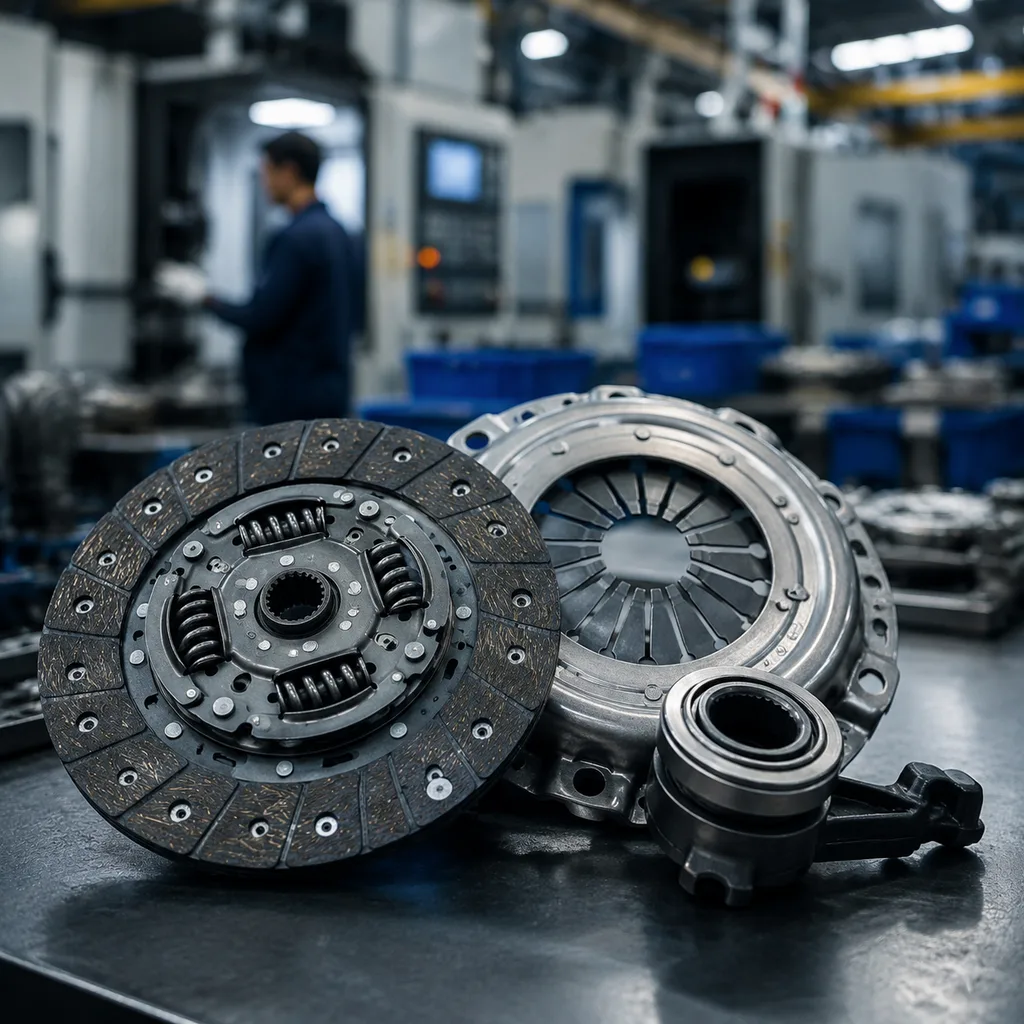
For procurement teams, choosing a clutch kit manufacturer in China is a sourcing decision, not a brochure exercise. The real test is fitment control, material consistency, traceable batches, and a delivery plan that matches programme demand. Driventus Auto Parts manufactures engine and powertrain components in Taizhou, Zhejiang, and supplies B2B buyers in the aftermarket, OEM/Tier-1, and repair-chain channels. We are certified to IATF 16949:2016 and ISO 9001:2015, and we support OE part-number cross-references where application data is available. Driventus is an independent aftermarket manufacturer; brand names are referenced for fitment only. If you are comparing suppliers, review friction material, cover-plate load, release-bearing type, runout, balancing, corrosion protection, and packaging. Also confirm MOQ, lead time, sampling method, and whether the factory can support custom manufacturing for special applications.

How to choose a clutch kit source in China

A clutch kit is a matched assembly, so the first decision is not price. It is whether the factory can prove control over fitment, consistency, and traceability.

Use this short checklist before you spend time on samples:

  • `IATF 16949:2016` and `ISO 9001:2015` certification status
  • OE cross-reference data for the exact application, such as `OE 06A107065` when applicable
  • Friction lining material, diaphragm spring grade, and cover-plate steel specification
  • Dynamic balance, flatness, and concentricity controls
  • Packaging method for export transit and warehouse handling

If the market is regulated, ask whether material declarations align with `REACH (EC) No 1907/2006` and whether any application needs friction or performance validation against recognised test methods. For buyer teams building a shortlist, our quality system explains how inspection and traceability are handled before shipment.

Spec points that separate a good quote from a weak one

Procurement teams should compare clutch kits using measurable data, not general descriptions. If a supplier cannot quote the numbers, the quote is not ready for a serious RFQ.

</tr></thead><tbody> </tbody></table>If your programme spans multiple vehicle platforms, ask for a part matrix and dimensional drawing pack. That matters when one vehicle family carries small revisions across build years.

Failure modes to watch before first order

Many sourcing problems show up in the sample stage if you know what to inspect. The common failures are not dramatic; they are small mismatches that become expensive after shipment.

Watch for:

  • Hidden fitment drift between drawing and actual sample
  • Inconsistent friction material between batches
  • Runout or flatness variation that leads to chatter
  • Weak packaging that allows corrosion or transit damage
  • Missing batch references that block traceability later

A factory audit should check more than office credentials. Review incoming material control, machining stability, assembly discipline, and final inspection records. Verify raw-material certificates for critical steel and friction inputs, then confirm gauge calibration, diaphragm spring testing, rivet retention, and plate surface finish. Ask for non-conformance handling and traceability back to heat number or batch code before the first production order.

Lead time, MOQ, and stocking decisions

A serious clutch kit manufacturer China buyers can work with should quote MOQ, sample lead time, mass-production lead time, and packing configuration in writing. Those numbers determine whether the supplier fits your inventory model.

  • Sample lead time for engineering review and fitment confirmation
  • Production lead time by order size and part family
  • MOQ by SKU and whether mixed-SKU cartons are allowed
  • Carton count, palletisation, and export marking requirements
  • Documentation package: invoice, packing list, CO, and batch references

If demand is irregular, confirm whether the factory can hold safety stock or support rolling releases. Driventus also supports custom manufacturing for defined dimensional or packaging requirements when the application needs a tailored spec rather than a catalogue match.

When an aftermarket partner makes more sense

Private-label programs often need a supplier that can support multiple channels at once: distributors, repair chains, and regional importers. That changes the brief. You need stable drawings, repeatable output, and clear revision control.

Choose an aftermarket partner when you need:

  • OE-equivalent fitment with documented dimensional match
  • Stable supply for fast-moving SKUs and regional coverage
  • Product bundling across clutch, engine, and cooling lines
  • Packaging and branding that fit your market strategy
  • Engineering support for validation and cross-reference work

For broader engine and powertrain sourcing, see our catalog and the related engine components range. Driventus is an independent aftermarket manufacturer; brand names are referenced for fitment only.

Frequently asked questions

Yes, where application data is available. We can work from OE part-number references, fitment details, drawings, and sample parts to confirm dimensional match before production.

Our management system is certified to IATF 16949:2016 and ISO 9001:2015. Material declarations can also be checked against REACH (EC) No 1907/2006 where applicable.

Yes. We offer custom manufacturing and can align carton design, labels, and pack counts with distributor or repair-chain requirements after technical review.

If you are comparing suppliers or preparing an RFQ, send your part list, target volumes, and application data. Use our contact page to request a quote: /contact.html

Request a Quote
Item Typical buyer check Why it matters
Driven plate OD / splineMatch to transmission input shaftFitment and engagement
Cover plate bolt patternMust align with flywheelPrevents installation issues
Clamp loadVerify against OE targetAffects torque capacity and pedal feel
Release bearing typeHydraulic, mechanical, or concentricCompatibility with vehicle system
Friction materialOrganic, ceramic, or segmentedWear rate and drivability
Runout / flatnessMeasured before packingReduces chatter and judder
BalanceDynamic verification requiredLowers vibration risk
Surface protectionPhosphate, coating, or oil filmCorrosion control in transit