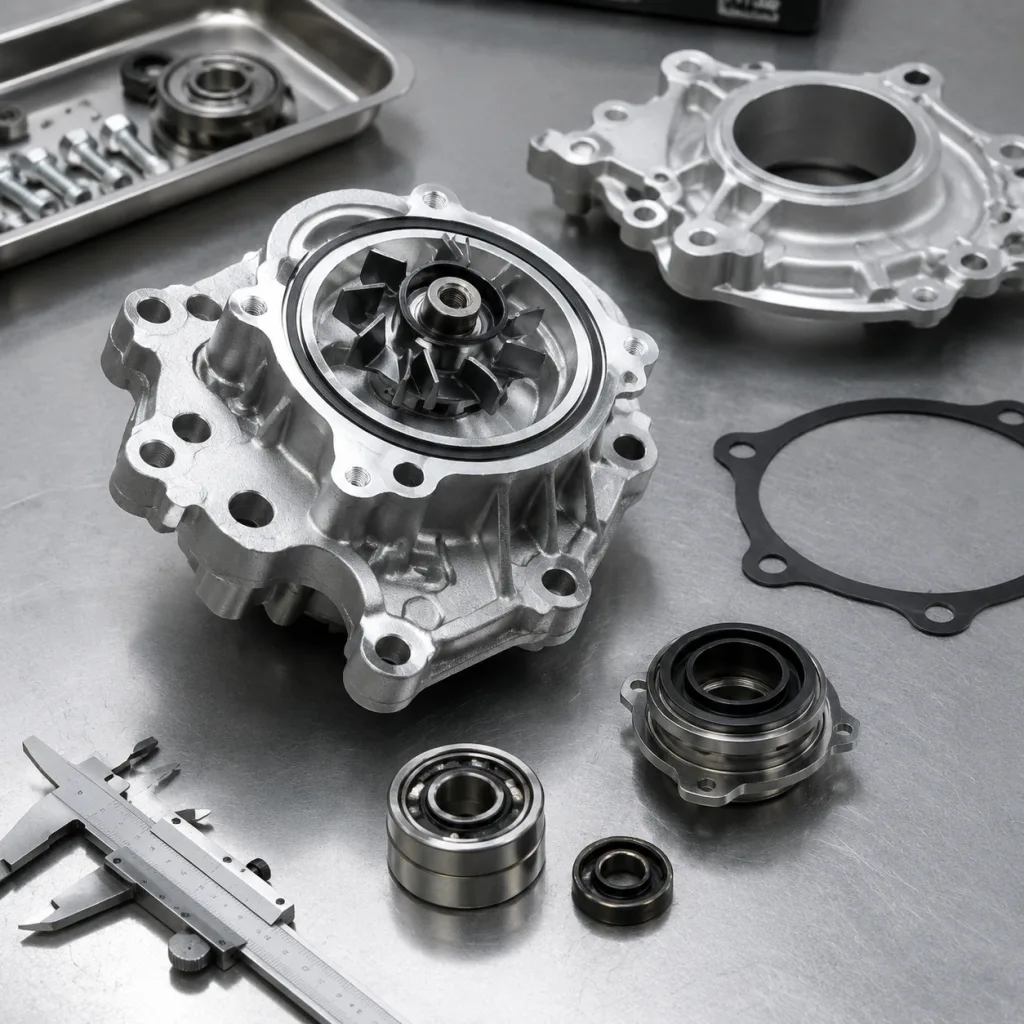
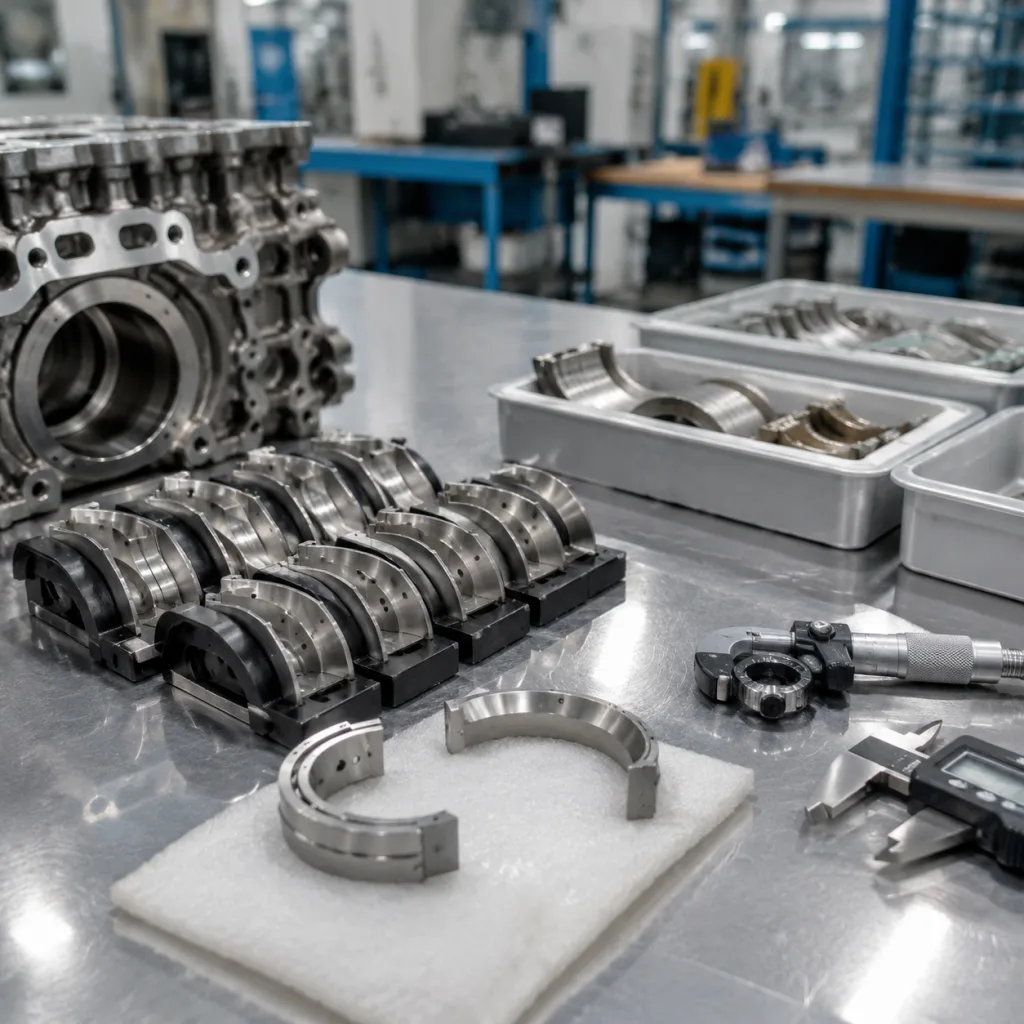
A clutch kit Jaguar OE equivalent should match the original assembly’s release characteristics, spline interface, cover clamp load, friction performance, and installation dimensions without changing pedal feel or engagement behaviour. For procurement teams, the priority is repeatable fitment across the approved Jaguar application range—not a vague branded claim.
Driventus is an independent aftermarket manufacturer; Jaguar and any other brand names are referenced for fitment identification only. We manufacture engine and powertrain components in Taizhou, Zhejiang, and supply B2B customers in more than 60 countries. Our parts are produced under IATF 16949:2016 and ISO 9001:2015 systems, with material, dimensional, and process checks aligned to documented specifications.
When sourcing a replacement clutch set, buyers should verify OE cross-reference, disc diameter, spline count and profile, hub offset, release bearing geometry, and torque capacity before approval. This guide explains what to check, which quality records matter, and how to compare equivalent kits for Jaguar applications with less risk of returns or installation issues.
What OE-equivalent means for Jaguar clutch kits
For procurement, OE-equivalent means the replacement clutch kit is engineered to match the original part’s functional and dimensional requirements. It does not mean the part carries OEM branding, is supplied through a vehicle manufacturer’s dealer channel, or has factory endorsement. The correct approach is to compare the published OE reference, vehicle application, and measured component geometry.
Key points to verify:
Disc outer diameter and facing thickness
Spline count, spline profile, and major diameter
Hub offset and sprung-hub or rigid-hub design
Cover assembly bolt pattern, dowel position, and locating features
Release bearing type, installation height, and contact face
Clamp load and torque transfer capacity
Compatibility with the specified flywheel and gearbox input shaft
A valid replacement should deliver the same transmission interface and similar wear behaviour under normal service conditions. For Jaguar applications, that level of confirmation is important because closely related vehicles may use clutch specifications that look similar but are not interchangeable across engine codes, gearbox versions, production years, and market variants.
Core specification checks before you place an order
Start with the OE reference, then confirm the kit dimensions against the target vehicle and transmission. If a catalogue lists a cross-reference, treat it as a starting point rather than final proof of interchangeability. The clutch assembly still needs to match the gearbox input shaft, flywheel interface, cover mounting pattern, and release system used on the specific Jaguar application.
Verification item
What to confirm
Why it matters
OE cross-reference
Published OE number and application range
Prevents wrong-fit supply and catalogue substitution errors
Disc diameter
Match to flywheel and pressure plate
Affects torque capacity, contact area, and release travel
Spline count and profile
Exact tooth count, diameter, and engagement length
Ensures correct input-shaft fit and avoids forced installation
Hub design
Sprung or solid hub, offset direction, clearance
Influences driveline damping and prevents interference
Release bearing
Type, height, bore, and contact face
Affects pedal feel, disengagement, and service life
Cover assembly
Bolt pattern, dowel location, diaphragm design
Prevents mounting mismatch and clamp-load variation
Friction material
Facing type and operating characteristics
Supports stable engagement, wear resistance, and heat control
</tr></thead><tbody> </tbody></table>For fleet buyers, wholesalers, and importers, a written specification sheet is more reliable than a photo comparison. Ask for dimensional drawings, packaging references, inspection criteria, and batch traceability before finalising the order. Where possible, approve a first article sample against the actual gearbox and flywheel combination rather than relying only on catalogue wording.
Validation tests that matter in replacement sourcing
A replacement clutch kit should be supported by inspection and validation records, not only by a catalogue description. Driventus validates production through dimensional and performance checks under our quality system. Relevant frameworks may include IATF 16949:2016 and ISO 9001:2015 for quality management, REACH (EC) No 1907/2006 for applicable chemical compliance, and customer-specific durability or performance requirements where defined for the programme.
Typical checks include:
Incoming material inspection for steel, cast components, springs, and friction-facing inputs
Dimensional measurement of disc, cover, hub, and release-related components
Runout, parallelism, and flatness verification
Clamp-load and release-force inspection
Spline fit and hub movement checks where applicable
Riveting, assembly torque, and balance checks where required
Batch traceability, packing verification, and final visual inspection
For replacement programmes, ask suppliers for the inspection record format, sampling plan, and control points—not just a certificate copy. A certificate confirms that a management system exists; it does not prove that every clutch kit matches the intended OE target without deviation. Strong procurement practice links each batch to a part number, drawing revision, inspection date, and shipment record.
Why dimensional match is more important than catalogue language
Many listings use terms such as direct fit, OE-style, replacement quality, or equivalent. These phrases can be useful for search and catalogue organisation, but they are not technical guarantees. A clutch kit may appear correct in a listing and still differ in spline length, release bearing height, hub offset, or cover geometry.
Common mismatch risks:
1. Wrong release bearing stack height, causing incomplete disengagement or bearing preload 2. Incorrect disc hub offset, creating interference with flywheel bolts, cover springs, or the crank area 3. Different friction material formulation, changing engagement feel, heat stability, or wear rate 4. Minor spline variation, leading to difficult installation, fretting, or premature input-shaft wear 5. Cover clamp-load deviation, reducing torque capacity or increasing pedal effort 6. Incorrect dowel or bolt-hole indexing, preventing correct cover alignment
For buyers supporting multiple locations or export markets, the safest process is to maintain a controlled master record: OE reference, VIN or engine-code range, transmission code, flywheel type, release mechanism, and confirmed sample measurements. That record reduces returns, improves installer confidence, and helps standardise reordering when the same vehicle nameplate has different drivetrain specifications across markets.
How Driventus supports B2B clutch kit procurement
Driventus supplies clutch-related replacement parts to aftermarket distributors, OEM and Tier-1 programmes, and repair networks. Our production base in Taizhou supports control over material selection, machining, assembly, inspection, and packing. Buyers can review our catalog, our quality system, and custom manufacturing options when a standard replacement part needs adjustment for a defined application.
For procurement teams, the practical benefits are:
Stable lot control for repeat orders
Technical support for OE cross-reference and application verification
Export-ready packaging, labelling, and documentation
Support for private-label and programme-based supply
Traceable manufacturing records for audit review
Coordination on sampling, first article approval, and replenishment planning
If your purchasing team needs a clutch kit Jaguar OE equivalent for a specific model family, share the OE reference, gearbox code, flywheel details if available, destination market, and target annual volume. With that information, we can confirm the specification route, identify any application risks, and advise on sampling and manufacturing lead time before commitment.
Buying checklist for procurement teams
Before approving a supplier, confirm the following:
OE reference and vehicle application range
Engine code, gearbox code, production year, and destination market where relevant
Disc diameter, spline count, spline profile, and hub style
Cover bolt pattern, dowel locations, and clamp-load requirements
Release bearing type, installation height, and contact geometry
Friction material expectations for normal service conditions
Required packaging, labelling, and barcoding format
Sampling plan for first article approval
Inspection records, traceability format, and drawing revision control
Country-of-destination compliance needs
Minimum order quantity, lead time, and forecasted replenishment cycle
If your team manages regional distribution, standardise the approved part file by application and specification—not by brand name alone. This reduces error when the same Jaguar nameplate appears with different transmissions, engine outputs, or release systems across model years and markets.
Frequently asked questions
No. OE-equivalent means the replacement is designed to match the original fit, function, and key dimensions. It does not mean OEM branding, dealer-channel supply, or factory endorsement.
Start with the OE reference, gearbox code, disc diameter, spline count and profile, hub offset, and release bearing height. These details usually determine whether the kit will fit and operate correctly.
Yes. We support B2B supply and custom manufacturing for defined applications, subject to technical review, sample approval, compliance requirements, and order volume. Contact us for fitment confirmation.
For cross-reference support, sample review, or supply planning, please request a quote via /contact.html.