A clutch kit Iveco replacement programme is usually driven by fleet uptime, workshop efficiency, and reliable parts availability across light commercial and medium-duty applications. Buyers are not simply purchasing a disc, cover, and release bearing in one carton. The kit has to match the original clutch envelope, spline interface, clamp load, friction characteristics, and release travel closely enough for workshops to install it without modification or repeat adjustment. For importers, distributors, and repair-chain category teams, the main sourcing risk is batch variation. Small changes in diaphragm spring height, disc runout, hub offset, or facing material can lead to judder, slip, heavy pedal feel, poor release, or early bearing noise. Driventus manufactures clutch kit assemblies for independent aftermarket supply and private-label programmes, supported by IATF 16949:2016 and ISO 9001:2015 process controls. Driventus is an independent aftermarket manufacturer; brand names are referenced for fitment identification only.
Replacement Fitment Priorities for Iveco Applications
Iveco vehicles serve several duty profiles, from urban delivery vans and minibuses to chassis-cab, box body, and light truck platforms. A replacement kit should therefore be specified by application data and physical measurement, not by model name alone. Procurement teams should confirm engine family, gearbox type, disc diameter, spline count, release system, and flywheel type before approving a supplier change.
For aftermarket distribution, OE-equivalence means the kit follows the functional dimensions and performance targets of the original assembly. It does not mean approval, sponsorship, or endorsement by a vehicle manufacturer. Driventus validates fitment against sample parts, customer-supplied drawings where available, controlled measurement reports, and agreed inspection standards.
Key verification points include:
Clutch disc outside diameter and thickness under defined load
Hub spline count, major diameter, minor diameter, and lead-in chamfer
Disc offset, cushion plate height, and torsional damper clearance
Cover assembly bolt circle, dowel positions, and installed height
Diaphragm spring finger height and release load curve
Release bearing interface, guide sleeve diameter, and travel range
Compatibility with solid flywheel or dual-mass flywheel configuration
Buyers can review related driveline and engine parts in our catalog when consolidating mixed-container orders.
Dimensional and Functional Checks Before Approval
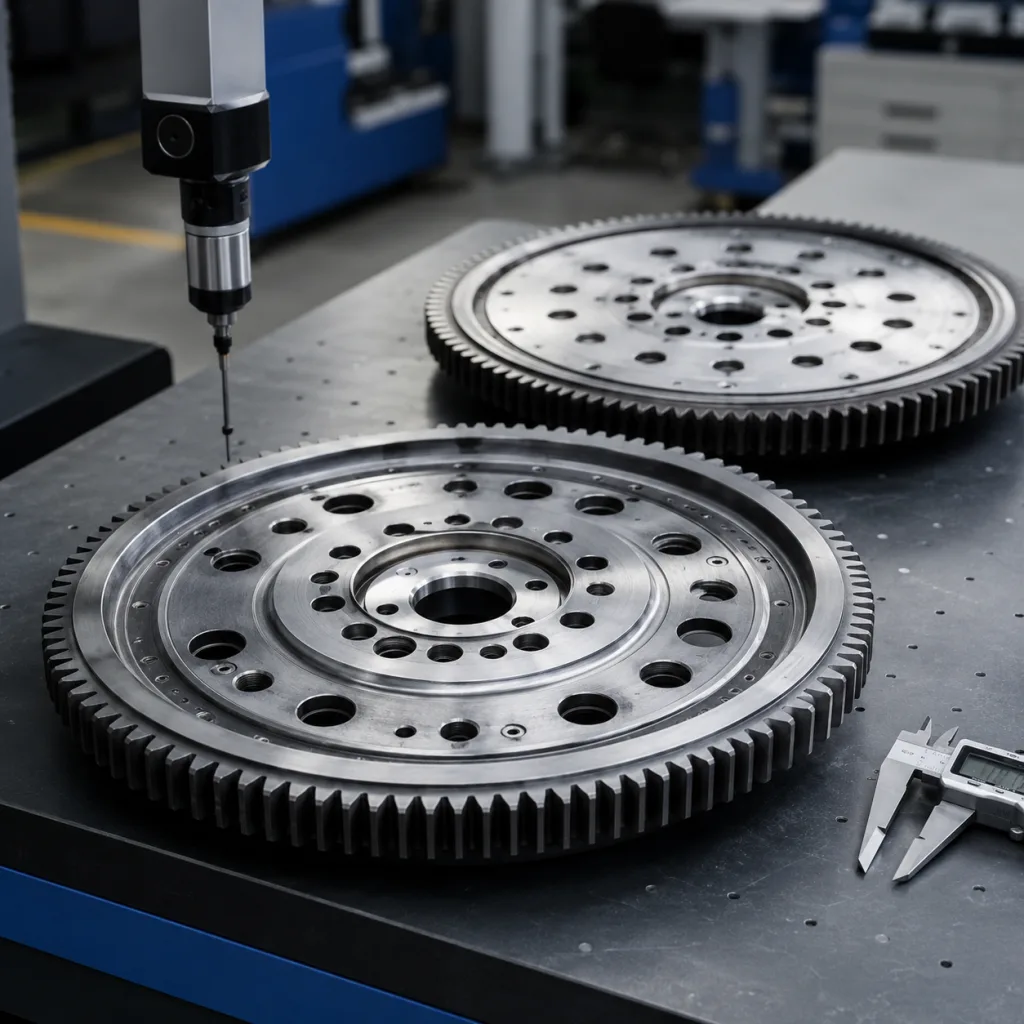
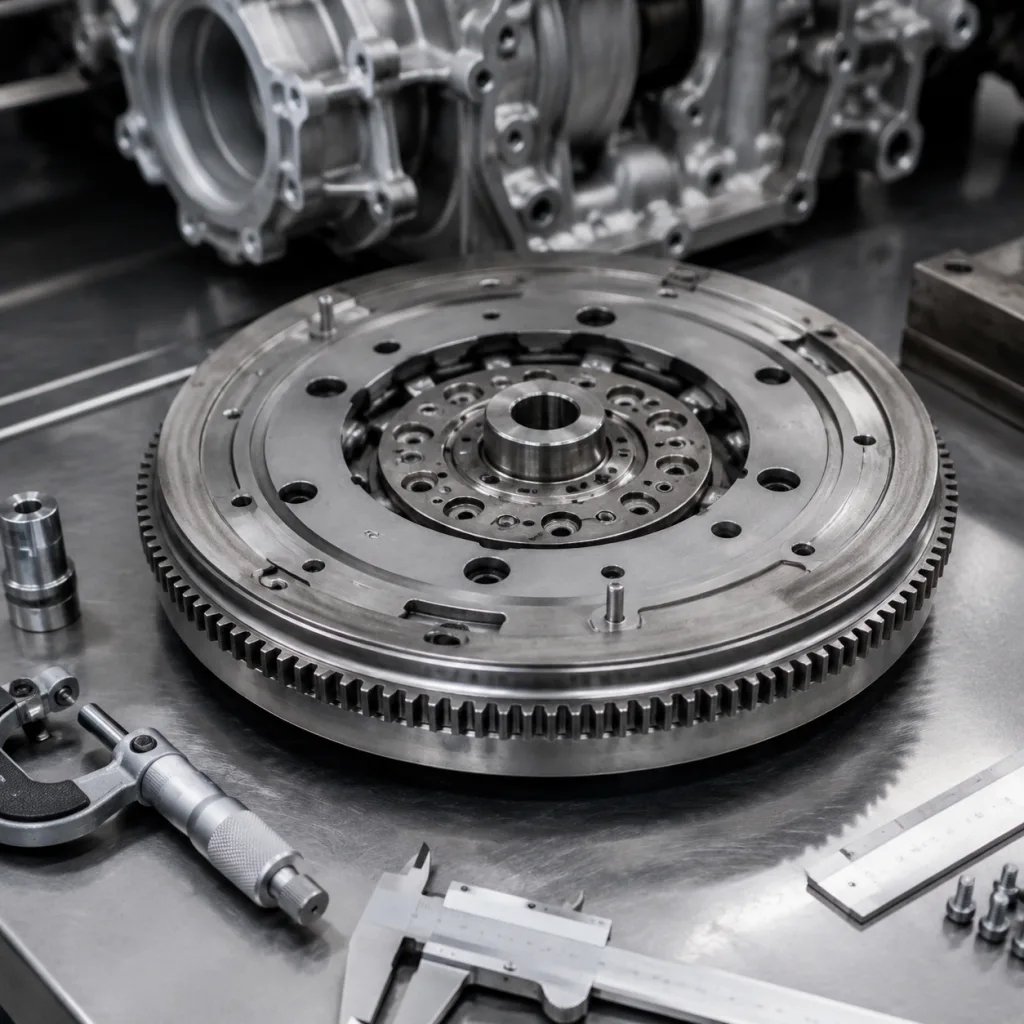
Dimensional accuracy is the first approval gate for a clutch kit Iveco replacement project. A kit that looks correct beside a sample can still create installation or warranty problems if the release bearing stack height, disc offset, spline fit, or cover clamp load falls outside the working range of the clutch actuation system.
Check item
Typical buyer requirement
Why it matters
Disc outside diameter
Matched to application sample or drawing
Prevents cover interference or reduced torque capacity
Spline fit
Go/no-go gauge against gearbox input shaft profile
Avoids hub rattle, seizure, or excessive installation force
Disc runout
Controlled after riveting and balancing
Reduces judder and uneven engagement
Cover clamp load
Tested on clutch load equipment
Helps prevent slip under load and excessive pedal effort
Finger height variation
Measured across diaphragm fingers
Supports stable release and bearing life
Bearing rotation noise
Checked under load and speed conditions
Reduces early field complaints
</tr></thead><tbody> </tbody></table>A practical sourcing process starts with sample comparison, moves to pilot batch installation feedback, and then becomes routine batch release. Driventus can supply inspection records for agreed characteristics and maintain reference samples for repeat orders. This discipline is especially important for distributors selling into several countries, where the same commercial vehicle platform may have different power ratings, clutch diameters, gearbox variants, or flywheel specifications.
Materials, Friction Behaviour, and Durability Testing
Clutch life depends on the complete system: friction facing, damper springs, hub metallurgy, diaphragm spring heat treatment, cover stiffness, rivet retention, and release bearing sealing. For Iveco replacement programmes, the friction material must balance torque capacity with controlled engagement. An overly aggressive facing can increase judder, driveline harshness, and flywheel wear, while a low-friction formulation may slip during towing, high-payload operation, stop-start delivery routes, or frequent hill starts.
Driventus specifies facing formulations according to customer application needs and destination-market expectations. For EU and UK supply, buyers should also consider substance declarations under REACH (EC) No 1907/2006. Where friction material compliance documentation is required, it should be agreed before production rather than requested after shipment, because documentation scope and test evidence can affect the release package.
Common validation steps include:
Static clamp load and release load testing
Burst-speed checks for rotating clutch discs
Torsional damper characteristic measurement
Hot engagement and fade-resistance assessment
Disc balance and runout confirmation after assembly
Salt-spray checks for selected metal components where required by customer specification
Packaging drop and corrosion-prevention review for long sea freight routes
For commercial fleets, consistency is often more valuable than a marginal increase in nominal torque rating. Predictable pedal feel, a stable engagement point, and clean release help workshops reduce repeat visits after installation.
Quality Controls for Importers and Repair Chains
For B2B buyers, clutch kit quality is controlled as much by process discipline as by product design. Driventus operates under IATF 16949:2016 and ISO 9001:2015, with incoming material inspection, in-process checks, final inspection, and traceability by batch. The quality system covers document control, nonconforming product handling, corrective action, and production change management.
A purchasing specification should define critical-to-quality items before price negotiation. For clutch kits, recommended control points are:
Approved drawing or reference sample revision
Disc runout and balance criteria
Cover clamp load range and test frequency
Release bearing supplier, grease type, and sealing design
Rivet compression and facing bond controls
Diaphragm spring height and load tolerance
Batch marking format on product and carton
Carton strength, pallet pattern, and moisture protection
Multi-location repair chains should also request installation notes covering flywheel inspection, pilot bearing condition where applicable, hydraulic release system checks, torque values where supplied, and bedding-in recommendations. These documents reduce false warranty claims caused by worn flywheels, oil contamination, gearbox misalignment, incorrect release travel, or incomplete hydraulic bleeding.
Packaging, Labelling, and Cross-Reference Data
A replacement clutch programme depends on accurate catalogue data. Importers should provide application tables, engine codes where available, gearbox references, production year ranges, and any OE part-number cross-references already used in their market. If a reference such as OE 06A... or OE 11251... appears in a buyer's legacy data, it should be verified against the actual Iveco application before labels are printed or marketplace listings are uploaded.
Packaging should protect the pressure plate fingers, prevent friction disc contamination, and keep the release bearing sealed until installation. For export shipments, Driventus can support neutral packaging, customer brand packaging, barcode labels, carton-level batch identification, and mixed-SKU pallet plans. Clear label data also helps warehouses avoid returns caused by incorrect picking between visually similar clutch kits.
For private-label programmes or dimensional variants, custom manufacturing can include sample reverse engineering, drawing confirmation, prototype production, pilot batch review, and agreed inspection reports. This is useful when a distributor needs to rationalise several local references into one controlled clutch kit Iveco replacement SKU while preserving workshop fitment.
Commercial Sourcing Checklist
Before placing a production order, procurement teams should align technical, quality, packaging, and commercial requirements in writing. This reduces disputes after goods arrive and gives both sides a clear release standard for repeat supply.
Recommended sourcing checklist:
Confirm vehicle application list, engine range, gearbox type, and flywheel type
Supply reference samples or approved technical drawings where possible
Define kit contents: disc, cover, release bearing, pilot bearing, bolts, alignment tool, or installation sheet
Agree critical dimensions and test records required per batch
Confirm REACH (EC) No 1907/2006 documentation needs for the destination market
Approve carton design, label fields, barcode format, and language requirements
Set warranty review process, including photos, installation data, and failed-part return rules
Confirm MOQ, lead time, shipment terms, and spare carton availability
For replacement programmes, the lowest unit price rarely gives the lowest total cost if fitment returns are high. A controlled specification, stable production route, and transparent batch records are more useful for distributors and repair networks that need repeatable supply over several seasons.
Frequently asked questions
Confirm disc diameter, spline specification, cover bolt pattern, release bearing type, flywheel configuration, engine application, and gearbox variant. Physical samples or approved drawings are strongly recommended before opening a new replacement SKU.
Yes. Driventus can support neutral or customer brand packaging, barcode labels, carton-level batch identification, and export pallet planning. Packaging artwork, label data, and compliance markings should be approved before mass production.
No. OE-equivalent describes functional fit, dimensions, and performance targets for independent aftermarket replacement. Driventus is an independent aftermarket manufacturer; brand names are referenced for fitment identification only.
For clutch kit specifications, samples, inspection records, or distributor pricing, send the application list and target volumes to Driventus and [request a quote](/contact.html).