If you are evaluating a clutch kit Honda supplier, the commercial details matter as much as fitment. Procurement teams need repeatable dimensions, clear material control, stable lead times, and export packaging that survives long transit. Driventus supplies aftermarket clutch kits from Taizhou, Zhejiang to buyers in more than 60 countries, with production aligned to IATF 16949:2016 and ISO 9001:2015 processes. Driventus is an independent aftermarket manufacturer; brand names are referenced for fitment only. A serious sourcing review should cover friction material, diaphragm spring load, runout, cover balance, and the way each lot is identified for traceability. It should also define MOQ, sample policy, and the documents required before release. The sections below set out the practical checks that help wholesalers, repair chains, and importers compare suppliers on objective terms rather than price alone.
What buyers should verify before placing a Honda clutch order
A qualified supplier should be able to answer three questions without delay: what exact fitment range is covered, what is inside the kit, and what inspection evidence is available for the lot you are buying. For Honda applications, that usually means matching the pressure plate, clutch disc, release bearing, and any alignment or installation hardware to the target engine and gearbox family.
The buyer should also confirm whether the supplier supports cross-reference review from OEM data, aftermarket samples, or customer-supplied measurements. If the answer is only a part description and a box photo, the sourcing risk is high.
For procurement teams, the minimum commercial file should include:
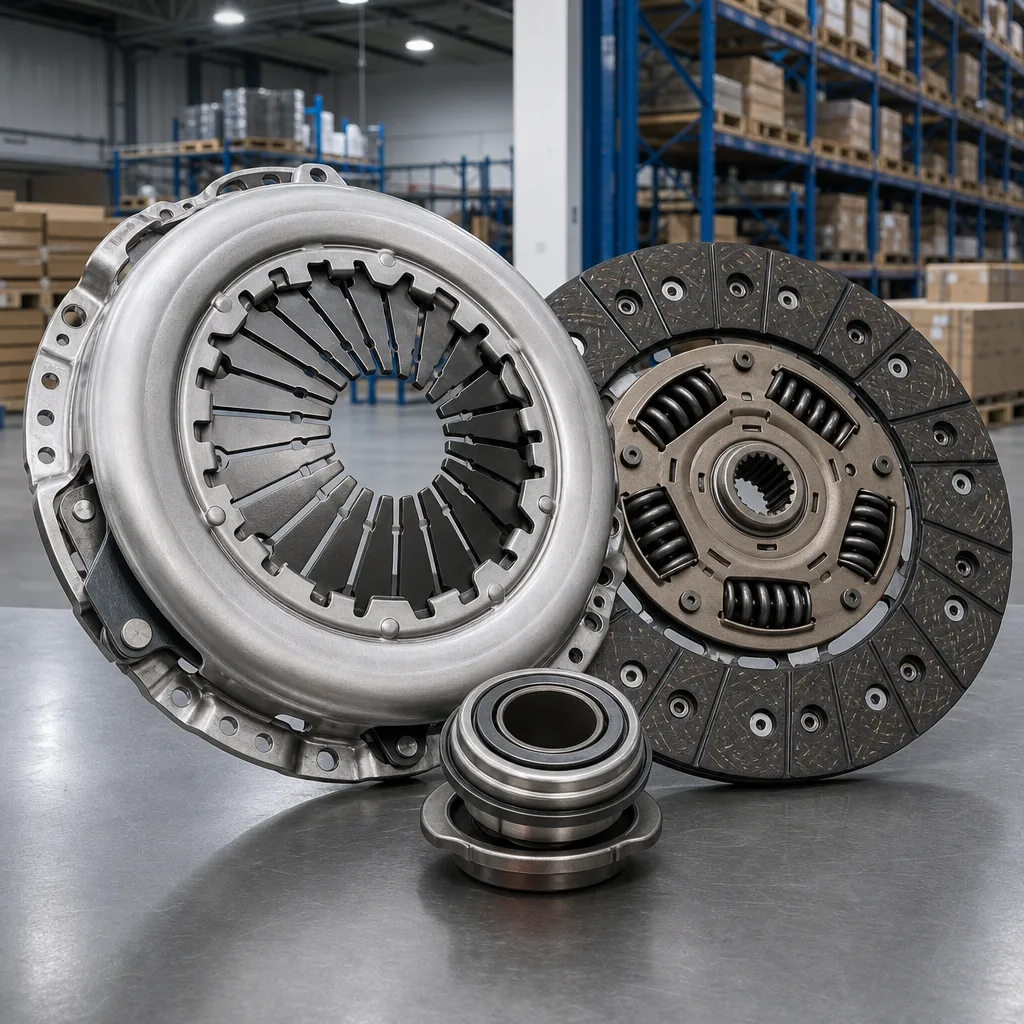
Typical clutch kit contents and technical specification
A Honda clutch kit is not a single component. The content set should be defined before pricing is compared, because one supplier may quote a disc and cover only, while another includes the release bearing and installation hardware.
Item
Common material / build
Buyer check
Clutch disc
Organic friction lining, spring hub, steel core
Lining thickness, hub spline fit, runout
Pressure plate
Cast or stamped steel assembly
Clamp load, cover flatness, balance
Release bearing
Steel bearing with grease fill
Noise, smooth rotation, seal integrity
Alignment / hardware
Steel or plated fasteners
Thread quality, coating, pack count
</tr></thead><tbody> </tbody></table>Key technical points should be stated in writing. Ask for disc runout limits, pressure plate balance criteria, and the friction material family used for the application. If the kit is for higher-heat service, the buyer should confirm how the supplier manages fade resistance and pedal effort trade-off. For mixed fleets, consistency across repeated lots is more important than a single sample result.
If your program needs a non-standard bundle, custom manufacturing can be used to define the kit content, branding, label format, and carton sequence before mass production.
Quality system, validation, and traceability
A credible supplier should operate under documented controls, not informal shop-floor checks. At minimum, the production flow should be covered by IATF 16949:2016 and ISO 9001:2015 procedures, with incoming inspection, in-process verification, final release, and retained records for each shipment.
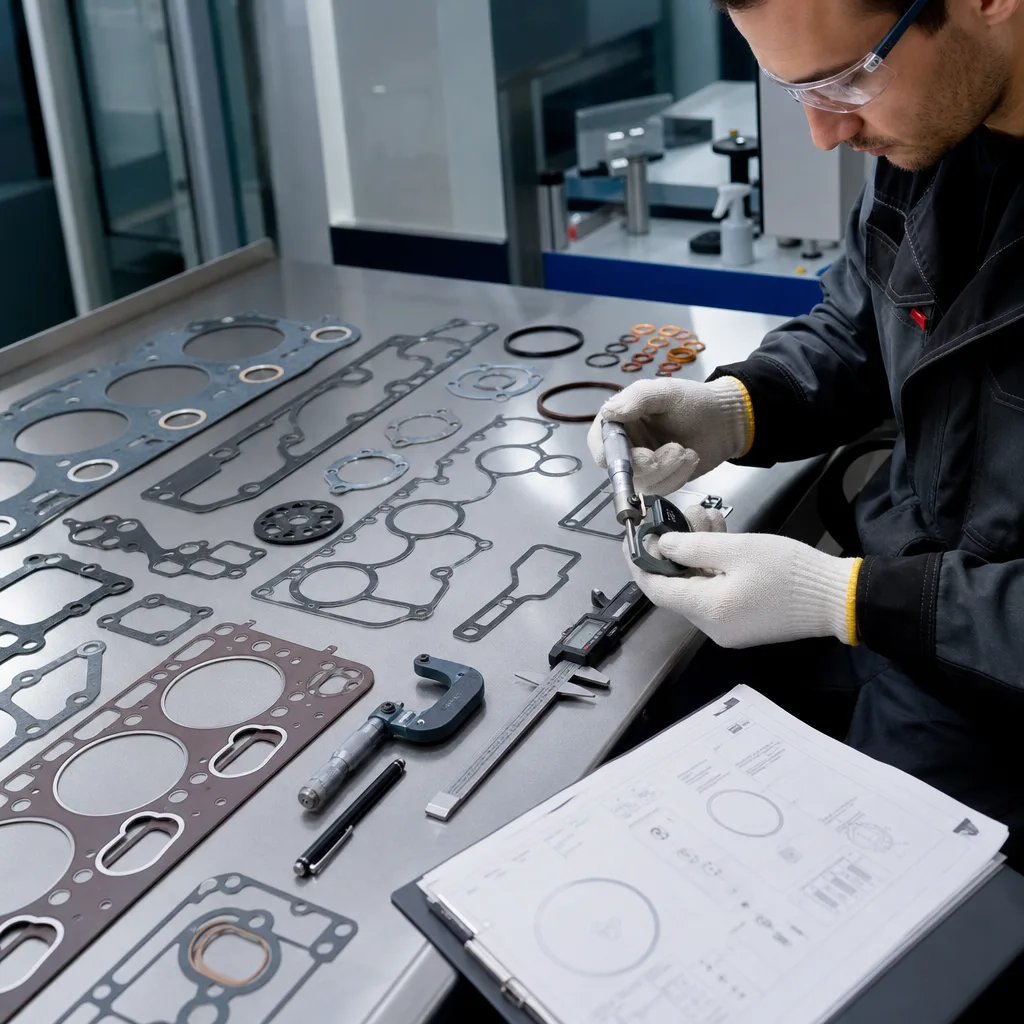
For clutch kits, validation should focus on fit, function, and repeatability. Typical checks include dimensional inspection of the spline interface, clamp-load verification for the cover, rotational balance, and visual review of the friction surface. Where coatings or corrosion-sensitive parts are used, the buyer may also ask for REACH (EC) No 1907/2006 material compliance declarations.
A practical audit request should ask for:
Control plan and inspection flow
Calibration status for measuring tools
Lot traceability method
Nonconformance handling process
Packaging drop-test or transit evidence
Retention period for production records
If you are comparing suppliers, do not stop at certificate copies. Ask how the factory links raw material intake to finished carton labels. That is what allows a distributor or repair chain to isolate risk when a complaint appears months later.
Driventus publishes its quality system so buyers can review process scope before a factory audit.
MOQ, lead time, and export packaging for B2B programs
Commercial terms should match the buyer's channel, not the supplier's convenience. A wholesale distributor usually needs a different MOQ structure from a repair chain or an OEM service program. The right starting point is to define annual volume, forecast stability, and the number of SKUs in the range.
A useful sourcing model is to separate stock items from build-to-order items. Stock items support shorter lead time and lower risk. Build-to-order items support tighter fitment control, label customisation, and carton sequencing, but they usually require a longer schedule and stronger forecast discipline.
Before you approve an order, confirm:
MOQ per SKU and per carton
Sample lead time and production lead time
Master carton dimensions and pallet plan
Barcode, label, and language requirements
Incoterms, export documents, and inspection hold points
Good export packaging should protect friction faces from contamination, keep the cover from shifting in transit, and preserve lot identity through to warehouse receiving. If the buyer wants private label or kit reshaping, request a quote with the target volume and packaging specification so the offer can be priced correctly.
How Driventus supports supplier qualification
Buyer qualification is faster when the supplier can respond with a complete document set instead of fragmented emails. For clutch programs, Driventus can align the quotation stage with sample approval, packaging review, and production planning so the buyer sees the total landed configuration early.
This is most useful when the program has multiple sales channels. A distributor may need one carton format, a repair chain may need another, and an OEM service program may require tighter traceability and different label content. The core product can remain the same, but the commercial pack must change.
When you compare bids, focus on these points rather than headline unit price alone:
Specification clarity
Traceability and lot control
Document response speed
Packaging robustness
Reorder stability over time
For buyers building a wider engine range, the clutch programme can be reviewed alongside other powertrain parts in our engine components page.
Frequently asked questions
Send the vehicle application, target annual volume, preferred packaging, and any cross-reference data you already have. If you need private label or special carton sizing, include that at the first request so the quote reflects the real commercial scope.
Yes. Buyers usually ask for certificate copies, process flow, inspection records, and sample traceability before a visit. A structured audit works best when the supplier has an IATF 16949:2016 and ISO 9001:2015 control system in place.
Yes. Kit content, labels, carton quantity, and documentation can be adjusted to fit distributor, repair chain, or OEM service requirements. Share the target application and packing rules first so the proposal can be built around them.
If you need a quotation, sample set, or audit document pack, send your requirements through [request a quote](/contact.html).