Camshaft for Citroen Jumper Replacement: Fitment Checks
If you are sourcing a camshaft for Citroen Jumper replacement, the main risk is not price. It is mismatch: the wrong journal size, valve-train variant, sensor trigger layout, or thrust arrangement can turn a simple part swap into a rejected shipment or a field failure. Driventus supports B2B replacement programmes with dimensional matching, batch traceability, and inspection against customer drawings or OE references. Driventus is an independent aftermarket manufacturer; brand names are referenced for fitment only. For procurement teams, the right part is the one that installs cleanly, holds timing, and maintains lobe profile under load. That means checking geometry, surface finish, heat treatment, and packaging before release. The guidance below covers the checks that matter for direct replacement, the documents buyers should request, and the controls that reduce warranty risk in distribution, repair chain, and export supply.
What a direct replacement must match
A replacement camshaft is only useful when it matches the engine family and the valve-train configuration exactly. For the Citroen Jumper platform, buyers should confirm the engine code, number of valves, timing drive type, and whether the camshaft carries a timing wheel or sensor target.
Key dimensional and functional checks:
- Overall length and journal spacing
- Journal diameter and bearing fit
- Lobe lift, base circle, and lobe phasing
- Thrust face position and end-play control
- Sensor trigger wheel location, if fitted
- Surface hardness and lobe finish
These are not optional checks. Small deviations can change valve timing, create follower wear, or cause low oil pressure at the journals. For replacement sourcing, OE-equivalent means the part behaves the same in the engine, not just that it resembles the removed component.
Fitment checks before you place the order
Use the table below to screen parts before purchase. It is faster to reject a bad cross-reference on paper than after installation.
| Check | What to confirm | Why it matters |
|---|---|---|
| Engine code | Match the exact diesel or petrol engine variant | Cam profiles and sensor layouts vary by engine family |
| Valve-train layout | 8V, 16V, SOHC, or DOHC | Lobe count and spacing must align with the head |
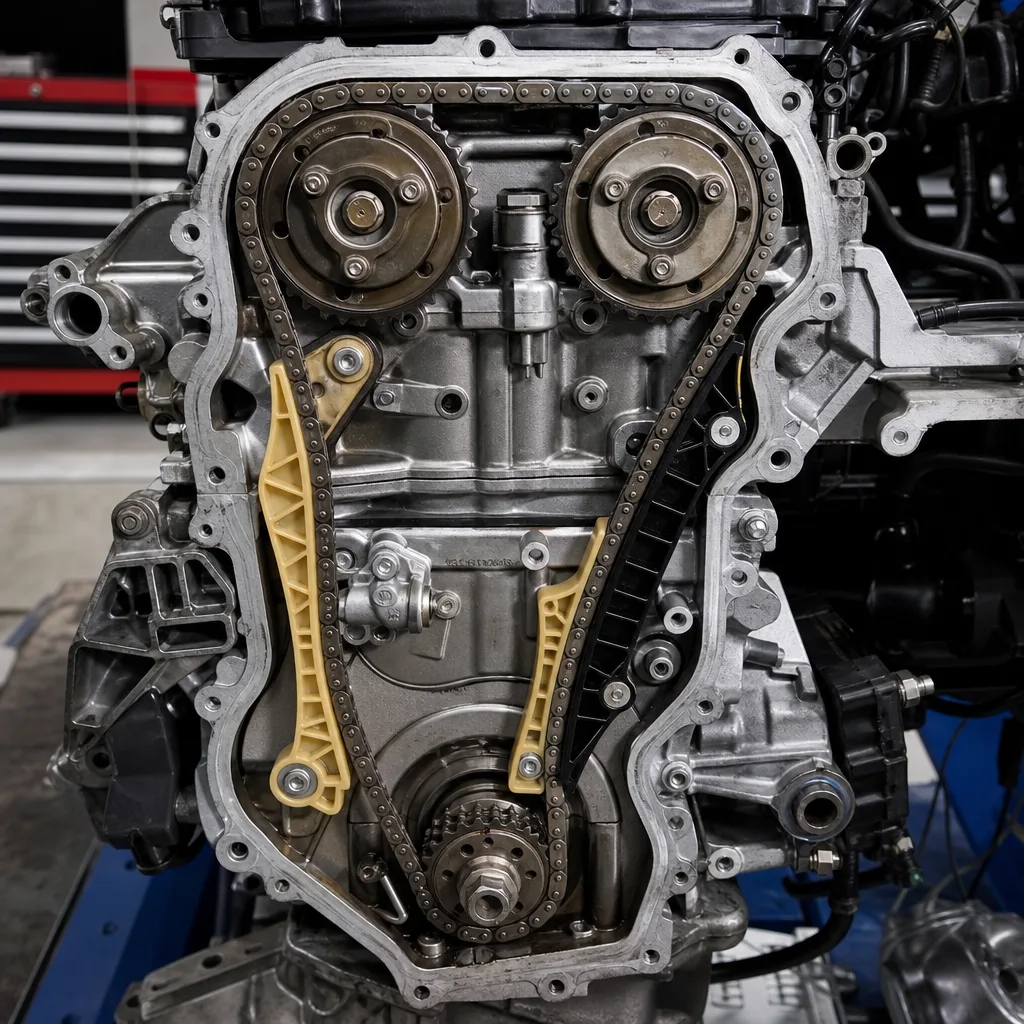
| Timing drive | Belt, chain, sprocket style, and keyway detail | Incorrect drive geometry can shift valve timing |
| Sensor target | Presence and position of trigger ring | A wrong signal pattern can create no-start faults |
| Journal finish | Diameter, roundness, and surface roughness | Protects oil film and bearing life |
| End play | Thrust control and spacer arrangement | Prevents axial movement and noise |