Change Wheel Bearing: What Buyers Should Verify Before Switching Supply
When buyers need to **change wheel bearing** supply across passenger car and light commercial applications, the real risk usually appears before the part reaches the workshop. Early failures often trace back to dimensional mismatch, wrong preload strategy, weak sealing, unstable heat treatment, or inconsistent assembly control rather than the replacement step alone.
For distributors, repair chains, and private-label programmes, the job is not to find a bearing that merely fits a catalogue line. It is to approve a replacement that behaves like the intended OE design in service: correct rotating accuracy, stable torque, reliable grease retention, corrosion resistance, sensor compatibility, and repeatable lot-to-lot quality.
This article lays out a more practical review framework for procurement teams. It covers hub units and conventional bearing sets used in the aftermarket, but from several angles: how to compare design types, where failures usually start, what specs deserve close attention, how to structure approval, and which supplier answers actually reduce warranty exposure. Driventus is an independent aftermarket manufacturer; brand names are referenced for fitment only. If you are reviewing supply options, you can also see our catalog, our quality system, and custom manufacturing capabilities for private-label or application-specific programmes.
Start with the decision framework, not the catalogue line
A replacement wheel bearing should match the OE functional envelope, not just the nominal dimensions listed in a catalogue. When a buyer needs to change wheel bearing coverage across multiple references, the review has to move past basic fitment and into material control, internal geometry, sealing performance, grease behaviour, and durability evidence.
Running characteristics: contact angle, raceway profile, rolling element size, cage design, assembled end play or preload
Material integrity: typically 100Cr6 / SAE 52100 bearing steel, with controlled hardness, cleanliness, and microstructure
Environmental resistance: seal design, corrosion protection, splash resistance, grease retention
Vehicle-system compatibility: ABS encoder pulse count, magnetic orientation, signal stability, hardware inclusion
Manufacturing discipline: lot traceability, process records, inspection retention under IATF 16949:2016 and ISO 9001:2015 controls
Ask for actual tolerance data on critical features, not nominal dimensions alone. Typical review points include bore and seat tolerance bands in the low-micron range, hub flange axial runout commonly held around 0.03-0.08 mm depending on design, and wheel mounting face runout often expected within 0.05 mm to avoid brake feel issues. On preloaded hub units, rotational torque should also be stable from lot to lot. If it moves around too much, the root cause may be raceway finish, grease variation, or assembly-setting drift.
One more distinction matters early: first-generation press-in bearings are not evaluated the same way as second- or third-generation hub units. Pre-assembled hub units usually have preload set during manufacture, so buyers should focus on assembly consistency, runout, sensor integration, and stud or bolt-hole accuracy. With service-installed tapered or press-fit bearings, the bigger risks shift toward mounting damage, wrong adjustment, or seal disturbance during replacement.
A credible supplier should also be able to explain the manufacturing route clearly: steel sourcing, forging where relevant, ring turning, heat treatment, grinding or superfinishing, washing, controlled assembly, grease filling by weight, seal pressing, torque verification, noise screening, anti-rust protection, and packaging. When buyers change wheel bearing suppliers, process variation is usually where warranty cost starts.
What an OE-equivalent claim should actually include
A supplier should be able to prove OE-equivalent performance with evidence, not just say it in a quotation. This matters even more when the part includes a flange, hub, encoder ring, or mounting hardware. The real test is not whether the bearing can be installed. It is whether it behaves correctly after installation.
Check point
Why it matters
Typical review method
Dimensional match
Prevents installation force errors, misalignment, and poor hub seating
Drawing comparison, CMM inspection, gauge reports
Bearing clearance/preload
Affects noise, heat generation, torque, and bearing life
Assembly measurement, torque rotation check
Surface roughness
Influences lubricant film stability and rolling contact fatigue
Profilometer report on raceways and journals
Hardness range
Controls wear resistance and fatigue strength
Rockwell hardness test, metallographic review
Seal design
Limits contamination entry and grease leakage
Water splash, mud exposure, rotation endurance
Grease specification
Supports high-speed and high-temperature durability
Grease type confirmation, compatibility review
Sensor function
Prevents ABS warning lamps and signal loss
Magnetic pole test, runout and air-gap check
Packaging protection
Reduces corrosion and transit damage before installation
Salt storage review, packaging validation
</tr></thead><tbody> </tbody></table>Push for measurable values. Hardened bearing rings and rolling elements in this category are often controlled around HRC 58-64, with raceway surface roughness commonly around Ra 0.10-0.30 μm after grinding or superfinishing. Residual magnetism, washing cleanliness, and grease fill weight also deserve attention, especially on sealed hub units. A few grams too much or too little grease can change heat build-up or seal purge behaviour.
For EU and UK supply, relevant chemical compliance documentation should also be available, including REACH (EC) No 1907/2006 declarations for coatings, seals, greases, and packaging materials where required.
In stronger supplier files, OE-equivalent review looks a lot like PPAP even when formal PPAP is not requested. Typical contents include material certificates, process flow, control plan, dimensional results, capability data on critical characteristics, and durability records. Buyers assessing multi-market supply can review our quality system for this control structure.
Commercially, evidence links directly to MOQ and price. A stocked bearing with an already-validated process may support a lower MOQ, such as 50-200 pcs per SKU. A private-label kit with custom packaging, laser marking, included hardware, and dedicated validation may need 300-1,000 pcs per SKU. Compare total delivered cost per fitted corner, not only ex-works piece price.
Failure modes after replacement: where claims usually begin
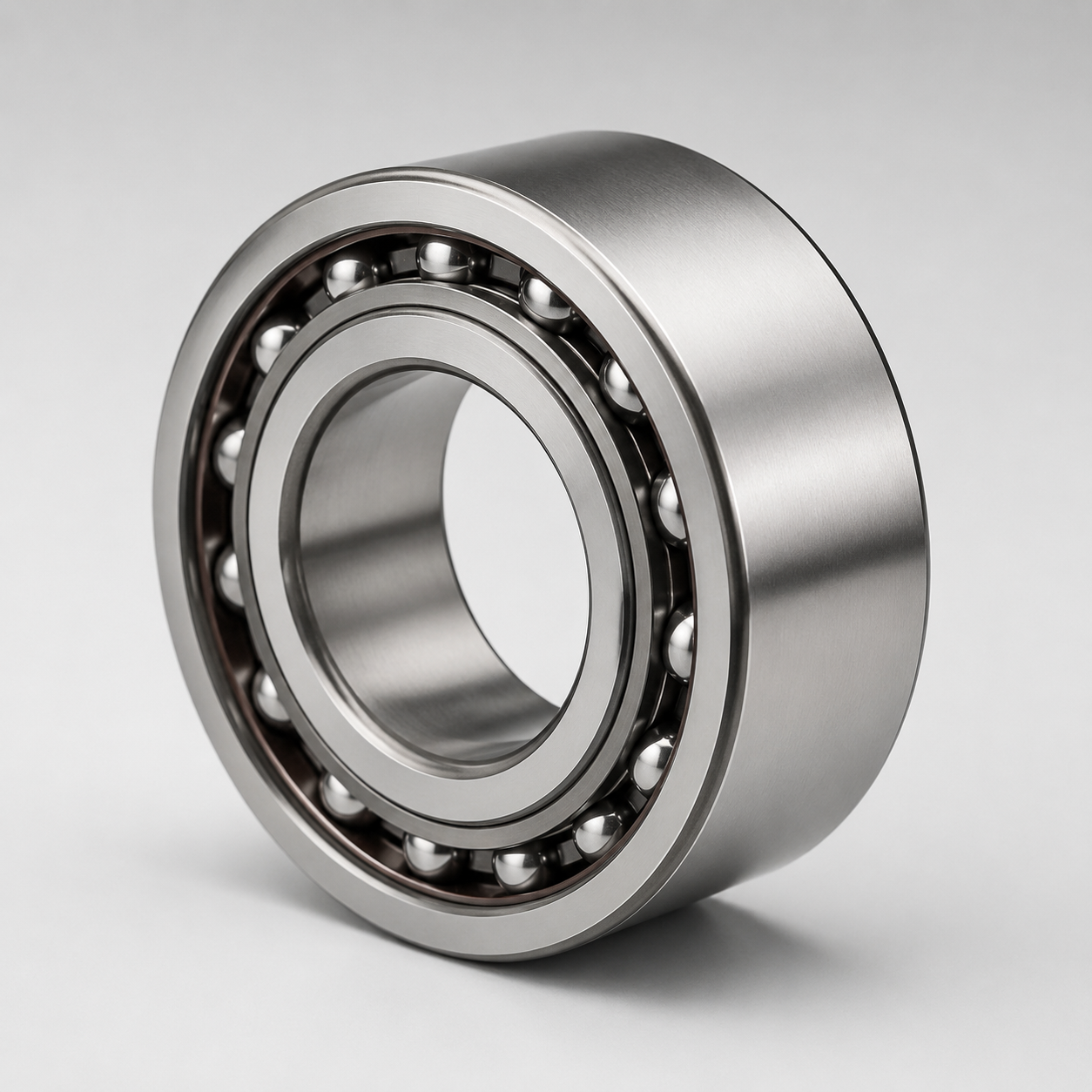
The correct replacement strategy depends on bearing architecture. A press-in double-row bearing does not fail for the same reasons as a pre-assembled hub unit, and a tapered roller set brings its own service sensitivities. Buyers planning to change wheel bearing references across a wider range should validate by design type, not treat all parts as one category.
Main configurations
Configuration
Typical use
Main replacement risk
Procurement note
Gen 1 press-in bearing
Passenger car front/rear axles
Installation damage from incorrect pressing force
Confirm exact tolerance band and seal protection
Gen 2 hub unit
Integrated flange and bearing
Runout issues if flange geometry is off
Check flange runout and mounting face accuracy
Gen 3 hub unit
Integrated mounting and often sensor features
ABS incompatibility or bolt pattern mismatch
Verify encoder data and hardware pack
Tapered roller set
Older rear axles and some commercial uses
Incorrect setting of end play/preload
Review installation specification and washer/nut kit
</tr></thead><tbody> </tbody></table>### Typical failure triggers after replacement
Pressing through the wrong ring during installation
Excessive interference due to diameter deviation
Seal lip damage during handling or assembly
Inadequate grease fill or grease unsuitable for the operating temperature range
Encoder ring mounted with incorrect orientation
Hub flange runout causing brake pulsation and uneven tyre wear
Fastener reuse where the OE service method requires replacement
Contamination entering the bearing during workshop fitting
This is why dimensional conformity alone is not enough. The supplier should understand what the part sees in service: curb strikes, water ingress, road salt, brake heat, shock loading, and lateral load from larger wheel packages or light commercial duty.
Each configuration also needs different inspection priorities. For Gen 1 press-in bearings, verify OD/ID tolerance class, chamfer geometry, seal stand-off, and press-force window, because too much interference can crack rings or distort raceways during fitting. For Gen 2 hub units, check flange perpendicularity, pilot diameter tolerance, stud press-fit consistency, and wheel-face runout. For Gen 3 hub units, encoder pole count, sensor-side orientation, connector clearance, and bolt-hole positional tolerance are as important as the bearing itself. For tapered roller sets, service adjustability matters; buyers should confirm whether the kit includes nut, washer, split pin, seal, and a target end-play setting such as 0.02-0.08 mm where the application requires adjustment.
Commercial exposure changes by type as well. Gen 1 parts are often more price-sensitive and bought across broader SKU counts. Gen 2 and Gen 3 units carry higher piece value and much higher claim cost if ABS or flange accuracy fails. That changes the acceptable MOQ-versus-risk equation.
Spec deep-dive: the numbers buyers should ask to see
After the basic fitment review, the next question is simple: which specs actually predict field performance?
Recommended evidence includes:
Dimensional inspection on critical-to-fit features using calibrated gauges and CMM where applicable
Rotational torque testing after assembly to verify internal friction remains within control limits
Noise and vibration screening to detect raceway defects, contamination, or poor internal geometry
Fatigue durability testing under radial and axial load cycles representative of vehicle duty
Seal integrity testing using water spray, dust exposure, or contamination challenge methods
Corrosion testing of external surfaces and mounting flanges using neutral salt spray where specified by customer requirement
Metallographic verification for hardness, retained austenite control, and microstructure consistency
Runout measurement on hub flange, pilot, and mounting faces
Where brake-related interactions are considered on complete corner systems, some buyers also look at adjacent standards such as SAE J2527 for brake dynamometer evaluation, because excess hub runout can influence brake behaviour. Emissions rules such as ECE R-83 are not wheel bearing standards, but they may still appear in vehicle-platform documentation.
For private-label or platform-specific adaptation, Driventus also supports custom manufacturing when customers require modified packaging, marking, kits, bundled hardware, or controlled validation deliverables.
A useful approval file separates type validation from routine production checks. Type validation may include durability rigs running hundreds of thousands to over a million equivalent cycles depending on application, temperature-related grease assessment, seal splash testing, and ABS signal verification at varying wheel speeds. Routine production checks then lock down the features most likely to drift: bore/OD dimensions, raceway grind quality, assembly torque, flange runout, grease fill weight, encoder presence, marking, and packaging condition.
A practical test-frequency matrix might look like this:
100% checks: laser marking presence, basic appearance, encoder orientation where poka-yoke is used
Per shift or per batch: rotational torque, noise screening sample, grease fill verification, critical dimensions
Per lot: hardness confirmation, metallographic review by plan, corrosion protection review, packaging audit
Annual or engineering change revalidation: endurance, seal challenge, and sensor performance confirmation
Lead time should make sense against that control plan. For standard stocked references, typical export lead time may be around 30-45 days after deposit or order confirmation. For non-stock or private-label references requiring artwork approval, packaging procurement, or first-article validation, 45-75 days is more realistic. If a supplier promises very short lead times on complex hub units without explaining incoming control and validation, that is a red flag rather than a benefit.
How distributors and repair chains should compare suppliers
A wheel bearing range can scale quickly across vehicle applications, so the better supplier is rarely the one with the best-looking sample only once. The real question is whether quality stays repeatable through multiple production releases, mixed export destinations, and changing material lots.
Useful selection criteria include:
Certification status: active IATF 16949:2016 and ISO 9001:2015 certification
Lot traceability: link from finished part to steel heat, grinding batch, grease lot, and sealing components
Application coverage: passenger car, SUV, van, and light commercial references in one programme
Cross-reference control: clean interchange mapping without unverified fitment claims
MOQ and lead time discipline: realistic planning for standard and private-label supply
Packaging options: retail box, master carton, corrosion protection, and pallet design for export
Claim handling: defined process for field returns, teardown, root cause, and corrective action
Buyers managing broad SKU portfolios may also prefer one supplier for related rotating and chassis parts, which can simplify sourcing, packaging, and claim administration. You can review our catalog for current product coverage and discuss range planning through a request a quote enquiry.
Driventus is an independent aftermarket manufacturer; brand names are referenced for fitment only.
The fastest way to separate capable suppliers from traders with thin technical control is to ask pointed commercial questions:
What is the standard MOQ per SKU, and can mixed-container orders combine multiple references?
What are the price breaks at sample, pilot, carton, pallet, and full-container levels?
Which items are stocked, which are make-to-order, and which require tooling or dedicated packaging inventory?
Is there a surcharge for custom laser marking, branded box, hardware inclusion, VCI bag, barcode label, or pallet standard?
How are steel cost changes or exchange-rate movements handled on repeat orders?
A practical sourcing model often runs in stages: samples in small quantity at higher unit cost; pilot orders of perhaps 20-100 pcs per SKU across selected references; then mass orders where MOQ and carton efficiency reduce cost. For private-label programmes, artwork approval, package drop-test review, and barcode confirmation should happen before production starts. If a supplier quotes a low price but cannot define carton quantity, inner-pack logic, or replacement-hardware policy, the saving may disappear in warehouse handling and field claims.
Repair chains should also rate response speed. A capable supplier should be able to issue a preliminary claim response within a few working days after receiving photos and application data, followed by a full teardown report after parts receipt. In practice, workshop labour claims often exceed the bearing cost several times over.
A step-by-step approval plan before you launch a new range
Before releasing a new replacement wheel bearing line to market, use a structured approval plan. It is one of the simplest ways to reduce fitment issues, ABS faults, early noise claims, and warranty leakage—especially when launching multiple references at once.
1. Confirm application mapping against trusted catalogue data and physical sample hardware. 2. Review drawings and key dimensions including hub pilot, flange offset, bolt pattern, and sensor location. 3. Check material and heat treatment certificates for bearing rings and rolling elements. 4. Verify preload or end play data for the assembled condition. 5. Assess sealing and grease for the intended climate, speed range, and duty profile. 6. Inspect runout and rotational torque records from production lots. 7. Review corrosion protection and packaging for sea freight, warehouse storage, and retail handling. 8. Check legal and chemical documentation including REACH declarations where requested. 9. Run pilot-market validation with monitored installation feedback from selected workshops or customers. 10. Agree claim protocol covering sample retention, teardown timing, reporting format, and corrective action response.
For importers and multi-location repair chains, this approach is usually more effective than comparing piece price alone. The lower-cost option can quickly become the expensive one if it leads to ABS warnings, repeat labour, or premature bearing replacement.
If you need application review or sourcing support when you change wheel bearing programmes, contact Driventus through request a quote.
To make the checklist actionable, attach acceptance criteria to each step:
1. Application mapping: confirm OE cross-reference, axle position, ABS type, and whether mounting bolts, axle nut, circlip, or seal must be included. 2. Drawing review: verify all critical dimensions and tolerance bands, not just nominal values; flag any feature with safety or sensor impact. 3. Material review: confirm steel grade, hardness window, heat-treatment route, and certificate traceability by lot. 4. Preload/end play: request actual measured range and test method for assembled units. 5. Sealing/grease: confirm grease base oil type, thickener system, operating temperature logic, and fill weight control. 6. Runout/torque: review data from at least one recent production lot, not only pre-production samples. 7. Packaging: confirm VCI or anti-rust protection, carton quantity, label format, pallet pattern, and expected storage life, often 12-24 months in controlled warehousing. 8. Compliance: collect REACH or other requested declarations before shipment, not after customs or customer audit issues arise. 9. Pilot validation: select representative workshops, track fitting time, installation issues, ABS warnings, noise, and early returns over an agreed mileage period. 10. Claim protocol: define who pays freight on suspect parts, how many retained samples are required, and target timing for 8D or corrective-action response.
A sensible launch timeline for a new private-label bearing range is often 1-2 weeks for technical review, 2-4 weeks for samples and fitment confirmation, 1-2 weeks for packaging approval, then 4-8 weeks for production depending on order size and whether components are stocked. That schedule tells you far more about execution reliability than quotation speed alone.
Frequently asked questions
Ask for dimensional reports, material certificates, hardness data, runout results, rotational torque checks, durability or seal test records, and traceability details. For EU supply, REACH (EC) No 1907/2006 declarations may also be required depending on customer policy. It is also useful to request grease specification, encoder verification where applicable, packaging specification, and recent lot inspection data rather than sample-only reports.
Usually yes for installation, because preload is set during assembly. However, hub units add other control points such as flange runout, ABS encoder function, stud fit, and mounting geometry. Buyers should review the full assembly specification, not only the bearing dimensions, and should ask for measured runout and rotational torque ranges from production lots.
Use a pilot approval process with drawing review, sample inspection, lot validation, and monitored field installation. It is also important to define a clear returns and root-cause process with the supplier before launch. In commercial terms, start with a controlled pilot MOQ, verify packaging and hardware completeness, and move to volume orders only after fitment, noise, and ABS performance are confirmed.
If you are qualifying a replacement wheel bearing supplier, Driventus can provide technical documentation, validation support, and export packaging options. Contact our team here: /contact.html