To change an engine mount properly, fitment is only the starting point. For distributors, repair groups, fleet service providers, and procurement teams, the replacement part also needs to match the original in geometry, stiffness, load control, and durability under heat, oil exposure, and repeated vibration cycles. A poor-quality mount may bolt into place without trouble yet still transmit excess noise, allow too much drivetrain movement, or fail early under torque reaction. The result is added warranty cost, repeat labour, and customer dissatisfaction.
When buyers assess a replacement mount, the real question is not simply whether it installs, but whether it manages powertrain motion within the intended range across real operating conditions. That means checking dimensions, elastomer properties, bracket strength, corrosion protection, hydraulic integrity where applicable, and the quality controls behind the part. In practical sourcing terms, buyers should define measurable acceptance points such as mounting-centre tolerance, installed-height tolerance, rubber hardness window, coating performance, and test-sample approval rules before placing production orders. This article explains the main engineering and sourcing checks that support a dependable change engine mount programme: dimensional match, rubber compound behaviour, structural integrity, validation testing, and documentation discipline. Driventus is an independent aftermarket manufacturer; any brand names or OE references are used for fitment identification only.
Decision framework: what actually determines a successful change engine mount outcome
An engine mount is not just a bracket with rubber in the middle. It is a structural NVH component that supports engine mass, controls roll under torque, and limits how much vibration reaches the body shell. So when buyers plan to change an engine mount, the job is to judge the part in three linked layers, not one.
Durability: fatigue life under repeated load, plus resistance to oil, ozone, salt, and temperature cycling
This is where many replacement decisions go wrong. A mount can look right and still behave wrong. If the elastomer is too soft, the vehicle may feel smooth at idle but allow excess drivetrain movement during acceleration, braking, or torque reversal. If it is too hard, the mount may control movement yet create noise and harshness complaints.
For buyer-side control, numeric acceptance limits work far better than visual judgement. Typical incoming checks for passenger-vehicle mounts may include mounting-hole centre distance within ±0.30 to ±0.50 mm, installed height within ±0.50 mm, bracket thickness within ±0.10 mm, and rubber hardness within ±3 to ±5 Shore A of the approved target, depending on application. On larger SUV, pickup, or light commercial vehicle mounts, load-deflection values under a defined static load are often more useful than hardness alone.
In short: if you need to change an engine mount reliably across a repair network or product range, judge the part by controlled movement and service life, not by appearance.
Pre-buy checklist: the sample checks that catch most problems early
Before approving a supplier or buying in volume, buyers should inspect candidate samples the same way workshops later experience them: as installation, noise, and durability risks. A compact checklist helps reduce returns and prevents avoidable field complaints.
Check point
What to verify
Typical target or method
Typical risk if out of spec
Mounting hole centres
Centre-to-centre distance against drawing or OE sample
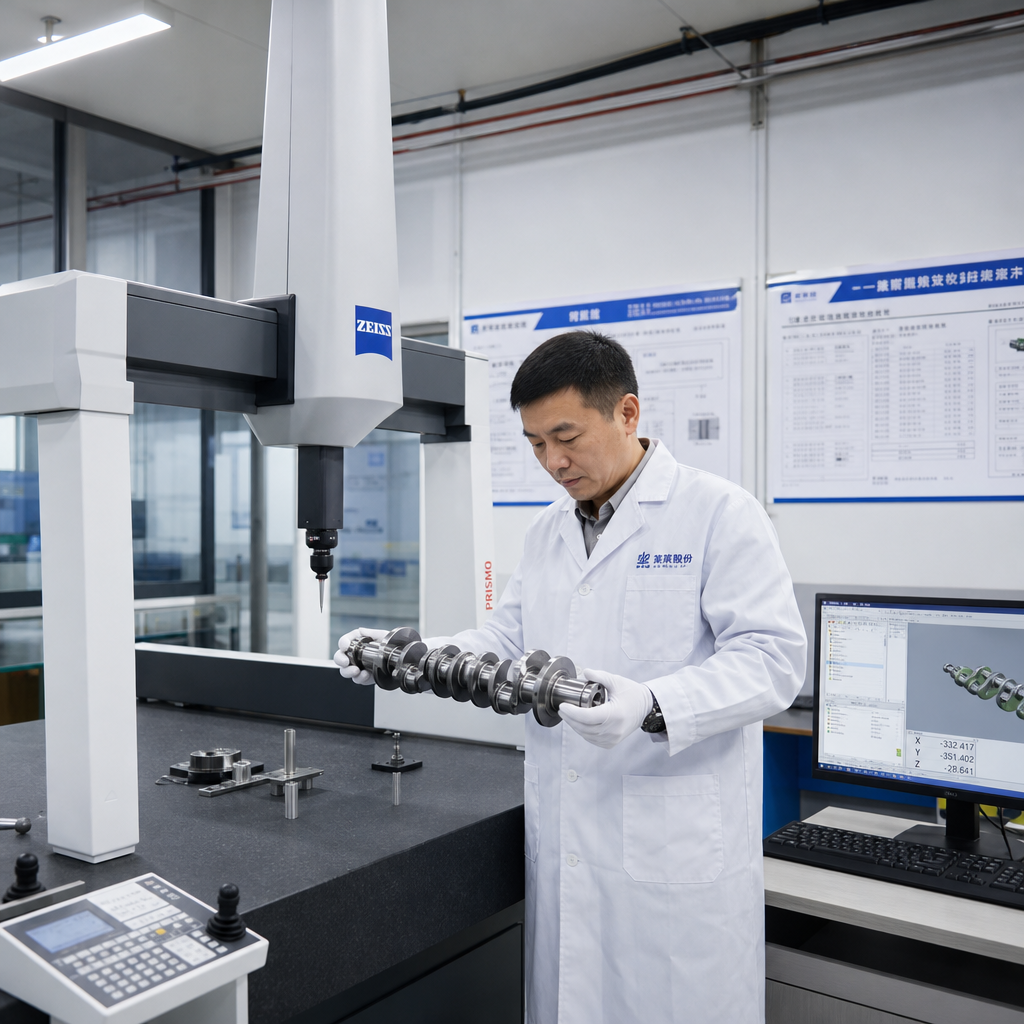
CMM, fixture, or caliper check; often ±0.30 to ±0.50 mm
Misalignment during installation
Installed height
Free height and loaded height
Often ±0.50 mm free height; loaded deflection checked at defined force
Incorrect drivetrain angle or preload
Stud and thread details
Diameter, pitch, class, exposed length
Example: M10x1.25, M12x1.25, thread class per drawing, exposed length ±1.0 mm
Fastener mismatch, stripped threads, or assembly delay
Bracket thickness
Steel gauge, formed geometry, and weld quality where used
Common stampings 2.5-5.0 mm depending on design; thickness tolerance per material spec
Reduced rigidity, distortion, or cracking
Rubber hardness
Shore A target range by application
Often 50-70 Shore A for many conventional mounts
Excess vibration or excessive engine movement
Bond integrity
Rubber-to-metal adhesion and void-free bonding
Peel or destructive bond test on sample pieces
Separation under torque load
Surface protection
Coating type, coverage, and corrosion resistance
E-coat, powder coat, zinc flake, or zinc plating; target often 240-720 h neutral salt spray depending on spec
Rust expansion and premature field failure
Fluid chamber integrity if hydraulic
Leak check, seal quality, and chamber consistency
Air-pressure hold, vacuum, or functional leak test
Premature loss of damping
</tr></thead><tbody> </tbody></table>## Material and construction points
Construction details are not paperwork trivia. They explain how the mount will behave after months of heat, vibration, and oil splash.
Buyers should request confirmation of:
Elastomer type and target hardness range
Bonding method between rubber and metal inserts
Steel or aluminium bracket material specification
Corrosion protection system, such as e-coat or zinc-based finishing
Traceability by batch, mould cavity, or production lot where applicable
In production, common bracket materials include low-carbon stamped steel, HSLA steel for thinner but stronger sections, and cast aluminium in selected applications. Rubber compounds may use natural rubber, SBR, or NR/BR blends, tuned for damping, heat resistance, and splash exposure. A supplier may specify 58 Shore A ±3 on one mount and 65 Shore A ±5 on another, but that number only means something if the test method, dwell time, and reading location are defined.
If the goal is to change an engine mount without creating problems two months later, these details matter. For EU supply, material declarations should also support REACH (EC) No 1907/2006 expectations.
Failure modes first: why a mount that fits can still be the wrong replacement
One of the most expensive assumptions in the aftermarket is that a mount that installs cleanly is a good replacement. It is not.
When buyers change an engine mount and later see claims, the failure usually falls into a short list:
Too much vibration at idle or low RPM: stiffness too high, wrong hydraulic behaviour, or incorrect loaded height
Excess engine movement under torque: rubber rate too soft, poor bond quality, or wrong mount specified for engine output
Premature tearing or separation: weak rubber-to-metal adhesion, voids, or fatigue resistance below requirement
Hydraulic damping loss: chamber leakage, seal inconsistency, or poor storage conditions before installation
These issues rarely show up in a basic visual inspection. They appear when the mount sees heat, cyclic load, torque reversal, and fluid exposure in real service.
That is why experienced buyers look beyond shape. Two mounts may share a bolt pattern but carry different stiffness targets, damping curves, or bracket offsets. The result is a part that seems interchangeable in the catalogue and proves troublesome in the field.
A practical sourcing rule is simple: if a supplier cannot explain likely failure modes and how its checks address them, the approval process is incomplete.
Spec deep-dive: which validation tests make an engine mount credible
A credible replacement programme needs more than visual comparison and a fitment label. Buyers do not need confidential OEM data, but they should expect controlled testing, documented methods, and clear acceptance criteria.
Common validation items
Dimensional inspection against approved drawing or master sample
Static load test to confirm deflection under defined vertical and lateral loads
Dynamic fatigue test under repeated displacement or force input
Rubber hardness test using a defined Shore A method
Bond strength test for rubber-to-metal adhesion
Salt spray or corrosion test for coated metal parts
Thermal ageing to assess stiffness shift after heat exposure
Oil resistance check where the mount is installed near leak-prone engine areas
The manufacturing control framework should align with IATF 16949:2016 and ISO 9001:2015, especially for traceability, incoming material control, nonconformance handling, calibration, and corrective action.
For buyers planning to change an engine mount across multiple branches or customer groups, one useful question is whether the supplier validates both initial stiffness and post-ageing stiffness. A mount may pass incoming inspection when new and still drift out of performance range after heat or fluid exposure.
Request actual test values, not only pass/fail statements. For example, a static compression check may measure deflection at 500 N, 1,000 N, or another application-specific load. Dynamic durability may run 500,000 to 2,000,000 cycles at a defined amplitude and frequency. Thermal ageing may be checked after 70 h at 100°C or 168 h at 120°C, followed by hardness shift and crack inspection. Corrosion performance often ranges from 240 h for basic aftermarket protection to 480 h or higher where road salt exposure is severe.
It also matters whether test samples come from serial production rather than development-only builds. For larger-volume sourcing, buyers may ask for first-article approval, retained golden samples, and periodic revalidation every 6 to 12 months or after any material, mould, or process change. At Driventus, buyers can review our quality system for process control, inspection discipline, and documentation expectations.
Comparison: when standard rubber works and when hydraulic design is non-negotiable
Not every mount does the same job. Before buyers approve substitutions, they need to separate standard rubber mounts from hydraulic designs.
Feature
Standard rubber mount
Hydraulic mount
Main function
Basic isolation and support
Improved frequency-specific damping
Construction
Rubber bonded to metal
Rubber structure with fluid chamber
Cost position
Lower
Higher, often 20-80% above comparable rubber type depending on design and volume
Sensitivity to leakage
None
Yes
Idle NVH control
Moderate
Better in many applications
Durability risk
Bond fatigue, rubber cracking
Bond fatigue plus fluid seal failure
Inspection priority
Hardness, bond, geometry
Geometry, damping feel, leak integrity
Typical replacement issue
Harshness or excess engine movement
Loss of damping after fluid leak
</tr></thead><tbody> </tbody></table>The practical point is straightforward: a hydraulic mount should not be replaced with a conventional rubber version unless the application specifically allows it. The same caution applies to left-hand and right-hand positions, transmission-side mounts, front or rear roll stoppers, and torque struts.
Two mounts can share a bolt pattern and still behave very differently. Hydraulic versions are especially sensitive to chamber volume, orifice design, seal quality, and fluid-fill consistency. Even with correct geometry, an underfilled or poorly sealed unit may install without complaint and lose damping soon after.
For that reason, approval of a hydraulic part should include leak testing, sample sectioning where appropriate, and review of storage conditions. Long exposure to heat before installation can affect both fluid and seals.
If you manage a broad replacement range, reviewing our catalog can help organise part families by mounting type and application group.
Scenario planning for distributors: how sourcing choices affect returns, MOQ, and lead time
In aftermarket buying, engineering quality is only half the decision. The supply model shapes the rest: return rate, batch control, packaging consistency, and how quickly problems get corrected.
Buyers commonly ask for:
PPAP-style documentation where appropriate for programme business
Incoming inspection reports for critical dimensions
Rubber hardness records by batch
Coating or corrosion test results
Carton labelling with lot traceability
Neutral or private-label packaging options
Regional compliance support for export markets
Consider two sourcing scenarios.
Scenario 1: a distributor wants a catalogue-fill conventional rubber mount. In this case, stable repeat geometry, clear labelling, and reasonable MOQ may matter more than engineering customisation.
Scenario 2: a repair network wants to change engine mount supply on a problem application with repeat field claims. Here, supplier responsiveness, validation depth, and the ability to revise compound, bracket thickness, or coating may be more important than the lowest unit price.
Commercial logic matters. Typical aftermarket MOQ may start around 200-500 pcs per SKU for standard neutral packing, while private-label packaging or lower-run hydraulic items may require 500-1,000 pcs per SKU to maintain workable cost. Sample orders usually cost more per piece because setup, inspection, and packaging are spread over a small quantity.
Unit price is usually driven by four factors:
Material weight
Rubber and bonding complexity
Hydraulic construction
Order quantity
Lead time should also be discussed in process terms, not just calendar terms. If tooling exists and materials are in stock, repeat orders may ship in about 30-45 days. New private-label artwork, first-article approval, or a formulation change can extend timing to 45-60 days or more. If new tooling or bracket dies are required, development may move to 60-90+ days depending on validation scope.
Where a vehicle platform has recurring field issues, some buyers request revised formulations, reinforced bracket sections, or upgraded corrosion protection. In those cases, custom manufacturing becomes relevant, provided the revised design is validated and kept separate from standard catalogue supply.
For engine and powertrain-related lines, buyers may also review adjacent categories through /products/engine-components.html when planning mixed-container or platform-based sourcing. If your business needs to change engine mount supply at scale, consistency and response speed often matter as much as piece price.
Q-and-A for catalog control: what documentation prevents wrong-part decisions
When buyers change an engine mount supplier, many problems start in the catalogue, not in the factory. Cross-reference discipline is what keeps a technically acceptable part from becoming a fitment error.
A reliable listing should answer these questions clearly:
What is the OE reference, where available and lawful to cite, such as OE 11251… style references when supplied for fitment context?
Where does the mount sit on the vehicle: left, right, front, rear, transmission side, or torque position?
Which engine code and transmission variant does it match?
Is there a build-date split?
Is the construction hydraulic or non-hydraulic?
Cataloguing errors are common when one body shell carries multiple engine families with different weight, torque output, or mounting layout. Two mounts may look interchangeable by bolt pattern while using different stiffness targets, bracket offsets, or damping behaviour.
To reduce this risk, ask suppliers how they validate cross-references and whether they maintain sample retention, drawing revision control, supersession records, and application review before release. These controls align with an IATF 16949:2016 production environment and help protect both distributors and repairers from avoidable installation mistakes.
A practical buyer pack should include a drawing or key-dimension sheet, clear multi-angle photos, thread specification, torque-note warnings where relevant, packaging label format, and the exact application matrix used for release. For higher-risk SKUs, many importers also request signed sample approval that references the supplier part number, OE reference, revision date, and inspection result. If more than one factory or line is involved, specify whether one approved sample covers all plants or only the named source.
If you are qualifying a new supplier or reviewing an existing range, the next step is simple: request sample inspection data, material information, validation summaries, and packaging details before placing a larger order. If needed, you can request a quote for technical review and sourcing support.
Frequently asked questions
Check more than external shape. Verify mounting centres, installed height, thread details, rubber hardness range, bond strength, and fatigue performance. A credible supplier should provide inspection records and controlled validation data under IATF 16949:2016 or ISO 9001:2015 processes. In practice, many buyers set acceptance points such as centre distance within ±0.30 to ±0.50 mm, installed height within ±0.50 mm, and hardness within ±3 to ±5 Shore A of the approved sample, then confirm load-deflection behaviour on tested parts.
Common causes include incorrect stiffness, poor rubber compound control, the wrong hydraulic or non-hydraulic design, or cataloguing errors by engine variant. A part may fit physically yet still transmit excess NVH if its dynamic characteristics do not match the intended application. Another frequent issue is that a mount passes visual inspection but has the wrong loaded height or post-ageing stiffness, which changes powertrain position and vibration transfer.
Request dimensional inspection reports, material or compliance declarations where needed, batch traceability details, corrosion test information, and packaging specifications. For programme business, many buyers also ask for process-control evidence linked to the supplier’s quality system. For higher-volume orders, it is useful to add hardness records, sample approval forms, key-dimension drawings, salt-spray results, and confirmation of MOQ, lead time, and change-control procedure.
If you are reviewing replacement mount supply for distribution or repair networks, Driventus can support technical evaluation, sampling, and private-label supply. Contact our team to discuss your requirement at /contact.html