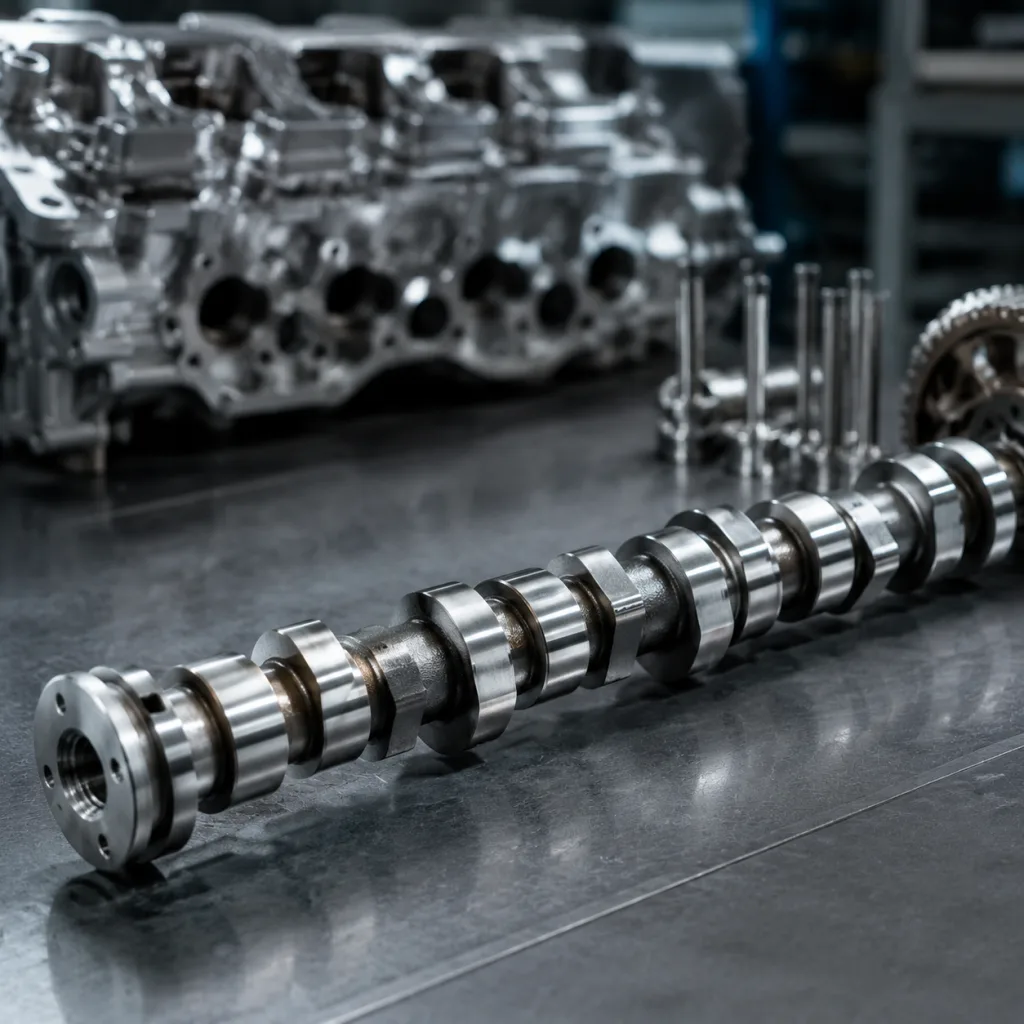
Carbon deposits on intake valves can cause rough idle, cold-start misfire, reduced airflow, unstable combustion, and loss of valve sealing. Gasoline direct-injection engines are especially exposed because fuel no longer washes the back of the intake valve as it does in many port-injection designs. For procurement teams, the key question is not “clean or replace?” It is whether the deposit problem has already changed valve seating geometry, insert fit, or the evidence needed for a warranty decision. Repeated heat cycling, abrasive deposit removal, poor machining, and weak seat concentricity can turn a drivability complaint into a valve seat sourcing requirement. This article explains how carbon buildup intake valves valve seat cases should be diagnosed, what evidence should be collected before replacements are ordered, and which material and process controls matter for aftermarket and OE-equivalent supply. Driventus manufactures valve seats and related engine components in Taizhou, Zhejiang, under IATF 16949:2016 and ISO 9001:2015 controls for B2B buyers in the EU, UK, North America, Australia, and Brazil. Driventus is an independent aftermarket manufacturer; brand names and OE references are used for fitment identification only.
Start With the Decision: Airflow Loss or Sealing Failure?
Carbon on the intake side is not proof that the valve seat is damaged. It may only be restricting airflow. It may also be holding the valve open just enough to burn, pit, or widen the sealing band. The useful first split is simple: is the workshop dealing with a breathing problem, a sealing problem, or both?
Field symptoms that deserve evidence, not guesswork:
Rough idle after cold start that improves as the engine warms
Misfire counters concentrated on one or two cylinders
Higher fuel trim correction caused by unstable combustion
Reduced compression on a cylinder with no piston-ring evidence
Intake port and valve deposits visible by borescope
Valve face pitting or contact marks after aggressive cleaning
In gasoline direct-injection engines, deposits usually build on the stem, tulip, and port-facing side of the intake valve. If they disturb valve motion or prevent full closure, hot gas leaks across only part of the sealing band. That narrow leak path can mark the valve face and the seat insert even when the original customer complaint sounded like ordinary intake fouling.
Before a buyer approves replacement, request the facts: compression readings, leak-down percentage, borescope images, seat contact results, and measured valve recession after cleaning. This prevents unnecessary seat orders when the real cause is crankcase ventilation oil carryover, EGR contamination, oil consumption, poor maintenance intervals, injector condition, or calibration.
Failure Mode Deep-Dive: How Deposits Become Seat Damage
The failure path is usually mechanical first, thermal second. Soft oil-derived deposits narrow the intake passage and disturb mixture motion. Harder deposits then create uneven contact around the valve head. Once the valve stops closing squarely, the sealing band overheats in local zones and the insert loses its intended contact geometry.
Typical progression:
1. Oil mist, soot, and fuel-related residue accumulate on the intake valve. 2. Deposit thickness restricts airflow and changes port turbulence. 3. A hard deposit interferes with stable valve closure or touches the seat area. 4. Local leakage raises temperature at one part of the sealing band. 5. The valve face and seat insert develop pitting, micro-welding, recession, or fretting. 6. Cleaning removes the deposit layer but exposes an out-of-round, widened, or recessed seat.
Carbon buildup intake valves valve seat failures become more likely when the insert material lacks hot hardness for the duty cycle, the engine runs under high thermal load, or machining concentricity is marginal. A seat that is slightly off-axis can pass an assembly check, then become vulnerable once deposits disrupt valve motion and closing force.
IATF 16949:2016 and ISO 9001:2015 do not define one universal valve seat alloy. They require controlled manufacturing, traceability, nonconforming product handling, corrective action, and continual improvement. For emissions-related engine performance, buyers should also understand the vehicle platform’s compliance context, including ECE R-83 where applicable, without treating the component supplier as the vehicle approval authority.
Step-by-Step Evidence Pack Before Any Seat Order
A repeatable inspection workflow prevents the same argument from repeating across workshops, distributors, remanufacturers, and component suppliers. The aim is to decide whether the seat insert can be reused, refaced, or replaced. Measurements after cleaning matter most because carbon can hide recession, pitting, and poor contact width.
Inspection point
Method
Procurement relevance
Deposit location
Borescope before disassembly
Confirms intake-side contamination pattern
Cylinder sealing
Compression and leak-down test
Distinguishes ring, valve, and gasket faults
Valve contact band
Engineer’s blue or vacuum test
Shows seat continuity after cleaning
Seat concentricity
Dial indicator or seat runout gauge
Verifies machining quality and wear
Valve recession
Depth measurement from head datum
Determines if machining allowance remains
Insert fit
Bore and OD interference measurement
Confirms replacement feasibility
</tr></thead><tbody> </tbody></table>Recommended evidence package for B2B claims:
Engine code, fuel type, mileage, and service interval
Photos before cleaning, after cleaning, and after seat contact testing
Measured seat width, valve recession, and runout
Cylinder head material and insert bore dimensions
Operating environment, including LPG/CNG use if relevant
Cleaning method used, such as walnut blasting, chemical cleaning, or manual scraping
Any OE cross-reference provided by the buyer, such as OE 06A… or OE 11251… when used in the customer’s system
Do not source a valve seat from visual comparison alone. Similar outside diameter and height do not confirm thermal expansion behaviour, interference fit, alloy compatibility, cutting response, or installed valve geometry. For repeat repair programmes, standardise the inspection sheet so workshops, distributors, and suppliers evaluate claims with the same data.
Specification Deep-Dive: Alloy, Geometry, and Traceability
A replacement seat insert has to do several jobs at once. It must resist wear, conduct heat, machine cleanly, and remain compatible with the cylinder head alloy. Powder metallurgy seats are widely used because alloy distribution and porosity can be controlled more consistently than in simple cast inserts. High-load, turbocharged, LPG, CNG, or other alternative-fuel applications may require higher chromium, molybdenum, cobalt, nickel, or other alloying elements depending on operating temperature and valve material.
Key specification points for sourcing:
Material route: powder metallurgy or cast alloy, selected by application load
Hardness control: batch-tested and specified in HRC, HRB, or another agreed scale
OD tolerance: controlled to achieve the required interference fit
Height tolerance: controlled to preserve valve installed height and recession limits
Concentricity allowance: defined for insert OD, ID, and finished seat angle
Surface condition: free from cracks, laps, oxidation scale, burrs, and edge chipping
Traceability: heat or batch records linked to inspection data and packaging lots
Material choice should not be based only on deposit formation. A naturally aspirated gasoline seat may be wrong for a high-load turbocharged engine or a gaseous-fuel conversion. Define the duty cycle, head alloy, valve material, machining process, and target market before freezing the specification.
Driventus manufactures valve seats for aftermarket and programme-specific requirements. Buyers can review our catalog for standard engine component families or discuss custom manufacturing when insert geometry, material, inspection reports, or packaging formats differ from catalog stock.
For regulated markets, importers may also need material declarations. EU buyers should request data relevant to REACH (EC) No 1907/2006, especially where alloying elements, coatings, rust preventives, or packaging chemicals must be documented.
Comparison: Clean, Reface, or Replace?
Cleaning is a repair step, not a verdict. Aggressive blasting, scraping, or chemical soaking can alter the valve face, reveal old seat wear, or widen the contact band. The reuse, machining, or replacement decision should be made only after deposits are removed and measurements are recorded.
Condition after cleaning
Likely action
Replacement trigger
Continuous sealing band, runout within repair limit
Reassemble after verification
No seat insert replacement required
Minor pitting but correct contact width
Light seat refacing
Confirm machining allowance
Broken contact band or leakage at vacuum test
Cut and inspect
Replace if recession exceeds limit
Excessive valve recession
Replace seat insert
Head repair required before assembly
Loose insert or fretting marks
Replace and inspect bore
Check head bore damage and interference
Cracked insert
Replace
Review combustion overheating or detonation evidence
</tr></thead><tbody> </tbody></table>Carbon-related intake valve problems can return if the upstream cause remains. Repair networks should check crankcase ventilation function, oil consumption, injector condition, intake air leaks, EGR contamination where applicable, and software or calibration updates. In fleet and high-volume repair programmes, a standard inspection sheet reduces unnecessary returns and helps distributors forecast demand by engine family.
Driventus’ quality system covers incoming material checks, in-process inspection, final dimensional verification, and batch traceability. This supports importers and repair-chain buyers that need repeatable supply, documented inspection, and stable packaging rather than one-time spot purchasing.
Procurement Scenario: Building a Repeatable Seat Program
A distributor receives recurring claims for misfire after intake cleaning on a direct-injection engine family. Some workshops ask for new seats immediately. Others reinstall the head after blasting. The parts team cannot forecast demand because every claim is described differently. The fix is not a larger safety stock order. It is a tighter sourcing brief.
For valve seat procurement, the technical drawing is more important than the vehicle name. A useful request should include OD, ID, height, required seat angle after machining, material requirement, application details, packaging quantity, and annual demand estimate. If the part is linked to a known service problem, include failure photos and the inspection workflow used by workshops.
Procurement teams should define:
Target market and compliance documentation needs
Engine family, fuel type, and application temperature range
Required stock mix for intake and exhaust seats
Dimensional tolerances and inspection sampling plan
Labelling format, carton quantity, and pallet requirements
MOQ, forecast volumes, lead-time expectations, and reorder rhythm
For OEM and Tier-1 projects, production part approval, control plans, gauge strategy, process capability evidence, and change-control procedures may be needed depending on the buyer’s internal requirements. For aftermarket programmes, the same discipline can be scaled into practical controls: confirmed dimensions, agreed material grade, traceable batches, clear packaging, and documented inspection.
Driventus can supply standard aftermarket valve seat inserts as well as drawing-based components for private-label distributors, remanufacturers, and multi-location repair chains. When documenting carbon buildup intake valves valve seat claims, avoid broad descriptions such as “bad seat.” Use measured recession, runout, leakage, contact-band width, insert fit, and visual evidence. Clear data creates a stronger basis for replacement sourcing, warranty evaluation, and future demand planning.
Frequently asked questions
Yes. Deposits can prevent full valve closure, causing hot gas leakage across part of the sealing band. Over time this can create pitting, recession, fretting, or uneven contact. The seat should be cleaned, contact-tested, and measured before replacement is specified.
No. Many engines only need cleaning and verification. Replacement is justified when the sealing band is broken, runout or recession exceeds the repair limit, the insert is loose, contact width cannot be restored, or cracking is visible.
Send a drawing or measured OD, ID, height, seat angle requirement, material requirement, engine application, expected volume, packaging needs, and any OE-style cross-reference already used in your system, such as OE 06A… or OE 11251… .
For valve seat sourcing, inspection samples, or drawing-based production, contact Driventus to [request a quote](/contact.html).