Car Parts Online: How B2B Buyers Separate Usable Supply from Risk
Buying car parts online at B2B scale is not a retail exercise with larger quantities. Import managers, distributor buyers, and workshop-network procurement teams are not just buying a part; they are buying fitment accuracy, documentation quality, repeatability, and delivery discipline. A low quote loses its appeal fast when catalogue errors drive returns, dimensional drift creates claims, or incomplete paperwork delays customs clearance and receiving.
The real job is to tell the difference between a listing that looks complete and a supply source that can actually support repeat orders. That means checking application data, dimensions, tolerances, MOQ logic, sample and production lead times, and how the factory controls lot variation. Buyers should be able to answer practical questions before release: What tolerance is acceptable? Which OE numbers and revisions does this SKU really cover? How many pieces are inspected per lot? What changes at 500, 2,000, or 10,000 units? What happens if packaging or tooling needs correction?
This article approaches car parts online sourcing as a decision process, not a generic checklist. It looks at where online offers usually fail, what evidence matters by part category, how to compare real supply cost instead of headline price, and when buyers should move from marketplace sourcing to direct factory engagement. Driventus is an independent aftermarket manufacturer; brand names are referenced for fitment only.
Decision filter #1: reject weak fitment data before comparing price
When sourcing car parts online, fitment is the first commercial control. Not the second. Not something to revisit after price review.
Catalogue errors are expensive because they spread across returns, labour claims, installer dissatisfaction, and stranded inventory. A supplier with weak application data can look competitive online and still become the highest-cost option after launch.
What buyers should verify first:
Vehicle coverage by make, model, engine code, production year, and market region
OE cross-reference format where relevant, such as OE 06A107065 or OE 11251…
Supersession history and discontinued number mapping
Left/right, front/rear, standard/oversize, and revision-level distinctions
Packaging labels that match ERP and warehouse barcode requirements
Minimum order by application group, especially where slow-moving variants share one platform
The key question is simple: is the fitment claim built from structured engineering or catalogue control, or from broad marketing language? If the seller cannot explain that distinction, risk goes up immediately.
For B2B buyers, the most useful file is usually a line-by-line application matrix, not a generic compatibility list. A workable matrix includes engine displacement, engine code, fuel type, body type where relevant, OE number, aftermarket references, and exception notes for mid-year or plant-specific changes. If one SKU is said to fit a multi-year range, ask whether that applies to every engine code and production plant in that range or only one revision.
This becomes critical in engine and powertrain categories. A single platform may carry multiple bore sizes, gasket thicknesses, ring pack designs, connector variants, or sensor revisions within a short production window. Online listings often flatten those differences. Workshops and distributors then pay for the mistake.
Examples matter. A piston listing may need to separate standard from +0.25 mm, +0.50 mm, and +0.75 mm oversizes. A head gasket offer may need distinct compressed thicknesses such as 1.20 mm, 1.35 mm, and 1.50 mm. If those variants are blended into one listing, the problem is not cosmetic; it is operational.
Buyers should also ask how fitment errors are corrected after field feedback. Is the change made only to the marketplace page, or also to ERP, carton labels, packing lists, and technical sheets? Is old stock isolated if an application note changes? Those process details often predict return rate better than the initial quote does.
Reliable fitment data protects margin. Even a 1.5% to 3% fitment-related return rate can wipe out the benefit of a quote that is only 2% to 4% cheaper than the next source once freight reversal, labour claims, and credit handling are included. You can review our catalog for the type of structured part-family coverage procurement teams typically expect when assessing a supplier of aftermarket replacement parts.
Failure mode to watch: listings that sound technical but say very little
Many online offers use technical language without providing decision-grade data. That is one of the most common traps in car parts online sourcing.
A credible listing should help a buyer judge interchangeability, installation risk, durability, and claim exposure. It does not need to reveal proprietary know-how. It does need real specifications.
Minimum data fields for replacement-part evaluation
Data field
Why it matters
Typical buyer check
Material grade
Confirms suitability for load, temperature, and corrosion exposure
Compare against OE-equivalent application needs
Critical dimensions
Controls installation fit and running clearance
Review drawing values and tolerances
Surface treatment
Affects wear, sealing, and corrosion resistance
Verify plating, coating, or finish specification
Weight or mass range
Flags major manufacturing variation
Check consistency lot to lot
Torque or assembly notes
Prevents installation error in workshop networks
Include in technical sheet where relevant
Batch traceability
Supports containment and recall action
Confirm lot code format and retention period
</tr></thead><tbody> </tbody></table>For many product groups, buyers should request a technical sheet covering dimensional tolerances, raw-material declaration, and inspection method. Depending on the part family, useful checkpoints include:
Water pumps: bearing specification, seal type, impeller material, leak test method
Crankshafts: journal hardness, runout, fillet radius, balancing standard
Turbochargers: shaft play limits, balancing speed, actuator specification
Ask for numbers, not adjectives. "OE quality" and "high precision" do not support approval.
A useful piston sheet may specify Al-Si alloy grade, piston diameter tolerance such as ±0.01 mm to ±0.03 mm depending on diameter band, ring groove side clearance range, pin bore tolerance such as H7, and weight matching within ±3 g or tighter per set. A gasket sheet should show uncompressed and compressed thickness, for example 1.45 ±0.05 mm uncompressed and 1.20 ±0.05 mm compressed, plus facing type, core material, and torque-sequence reference where relevant.
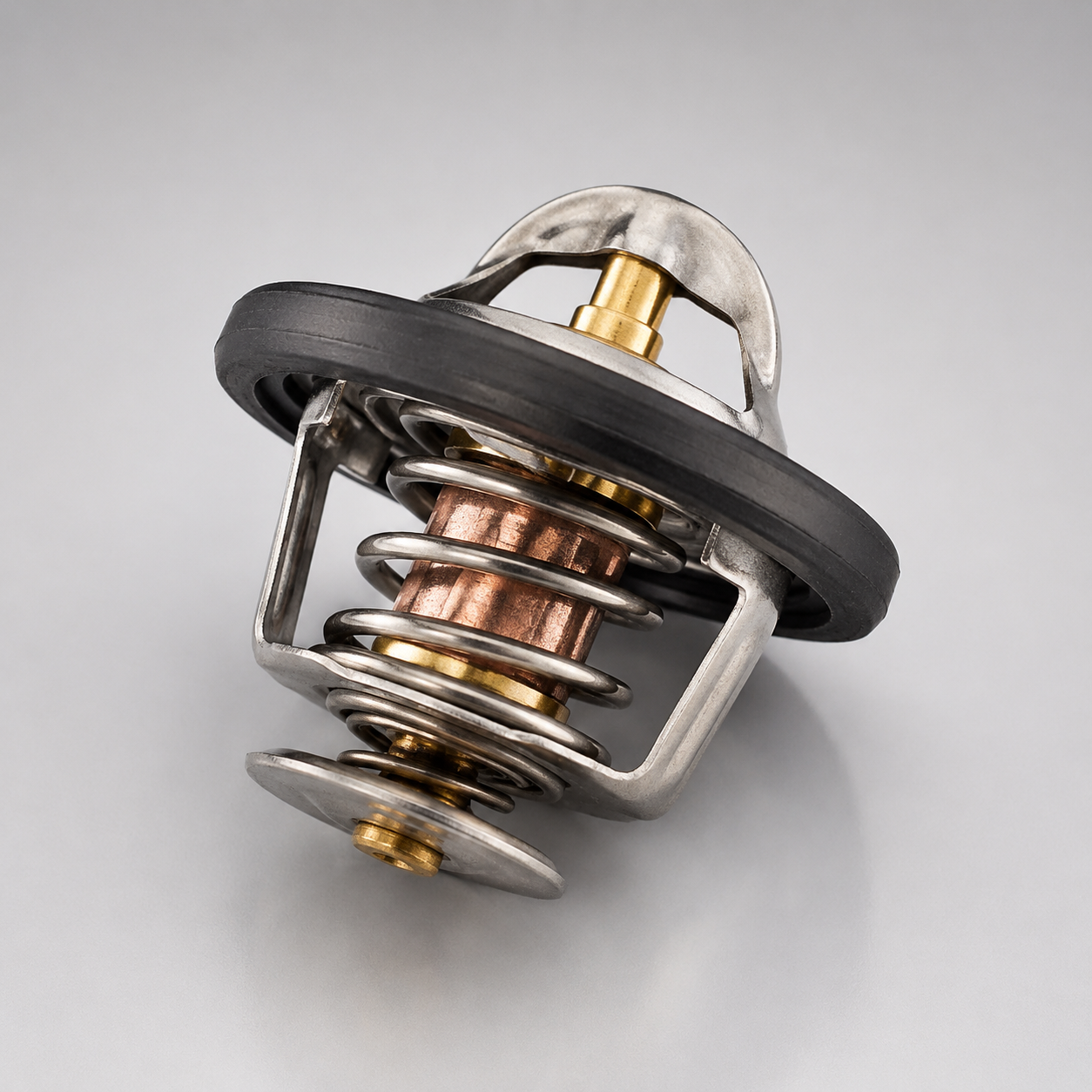
For rotating parts, buyers need control values, not broad claims. A crankshaft listing should point to journal diameter tolerance, total indicated runout, hardness range such as HRC 52-60 on relevant surfaces, and balancing result. A water-pump sheet should identify bearing code, seal material, impeller type, housing material, and leak-test condition, such as 100% air-pressure leak test at 0.2-0.3 MPa for 10-30 seconds. A turbocharger listing should indicate radial and axial play limits at inspection condition, balancing method, and actuator calibration status.
Consistency across the listing matters too. If photos show one revision while the specification sheet describes another, treat that as a warning sign. Weak data control online often turns into receiving problems later.
One more check is often overlooked: how were the dimensions measured? Was diameter checked with a micrometer, bore gauge, air gauge, or CMM? Is the reported tolerance a controlled production value backed by first-piece, in-process, and final inspection, or only a drawing target? On higher-risk parts, a dimensional report from 5 to 10 pieces in one lot is often more useful than a polished product page.
If an offer includes only images and broad compatibility claims, it is not enough for professional sourcing. Stronger suppliers can also support buyer-specific documentation through custom manufacturing where private label, packaging, or specification alignment is required.
Spec deep-dive: what quality evidence should match the exact part being quoted
Online sourcing still comes back to factory discipline. The right question is not whether a supplier has certificates. The right question is whether the quoted part, revision, and site are supported by controlled records.
Driventus operates under IATF 16949:2016 and ISO 9001:2015. For buyers, those systems matter because they point to process change management, nonconforming material handling, measurement control, traceability, corrective action, and release approval. The certificate alone is not the decision.
Notification process for tooling, material, sub-supplier changes
Reduces silent specification drift
</tr></thead><tbody> </tbody></table>Published standards can be relevant, but only when they truly fit the part category. Examples include REACH (EC) No 1907/2006 for EU chemical compliance, SAE J2527 in friction-material discussions, and ECE R-83 where emissions-related component context affects the replacement part. Buyers do not need a long list of standards. They need evidence that the supplier knows which ones actually apply.
Before approval, ask how the factory turns specification into routine control. How often are critical dimensions checked? What capability targets apply? How are gauges calibrated? What is the final release standard? A practical answer might describe piston diameter inspection every 30 minutes per machine, ring groove width verification every 100 pieces, and final AQL inspection at Level II, AQL 0.65 or 1.0 depending on defect class.
Validation evidence should follow the part family. Useful records include hardness reports, metallographic checks, corrosion data where relevant, leakage test records, balancing printouts, dimensional reports, and durability or bench-cycle results. Buyers should confirm that the report belongs to the exact revision and manufacturing location being quoted, not a similar part from another line.
Traceability matters most when something goes wrong. Confirm whether the lot code links back to production date, machine or line, cavity where relevant, raw-material heat or batch, and final inspection release. A retention policy of 2 to 5 years is common for routine aftermarket records, though programme business may require longer. Get the actual rule in writing.
In car parts online procurement, quality evidence is useful only when it is specific, current, and tied to the offered SKU. For new-source approval, buyers should review the supplier’s quality system and ask how incoming inspection, in-process control, final inspection, and release documentation are managed.
Comparison lens: lowest quote versus lowest operating cost
The cheapest online quote is often the most expensive supply option once the full model is visible.
B2B buyers should compare total landed cost, service stability, and claim exposure instead of focusing only on ex-works or FOB price.
Cost factors beyond unit price
Freight mode and carton density
Country-of-origin duty treatment
Defect rate and return handling cost
Packaging durability for long-distance transport
Label compliance for warehouse receiving
Lead-time stability during seasonal demand peaks
MOQ impact on inventory turns and cash use
A supplier with a slightly higher unit price may still be the better commercial choice if it reduces receiving discrepancies, freight inefficiency, defect cost, or replenishment volatility. This matters even more in heavy, fragile, or mixed-material categories such as water pumps, turbochargers, and gasket sets.
Buyers should also compare how each supplier handles:
Safety stock for core SKUs
Tooling redundancy for high-volume parts
Sub-supplier qualification and backup sources
Export documentation accuracy
Batch segregation during packing
Do not test price with one headline quantity. Test it in brackets. Ask for realistic breakpoints such as sample quantity, 300-500 pieces, 1,000-2,000 pieces, and container-level demand. Many suppliers price differently when they can run one full batch, one full shift, or one full pallet pattern. A 3% to 8% unit-price drop at the next MOQ tier may look attractive, but if it pushes inventory cover from 45 days to 120 days, the cash and obsolescence cost may erase the saving.
Lead time also needs to be unpacked. Ask separately for sample timing, tooling or artwork approval where needed, mass-production lead time, booking-to-onboard timing, and transit time by mode. A realistic response might be 7-15 days for stocked samples, 20-45 days for repeat production, and 45-60 days total door-to-port cycle depending on consolidation and port conditions. A flat single-number answer usually hides planning risk.
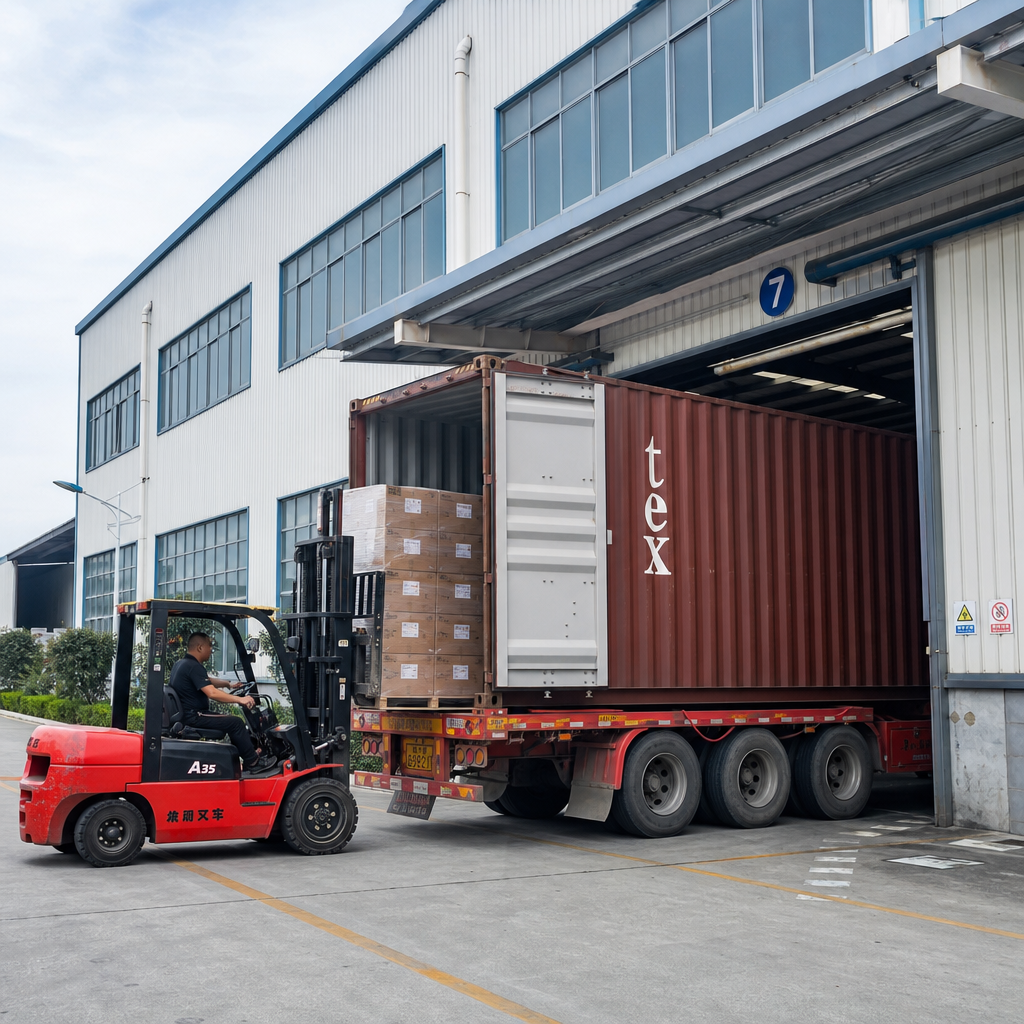
Packaging deserves the same scrutiny. A quote should state units per inner box, units per master carton, gross weight, carton dimensions, pallet pattern, and whether export pallets are fumigated or plastic. Improving carton density by 8% to 12% can materially reduce freight cost on heavy categories. Overweight cartons, on the other hand, can create warehouse and labour issues.
Claim cost should be modelled directly. If one supplier is $0.30 cheaper per piece but adds 1% more field-failure or fitment claims on a part with $20-50 installed claim exposure, the apparent saving disappears quickly.
For importers and service networks buying car parts online, the better scorecard usually blends price, defect rate, on-time delivery, fill rate, data accuracy, and corrective-action responsiveness. That is how buyers get to the lowest operating cost, not just the lowest first invoice.
Step-by-step approval flow before you release a production order
A formal approval process keeps online sourcing from becoming a catalogue-and-price exercise. It also helps purchasing, quality, engineering, and logistics teams use the same gate.
B2B checklist for evaluating online aftermarket offers
Confirm legal entity, manufacturing site, and export history
Verify IATF 16949:2016 or ISO 9001:2015 certificate scope
Review application data structure and OE cross-reference logic
Request drawings or key dimensions for critical SKUs
Check test evidence for durability, sealing, hardness, balance, or leakage as relevant
Confirm REACH-related declarations where EU distribution applies
Review packaging specification, pallet pattern, and barcode format
Test sample fitment on representative vehicles or assemblies
Audit lead time, MOQ, and monthly capacity by SKU family
Establish quality claim handling and response timing
Agree change-notification rules in writing
Used properly, this checklist is not just administrative. It forces comparable evaluation across multiple suppliers of car parts online and creates a documented approval trail.
Make each item measurable. For example: application-data completeness above 95% for requested SKUs, technical-sheet response within 3-5 working days, sample lead time within the committed window, dimensional conformity on all critical characteristics, barcode readability at receiving, and written change-notification commitment of at least 60-90 days before any feasible material, tooling, or sub-supplier change.
MOQ and capacity should be checked at SKU level, not with a generic factory number. A supplier may state 500 pieces MOQ for a standard piston but allow 100 pieces per size in a family order totaling 1,000 pieces. That flexibility often matters more than the headline MOQ shown online. Capacity should distinguish normal output from surge output, for example 20,000 pieces/month normal with 25% short-term surge if raw material is available.
Sample approval should mirror actual receiving and installation conditions. Check labels, dimensions, appearance, packing security, and functional fitment. For critical SKUs, many buyers follow sample approval with a pilot order to test invoice accuracy, packing-list accuracy, carton condition, and delivery reliability before larger release. That is often where hidden process weaknesses appear.
Where engine and powertrain lines are in scope, buyers often start with focused categories such as pistons, crankshafts, gasket sets, and water pumps before expanding the programme. That phased approach makes it easier to verify documentation quality, process consistency, and replenishment performance. If you are reviewing these lines specifically, see our catalog and relevant engineering support options.
The objective is straightforward: approve only when product data, manufacturing control, and logistics execution are all strong enough to support repeat orders.
Scenario: when marketplace sourcing stops being the right model
Marketplace channels are useful at the beginning. They help buyers discover suppliers, benchmark prices, and test small-volume orders. But they are rarely the best long-term model once the business becomes repeatable or technically demanding.
Typical triggers for moving direct include:
Annual demand high enough to justify MOQ planning by SKU group
Need for buyer-specific packaging, labels, or carton marks
Requirement for stable revision control across repeat orders
Need for engineering discussion on materials or dimensions
Consolidated shipments across multiple product families
Greater visibility on production scheduling and inspection release
Consider a common scenario. A distributor begins by searching car parts online through marketplaces and places small trial orders across several SKUs. That works while the goal is comparison. Then volume concentrates. Packaging needs to match warehouse barcode rules. The buyer needs fixed revision control, clearer lead times, and better claim response. At that point, the marketplace model starts adding friction instead of reducing it.
A practical threshold is when recurring demand becomes forecastable enough to support planned production. That may mean one SKU reaching 3,000-5,000 pieces per year, a family large enough for monthly or quarterly releases, or a mixed container combining several product lines under one shipment plan. Once that happens, direct factory engagement often improves pricing logic, lead-time commitment, and packaging control.
Direct supply is also the better route when buyers need information that marketplace listings rarely handle well: dimensional reports, pre-shipment inspection records, lot-code mapping, private-label artwork approval, pallet configuration, and written engineering deviation approval. Those details matter for wholesalers, workshop chains, and OEM-adjacent programmes because one field issue can affect many downstream customers.
The commercial comparison should include more than piece price. Buyers should weigh payment terms, MOQ flexibility, claim response, packaging compliance, revision control, and replenishment stability. In many cases, direct supply reduces hidden cost even when the initial marketplace quote looks similar.
In that sense, moving from marketplace buying to direct factory supply is not just about scale. It is usually a sign that the buyer now needs tighter control than a listing platform can provide.
Driventus serves B2B buyers in aftermarket and OEM-adjacent programmes with engine and powertrain components exported to more than 60 countries. If you need catalogue review, documentation support, or a quotation on specific part numbers, you can request a quote. Driventus is an independent aftermarket manufacturer; brand names are referenced for fitment only.
Frequently asked questions
Request current quality certificates, product specifications, critical dimensions with tolerances, test reports relevant to the part family, traceability details, packaging specifications, and compliance declarations where applicable. For higher-risk programmes, ask for change-control procedures, sample validation records, inspection reports, MOQ by SKU or family, monthly capacity, and a written breakdown of sample, production, and shipment lead times.
Use structured application data with engine code, production range, and OE cross-reference checks. Validate samples against representative vehicles or assemblies, and confirm that supersessions, left-right variants, revision differences, and thickness or size options are clearly separated in the catalogue data. It also helps to require a buyer-approved application matrix and to track fitment-related return rate by supplier after launch.
Direct factory supply is usually better when volumes are repeatable, private label is required, technical review is needed, or multiple SKUs must be consolidated in one shipment. It also improves control over revision status, lead time, documentation quality, MOQ negotiation, packaging specification, and claim handling. Buyers often switch once recurring annual volume or mixed-container demand is high enough to support planned production releases.
If you are comparing suppliers for aftermarket engine or powertrain components, we can review your target SKUs, tolerance requirements, MOQ and lead-time targets, documentation needs, and shipping plan. Contact Driventus to discuss your requirements at /contact.html