Car Parts on Line: How Trade Buyers Separate Low Prices from Low-Risk Supply
Buying car parts on line for trade supply is not a scaled-up version of retail purchasing. The stakes are different. One wrong application mapping can trigger returns across multiple customers; one packaging failure can damage an entire pallet; one undocumented design change can turn a repeat order into a warranty problem.
That is why experienced buyers do not start with the cheapest listing. They start with control: fitment data, measurable specifications, batch traceability, packaging reliability, and supplier response discipline. The real job is to confirm that the part ordered today will be the same part delivered six months from now.
This article breaks the process into decision points rather than generic sourcing advice. It looks at what to verify first, where online listings usually fail, how to compare supplier types, which records actually matter, and how to run a shortlist without wasting time. Driventus is an independent aftermarket manufacturer; brand names are referenced for fitment only.
First gate: can this online supplier support a controlled trade purchase?
When sourcing car parts on line, the first question is simple: can this supplier support repeatable buying, or only a one-off transaction?
A serious trade supplier should be able to confirm:
Application coverage by vehicle model, engine code, year range, and market
OE-equivalent references where relevant, for example in the format OE 06A107065 or OE 11251… when cited in the enquiry
Dimensional data with tolerances for critical interfaces, such as bore ±0.03 mm, flange flatness ≤0.10 mm, hole position ±0.15 mm, or gasket thickness 1.20 ± 0.08 mm
Material specification for wear, heat, and sealing performance, for example NBR 70±5 Shore A, FKM 75±5 Shore A, ADC12 aluminium, or 45# steel with induction hardening HRC 52–58 where relevant
Batch traceability from raw material to finished goods, typically by heat number, mould cavity, shift, line, and packing date
Inspection records for key characteristics, including first article, in-process checks every 1–2 hours or every 200–500 pcs, and final AQL release data
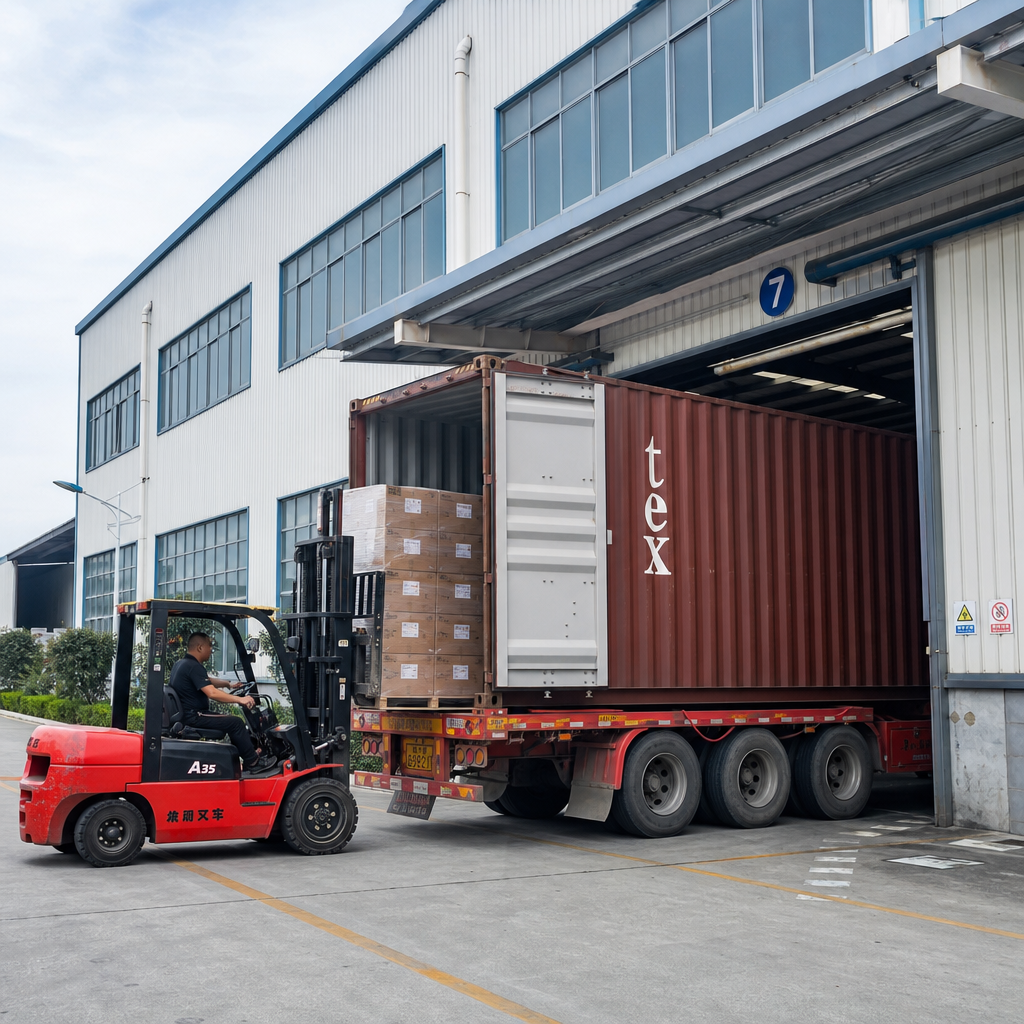
Packaging configuration per carton, pallet, and container, such as 10 pcs/inner, 50 pcs/master carton, 24 cartons/pallet, 20' container loading plan
Export documentation including HS code, packing list, commercial invoice, COO/origin documents, and test or declaration files when required by destination market
If any of that information is missing, price is almost irrelevant. You are not evaluating supply stability yet; you are still trying to confirm whether the listing connects to a controlled product.
For replacement parts, failures often begin with catalogue mismatch, incomplete engine-code mapping, or weak change control rather than obvious production defects. So request both the commercial listing and the technical drawing or controlled specification.
Revision control deserves special attention. If gasket thickness, connector angle, coating, or seal material changes, buyers need to know whether the catalogue, labels, and packing records change at the same time. Ask for the current revision code, effective date, and whether old and new revisions can coexist in stock. If they can, require lot segregation.
Commercial logic matters too. Many aftermarket lines have a trial MOQ of 50–100 pcs/SKU for stock items, while production MOQs for custom box or label programmes may be 300–1,000 pcs/SKU depending on tooling, print setup, and material procurement. Typical sample lead time may be 7–15 days, while repeat production lead time may be 25–45 days after deposit and artwork approval. These ranges vary by part family, but the supplier should be able to explain them clearly.
If you are reviewing a broad product range, start with our catalog and then request part-family data for the SKUs under consideration.
Where online offers usually go wrong: the failure modes behind returns and claims
Most sourcing mistakes in car parts on line do not begin on the production floor. They begin in the data.
A listing can look credible and still create downstream problems. Common failure modes include:
Copied application tables that miss engine-code differences or market variations
Old images that no longer match the current production revision
Broad claims such as “OEM quality” with no measured dimensional or material data behind them
Mixed stock from multiple sources under one seller listing
Weak change control so revised parts and old labels circulate together
Packaging mismatches that create warehouse errors, relabelling work, or transit damage
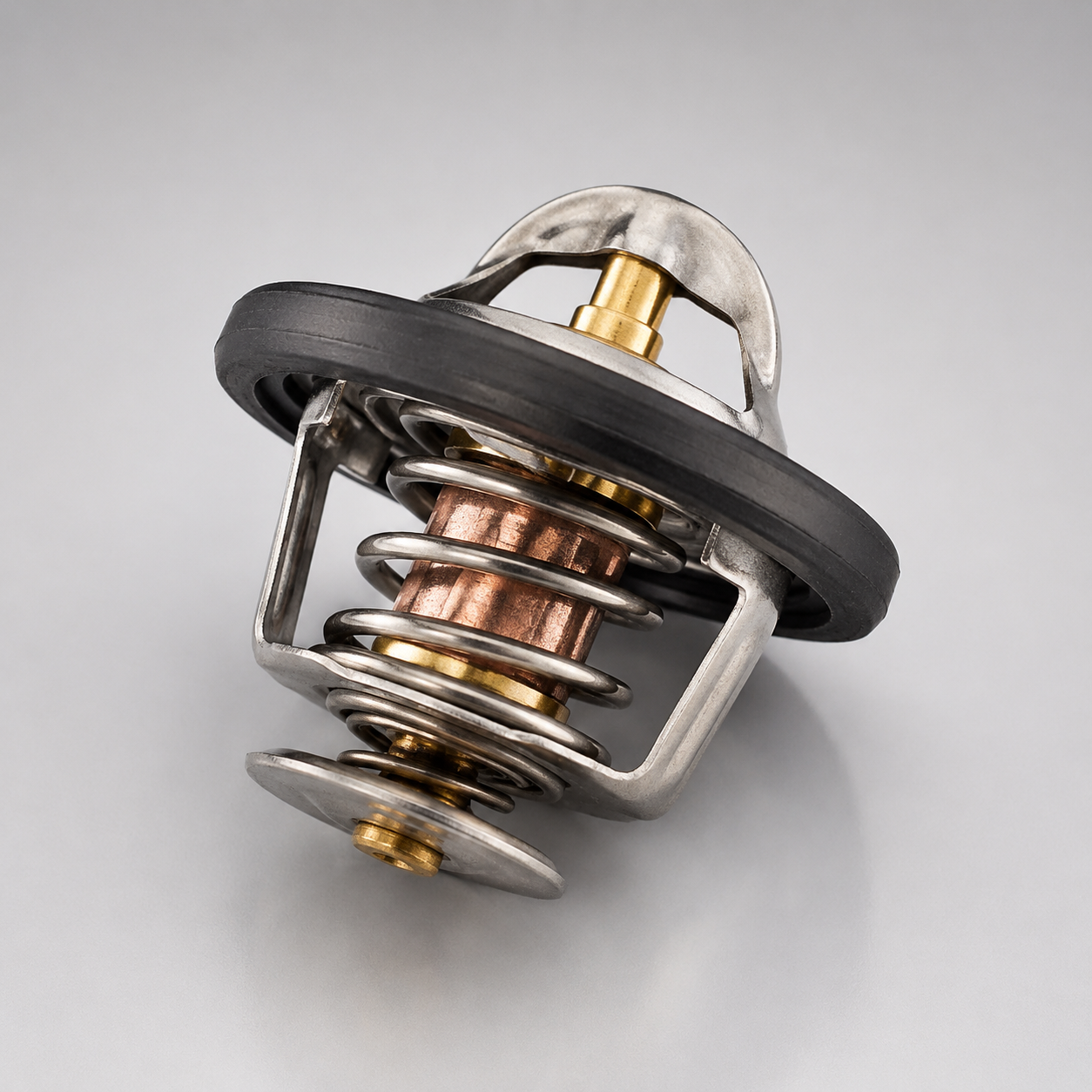
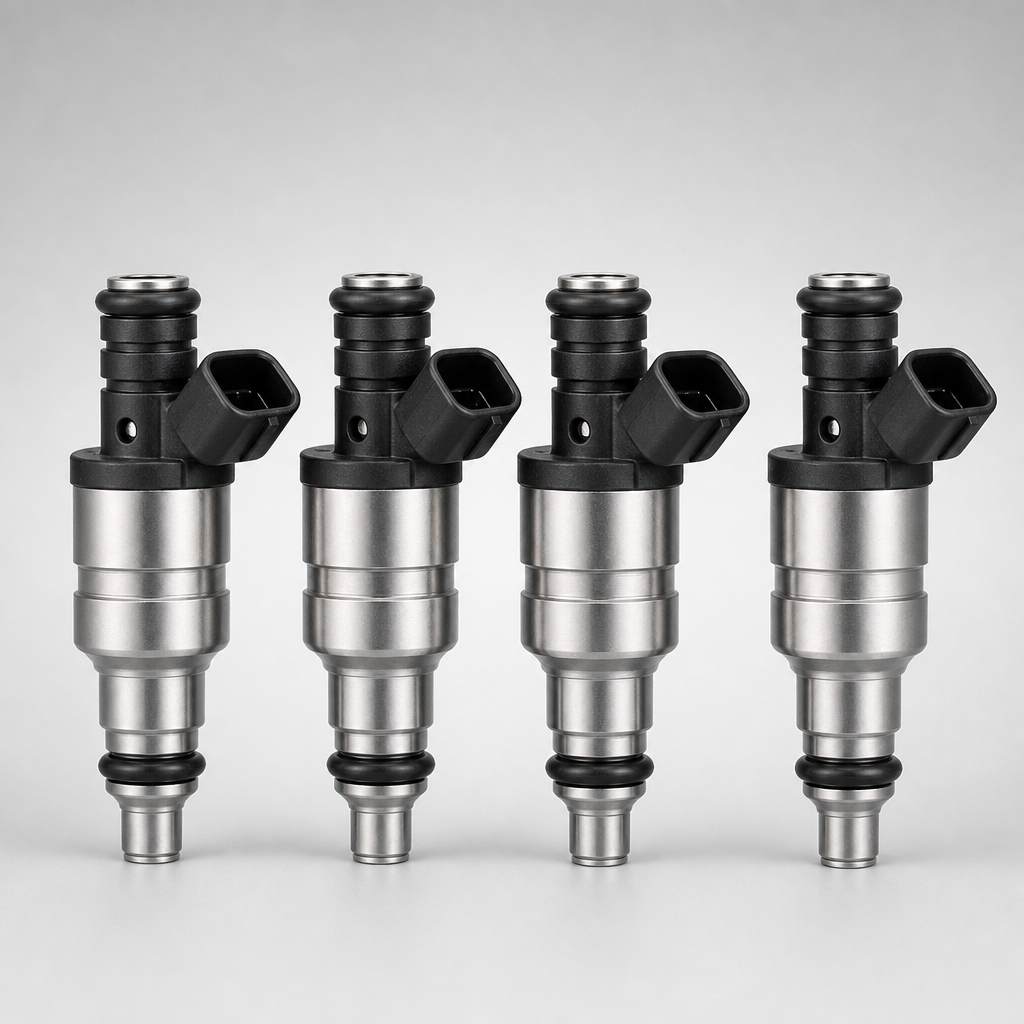
This is why buyers should not rely on photographs alone. Two parts can appear identical online while differing in connector orientation, bolt pattern, sealing geometry, bracket offset, thread pitch, or material construction.
The practical response is to build a validation file per SKU. Include OE reference, supplier part number, drawing revision, application table, sample photos with scale, measured inspection report, and pilot-order result. That file becomes far more reliable than the marketplace listing itself.
Another frequent issue is revision lag. Some platforms leave outdated compatibility claims live long after a design update. Fitment validation should therefore come from controlled data sheets and sample inspection, not from listing text.
For engine and powertrain items, buyers may also want to review related ranges in /products/engine-components.html if the sourcing project covers multiple mating parts.
Trader, wholesaler, or manufacturer? Compare the business model before the quote
Online listings often compress very different supplier types into the same search results. That matters. A trader, a stocking wholesaler, and a direct manufacturer can all show similar photos and similar price claims, while offering very different levels of control behind the scenes.
</tr></thead><tbody> </tbody></table>For buyers managing multi-country distribution, the question is not who can ship one batch this month. It is who can hold specification over the next 12 to 24 months without uncontrolled variance in fitment, finish, packaging, or labelling.
Use this scorecard to compare suppliers on the same basis:
Catalogue accuracy rate, ideally measured on a test basket; many buyers set an acceptance target of ≥98% correct application mapping on reviewed SKUs
PPM or field return history, if available; for mature aftermarket programmes, a working target may be <1,000 PPM internal defect and <0.5–1.0% field claim rate depending on category
On-time delivery performance, often expected at ≥95% for release orders
Average lead time by product family, for example 20–30 days for stocked service parts and 30–60 days for made-to-order lines
Response time for technical queries, ideally 24–48 hours for first reply and 3–5 working days for documented answers
Evidence of final inspection and incoming material control, including incoming AQL, supplier approval list, and calibration records
Ability to support label, box, and barcode requirements, such as EAN-13, Code 128, lot number, country of origin, and shelf location fields
Corrective action discipline for non-conforming parts, including 24-hour containment, 72-hour preliminary report, and 10 working day 8D target
The most useful comparison method is still a matched SKU set. Ask each shortlisted supplier for drawings, application data, packaging details, sample lead time, and answers to the same technical questions. Differences in capability become obvious very quickly.
Quote structure also matters more than headline price. A direct manufacturer may quote EXW USD 2.10/pc at 1,000 pcs and USD 1.86/pc at 5,000 pcs, while a trader may offer USD 2.25/pc with lower MOQ but less control over revision and traceability. For slow-moving SKUs, that trade-off may be acceptable. For faster movers, supply control usually wins.
Spec deep-dive: what fitment and OE-equivalence checks should sit behind each SKU?
A large share of avoidable returns comes from data problems rather than manufacturing defects. That is especially true when buying car parts on line through marketplaces or broad catalogue sites, where listings are often copied, simplified, or left outdated.
What to confirm for each SKU
Check item
Why it matters
What to request
OE cross-reference
Reduces mismatch risk
OE-format references where available
Engine code coverage
Prevents near-fit errors
Application list by engine code and year
Critical dimensions
Confirms interchangeability
Drawing or dimensional sheet
Material grade
Affects life and performance
Material specification
Kit contents
Prevents incomplete installations
Packing content list
Supersession status
Avoids obsolete combinations
Latest revision record
Packaging label data
Supports warehouse control
Label sample with barcode fields
</tr></thead><tbody> </tbody></table>Where possible, ask for measured values rather than generic wording such as "high quality" or "OEM standard". Useful examples include bore diameter tolerance, flange flatness, gasket thickness range, shaft runout, hardness values, or leak-test thresholds.
Typical measurable checkpoints by part type include:
Gaskets and seals: thickness ±0.05 to ±0.10 mm, hardness ±5 Shore A, compression set limit, bead height consistency, and media compatibility
Machined housings or flanges: hole pitch ±0.10 to ±0.20 mm, surface roughness target, flatness ≤0.05 to 0.15 mm depending on interface, and thread specification confirmation
Rotating parts: shaft runout ≤0.03 to 0.08 mm, dynamic balance threshold, bearing noise screening, and end play range
Pumps and cooling parts: leak-test pressure and hold time, for example 0.2–0.3 MPa for 10–30 seconds with zero visible leakage, plus impeller clearance control
Rubber or plastic connectors: insertion force range, angle tolerance, clip retention, and temperature resistance band
The point is not to collect paperwork for its own sake. The point is to confirm interchangeability before the part enters your warehouse.
It is also important to verify that the online listing matches the current production revision. Some platforms keep older images or broad compatibility claims live long after a design update. Fitment validation should come from controlled data sheets and sample inspection, not from marketplace visuals alone.
Which quality records actually predict supply performance?
Certificates matter, but only up to a point. A framed certificate does not tell you whether the last shipment was traceable, whether critical dimensions were checked, or whether a complaint would be contained within 24 hours.
For aftermarket replacement parts, certification shows whether the supplier operates inside a structured system. Buyers should request current certificates, verify expiry dates, and confirm that the certificate scope actually covers the product category being quoted.
Relevant references include:
IATF 16949:2016 for automotive quality management system requirements
ISO 9001:2015 for general quality management systems
REACH (EC) No 1907/2006 for chemical compliance in the EU supply chain
Product-specific validation where applicable, such as material testing, durability testing, pressure testing, leak testing, balance checks, or dimensional capability studies
The exact validation method depends on the part family and its failure mode in service. An engine gasket set may require material verification, compression-set control, and sealing-bead consistency. A water pump may require leak testing, bearing durability checks, and impeller dimensional control. A turbocharger component programme may involve balance verification and housing tolerance checks.
Ask suppliers for their control plan, inspection frequency, and non-conformance handling procedure. If they cannot explain which dimensions or material properties are critical to function, that is a clear risk signal.
Useful records to request include:
Incoming material inspection against a defined standard, such as hardness, tensile, coating thickness, or chemical composition
First article inspection report (FAIR) with measured values for all critical dimensions on initial sample or first lot
In-process control records, for example one check per cavity every 2 hours or every 300 pcs
Final inspection release using agreed sampling, often ISO 2859-1 / ANSI ASQ Z1.4 with buyer-agreed AQL such as 0.65 for critical, 1.0 for major, 2.5 for minor characteristics
Capability data for stable dimensions, with preferred Cpk ≥1.33 on critical interfaces where process is mature
Calibration status for gauges, calipers, bore gauges, torque testers, leak testers, and weighing devices
Traceability format showing how lot code links to date, line, operator, and material batch
In practical terms, ask what happens if a defect is found after shipment. A workable answer should include stock containment within 24 hours, suspect lot identification, replacement or credit proposal, root-cause analysis using 5 Why or fishbone, and a preventive action with verification date. If the supplier cannot show a closed-loop CAR or 8D example, complaint handling may be weak in real use.
You can review Driventus quality system information before requesting a project-specific quality pack.
Landed cost reality check: what the online unit price does not show
The visible online price is only one line in the decision. Buyers should model total landed cost and the operating cost of failure: returns, relabelling, stock disruption, claim handling, and lost service level.
Key commercial points to review:
MOQ by SKU and by order
Lead time for repeat production, not just first sample availability
Incoterms and freight responsibility
Inner and outer carton quantities
Pallet efficiency and container loading plan
Warranty claim process
Spare capacity during peak seasons
Private label and documentation support
Common hidden costs
Repacking due to weak export cartons
Manual relabelling because barcode fields were not agreed
Higher return handling due to poor application data
Mixed batches without clear lot traceability
Delays from missing declarations for destination market compliance
A lower ex-works price can quickly become more expensive if the supplier cannot maintain catalogue discipline, carton integrity, or shipment accuracy. That is why many procurement teams start with a limited SKU trial and expand only after reviewing delivery accuracy, claim rate, and fill rate over several order cycles.
When reviewing car parts on line, ask how the supplier handles forecast changes. Can they hold safety stock, reserve capacity, or combine mixed-SKU orders efficiently? Those details often determine whether the supplier remains workable once demand becomes less predictable.
Buyers should also ask suppliers to explain the MOQ/price/lead-time logic in concrete terms. Typical patterns include:
Stock items: low MOQ, often 20–100 pcs/SKU, faster dispatch in 3–10 days, but limited private label flexibility
Made-to-order standard parts: MOQ often 200–500 pcs/SKU, repeat lead time 25–40 days, better price at carton or pallet multiples
Private-label orders: MOQ often rises to 500–1,000 pcs/SKU because of printed boxes, labels, inserts, and separate packing setup
Custom or tooling-based parts: tooling deposit plus MOQ linked to cavity count, forging batch, die-casting run, or minimum raw-material purchase
Example price logic for a gasket or small engine part might look like this:
Order quantity
Unit price logic
Typical effect
50–100 pcs
Trial or sample batch
Highest price due to setup and handling
300–500 pcs
Standard MOQ
Balanced price for validation orders
1,000–3,000 pcs
Production run
Lower unit cost from material and packing efficiency
5,000+ pcs
Forecasted programme
Best price if demand is stable and revisions are frozen
</tr></thead><tbody> </tbody></table>Packaging changes landed cost more than many buyers expect. Ask for carton dimensions, gross weight limit per carton, drop-test basis if available, pallet size such as 1100 x 1100 mm or 1200 x 1000 mm, stretch-wrap method, corner protection, and whether pallets are fumigated or exempt for destination rules. Cartons over 15–18 kg often raise handling damage and warehouse inefficiency.
For payment terms, common starting points are 30% deposit / 70% before shipment for new programmes, moving later to credit terms only after stable order history. Buyers should also define claim windows, photo evidence requirements, and whether replacement, credit, or debit note is the default remedy.
A six-step shortlist process for buying replacement parts online without guesswork
A structured shortlist process reduces sourcing risk and improves negotiation quality. It also keeps the team focused on facts instead of presentation.
1. Screen the online offer for application coverage, product range, and response quality. 2. Request technical files for 3 to 10 target SKUs, including dimensions, material details, and packaging specification. 3. Check certifications and confirm current scope for IATF 16949:2016 or ISO 9001:2015 as applicable. 4. Validate samples against your incoming inspection criteria and fitment requirements. 5. Review supply terms including MOQ, lead time, carton data, and corrective action workflow. 6. Run a pilot order before full range expansion.
This approach is especially useful for buyers searching broad head terms such as car parts on line, where listing quality varies widely and technical detail is often incomplete.
During the pilot stage, track more than whether the goods arrive. Review label accuracy, carton condition, pallet consistency, document completeness, lot coding, and how quickly the supplier answers follow-up questions. Early operational discipline is usually a reliable indicator of long-term account performance.
A workable shortlist process often looks like this in practice:
1. Desk review: remove suppliers that cannot provide drawing-based data, OE references, or batch-traceable photos within 48–72 hours. 2. RFQ pack: send the same 3–10 SKUs to all candidates and request quote by Incoterm, MOQ, sample cost, tooling cost if any, production lead time, carton pack, and warranty terms. 3. Technical review: compare dimensions, tolerances, material specs, label fields, and supersession status line by line. 4. Sample validation: inspect against an agreed checklist covering dimensions, visual finish, function, and packaging. For critical SKUs, use a pass/fail sheet with measured values and photos. 5. Pilot order: place a limited run, often 300–1,000 pcs total across selected SKUs, large enough to test packing consistency, shipment accuracy, and receiving performance. 6. Post-pilot score: rate claim rate, fill rate, OTD, response speed, and document quality before approving wider range release.
For incoming inspection, many buyers set simple acceptance gates such as: carton label 100% match, critical dimensions within drawing tolerance, zero mixed lots per carton, AQL release report attached, and shipping documents complete before cargo cut-off. These basic controls quickly separate reliable suppliers from risky ones.
If you need support with aftermarket engine and powertrain replacement programmes, Driventus can provide catalogue review, drawing-based checks, private-label support, and export packaging planning. To start a discussion, request a quote.
Frequently asked questions
The main risk is not always manufacturing quality. It is often fitment error caused by weak catalogue data, incomplete engine-code mapping, or poor change control. Buyers should verify OE references, dimensions, materials, application coverage, and current revision status before placing volume orders. A practical check is to request measured dimensions with tolerances and validate a pilot lot before scaling.
At minimum, ask for current ISO 9001:2015 certification. For automotive programmes, IATF 16949:2016 is a strong indicator of structured process control. Also review compliance documentation relevant to your market, such as REACH (EC) No 1907/2006 for the EU supply chain. Beyond certificates, request control plans, batch inspection reports, and traceability examples because execution records matter more than certificate logos alone.
Compare technical depth, traceability, packaging control, lead-time consistency, corrective action speed, and sample validation results. Ask both suppliers to quote the same SKU set with MOQ, price breaks, carton pack, sample lead time, and repeat lead time. A supplier with clear drawings, batch control, and stable export execution usually carries lower total cost than one offering only a lower unit price.
If you are qualifying a new source for aftermarket replacement parts, Driventus can support technical review and pilot-order planning. Contact our team here: /contact.html