Camshaft Wear Repair Cost Guide for Buyers and Shops
Camshaft wear is a cost problem before it is a parts problem. The visible damage may sit on one lobe or journal, but the cause is usually elsewhere: low oil pressure, wrong oil viscosity, contaminated oil, valve train misalignment, excessive spring load, blocked oil galleries, poor break-in, or a damaged bearing surface. For procurement teams and workshop managers, the repair decision affects downtime, machining spend, warranty exposure, comeback risk, stock planning, and whether replacement is cheaper than controlled rework. This camshaft wear repair cost guide sets out a practical buying framework for comparing labour, parts, machining, tolerances, MOQ, lead time, and validation work on the same basis. Driventus is an independent aftermarket manufacturer; brand names are referenced for fitment only. The focus here is commercial and technical discipline: when to polish, when to regrind, when journal repair is too risky, and when a documented replacement is the cleaner decision.
Cost Model: Build the Quote Before Choosing the Repair
Do not start with "repair or replace." Start with the invoice structure. Camshaft wear cost is usually spread across diagnosis, access labour, machining or replacement parts, related wear items, fluids, cleaning, and validation. A small passenger engine may need 3-6 labour hours for access and inspection. An overhead-cam diesel, V engine, or timing-chain layout can move into the 8-18 hour range before machining or parts are added.
Break the estimate into these lines:
- Diagnostic labour: compression testing, oil pressure checks, fault-code review, cover removal, and visual inspection, often 1-3 hours.
- Component removal: timing drive, cam caps, followers, lifters, rocker arms, bearings, seals, and related hardware.
- Machining: lobe regrind, journal polish, dimensional restoration, straightness correction, and surface-finish verification.
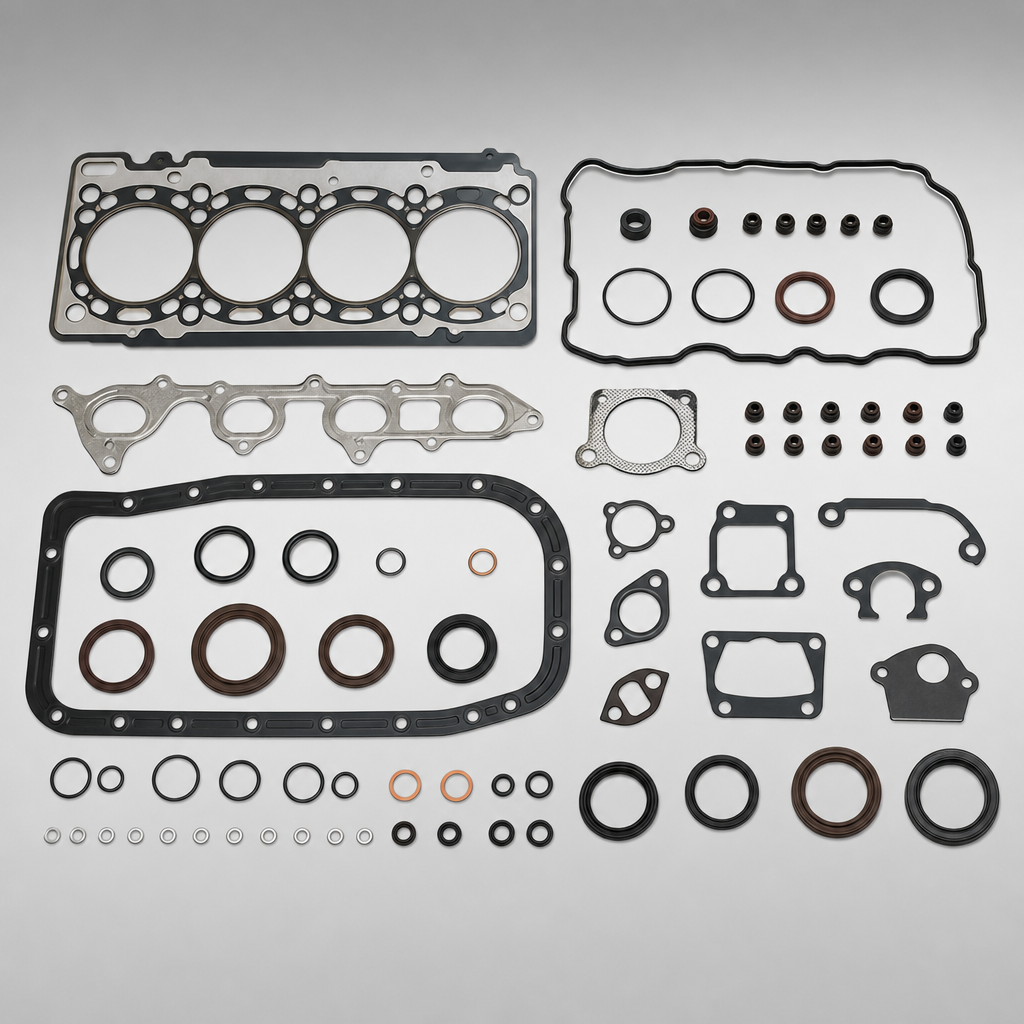
- Replacement parts: camshaft, followers, lifters, bearings, seals, gaskets, timing belt or chain components, and break-in consumables.
- Validation: oil pressure recheck, lubrication system cleaning, break-in procedure, road test or bench run, and post-repair inspection.
Light polishing may add only a modest machining charge plus gaskets, cleaning, and inspection time. Regrinding or journal repair costs more because it requires set-up, profile measurement, surface-finish control, cleaning, and repeat inspection. Full replacement has the highest unit part cost, but it often gives the clearest commercial quote because it removes uncertainty around material loss and repeat fitting.
As a rule, replacement becomes easier to justify when lobe lift loss exceeds the engine maker's service limit, journal scoring is measurable with a micrometer, runout is beyond tolerance, or the hardened layer is breached. At that point, repeated rework can become a more expensive way to arrive at the same replacement decision.
Symptom Triage: What Points to the Camshaft and What Does Not
The first signs are usually mechanical noise, unstable running, or lost performance. Treat those symptoms as a trigger for measurement, not as proof that the camshaft alone has failed. Ask the workshop to record engine speed, oil temperature, oil pressure, scan-tool codes, and cylinder balance data when the symptom is reproduced.
Common indicators include:
- Ticking, tapping, or knocking from the cylinder head area, especially after hot idle or cold start.
- Rough idle, misfire codes, or uneven cylinder contribution.
- Reduced manifold vacuum or poor cylinder filling.
- Loss of power at mid to high rpm from reduced valve lift.
- Hard starting caused by altered valve timing or low effective lift.
- Metal debris in the oil filter, drain pan, or magnetic plug.
- Visible scoring, pitting, discoloration, blue heat marks, or flattening on lobes and journals.
Useful screening numbers include oil pressure at hot idle and 2,000-3,000 rpm, valve lift checked with a dial indicator, and camshaft end float and runout checked against the service manual. A lobe height difference of 0.10-0.20 mm between similar lobes can be meaningful on many engines, but the manufacturer limit controls the decision.
Several faults can imitate camshaft wear: collapsed hydraulic lifters, blocked oil feeds, worn followers, weak valve springs, incorrect lash, timing errors, or follower edge loading. That is why the full valve train and lubrication path must be inspected before authorising replacement.
Inspection Workflow: The Evidence a Buyer Should Require
A controlled inspection prevents avoidable spend and separates a reusable camshaft from one that needs replacement. The sequence below works for a workshop estimate, fleet review, or sourcing decision. Require measured values, not only photographs.
1. Confirm oil grade, oil condition, service history, drain interval, and any history of overheating, fuel dilution, coolant ingress, or contamination. 2. Measure oil pressure at hot idle and operating speed, then compare results with engine specification. 3. Remove the valve cover and inspect lobe surfaces, cam caps, journals, and oil-feed areas with adequate lighting. 4. Check followers, lifters, rocker arms, lash adjusters, and contact faces for matching wear or edge loading. 5. Measure journal diameter, lobe height, base circle, runout, and end float against specification using a micrometer, dial bore gauge where applicable, and dial indicator. 6. Inspect timing chain or belt condition, guide wear, tensioner function, sprocket wear, and timing alignment. 7. Cut open or inspect the oil filter and check the drain pan for bearing material, hard particles, and magnetic debris. 8. Record photographs, measurements, fault codes, oil pressure readings, and part numbers so the repair estimate can be reviewed commercially.
For procurement files, ask the workshop to state the measuring tool resolution and the pass/fail limit. Typical inspection targets are journal diameter variation, lobe height loss, taper, out-of-round, end float, straightness, and visible surface damage. Many camshaft journals require surface finish in the low Ra range, often around Ra 0.2-0.8 micrometre depending on design. Excessive polishing can remove geometry even when the surface looks clean.
If the lobe nose is flattened, the journal is deeply scored, the camshaft is bent, or the surface hardening is damaged, machining may not restore reliable service life. In those cases, a replacement camshaft with matched wear parts is usually the lower-risk choice.
For buyers comparing parts supply options, see our catalog and our quality system for production controls and inspection points.
Repair Route Comparison: Polishing, Regrinding, Journal Work, or Replacement
The best repair route depends on wear depth, engine access, workshop capability, parts lead time, and the cost of downtime. Use the table as an estimate framework, then add local labour rate, machine-shop quotation, freight, and lost operating time.
| Option | Typical use case | Main cost drivers | Risk level |
|---|---|---|---|
| Polishing | Light surface marking with no measurable profile loss | Labour, cleaning, seals, measurement time, surface-finish check | Low if wear is superficial |
| Regrinding | Profile wear with enough material remaining | Machining set-up, profile verification, follower compatibility, possible surface treatment | Medium |
| Journal repair | Localised journal scoring or diameter loss | Machine work, bearing matching, alignment checks, inspection records | Medium to high |
| Sleeve or bearing-housing repair | Housing wear, cap damage, or oil-clearance issue where repair is approved | Line boring, sleeve material, cap alignment, oil-clearance measurement | High unless tightly controlled |
| Full replacement | Lobe wear, hardening failure, major scoring, or repeat contamination | Camshaft, followers, lifters, timing parts, labour, freight | Lowest risk for service life |
| Complete valve train refresh | Secondary wear across followers, lifters, rockers, or timing components | Matched ancillary parts, extra labour, oil-system cleaning | Highest initial spend, lower comeback risk |