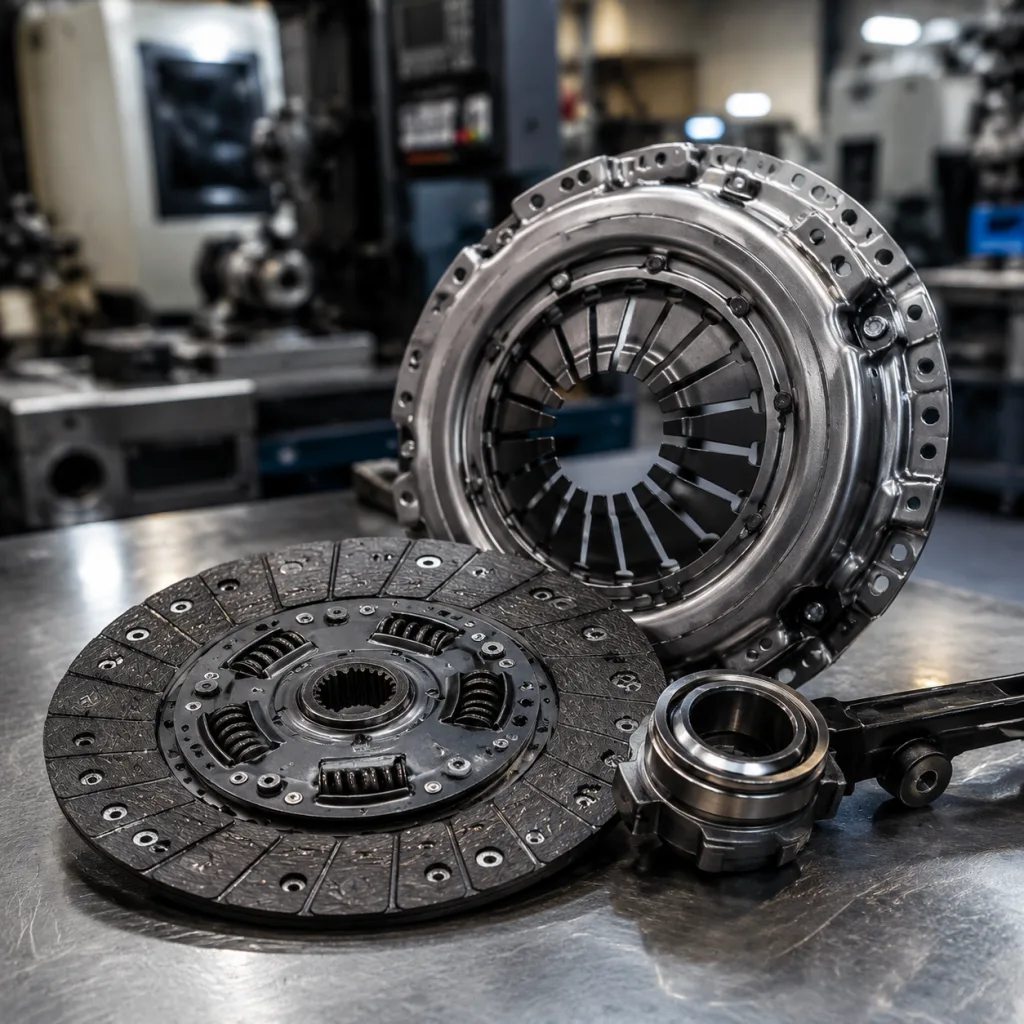
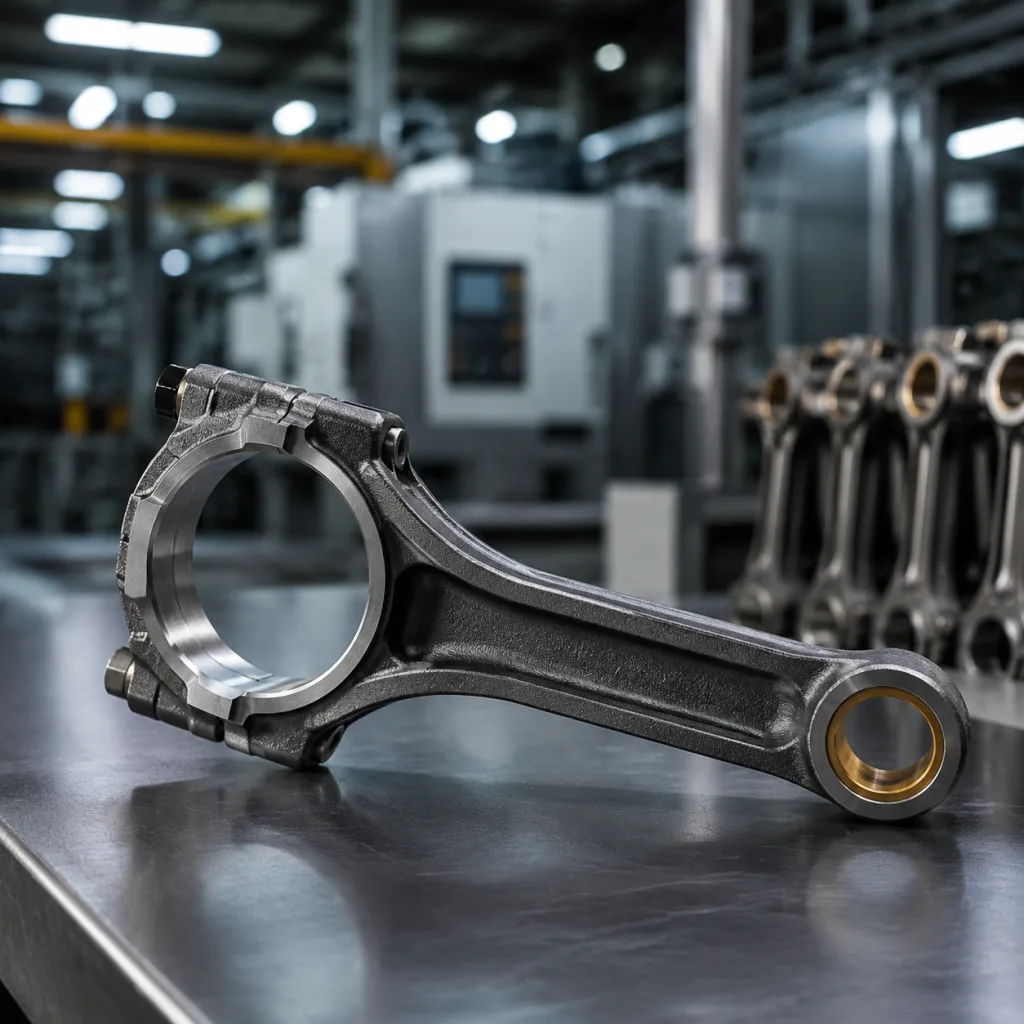
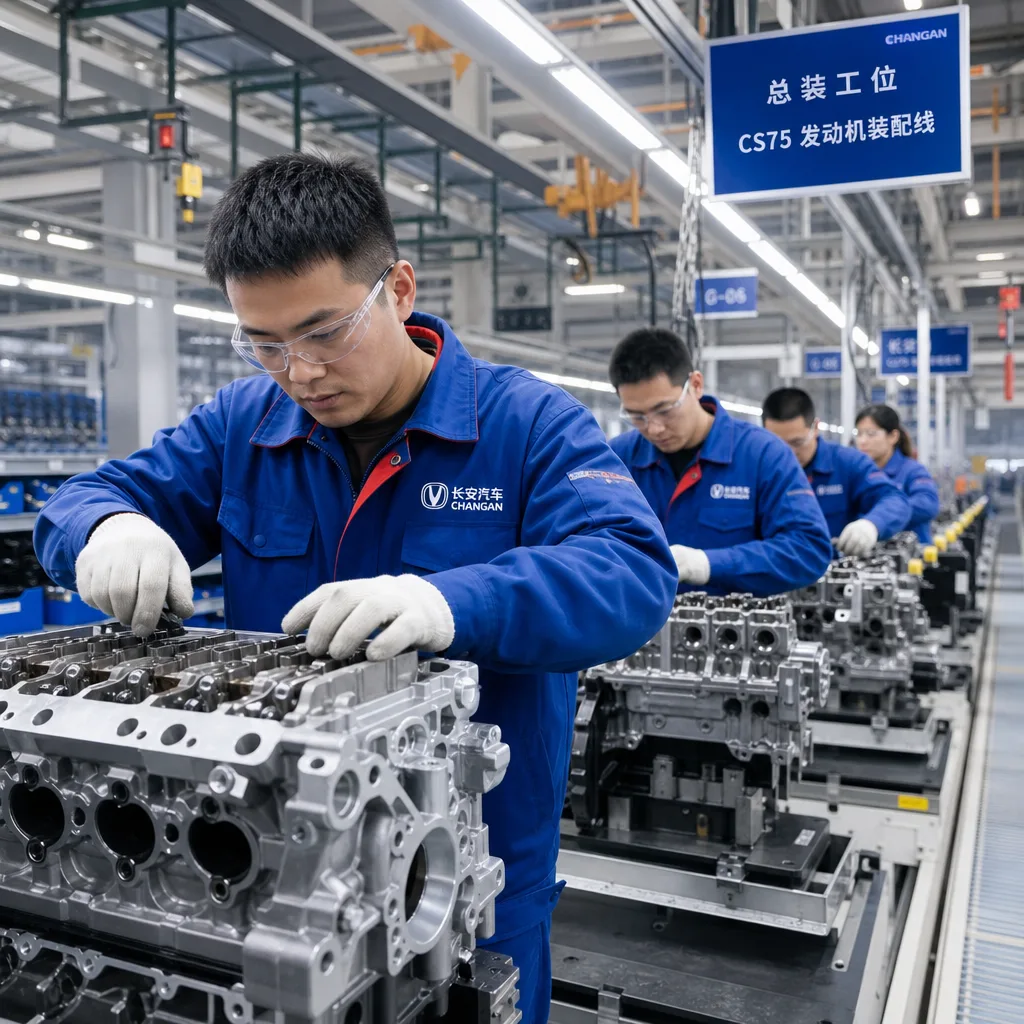
A camshaft Volkswagen aftermarket replacement is approved by evidence, not by catalogue wording. The part must match the original engine architecture, valve timing events, journal sizes, datum relationships, and drive interface before it can be treated as a substitute in distributor stock, workshop programmes, or engine remanufacturing.
For procurement teams, the expensive failures usually start upstream: incomplete fitment data, profile drift, poor hardness control, mixed supersessions, or weak inspection records across rough machining, heat treatment, finish grinding, washing, oiling, and packing. Driventus supplies camshafts for B2B replacement programmes with focus on OE-equivalent geometry, batch traceability, and repeatable measurement. Driventus is an independent aftermarket manufacturer; brand names are referenced for fitment only.
Before comparing offers, verify the engine code, OE cross-reference, lobe lift, base circle, journal finish, runout, hardness, packaging, MOQ, and first-order lead time. Ask for IATF 16949:2016 and ISO 9001:2015 evidence. Stable supply comes from controlled data, not guesswork.
Decision gate: when is a replacement camshaft truly OE-equivalent?
Start with the approval question: does the shaft reproduce the original function closely enough to install, run, and survive without changing the engine builder’s assumptions? A part name is not enough. A valid camshaft Volkswagen aftermarket replacement must align with the OE specification for base circle, lobe lift, timing phasing, nose radius, journal diameter, thrust face geometry, end float, sensor trigger features, and sprocket, gear, or chain-drive interface.
First-sample verification points
Journal diameter checked to drawing, commonly controlled within ±0.005–0.015 mm depending on bearing design
Journal roundness and cylindricity normally held within 0.005–0.010 mm on critical journals
Lobe lift and base circle checked against the master profile, with lift variation typically limited to ±0.02–0.05 mm where the OE drawing allows
Cam timing angle, opening/closing events, and phase relationship recorded against datum features
Surface roughness on journals and lobes, often targeting Ra 0.2–0.4 µm after finish grinding or polishing
Runout and concentricity at final inspection, commonly controlled below 0.03–0.05 mm depending on shaft length
Correct OE cross-reference, such as `OE 06A107065` when the application data uses that format
The approval file should make the decision obvious. Include a dimension report, material certificate, hardness reading, roughness result, runout record, packaging photo, and the exact label data that will appear on cartons. If those records are missing, the buyer is not approving a controlled substitute; they are accepting risk into inventory.
Failure modes that turn a low unit price into an expensive return
Most camshaft warranty issues are not dramatic material failures. They are small mismatches that become noise, idle instability, emissions complaints, oil-film problems, or premature wear after installation. A 1–2 crank-degree shift can matter. So can a few microns on journal size when the bearing clearance is already tight.
Risk point
What goes wrong
Buyer impact
Wrong lift profile
Valve event shifts from OE target by even 1–2 crank degrees
Rough idle, low torque, emissions complaints
Journal undersize
Oil clearance increases beyond the engine builder's target
Hot idle noise, low oil film margin, premature wear
Poor hardness depth
Hardened layer is too shallow for the contact stress
Scuffing, pitting, early failure
Excess runout
Lobes and drive datum do not rotate concentrically
NVH, timing instability, inspection rejects
Incorrect thrust width
End float is outside the service limit
Axial knock, gear or sprocket wear
Weak traceability
No batch, furnace, or grinding-lot record
Slow claims handling and blocked repeat orders
</tr></thead><tbody> </tbody></table>Use these points as validation gates, not as after-sales explanations. If a supplier cannot show measured results, the part should not enter line-stock, distributor inventory, or a remanufacturing schedule.
Compare offers on landed cost per approved unit. That means sample cost, first-article inspection cost, tooling or fixture charges if any, MOQ, defect allowance, packaging, sea or air freight, and the supplier’s response time for an 8D or corrective-action request. The cheapest quote is rarely cheapest after labour, returns, and brand damage are counted.
Spec deep-dive: material route, hardening, grinding, and cleanliness
Geometry decides fit. Metallurgy and process discipline decide repeatability. Driventus uses controlled casting or billet workflows depending on the application, then heat treatment, straightening where required, centerless or cylindrical grinding, lobe profile grinding, deburring, washing, oiling, and inspection.
Controls buyers should expect to see
Material certification tied to batch numbers, normally including chemical composition and melt or heat reference
Cast iron, chilled cast iron, forged steel, or billet steel selected according to OE design and contact stress requirement
Surface hardness checks after induction hardening, nitriding, or equivalent treatment; typical acceptance may be around 50–60 HRC for hardened steel surfaces or application-specific chilled-iron values
Case depth or hardened layer checks where specified, commonly verified by section test, microhardness traverse, or approved process correlation
Final grinding on lobe and journal surfaces with wheel dressing records and in-process size checks
Dimensional inspection with calibrated micrometers, air gauges, profile measurement, runout fixtures, and CMM methods where datum relationships are critical
Cleanliness, anti-corrosion oil, VCI bag or sleeve, and compartment packaging to protect journals and lobe surfaces in transit
Published systems are useful because they reduce ambiguity. IATF 16949:2016 supports automotive process control. ISO 9001:2015 anchors document control and corrective action. For buyer-side due diligence, request PPAP-style evidence, a control plan, process flow, PFMEA summary, inspection reports, gauge calibration records, and any durability or bench-test summary tied to the part-number family.
One practical signal: ask for method statements for heat treatment, grinding, washing, and rust prevention. Suppliers that can explain the process usually control it better across repeat lots.
Ordering scenario: the same vehicle name does not guarantee the same camshaft
Picture a distributor adding coverage for several Volkswagen applications across EU, UK, US, Canada, Australia, and Brazil. The vehicle family may look familiar, but engine outputs, emissions configurations, fuel systems, and service parts can differ by market. If the buyer orders by model name alone, mis-picks are likely.
Clean ordering data prevents that. Before release, confirm the engine code, cylinder count, fuel system, valve-train type, intake/exhaust position, and whether the application uses hydraulic lifters, solid lifters, roller followers, variable valve timing, cam position trigger wheels, or an integrated pump drive.
Minimum order data
Engine code and model year range, not only model name
OE part number or cross-reference family, with supersessions separated from direct replacements
Intake/exhaust cam designation and left/right bank position if applicable
Packaging and label requirements for warehouse intake, including barcode, carton quantity, pallet height, and country-of-origin marking
Treat MOQ and lead time as engineering constraints, not only commercial terms. A catalogue item may be quoted from 50–200 pieces per SKU with a 30–45 day production lead time. A new or revalidated profile may need 300–1,000 pieces, 45–75 days for first production, and 7–15 days for sample inspection before mass release.
When the standard catalogue does not cover a needed profile, or when a buyer needs a controlled substitute for an obsolescent OE number, Driventus can support custom manufacturing. The earlier the fitment data is cleaned, the fewer engineering changes appear after the first order.
Supplier comparison: where Driventus fits in a B2B sourcing programme
Driventus is set up for B2B supply rather than retail one-off sales. Buyers can review our catalog, check the wider quality system, or narrow the search to engine components when planning a multi-SKU purchase.
For procurement teams, the relevant differences are operational:
Stable dimensional control across repeat lots, with inspection records tied to batch and part number
Export experience across 60+ countries, including carton, pallet, and document handling for distributor supply
IATF 16949:2016 and ISO 9001:2015 documented systems
Batch traceability for claims handling, receiving inspection, and containment if a lot issue is reported
Engineering support for OE cross-reference review, dimensional comparison, and sample approval
Private-label packaging options once artwork, barcode format, carton strength, and label language are approved
Commercial review should happen before the drawing is frozen. A common replacement camshaft in stable production is priced very differently from a low-volume billet profile requiring new fixtures, first-article approval, or private packaging.
Request quotes in volume breaks, such as 100, 300, 500, and 1,000 pieces. Ask the supplier to separate tooling, sample, packaging, and freight assumptions. If your programme needs a non-catalogue profile, a faster trial lot, or private-label packaging, align the drawing data, validation requirement, and target annual volume before production release. That keeps the sourcing cycle short and reduces late engineering changes.
Step-by-step release checklist before inventory approval
Use a short validation gate before approving inventory or production use. Keep it simple, but do not skip evidence.
1. Confirm engine code, OE reference, supersession logic, and application market. 2. Check journal diameter, roundness, runout, lobe lift, base circle, and timing angle against the drawing or approved master sample. 3. Review hardness, case depth where applicable, material certificates, and heat-treatment records. 4. Inspect surface roughness, oil-hole condition if present, deburring quality, cleanliness, and anti-corrosion protection. 5. Confirm packaging: individual protection, carton quantity, label data, pallet stack limit, and drop or compression requirements if specified. 6. Run receiving inspection on a defined sample size, for example 5 pieces or AQL-based sampling for the first lot. 7. Keep one retained sample from the first lot, plus the inspection report and batch label photo.
The final question is direct: does the part match the original function, install cleanly, and stay within the maintenance interval your customer expects? If yes, the part can move from sample to supply with much lower risk. If any checkpoint is unclear, hold release until the missing evidence is provided.
For ongoing supply, set one non-negotiable rule: no shipment without batch number, final inspection record, corrosion-protection confirmation, and carton label approval.
Frequently asked questions
Match the engine code, OE part number, journal dimensions, cam profile data, drive-end interface, and intake/exhaust position. Do not rely on the vehicle model name alone. Ask for measured drawings and inspection records before approval, especially when the same model family uses multiple engine variants.
At minimum, look for IATF 16949:2016 and ISO 9001:2015. For chemical and compliance review, REACH (EC) No 1907/2006 may also be relevant depending on the market and material declaration needs. Buyers may also ask for inspection reports, batch traceability, control plans, gauge calibration records, and PPAP-style documentation.
Yes. Through [custom manufacturing](/oem-services.html), Driventus can review drawings, target volumes, sample needs, and packaging requirements for a private programme. Send the OE reference, required dimensions, target annual volume, and any market-specific labeling or testing requirements to start.
If you are building a replacement programme or validating a new source, send the OE reference, engine code, target volume, and required dimensions to [request a quote](/contact.html).