Camshaft for Subaru Forester Replacement: Fitment Guide
A camshaft for Subaru Forester replacement has to match more than the headline vehicle name. Forester applications vary by market, engine code, model year, and whether the engine uses intake and exhaust cam variants, chain or belt drive, and different trigger patterns for the cam sensor. For procurement teams, the buying decision is usually about dimensional match, traceability, and repeatable validation rather than a cosmetic comparison. Driventus is an independent aftermarket manufacturer; brand names are referenced for fitment only. If you are consolidating suppliers, you can review [our catalog](/products.html), [our quality system](/quality.html), and [engine components](/products/engine-components.html) before requesting a source check. The goal is straightforward: supply a camshaft that installs correctly, holds timing, and meets the inspection records your workshop, distributor, or production line expects.
Fitment Starts With the Engine Family
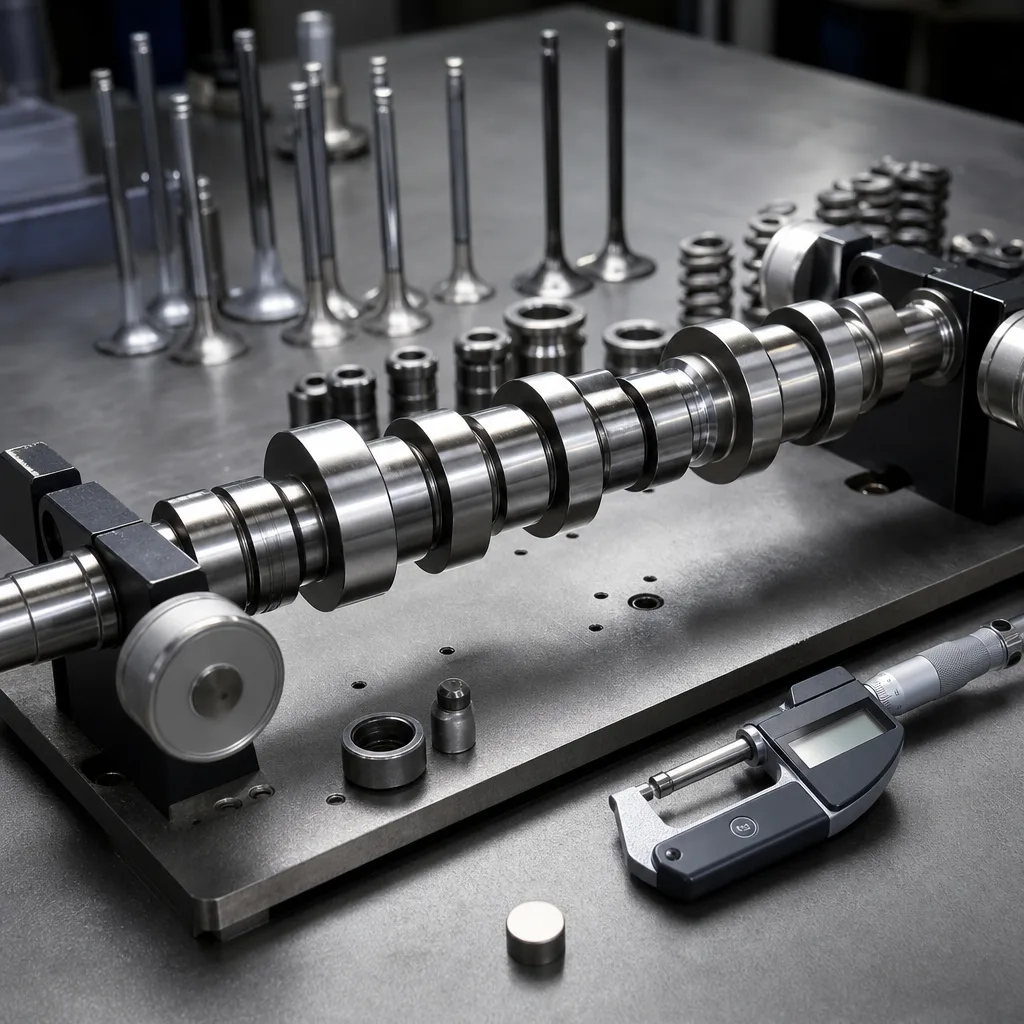
The Forester nameplate covers multiple engine families, so the first filter is always the engine code and cylinder head layout. A correct replacement must match the lobe profile, journal diameters, overall length, thrust face, sprocket interface, and any sensor target or reluctor pattern on the shaft.
A buyer should not assume that two camshafts with the same external length are interchangeable. Small differences in base circle, lobe separation, or end play can change valve timing enough to create noise, misfire, or low compression. For turbo and non-turbo engines, the profile target may also differ between intake and exhaust sides.
For catalog screening, start with the vehicle model year, engine code from the label or service record, and a measured sample if one is available. That is the fastest way to avoid ordering a part that only looks close on paper.
What To Verify Before Ordering
Before you approve a purchase order, confirm the part against the existing shaft and the engine data, not just the vehicle badge.
Engine-family checks
- Confirm engine code, model year, and market.
- Identify intake or exhaust side.
- Check drive type: timing belt, timing chain, or variant-specific gearing.
- Measure journal diameter, total length, and thrust width.
- Compare cam sensor trigger pattern and sprocket fit.
Wear-related checks
- Inspect lifters, buckets, rocker gear, and cam bearings.
- Check for oil starvation marks, pitting, or lobe scoring.
- Verify oil pressure and lubrication path before reassembly.
- Replace seals and timing components if contamination or wear is present.
If a failed camshaft damaged the head or valvetrain, a partial repair often fails a second time. It is usually cheaper to replace the worn mating parts during the same job than to reopen the engine after initial assembly.
Replacement Options Compared
For procurement, the practical choice is usually between a new OE-equivalent shaft, a reprofiled shaft, and a used take-off part. The table below shows the trade-offs.
| Option | Fitment confidence | Durability outlook | Lead time | Risk profile |
|---|---|---|---|---|
| OE-equivalent new camshaft | High | High, if material and heat treatment are controlled | Moderate | Lowest risk for repeat repairs |
| Reprofiled or reground camshaft | Medium | Depends on core quality and final grinding control | Short to moderate | Best only with documented process control |
| Used salvage camshaft | Low to medium | Unknown wear history | Short | Highest risk of repeat failure |