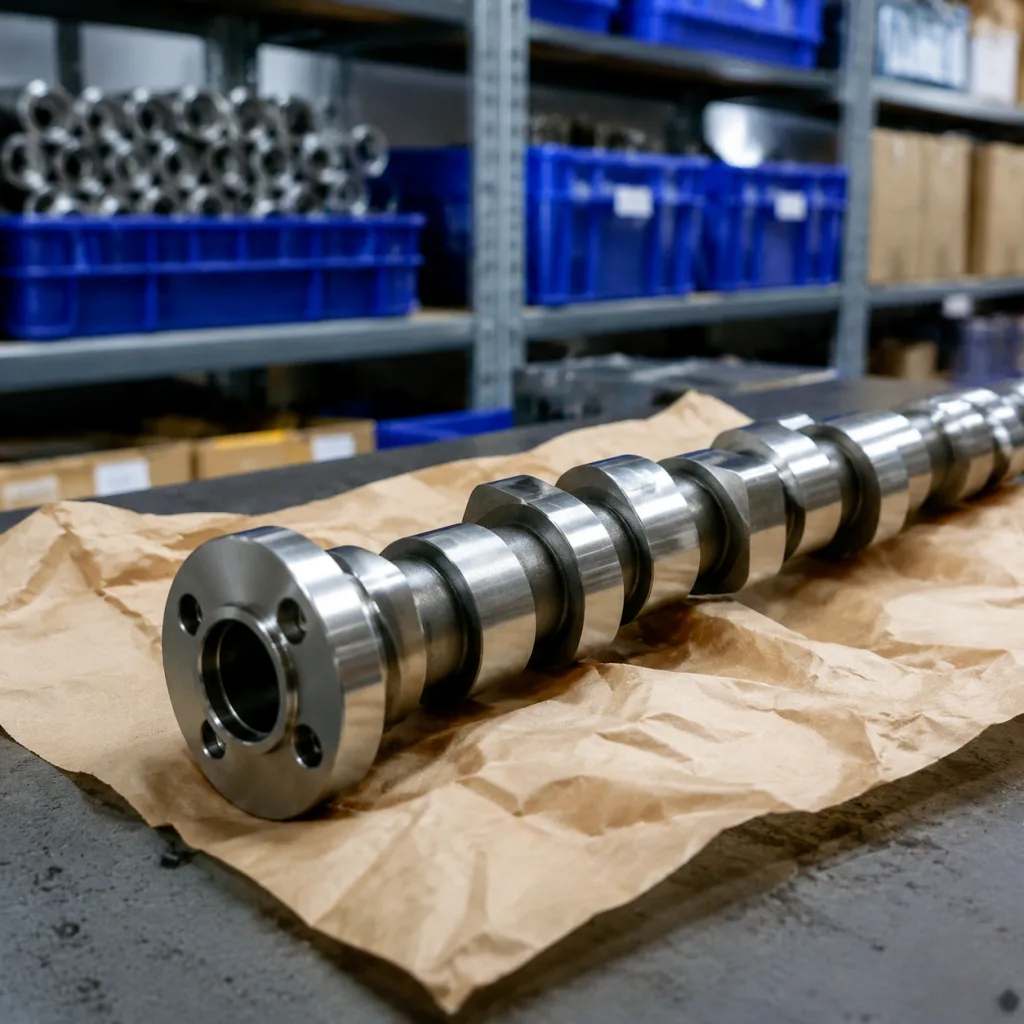
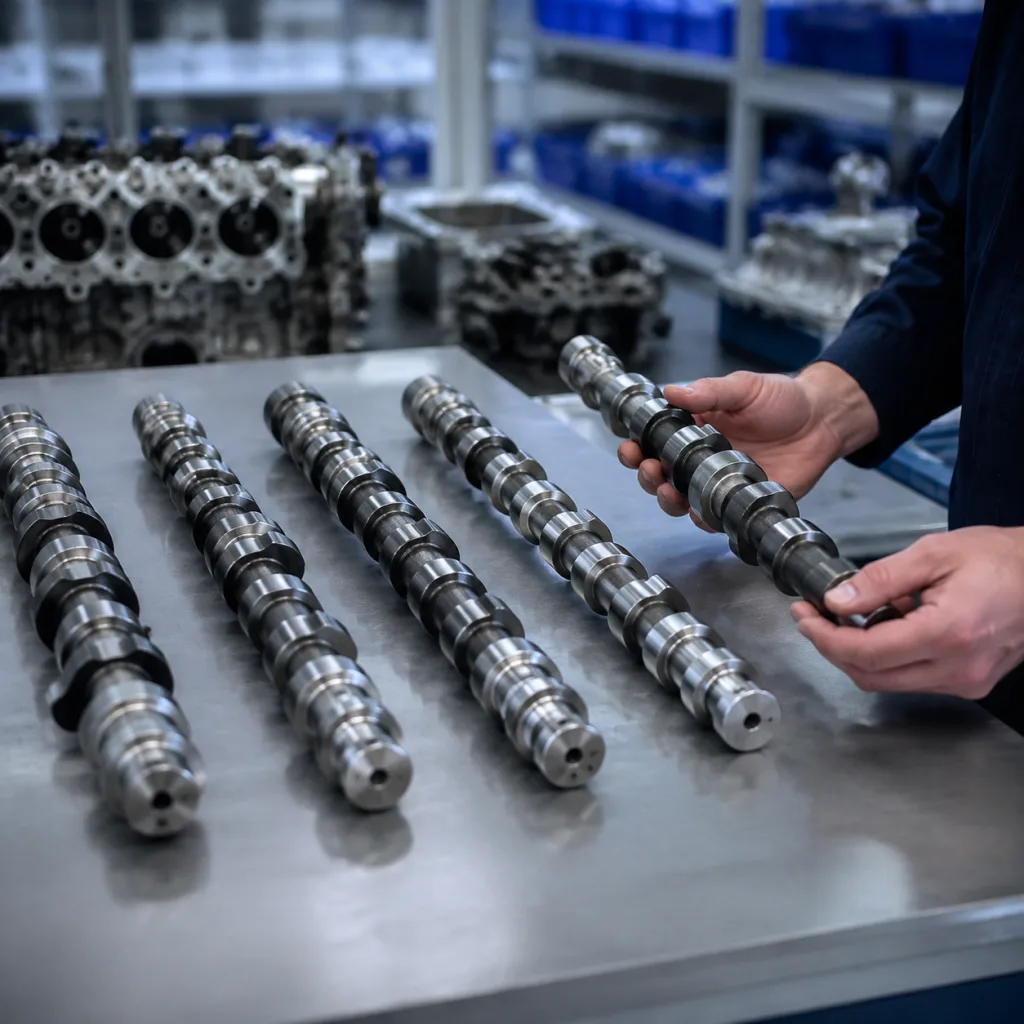
Camshaft Skoda Wholesale: Sourcing Guide for Buyers
Procurement teams sourcing camshafts for Skoda applications need more than a part name and a price. They need OE reference control, dimensional consistency, traceable materials, and a supplier that can support repeat orders without quality drift. For wholesale purchasing, the main risks are mismatched profiles, inconsistent hardening depth, poor journal finish, and weak packing that leads to transit damage. Buyers should confirm engine code coverage, OE cross-reference format, and validation methods before placing volume orders. Driventus is an independent aftermarket manufacturer; brand names are referenced for fitment only. This article focuses on the decisions that separate a reliable wholesale buy from an expensive return cycle: fitment control, failure modes, supplier proof points, commercial terms, and repeat-supply workflow.
1) Start with fitment, not price
For camshaft skoda wholesale sourcing, the first filter is application control. Price matters only after the part is tied to the correct engine family, valve train layout, and OE reference.
Confirm these details before you ask for a quotation:
OE reference format, such as `OE 06A107065` when the listing already uses that number
Engine code coverage: single application or a broader range
Camshaft position: intake, exhaust, or matched pair
Interfaces: journal count, drive end, sensor rings, thrust features
Packing standard: rust protection, end caps, carton strength
If any of those fields are unclear, the risk is simple: the wrong shaft gets quoted, then the wrong shaft gets built. Wholesale buyers should also confirm whether the part is a raw shaft, finished shaft, or fully dressed assembly. That changes machining scope, lead time, and landed cost.
A buyer-ready purchase order should include engine code, OE number, camshaft position, quantity, delivery window, and packaging instruction. If the supplier cannot work from that list, the sourcing process is already loose.
2) Where camshafts fail in the field
Camshafts usually fail from process drift, not from the label on the box. Geometry, hardness, and surface condition must all stay inside spec.
Check item
Why it matters
Buyer request
Journal diameter
Protects the oil film and bearing load
Diameter tolerance and micrometre report
Lobe lift and phase
Controls valve timing and performance
CMM or cam doctor report
Hardness depth
Resists lobe and journal wear
Case-hardness profile
Runout
Reduces vibration and timing variation
Total indicated runout data
Surface finish
Supports bedding-in and oil retention
Ra value and grinding record
</tr></thead><tbody> </tbody></table>The practical danger is inconsistency across batches. A shaft can look correct and still be wrong by a small amount that shows up later as noise, wear, or timing scatter. That is why pass/fail language is not enough. Ask for the measurement method, tolerance band, and inspection frequency.
For European and UK trade, it is also reasonable to ask how process materials and packaging align with `REACH (EC) No 1907/2006` where applicable. That question is small. The compliance gap it can expose is not.
3) Spec sheet or guesswork?
Wholesale buying gets much easier when the supplier can answer in numbers. If they answer in generalities, expect rework.
A solid technical request should ask for:
Journal diameter tolerance
Lobe-to-lobe variation limit
Runout at both ends
Surface roughness in micrometres
Heat-treatment hardness depth
Inspection method and frequency
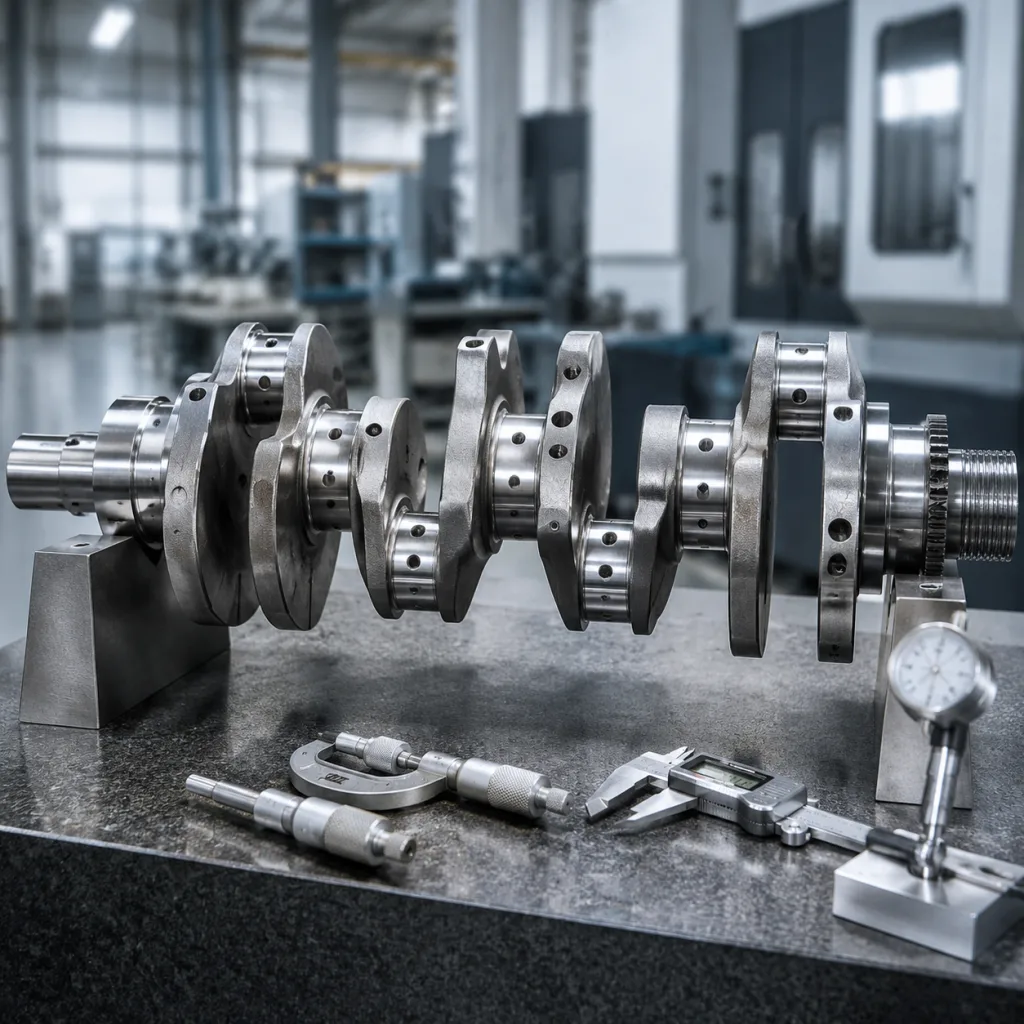
Typical buyer checkpoints include journal runout at or below 0.03 mm, journal diameter controlled to the drawing, and low sub-micron `Ra` on ground surfaces. Those are common procurement targets, not universal values, so the drawing still wins. The point is to force the supplier to show how they hold repeatability, not just to say they can.
If the quotation only says “good quality” or “OE standard,” that is not a spec. It is marketing. Ask for numeric limits, inspection records, and the master sample used to approve the batch.
4) Certification tells you what it does — and does not — prove
Certification is a baseline, not a guarantee. It shows the supplier has a system; it does not prove every camshaft is correct.
A camshaft supplier should operate under `IATF 16949:2016` and `ISO 9001:2015`, with process control documents available on request.
Useful evidence includes:
Incoming material certificate and melt traceability
Heat-treatment batch record
Grinding and final inspection log
Corrosion-prevention method where specified
Packaging validation for export cartons and pallets
Before release to mass production, ask for the control plan, PFMEA, and a dimensional sample report from the first approved lot. If the programme is export-sensitive, also confirm corrosion-prevention duration, acceptable transit condition, and anti-rust shelf life. A part that arrives clean, dry, and within spec is worth more than a lower price that fails in storage.
5) Compare suppliers on the same commercial basis
A low unit price can hide a poor wholesale deal. Compare MOQ, lead time, carton quantity, and reorder stability on the same terms.
Ask every supplier the same questions:
What is the MOQ per part number or engine family?
What is the standard lead time after sample approval?
Can mixed-SKU cartons support distributor orders?
Are private-label labels and barcode formats available?
Is production slotting fixed or forecast-based?
A practical wholesale structure is often 50 to 100 units for a standard aftermarket camshaft, with higher quantities for custom packaging or private-label orders. Repeat parts may ship in 30 to 45 days after sample approval, while new tooling, new grind programs, or drawing changes can extend that to 60 to 90 days. That spread matters more than a small price delta.
Compare quotations on the same shipping basis too: EXW, FOB, or CIF. Packaging, export cartons, and palletization should be separated so landed cost can be read cleanly. If the supplier will not quote tiered pricing at 100, 300, and 500 units, the order economics are not fully visible.
6) A repeat-order workflow that actually holds up
Driventus manufactures engine and powertrain components in Taizhou, Zhejiang, with export supply to more than 60 countries. For procurement teams, the value is not a slogan. It is controlled process, batch traceability, and direct factory communication.
For camshaft programmes, support typically includes:
Technical review of engine application and OE cross-reference
Sample supply for dimensional and fitment validation
Production planning for wholesale and distributor orders
Export packing suitable for sea and air freight
Document pack with inspection and certification references
The repeat-sourcing sequence should stay disciplined: application confirmation, sample approval, drawing or OE-number lock, pilot batch, then production release. That order reduces substitution risk and makes later reorders easier to control. For recurring repair-network supply, the factory should retain the approved master sample, revision record, and inspection baseline so the same specification can be reproduced on the next cycle without requalification.
If you need a formal buying discussion, request a quote. We can review volume, application, packaging, and documentation requirements before pricing. Driventus is an independent aftermarket manufacturer; brand names are referenced for fitment only.
Frequently asked questions
Yes. We support wholesale orders for selected engine applications, with fitment controlled by OE cross-reference, engine code, and batch inspection records.
Ask for material traceability, heat-treatment records, dimensional inspection data, and confirmation of `IATF 16949:2016` and `ISO 9001:2015` coverage.
Yes. For new programmes or special variants, use our OEM development path through [custom manufacturing](/oem-services.html) so we can review the drawing, volume, and validation plan.
If you are sourcing a camshaft programme and need pricing, sample support, or documentation review, start with [request a quote](/contact.html).