Camshaft Seat Replacement for Engine Rebuild Sourcing
Camshaft seat replacement is a precision repair decision that affects alignment, lubrication and long-term engine reliability. For distributors, repair chains and engine rebuild programs, the replacement seat, cap, saddle, bushing or cam carrier interface must restore camshaft position, oil film stability and load distribution within the original engine architecture. A poor match can cause low oil pressure, journal scoring, valve timing variation, noisy operation or repeat warranty claims. Procurement teams should therefore look beyond catalog matching and unit price. A reliable sourcing file should define material grade, machining datums, oil-hole location, surface finish, hardness where applicable, inspection method, packaging protection and batch traceability. Driventus manufactures engine and powertrain components in Taizhou, Zhejiang, under IATF 16949:2016 and ISO 9001:2015 systems for aftermarket and B2B supply. This guide explains what buyers should verify when sourcing replacement camshaft seats, caps, saddles and related camshaft support components for rebuild and repair-channel demand.
Replacement Scope and Fitment Risk
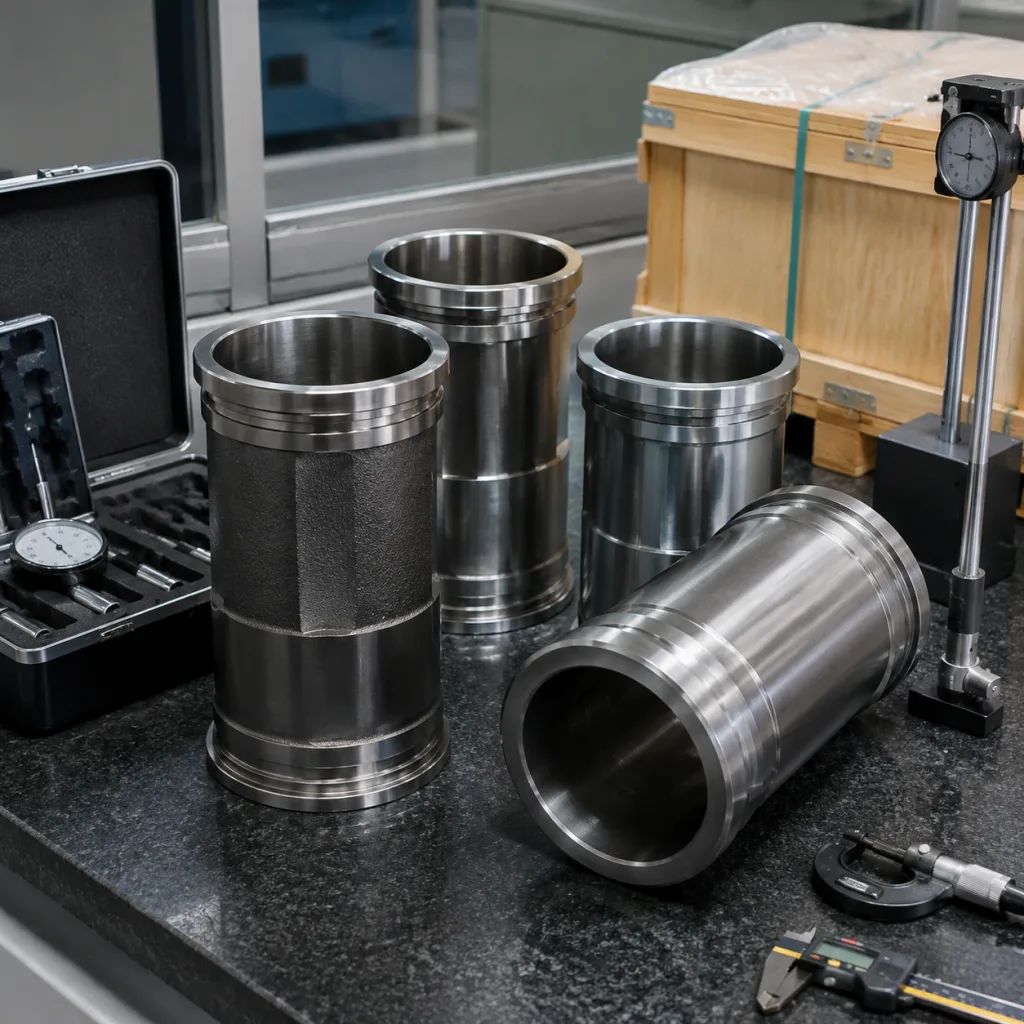
The term camshaft seat is used differently across engine platforms. It may refer to the machined support area in a cylinder head, a replaceable cam bearing insert, a camshaft cap interface, or a saddle inside a cam carrier. Before quoting or sampling, define the part boundary clearly in the RFQ so engineering, purchasing and quality teams are evaluating the same item.
For camshaft seat replacement programs, Driventus recommends separating three common supply cases:
Camshaft bearing insert: replaceable shell or bushing that supports the cam journal.
Camshaft cap or carrier component: machined aluminium or iron component forming part of the journal bore.
Cylinder head saddle repair component: service part or semi-finished repair item used during rebuild operations.
Fitment risk is highest when the component controls final journal bore geometry. After installation, the camshaft must rotate freely while maintaining the specified oil clearance. A part that looks similar externally can still fail if bolt-hole position, dowel location, oil feed passage, cap height or saddle depth differs by a small amount.
Buyers should provide OE part-number cross-references only when they are available from the application file, using generic reference formats such as OE 06A… or OE 11251… where applicable. Driventus is an independent aftermarket manufacturer; brand names are referenced only to identify fitment and application context.
Critical Dimensions for OE-Equivalent Matching
Dimensional accuracy is the main purchasing criterion for this product family. Drawings, samples and inspection reports should be aligned before tooling approval or bulk order release. For camshaft support parts, functional geometry matters more than external appearance because bore position, oil clearance and clamping behavior determine whether the assembly survives in service.
Check point
Why it matters
Typical verification method
Journal bore diameter
Controls oil clearance, oil pressure and seizure risk
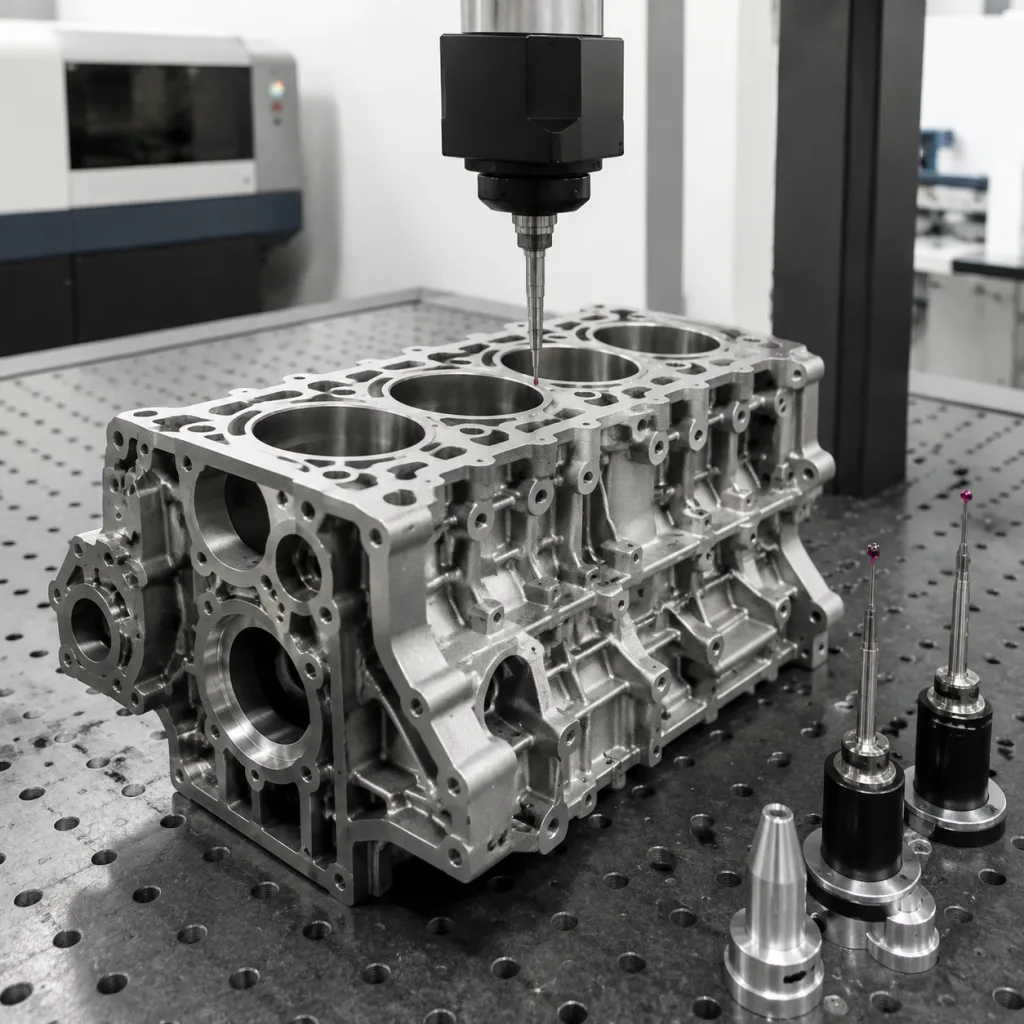
Air gauge, bore gauge, CMM
Bore roundness and cylindricity
Prevents point loading and uneven journal wear
Roundness tester, CMM
Centre distance between bores
Maintains camshaft straightness and timing stability
CMM inspection
Oil feed hole position
Supports lubrication during start-up and hot idle
Optical inspection, CMM check
Cap height or saddle depth
Affects clamp load and final bore size
Height gauge, CMM
Bolt-hole and dowel location
Prevents assembly offset and bore misalignment
Go/no-go fixture, CMM
Surface roughness
Influences oil film retention and wear behavior
Profilometer
</tr></thead><tbody> </tbody></table>For machined aluminium cam carriers or caps, final bore geometry should be checked after the intended tightening sequence because clamp load can change the effective bore shape. For split components, buyers should also confirm whether the part is compatible with line-boring or line-honing during rebuild work.
A practical sourcing specification should include datum scheme, measurement temperature, sampling plan, packaging protection and acceptable corrosion-prevention method. Procurement teams can review related engine families in our catalog or the engine component range at /products/engine-components.html.
Materials, Machining and Surface Requirements
Material selection depends on engine design and service environment. Many camshaft support structures are aluminium alloy features integrated into the cylinder head or cam carrier. Some heavy-duty, commercial and older engines use replaceable steel-backed, bronze-based or other bearing materials. The replacement component must be compatible with the camshaft journal material, engine oil chemistry, operating temperature and expected rebuild procedure.
Common material and process considerations include:
Aluminium alloy castings or forgings with controlled porosity and heat treatment.
Powder metallurgy or cast iron components where wear resistance and dimensional stability are required.
Bronze or steel-backed bushing materials for serviceable cam bearing applications.
CNC machining of journal bores, oil grooves, sealing faces, bolt interfaces and datum surfaces.
Deburring of oil passages to reduce start-up scoring and contamination risk.
Cleaning standards that prevent abrasive residue from remaining in oil-fed channels.
Surface finish is a functional requirement, not a cosmetic detail. A bore surface that is too rough can accelerate cam journal wear; a surface that is too smooth may not retain the intended oil film, depending on the design. The purchase drawing should state the required roughness parameter, such as Ra, together with the inspection position and measurement method.
Chemical compliance should also be addressed for export markets. For EU supply chains, material declarations may need to consider REACH (EC) No 1907/2006. Packaging, rust-prevention oil and protective films should be reviewed where importers require restricted-substance documentation.
Validation Tests Buyers Should Request
Replacement sourcing should include validation records in addition to a first article dimensional report. The goal is to confirm that the part works under realistic assembly, torque and lubrication conditions rather than only matching a static sample.
Recommended validation evidence includes:
First article inspection report against the buyer drawing or approved sample.
Material certificate or incoming material verification record.
Hardness or heat-treatment report where applicable.
Surface roughness report for functional bores, thrust faces and relevant sealing areas.
Oil-hole flow or blockage inspection for oil-fed components.
Assembly trial using the specified fastener torque sequence.
Camshaft rotation torque check after installation.
Bench, endurance or pilot-lot validation where program volume and risk justify it.
Driventus controls replacement engine components through a documented quality system aligned with IATF 16949:2016 and ISO 9001:2015. For high-volume aftermarket programs, control plans can include incoming material checks, in-process machining inspection, final CMM verification, batch traceability and retained samples.
Where a buyer requires a new design, reverse engineering or drawing conversion from samples, custom manufacturing can include 3D scanning, CAD review, fixture design and pilot-lot validation before serial production.
Procurement Checklist for Replacement Programs
A clear RFQ reduces sampling loops, prevents mismatched inventory and helps suppliers quote the real manufacturing risk. Import managers and category buyers should request information in a format that engineering, quality, warehouse and sales teams can all use.
Minimum RFQ data for camshaft seat replacement programs:
Application list by engine code, displacement, fuel type and model year range.
OE cross-reference format if available, such as OE 06A… or OE 11251…, without claiming vehicle-maker approval.
Sample quantity and condition, including whether parts are new, used, worn or damaged.
Drawing or 3D data, including datum references, tolerances and critical-to-quality dimensions.
Material, hardness and heat-treatment requirements, if known.
Required inspection report format, including CMM points and sampling level.
Packaging quantity, label format, carton strength and corrosion-protection requirement.
Annual forecast, first order quantity, shipment split and delivery schedule.
Market compliance expectations, including REACH (EC) No 1907/2006 where relevant.
Buyers should also confirm whether the product is sold as an individual component, a matched set, or a repair kit. For cam caps and carriers, mixing non-matched components can create alignment problems if the original design was line-machined as an assembly. For bearing inserts or bushings, set completeness, oversize options and installation instructions affect workshop acceptance.
Commercial terms should be evaluated together with process capability. A lower unit price does not compensate for high installation scrap, oil pressure complaints, camshaft seizure or repeat claims from repair networks.
Supply Model, Traceability and Aftermarket Packaging
For distributors and repair chains, the supply model should support repeat orders with stable dimensional output. Driventus can supply engine components under customer brands, neutral export packaging or agreed B2B labels. Packaging should prevent denting, bore contamination, moisture exposure and corrosion during sea freight, customs handling and warehouse storage.
Traceability should connect each shipment to production batch, material lot, inspection records and packaging date. This is especially important when a buyer operates across multiple warehouses or countries and needs fast containment if a field issue is reported.
For OEM and Tier-1 sourcing teams, production part approval requirements may differ by program. Driventus can prepare documentation based on the agreed customer specification, including control plans, process flow diagrams, material records and inspection reports. No aftermarket component should be described as approved or endorsed by a vehicle manufacturer unless a separate formal approval exists.
Driventus is an independent aftermarket manufacturer; brand names are referenced for fitment only. To discuss drawings, samples, validation scope or export packaging for camshaft seat replacement and related camshaft support components, buyers can request a quote.
Frequently asked questions
Provide engine application data, sample parts if available, drawings or 3D data, material requirements, critical dimensions, annual forecast and packaging needs. Oil-hole position, journal bore diameter, cap height and saddle alignment data are especially important for camshaft seat replacement programs.
It depends on the engine design. Some caps, saddles or carriers are line-machined with the cylinder head and should not be mixed without controlled machining. Buyers should verify the service procedure, bore alignment, oil clearance and camshaft rotation torque before approving a replacement program.
Typical documents include first article inspection, material verification, hardness report where applicable, surface roughness report, CMM data, batch traceability and a control plan. For automotive supply chains, alignment with IATF 16949:2016 and ISO 9001:2015 should also be reviewed.
For drawings, samples or forecast-based sourcing of camshaft seat replacement and related camshaft support components, contact Driventus engineering and export sales for a practical review. Start the discussion at /contact.html