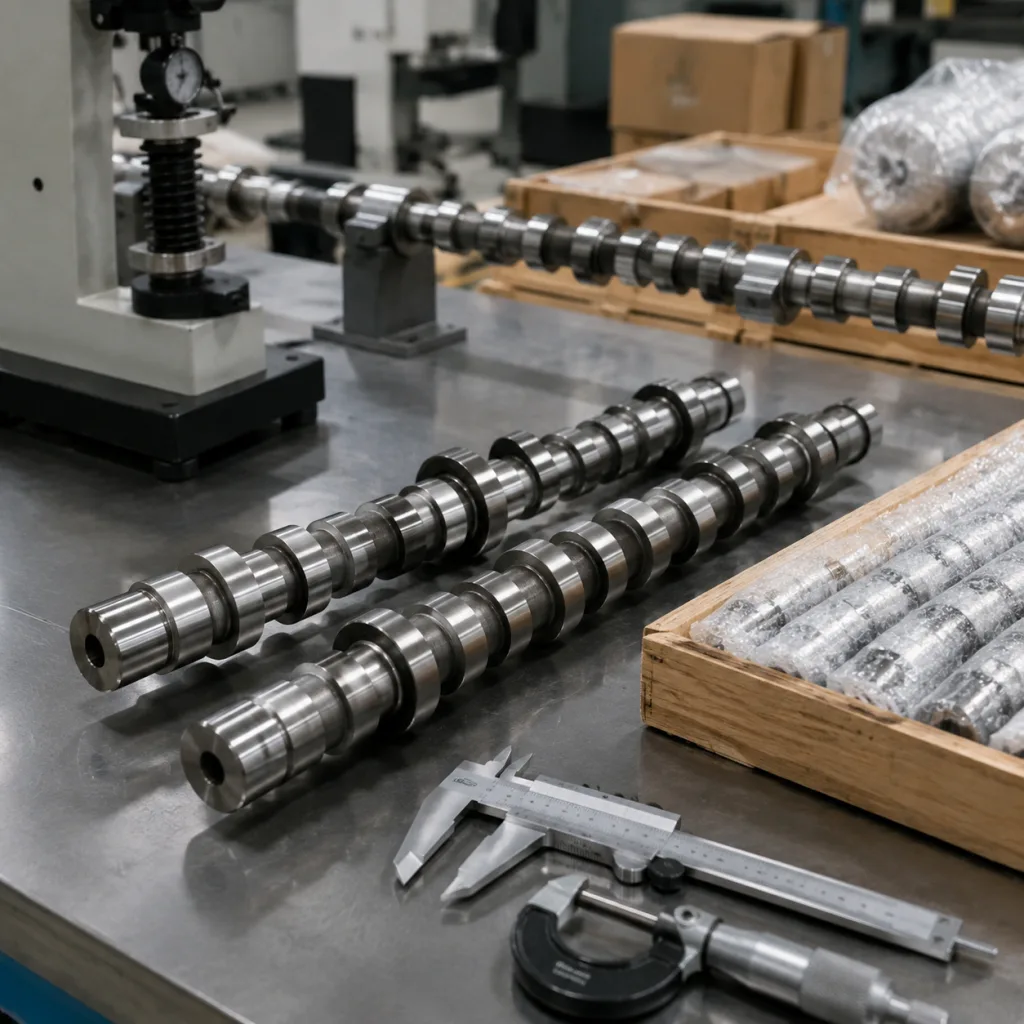
Camshaft for Seat Leon Aftermarket Replacement Guide
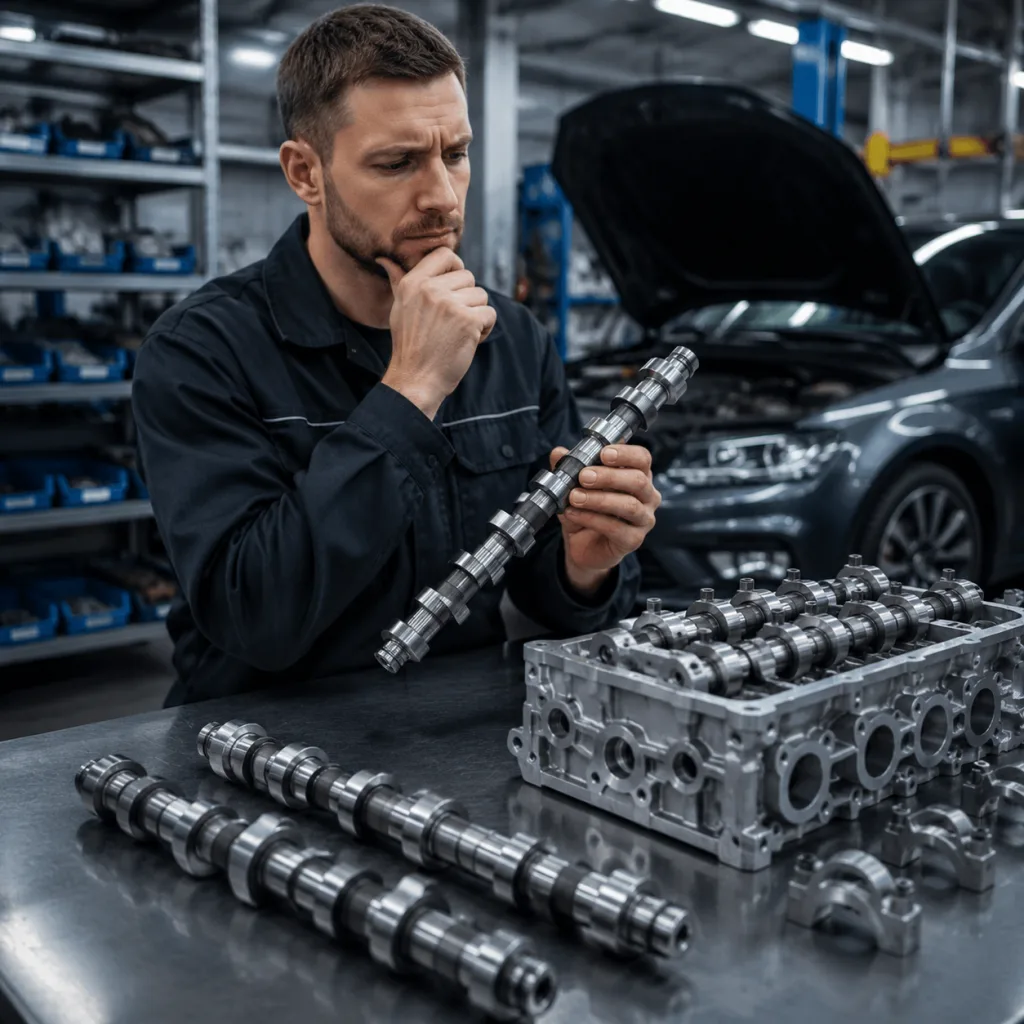
A camshaft for Seat Leon aftermarket replacement only works when fitment, timing events, mounting interfaces, and surface specification are verified against the exact engine code. For B2B buyers, the real decision is not whether the part is “for Seat Leon,” but whether it matches the engine family, dimensional tolerance, hardness data, runout limits, MOQ, and lead-time commitments you need. Seat Leon fitment changes by engine code, displacement, fuel type, and model year, so the vehicle name alone is not enough to approve a purchase. OE references such as OE 06A… are useful only after they are checked against the exact engine specification. Driventus is an independent aftermarket manufacturer; brand names are referenced for fitment only. The sourcing goal is simple: a replacement camshaft that installs without modification, meets validated hardness and total indicated runout requirements, and is supported by controlled inspection records under IATF 16949:2016 and ISO 9001:2015.
What has to match before you buy
A replacement camshaft is not defined only by length or the number of lobes. It has to match the functional geometry that controls valve timing and durability.
For Seat Leon applications, confirm the full set of technical points:
Overall length and bearing-journal spacing, typically within ±0.05 mm of the approved sample
Journal diameter and ovality, commonly held within ±0.01 mm on critical bearing surfaces
Lobe lift and lobe-to-lobe indexing, matched to the master drawing or OE sample within ±0.03 mm lift variation
Surface hardness and case depth, where applicable, with lobe hardness usually specified in the 55–62 HRC range depending on the base material route
Straightness and total indicated runout, with a typical acceptance target of ≤0.03 mm TIR unless the OE drawing is tighter
Drive compatibility for belt, chain, or gear-end design, including keyways, flats, or timing-wheel location
Finish quality on journals and lobes, with no scoring, chatter, pitting, burrs, or edge collapse
If a supplier cannot confirm these dimensions in writing, the risk rises fast: timing drift, noisy operation, oil-film failure, and premature wear are all common outcomes. For procurement teams, the part number matters only when it is tied to the engine code and verified against the actual geometry.
Why Seat Leon fitment fails when buyers skip engine code
Seat Leon camshaft fitment changes across petrol and diesel variants, and across generations. A 1.4 petrol application does not share the same camshaft requirements as a 2.0 TDI, even when the badge is identical. That is why OE numbers such as OE 06A107065 should be treated as cross-references, not as proof of compatibility.
Verification item
What to confirm
Buyer action
Engine code
Exact code from VIN, engine plate, or build data
Reject any quote that does not state the engine code explicitly
Valve-train type
SOHC, DOHC, variable valve timing, or fixed timing
Confirm the lobe count, cam phaser, and trigger-wheel arrangement
Emissions family
Market-specific calibration and hardware
Verify whether EGR, DPF, or VVT changes the cam profile
OE reference
Cross-check against supplier listing and sample part
Match OE reference only after engine code and profile are confirmed
Installation hardware
Bearings, caps, seals, bolts, and timing parts
Quote as a complete repair set to avoid incomplete orders
Dimensional record
Journal size, base circle, lift, and runout
Request a signed inspection sheet for the exact lot offered
</tr></thead><tbody> </tbody></table>The safest buying method is engine-code-led procurement plus physical verification against the original sample or engineering drawing. If you are ordering for several Seat Leon variants, split the SKUs by engine code. Do not pool them under a single vehicle listing and assume interchangeability.
Material route and inspection data that matter
A credible aftermarket camshaft should come from a controlled material route and a documented inspection flow. Common production routes include chilled cast iron and induction-hardened steel, depending on the original design, duty cycle, and lubrication strategy. The right route is the one that replicates OE performance targets, not the one with the lowest raw material cost.
Ask for these validation points before approval:
Rockwell or equivalent hardness confirmation on lobes and journals, with the test method stated on the inspection report
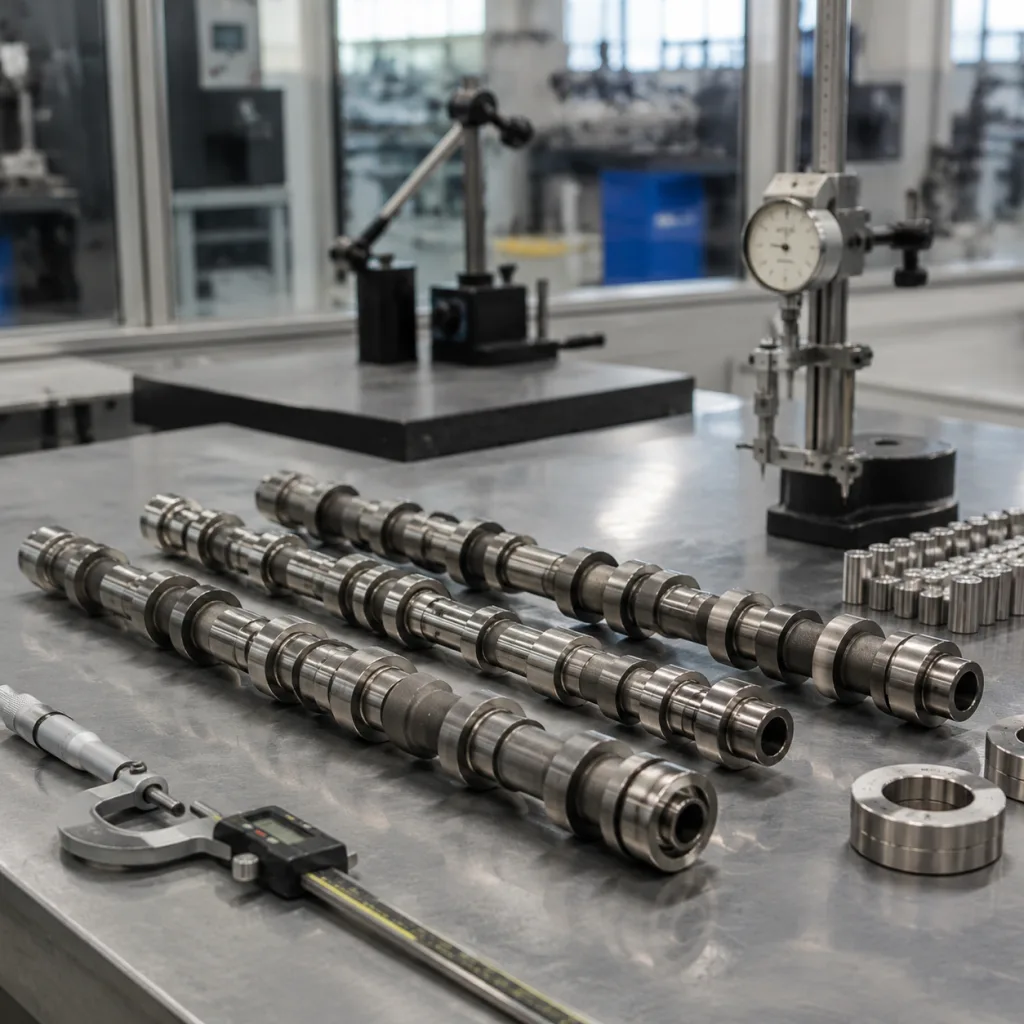
Runout inspection on a calibrated fixture, preferably with a documented maximum reading at each bearing position
Lobe lift and phasing measurement against master data, with sample-to-master deviation recorded in millimeters and degrees
Visual inspection for scoring, porosity, burrs, decarburization marks, or chatter marks
Dimensional audit of critical journals and drive ends using calibrated micrometers or CMM inspection
Packaging check to prevent transport damage, corrosion, and edge contact during export handling
Do not settle for a pass/fail statement alone. Ask for the actual acceptance thresholds used for the batch, including hardness values, journal tolerances, and TIR results on the shipped lot. For EU and UK buyers, material compliance may also connect to REACH (EC) No 1907/2006, depending on the finished assembly and associated substances. If the application is duty-critical, endurance and wear testing should reflect the real use case instead of a generic bench test.
How to compare suppliers without relying on catalogue claims
When sourcing a camshaft for Seat Leon aftermarket replacement, compare suppliers on measurable criteria. Marketing language is cheap; traceability, process control, and lead-time discipline are not.
Use this checklist during supplier review:
1. Confirm IATF 16949:2016 and ISO 9001:2015 certification scope, and verify that the camshaft process is inside the certified facility. 2. Ask for dimensional reports on the exact part number or engine code, including journal diameters, lift, and runout. 3. Request hardness, runout, and surface-finish records from the latest batch, plus the acceptance limit used for the lot. 4. Verify packaging standards for export storage and transport, including VCI protection, carton drop resistance, and palletization. 5. Ask whether the supplier supports custom manufacturing for special OE-cross cases or fleet programmes, and whether first-article approval is available. 6. Confirm MOQ, price breakpoints, and lead time before placing the order so the part is costed on a landed basis.
A practical quote structure is easy to evaluate: sample order at 1–10 units, standard production MOQ at 50–100 units, and lower per-unit pricing at 200+ units. The breakpoints depend on machining setup and packaging, so the supplier should state them clearly. Typical aftermarket lead times are often 15–30 days for stock-supported items and 30–45 days for made-to-order programs. If a supplier offers a low unit price but cannot state batch traceability, acceptance criteria, or ship date, the quote is not complete. Driventus supports buyers through our catalog, with supporting capability details in the quality system and custom manufacturing. For engine-family sourcing, engine components can help narrow related part coverage. If you need validation samples or a volume quotation, use request a quote.
What to check during installation to avoid repeat failure
A replacement camshaft should not be fitted in isolation. If the wear path around it is compromised, the new shaft can fail early even when the part itself is correct.
Before release to workshop or distribution, confirm:
Cam followers or tappets are serviceable and free of pitting, scoring, or collapse
Oil supply galleries are clean and oil pressure meets the engine specification before start-up
Bearings and caps are within spec, with cap torque applied in the correct sequence and to the correct Nm value
Timing belt or chain components are renewed if wear is present, including tensioners, guides, and related fasteners
Lubrication grade matches the engine requirement and is filled to the specified viscosity class
The engine is primed before first start, with oil circulated to the top end where applicable
The most common failure causes after replacement are contamination, incorrect cap torque, mistimed installation, dry start-up, and a mismatch between the part and the engine code. Good procurement practice is to bundle the camshaft with the sealing, timing, and fastening components needed for a complete repair order. That lowers repeat claims and reduces returns caused by incomplete kits. For workshop channels, an installation checklist with torque values, timing marks, and a pre-start oiling step improves repair consistency across technicians.
Frequently asked questions
Use the exact engine code, OE reference, and valve-train configuration. The vehicle badge alone is not enough because Seat Leon applications vary by engine family, market, and timing system. A buyer should also verify journal size, lift, and runout against the original sample or drawing.
Ask for dimensional reports, hardness data, runout results, batch traceability, MOQ, lead time, and certification evidence under IATF 16949:2016 and ISO 9001:2015. If possible, request sample lot photos and the inspection method used for the shipped batch.
Yes, if the camshaft is built to the correct dimensions, material route, and timing profile, and is validated against the original specification before shipment. The quote should state the tolerance target, the acceptance limits, and the production lot being supplied.
If you need a verified replacement part or a batch quotation, contact Driventus for fitment support, MOQ, lead-time confirmation, and sourcing details at /contact.html.