camshaft · 2026-06-01

Camshaft for Renault Kadjar OE Equivalent: Fitment Guide

A replacement camshaft for the Renault Kadjar has to match the engine code, valve-train layout, timing drive, cam sensor interface, and end-drive hardware exactly. The Kadjar nameplate spans petrol and diesel engine families across different markets and model years, so visual similarity is never enough for purchasing approval. Buyers should confirm lobe lift and phase, journal diameter and width, overall length, thrust-face geometry, oil-feed and groove layout, trigger-wheel pattern, sprocket or phaser interface, pump-drive detail where fitted, surface hardness, and runout before release. That is the practical way to evaluate a camshaft for Renault Kadjar OE equivalent as a direct-fit component rather than a generic substitute. Driventus is an independent aftermarket manufacturer; brand names are referenced for fitment identification only. For procurement teams, the useful test is straightforward: can the supplier document dimensional control, material traceability, heat-treatment consistency, surface finish, and post-process inspection against an OE sample or approved drawing? If the answer is yes, the part can be bought, stocked, and exported with lower fitment, comeback, and warranty risk.

What OE-equivalent means for this application

An OE-equivalent camshaft is not a visual copy, and it is not simply a part that fits inside the cylinder head. It is a replacement component that reproduces the functional geometry, metallurgy, surface condition, and interface details of the original part closely enough to preserve valve timing, valve lift, lubrication, sensor reading, emissions performance, and durability under the same operating conditions.

For the Kadjar, that distinction is important. The vehicle line includes different engine families, emissions specifications, and valve-train architectures. A petrol intake camshaft, a diesel exhaust camshaft, and a shaft used with variable valve timing can look similar in catalogue photos, but they are not interchangeable. Small differences in lobe phasing, trigger-wheel indexing, thrust-face position, or pump-drive geometry can lead to hard starting, cam/crank correlation faults, abnormal follower wear, oil-pressure loss at the cam journals, or piston-to-valve contact.

A proper camshaft for Renault Kadjar OE equivalent should match the original sample or approved drawing in the areas that control installation and long-term operation:

  • Lobe lift, base-circle diameter, opening and closing ramp geometry, nose radius, and lobe separation angle
  • Intake or exhaust position and correct cylinder-to-cylinder lobe orientation
  • Journal diameter, journal width, oil-hole position, oil-groove location, and bearing surface finish
  • Overall length, thrust-surface geometry, axial location, and end-float control
  • Sensor trigger pattern, tooth count or window shape, indexing angle, and sensor relationship
  • VVT phaser, sprocket, vacuum pump, or high-pressure fuel-pump drive geometry where fitted
  • Heat-treatment depth, lobe and journal hardness, and core material stability
  • Straightness, total indicated runout, and concentricity of final-ground surfaces
  • Seal-contact diameter, chamfer condition, keyway, slot, thread, or dowel detail where applicable

If any one of those details falls outside the approved window, the part may fit physically and still fail in service. Buyers should treat OE-equivalent as a controlled engineering claim, not a catalogue phrase. The supplier should be able to identify the reference sample or drawing, state which critical-to-fit and critical-to-function dimensions are inspected on each batch, and confirm which checks are carried out after hardening, straightening, and final grinding.

What to verify before placing an order

Procurement teams should verify the engine specification before buying a replacement camshaft. The vehicle badge alone is not enough, because Renault Kadjar applications can differ by engine code, model year, fuel type, emissions package, timing drive, and regional catalogue. Ordering from the model name only increases the chance of receiving a shaft with the wrong cam position, trigger pattern, phaser interface, or pump-drive configuration.

Use this checklist before releasing a purchase order:

  • VIN decode, engine code, displacement, fuel type, power rating, emissions level, and model year
  • Intake or exhaust position, or complete cam set if the engine uses paired shafts
  • Timing drive type: chain, belt, or gear train, including sprocket or phaser mounting detail
  • Presence of VVT hardware, cam phaser, actuator control, locking pin, or special end geometry
  • High-pressure fuel pump, vacuum pump, sprocket, seal, or sensor drive interface if present
  • Old-part measurements for overall length, journal diameter, journal width, thrust-face position, and seal diameter
  • Trigger-wheel pattern, indexing direction, tooth/window count, and sensor relationship
  • Lobe count, lobe orientation, oil-hole position, oil-groove layout, and chamfer condition
  • Packaging label, casting mark, laser mark, stamped mark, or photos from the removed part if the original number is missing

If the vehicle is in fleet use or the part is being sourced for a repair network, keep the failed component until the replacement is approved. The removed shaft gives the supplier a reference for lobe orientation, oil-feed position, thrust-face wear pattern, trigger indexing, and the condition of mating followers, rockers, hydraulic lash adjusters, or roller tappets. It also helps separate a true camshaft defect from oil starvation, blocked oil galleries, incorrect timing, follower seizure, or installation damage.

For distributor stocking, build an application file instead of relying on one quotation email. A useful file includes vehicle application data, original sample photos, key measurements, supplier cross-reference, inspection report, approved packaging artwork, barcode data, carton specification, and any market-specific compliance requirements. This makes repeat orders easier and reduces disputes when a later batch is delivered to another warehouse, branch network, or repair channel.

For a broader view of the range, see our catalog and engine components.

OE-equivalent, remanufactured, and used parts

Not every replacement route carries the same risk. Buyers often compare price first, but the real comparison should include fitment confidence, validation effort, warranty exposure, availability, installation labour, and the time spent resolving returns. A camshaft is not a cosmetic or low-load item. Once installed, a mismatch can damage followers, hydraulic lash adjusters, valves, timing components, cam caps, or the cylinder head.

</tr></thead><tbody> </tbody></table>An OE-equivalent new part is usually the cleanest procurement choice when the supplier can demonstrate consistent machining, heat treatment, and post-process inspection. The buyer receives a new component with controlled lobes and journals, known batch traceability, consistent rust protection, and repeatable packaging. That makes the part easier to stock across multiple branches and easier to support for export orders where inspection and material records may be required.

Remanufactured parts can work when the core is controlled, but the buyer should confirm how the supplier screens cracks, journal scoring, pitting, lobe wear, thrust-face damage, straightness, and previous grinding. It is also important to understand whether the camshaft has been repaired by regrinding, welding, hard-facing, coating, metal spray, or polishing only. Each method changes the validation needed, especially where flat tappets, roller followers, hydraulic lash adjusters, or low-friction coatings depend on a specific surface finish and lobe profile.

Used salvage parts are the least predictable. Prior oil starvation, overheating, corrosion, impact damage, timing failure marks, and micro-cracking are often hidden until the engine is reassembled. They may be acceptable for diagnostics or emergency repair, but they are a poor basis for a professional stocking programme or warranty-backed repair channel.

For a stocked programme, the lower return rate, clearer warranty position, and repeatable documentation of a new OE-equivalent part normally offset the higher unit price. The procurement decision should be based on total landed and installed cost, including labour, downtime, repeat repair risk, and claim handling, not only the part invoice.

Material and inspection controls that matter

A camshaft is a high-load rotating component, so material quality and inspection control matter as much as fitment. The shaft must resist contact stress at the lobes, maintain stable bearing surfaces at the journals, hold the cam sensor target in the correct angular position, and remain straight after heat treatment and grinding. In service, it is exposed to repeated Hertzian contact loading, oil-film variation, temperature change, and start-stop wear. Weak material control can turn into a warranty problem quickly.

A credible supplier should be able to show controls such as:

  • Material traceability by heat number, batch number, or controlled purchase lot
  • Defined material grade and process route for chilled cast iron, forged steel, billet steel, or assembled camshaft construction
  • Induction hardening, chill hardening, carburizing, nitriding, or equivalent surface hardening where specified by the design
  • Heat-treatment records showing hardness range, effective case depth, tempering condition, and process consistency
  • Dimensional inspection of lobe lift, base circle, journal diameters, thrust faces, end features, and overall length
  • Cam profile inspection for lift curve, opening/closing ramps, nose radius, and phase angle against the master profile
  • Runout inspection after hardening, straightening, and final grinding
  • Hardness verification at the specified lobe, journal, and case-depth window
  • Surface roughness control on bearing, follower, seal-contact, and thrust areas
  • Magnetic particle, dye penetrant, or controlled visual inspection after heat treatment where the process requires it
  • Final cleanliness, oiling or VCI rust prevention, capped ends where needed, and protective packing before shipment

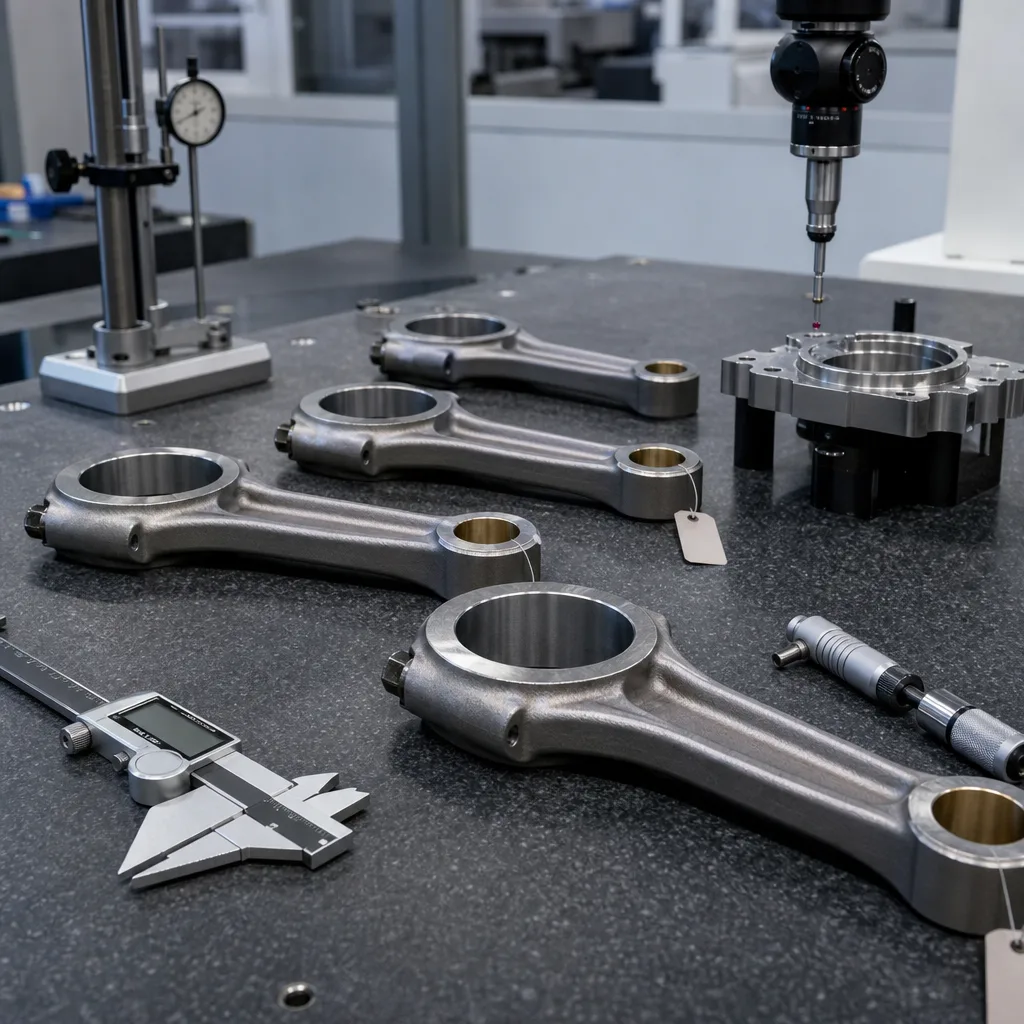
Typical production targets for a direct-fit aftermarket part may include total indicated runout within 0.02 mm, lobe-to-lobe lift variation within 0.03 mm, journal diameter held within the approved drawing tolerance, and functional surface roughness controlled to the follower and bearing design. Those figures are supplier control examples, not universal Renault OE values, but they are the kind of measurable limits a serious buyer should ask to see. The important point is that the supplier has a defined inspection plan and can repeat it across production batches.

Surface finish deserves particular attention. A camshaft that is dimensionally correct but too rough can accelerate follower wear, while a surface that is incorrectly hardened may polish quickly, pit, spall, or lose lift after installation. Buyers should ask whether reported hardness is measured on the relevant functional surfaces and whether the supplier controls both surface hardness and effective case depth, not one value alone. A hardness number without the test location, test scale, and case-depth method is weak evidence for a warranty-backed programme.

Driventus operates under quality system controls aligned with IATF 16949:2016 and ISO 9001:2015, and material compliance is managed for REACH (EC) No 1907/2006 where applicable. For B2B export, inspection records can be matched to the production lot so distributors and repair networks have a clear reference if they need to audit a shipment, investigate a claim, or approve repeat orders.

How Driventus supports sourcing teams

For B2B buyers, the practical goal is repeatable supply, not one-off fitment success. A single sample that installs correctly is only the beginning. The sourcing team also needs drawing control, sample approval, stable production routing, consistent packaging, lot traceability, and documentation that can support distributors, repair networks, fleet maintenance teams, and export customers.

Driventus can support both catalogue supply and project-based programmes. If you need a standard replacement, review our catalog. If you need a variant for a specific engine family, controlled branding, export packaging, or a private-label programme, see custom manufacturing.

Common sourcing inputs include:

  • Engine code and vehicle application, including model year and market where possible
  • Intake or exhaust position and any VVT, phaser, sprocket, seal, sensor, or pump-drive details
  • Old-part photos, critical dimensions, and physical sample availability
  • OE reference, aftermarket reference, buyer drawing, or failed-part mark if available
  • Required batch size, annual forecast, delivery schedule, and target Incoterms
  • Packaging type, barcode format, carton strength, palletisation, and labelling requirements
  • Destination market, language requirements, customs documents, and compliance needs
  • Required quality records, inspection level, retained-sample plan, and sample approval process

For export orders, buyers often ask for a dimensional report, material record, hardness record, batch traceability, and packing details. That is a reasonable baseline for distributors, wholesalers, repair networks, and OEM or Tier-1 programmes. Where the order is part of a longer programme, Driventus can also help define first-article inspection, production-lot inspection, retained samples, carton-level identification, and claim-review procedure so later shipments remain traceable.

A good enquiry starts with the engine data. Photos are useful, but the most efficient RFQ includes the engine code, camshaft position, old-part dimensions, required quantity, target market, and any known OE or aftermarket reference. That allows the supplier to cross-check the application, confirm whether an existing camshaft for Renault Kadjar OE equivalent is available, and identify any sample, drawing, or profile-measurement requirement before quoting.

If you need a replacement, a sample run, or a controlled production lot, use request a quote and include the engine data first. That reduces back-and-forth, speeds up technical confirmation, and helps the purchasing team receive a quote that is usable for real approval rather than only a price check.

Frequently asked questions

Match the engine code, intake or exhaust position, VVT or phaser hardware, journal dimensions, thrust geometry, oil-feed layout, end-drive interface, and trigger pattern. A supplier should verify against a sample, drawing, or measured reference profile, not only the vehicle model name.

Ask for a dimensional report, material certificate or material record, hardness record, runout and surface-finish inspection where relevant, and batch traceability. For EU shipments, REACH status should also be clear. OEM, Tier-1, and private-label programmes may require PPAP-style records, retained samples, or first-article approval.

Yes, when the application data, old sample, or technical drawing is available. For custom work, use [custom manufacturing](/oem-services.html) and provide the engine code, camshaft position, measurements, trigger pattern photos, target volume, and destination market.

If you need a verified replacement or a sample review, use [request a quote](/contact.html) with the engine code, camshaft position, photos, trigger-pattern details, and old-part measurements.

Request a Quote
Option Fitment risk Validation needed Typical use
OE-equivalent newLow when validated against sample or drawingDimensional report, hardness check, runout or surface-finish record, traceabilityDirect replacement, distributor stocking, export programmes
RemanufacturedMedium and dependent on core controlCrack check, journal wear measurement, lobe profile check, straightness, reuse criteriaRepair channels with controlled cores
Used salvageHigh because history is unknownFull visual, dimensional, wear, and runout inspectionTemporary repair, diagnostics, or low-value repair