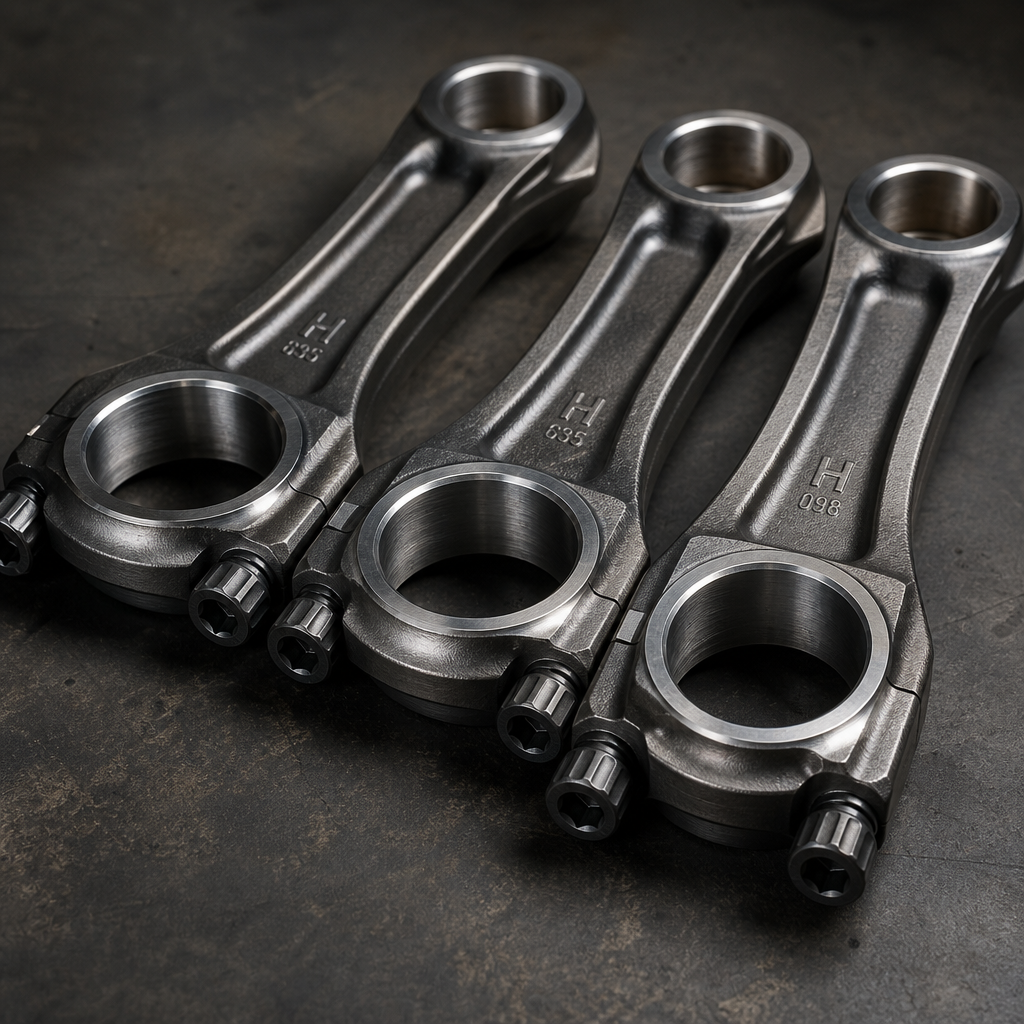
Camshaft Phaser Seat Manufacturer China: How B2B Buyers Screen Real Capability
Buying from a camshaft phaser seat manufacturer in China is rarely a simple price exercise. The part is small, but failure is expensive. If seat geometry drifts, hardness varies, or burrs remain around oil features, the problem can show up later as unstable phaser response, assembly issues, oil-control inconsistency, or early wear. By then, the cheapest quote is no longer cheap.
That is why experienced sourcing teams look past the headline unit price and ask harder questions: Can the factory hold repeatable tolerances? Is the material route stable? Is heat treatment controlled and traceable? Are sample reports real, complete, and tied to the shipped lot? Can the supplier manage change without mixing revisions?
Typical camshaft phaser seats are turned, ground, or finish-machined steel parts with outer-diameter tolerances often in the ±0.01 to ±0.03 mm range, bore tolerances to H7/H8 or customer print, flatness often below 0.03 mm on sealing faces, and roughness around Ra 0.8 to 1.6 μm on functional areas. Material choices may include 45# steel, 40Cr, 20CrMnTi, or other specified alloys, paired with quench-and-temper, carburizing, or induction hardening. Those figures are not defaults to assume. They simply show why process discipline matters.
Driventus manufactures engine and powertrain components in Taizhou, Zhejiang for B2B customers in more than 60 countries. This guide is written for importers, distributors, and procurement teams that want a more practical way to assess a camshaft phaser seat manufacturer in China: what to verify first, where suppliers usually fail, how to compare quotes properly, and what information actually speeds up a sound sourcing decision.
Start with a decision filter, not with RFQ price
Before you compare quotations, decide whether the supplier is even worth quoting. For this part category, that first screen should be technical, not commercial.
A camshaft phaser seat sits inside a tolerance-sensitive hydraulic mechanism. Small variation can create large downstream problems. So the first question is not "How cheap is the part?" It is "Can this factory control the part at all?"
Use five early filters:
- Material route: confirm the specified steel grade, cleanliness level, and heat-treatment path.
- Critical geometry: review bore, OD, face geometry, concentricity, runout, and any oil-hole features.
- Surface condition: confirm roughness, burr control, edge-break expectations, and anti-corrosion treatment.
- Traceability: make sure lots can be traced through steel receipt, machining, heat treatment, washing, inspection, and packing.
- Validation evidence: ask for dimensional data, hardness data, and any relevant endurance or rig-test support if the part is tied to a phaser assembly program.
A capable camshaft phaser seat manufacturer in China should also challenge the drawing when needed. If tolerances conflict, GD&T is unclear, or hardness targets may distort finish-machined features, the supplier should raise that before sampling. Silence at quotation stage often turns into delay later.
Ask one direct question early: Which print features do you consider special characteristics, and how will you control each one? That answer is usually more revealing than a polished company profile.
Typical buyer-focus characteristics include:
- OD tolerance such as ±0.015 mm
- Bore tolerance such as 0 / +0.021 mm or similar fit class
- Concentricity or runout in the 0.02-0.05 mm range
- Face flatness commonly ≤0.03 mm
- Surface roughness such as Ra 0.8 μm on sealing or contact faces
- Burr height control, for example ≤0.05 mm, especially around oil holes
- Hardness band after heat treatment, such as HRC 28-36 or a case-hardness requirement to print
Also ask how those numbers are achieved. A tolerance held by standard turning is one cost structure; the same tolerance held by grinding, hard turning, or secondary honing is another. If the supplier cannot connect tolerance to process route, the quote is not yet reliable.
For buyers consolidating related sourcing, it may also help to check whether the supplier supports adjacent engine component programs or a broader product catalog.
Where suppliers usually fail on this part
Most sourcing problems with camshaft phaser seats do not start with obvious catastrophic defects. They start with ordinary-looking process weaknesses.
Common failure modes include:
1. Tolerance held in samples but not in repeat batches A supplier can make ten good parts with extra attention. Serial stability is different. Watch for shops that rely on end-of-line sorting rather than process control.
2. Heat-treatment variation that shifts geometry Hardness may pass, but distortion can push bore size, runout, or flatness out of range. This matters especially where finish stock is limited.
3. Burrs or edge damage around oil features These are easy to underestimate and expensive to detect late. Burrs can affect oil flow, assembly, or internal wear.
4. Weak lot traceability If a defect appears, can the supplier isolate one heat-treat batch or one production lot? If not, every carton becomes suspect.
5. Revision mix-ups Older print revision, wrong packaging label, outdated gauge setting—small control failures can trigger major containment action.
6. Corrosion or contamination after washing A part can measure correctly and still arrive unusable if washing, drying, rust prevention, or packing discipline is poor.
This is why a technical review should include the likely defect pattern, not just the nominal specification. Ask the supplier what they see as the main manufacturing risks on your print. Strong suppliers answer specifically. Weak suppliers answer generally.
A useful follow-up is: What would make this part go out of spec first during production? Typical honest answers might include tool wear on a bore, runout drift from fixture wear, distortion after heat treatment, or burr growth around a drilled oil feature. That level of detail is valuable.
If a supplier claims there is little or no production risk, be cautious. Precision-machined VVT-related parts always have control risks. The issue is not whether risk exists, but whether the factory understands it and manages it.
Read the factory through its control plan
Machine count alone tells very little. What matters is whether the process controls match the print.
When evaluating a camshaft phaser seat manufacturer in China, ask the factory to walk through the actual production sequence and the control point at each step.
A typical route may look like this:
1. Raw material receiving: verify bar or forging against heat number, chemistry cert, and stock size. 2. Blank preparation: cut length and deburr. 3. Rough machining: turn OD, face, and pilot features while leaving finish stock. 4. Oil feature machining: drill, mill, slot, or broach as required. 5. Heat treatment: quench and temper, carburize, induction harden, or stress relieve according to print. 6. Finish machining / grinding: bring critical features to final size. 7. Deburring and edge control: especially around oil holes and sealing areas. 8. Washing and drying: remove contamination and apply rust preventive. 9. Final inspection: check key dimensions, hardness, and appearance per control plan. 10. Packing and labeling: preserve cleanliness and carry lot traceability to carton and pallet.
Then ask what is controlled in-process and what is checked only at the end. If the answer is mostly end-of-line inspection, risk is higher.
Useful capability questions:
- Which dimensions are checked 100%?
- Which are checked by frequency, such as 1/30 pcs or 1/hour?
- How is tool wear managed: fixed life, SPC trend, or operator judgment?
- How is runout measured: V-block setup, roundness tester, or CMM fixture?
- Is hardness checked by furnace load, lot, or sample quantity such as 3 pcs per batch?
- What process capability is expected on special characteristics, such as Cpk ≥1.33 where required?
Measurement method matters too. Depending on the print, the supplier may need micrometers, bore gauges, profilometers, CMMs, roundness equipment, or functional gauges. If the measurement system is weak, the dimensional report is weak even when the numbers look neat.
At quote or sample stage, the documentation request should be simple and targeted:
| Check item | What to ask for | Why it matters | |
|---|---|---|---|
| Material verification | Mill cert or compliance record | Confirms input consistency | |
| Dimensional control | Ballooned drawing with measured report | Verifies the part against print | |
| Hardness | Heat-treatment record and hardness report | Indicates wear resistance and distortion risk | |
| Surface finish | Ra result on specified faces | Supports fit and oil control | |
| Traceability | Lot identification method | Enables containment if defects appear | |
| Packaging | VCI, oiling, tray or cell-packing spec | Protects the part in storage and transit |
| Order stage | Typical MOQ logic | Typical lead time logic | Typical commercial note |
|---|---|---|---|
| Prototype | 50-200 pcs if standard bar stock is used and no dedicated gauge is needed | 15-25 days from drawing confirmation | Unit price is higher because setup and reporting cost is spread over fewer parts |
| Pilot / validation | 300-1,000 pcs depending on heat-treat batch size and inspection scope | 20-35 days | May include process tuning and packaging trial |
| Serial production | 1,000-5,000 pcs or call-off against forecast | 25-40 days normal replenishment | Best pricing after the process stabilizes |
| Project phase | Documents commonly requested | ||
|---|---|---|---|
| RFQ | Drawing review notes, process route, material proposal, quotation assumptions | ||
| Sample submission | Ballooned drawing, dimensional report, material cert, hardness report, surface-finish report if specified, sample photos, lot ID | ||
| Pilot approval | Control plan, process flow, PFMEA summary, gauge list, packaging specification | ||
| Serial supply | CoC or inspection summary, lot traceability, packing list, nonconformance response when needed |
| Criterion | Weak response | Acceptable response | Strong response |
|---|---|---|---|
| Tolerance understanding | Repeats the print only | Identifies critical dimensions and gauges | Flags risk areas, control frequency, and shares sample data |
| MOQ logic | One MOQ with no explanation | Separate sample and serial MOQ | Explains MOQ by heat-treat batch, fixture, packaging, or material logic |
| Lead time | One number only | Separates sample and repeat lead time | Breaks timing into material, machining, heat treatment, inspection, and packing |
| Quality evidence | Certificate only | Dimensional report and material cert | Adds hardness, roughness, traceability, and corrective-action method |
| Packaging | "Standard export packing" | Defines carton and rust prevention | Defines tray count, labels, VCI/oil, palletization, and transit protection |