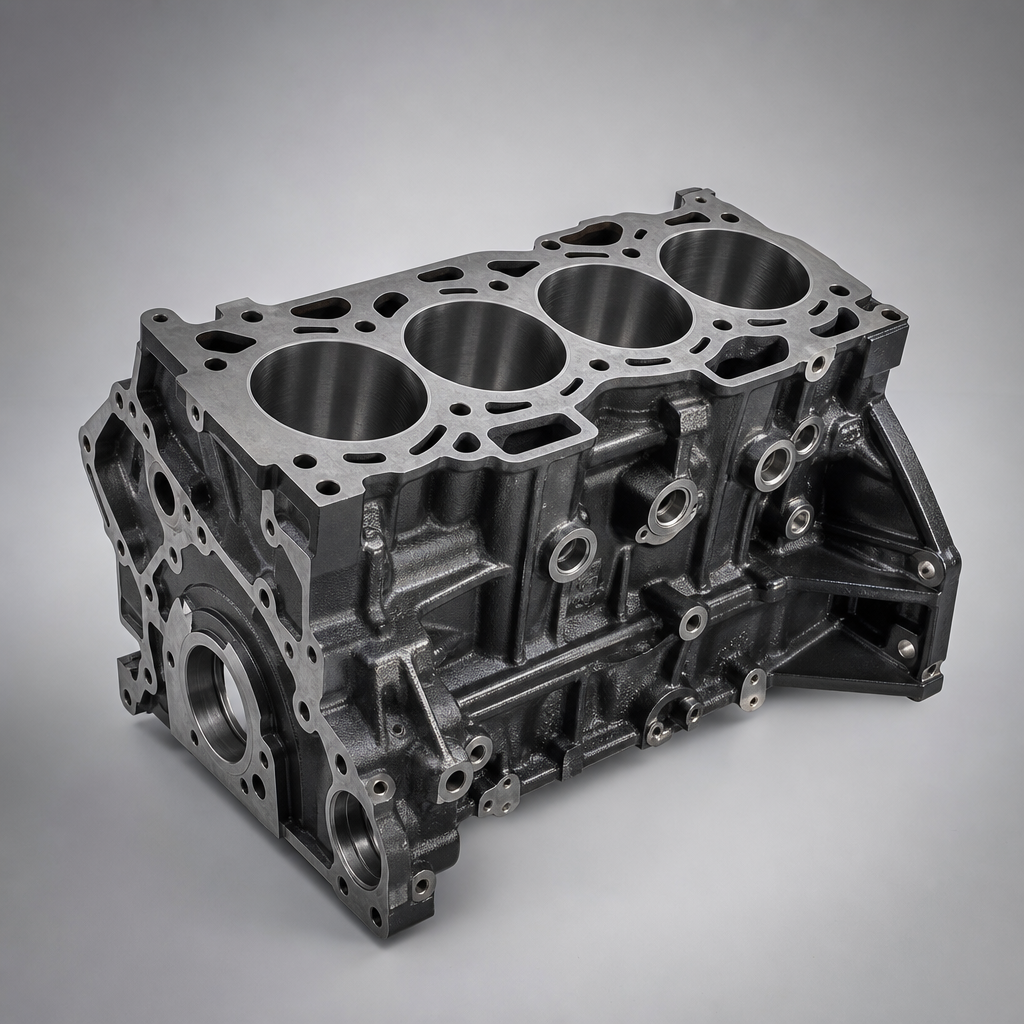
Camshaft Phaser Renault Manufacturer China Sourcing Guide
Choosing a camshaft phaser Renault manufacturer China partner is not a catalogue-matching exercise. The risk sits in details that are easy to miss: oil-port position, vane clearance, locking-pin behaviour, tooth form, runout, cleanliness, packaging, and whether the same controls will still be used on the third replenishment order. Driventus Auto Parts manufactures engine and powertrain components in Taizhou, Zhejiang, and exports to more than 60 countries. We support B2B supply of Renault-fit variable valve timing components for aftermarket distributors, importers, repair-chain programmes, and selected OEM/Tier-1 projects. A workable RFQ normally starts with engine code, intake or exhaust position, tooth count, bore and bolt pattern, oil-port layout, locking position, phasing angle, sample or drawing status, annual forecast, and packaging target. This guide is written as a sourcing decision tool: how to screen suppliers, avoid common failure modes, plan MOQ and lead time, define validation, prepare audit evidence, and protect traceability after shipment. Driventus is an independent aftermarket manufacturer; brand names are used only to describe fitment.
Decision Gate: Is the Supplier Controlling the Part or Just Selling a Shape?
A camshaft phaser is a hydraulic timing actuator with mechanical stops, oil galleries, locking parts, and precision interfaces. It may look like a pulley or sprocket in a catalogue photo, but a small error in vane geometry, lock-pin clearance, oil-feed alignment, tooth profile, or rotor/stator clearance can create cold-start rattle, slow response, cam-correlation faults, oil leakage, or repeat warranty claims.
Before price negotiation, buyers should separate real manufacturing control from simple trading ability. Ask for evidence in four areas.
1. Application definition
Confirm the supplier can identify the part by engine family, engine code, intake/exhaust side, model year, regional market, tooth count, timing mark, and OE-style reference where applicable. Renault-fit coverage can vary by market and engine version; visual similarity is not enough.
2. Critical characteristics
Agree the dimensions and functions that matter before samples are built:
Bore size, bolt-hole PCD, bolt-hole diameter, axial height, face flatness, radial and axial runout.
Sprocket or gear tooth count and tooth form.
Oil-port diameter, position, and gallery cleanliness.
A competent supplier should explain which features are controlled by CNC fixtures, dedicated gauges, runout fixtures, functional benches, or CMM/projector checks. General calipers alone are not a control strategy for a hydraulic timing component.
4. Repeatability evidence
For comparison between suppliers, request a sample file with 8–15 critical dimensions, batch functional-test data, incoming-material record or material certificate, gauge calibration evidence, and packing photos. If the supplier cannot show how one batch links to material, machining, assembly, inspection, and shipment, the lowest unit price may become expensive later.
Buyers can review standard product coverage through our catalog and the engine category at /products/engine-components.html. If a Renault-fit reference is not already available, the project should be treated as development rather than routine replenishment.
Scenario Planning: Existing Reference, Modified Part, or New Development?
The right MOQ and lead time depend on the sourcing scenario. A stock-like aftermarket reference, a private-label variant, and a new engineering project do not carry the same sampling, tooling, packaging, or validation load.
Driventus manages camshaft phaser production through in-house manufacturing and controlled sub-process partners. The route can include incoming material verification, turning and milling, gear or sprocket machining, controlled blanks, heat-treatment coordination, surface finishing, deburring, washing, component matching, controlled assembly, oil-pressure functional testing, response or leak checks, final inspection, anti-corrosion protection, and export packing.
Sourcing scenario
When it fits
MOQ guidance
Lead-time guidance
What the buyer should provide
Existing Renault-fit reference
Replenishment for a known aftermarket application
300–500 pcs per reference
30–45 days after order confirmation and deposit
Fitment list, target packaging, forecast, delivery term
Modified reference
Private label, label change, minor interface change, regional variant
500–1,000 pcs
45–70 days after sample approval
Sample, drawing if available, marking rules, packaging artwork
New development
OEM/Tier-1 project or exclusive aftermarket part
Project-based, often 1,000+ pcs after approval
70–120 days for tooling, sample build, and validation
Technical drawing, master sample, duty requirements, PPAP level if required
</tr></thead><tbody> </tbody></table>Several items can move these numbers: steel or powder-metal blank availability, treatment capacity, fixture status, inspection level, validation scope, packaging-material MOQ, and whether private-label cartons are required. Price is usually driven by reference maturity, annual volume, machining time, scrap risk, functional-test cycle time, material grade, surface treatment, packing specification, and document package.
A 300-piece neutral-box order can be sensible for market testing. A private-label launch with printed boxes, retailer carton rules, custom labels, and barcode validation usually needs more volume because packaging setup must be amortised. For dense metal parts such as camshaft phasers, samples may move by air, while mass shipments typically use FOB Ningbo/Shanghai or a buyer-nominated forwarder.
Forecast quality matters. A 3–6 month rolling call-off plan normally supports better unit pricing and production scheduling than urgent spot orders across multiple low-volume references.
For private-label or application-specific work, Driventus supports custom manufacturing: drawing review, sample benchmarking, inspection planning, laser marking or label definition, packaging definition, and approval samples. If the buyer sends a sample, state whether it is new, used, or a failed field return. Wear marks, impact damage, contamination, chain or belt wear, and failure scars should not become the production standard.
Audit File Deep-Dive: What Import Buyers Should Ask to See
A certificate is useful, but it is not the audit. For Renault-fit camshaft phasers, the buyer needs to know whether the quality system reaches the actual part characteristics: oil galleries, rotor/stator clearance, lock-pin function, sprocket geometry, runout, cleanliness, packaging, and traceability.
Driventus operates under IATF 16949:2016 and ISO 9001:2015 quality-management frameworks. These frameworks support process control, document management, corrective action, supplier control, and continuous improvement. They do not replace part-specific validation, so the audit package should be defined by programme risk.
Typical evidence for remote review or on-site audit includes:
Business licence, export records, facility overview, and responsibility map for in-house and outsourced operations.
IATF 16949:2016 and ISO 9001:2015 certificates within their stated scope.
Process flow chart, PFMEA where required, control plan, work instructions, and inspection instructions.
Incoming material inspection records, supplier-control records, heat-treatment certificates, and surface-treatment records where applicable.
CNC capability records for bore, PCD, oil-port location, axial height, sprocket profile, vane slot width, face consistency, and runout.
Stability or capability data for important characteristics, such as Cpk studies for high-volume programmes or 30-piece dimensional checks for initial approval.
Functional test records showing test pressure, angle travel, unlock behaviour, leakage criteria, and oil-temperature range if specified.
Gauge calibration records for micrometers, height gauges, CMM or projector checks, runout fixtures, pressure gauges, torque tools, and functional benches.
Nonconforming product control procedure, segregation method, rework approval rules, and scrap records.
Corrective and preventive action records, including 8D or similar formats when required.
Packaging approval evidence, pallet photos, label approval records, and drop-test or transport-simulation evidence where specified.
A basic aftermarket file may include certificate copies, dimensional report, functional report, material declaration, and packing photos. A higher-risk programme may require PPAP-style documents, IMDS-style material data, MSA, capability evidence, appearance boundary samples, packaging approval, and control-plan sign-off.
Mark special characteristics on the drawing before sample production. If they are not marked, they may not flow into the control plan, inspection report, or final approval file.
EU and UK importers may request material declarations related to REACH (EC) No 1907/2006. Any market-specific rules for chemicals, labelling, recycling, anti-corrosion protection, wood-pallet fumigation, or packaging waste should be included in the RFQ. Fixing documentation after shipment is slower and usually more expensive.
More detail on process control and audit readiness is available through our quality system. Driventus is an independent aftermarket manufacturer; brand names are referenced for fitment only.
Failure-Mode View: Validation Tests That Prevent Noisy Returns
Validation should be built around the failure modes the market actually sees: cold-start noise, delayed cam response, cam/crank correlation faults, oil leakage, rough idle, timing instability, and premature wear. The document package can be light or formal, but the test logic should match the risk.
For routine distributor orders, buyers may need dimensional reports, functional batch tests, and packing checks. For OEM, Tier-1, or exclusive development projects, a PPAP-style submission may be appropriate, even if the customer uses its own format.
Core validation checks normally include:
Dimensional inspection: sprocket tooth geometry, mounting bore, bolt-hole position, rotor/stator clearance, oil-gallery position, axial height, sealing interfaces, dowel or alignment feature, and cover-to-body fit.
Runout and concentricity: limits for the sprocket face and bore datum help reduce chain or belt tracking issues and timing variation.
Locking-pin function: the pin should lock at rest and release at the defined oil pressure. The test plan should state pressure ramp rate, oil temperature, and cycle count.
Phasing angle: available advance/retard range should be measured under controlled pressure and temperature. Do not assume interchangeability from appearance.
Leakage test: internal oil loss can slow response, reduce control accuracy, and create noise. Leakage limits should define pressure, fluid viscosity, and test duration.
Torque and endurance checks: application-dependent testing may include tightening torque, torsional shock, spring fatigue, cyclic load, and stop-impact resistance.
Surface and cleanliness control: burr removal, residual-particle control, anti-corrosion protection, clean oil passages, and clean packaging. Stricter programmes can define particle-size or gravimetric cleanliness targets.
Assembly verification: spring direction, fastener security, alignment marks, locking position, free movement before packing, and absence of metallic chips in oil channels.
A practical sequence is:
1. Measure the master sample. 2. Confirm drawing or reverse-engineered data. 3. Build prototypes. 4. Perform 100% functional checks on samples. 5. Bench test under heated oil. 6. Trial fit on the intended engine family. 7. Observe cold-start noise, warm-operation behaviour, and fault codes. 8. Release controlled mass production only after approval.
For production batches, critical features can be inspected at first-piece, patrol, and final stages. Functional testing may be 100% or sampled depending on buyer risk level, order history, and field performance.
Vehicle-emissions regulations such as ECE R-83 define emissions-related performance requirements for vehicles; they are not production approval for an individual aftermarket camshaft phaser. Driventus does not claim endorsement or approval by any vehicle manufacturer. The goal is OE-equivalent fit, function, and durability according to buyer-defined specifications, supported by inspection and test evidence.
Step-by-Step RFQ: How to Get a Quotation That Can Be Built
A vague RFQ produces a vague quotation. A photo and a target price may start a conversation, but they rarely produce the right Renault-fit camshaft phaser on the first sample loop. Technical and commercial information should arrive together.
Use this sequence for a camshaft phaser Renault manufacturer China programme:
Step 1: Identify the application
Provide vehicle application range, engine codes, intake or exhaust position, model years, and regional market. Include the buyer’s OE-style reference format and supersession history if available.
Step 2: Share part evidence
Send photos of the original part from the front, rear, side, mounting face, tooth profile, locking area, and oil-port positions. If a sample is available, confirm whether it is new, used, or a failed field return. For used samples, add mileage and known fault codes.
Step 3: Provide measurable data
If no drawing exists, list tooth count, outside diameter, bore diameter, bolt-hole PCD, bolt-hole diameter, axial height, oil-port diameter, visible timing marks, and any stamped or laser-marked codes.
Step 4: Define the commercial plan
State annual forecast, first-order quantity, replenishment cycle, and whether mixed references can ship together. Give the target Incoterm—EXW, FOB Ningbo/Shanghai, CIF, or DDP where supported—and include destination port or warehouse postcode for logistics assessment.
Step 5: Lock the packaging and documents
Specify neutral box, private label, bulk service pack, repair-chain kit, inner box size, master carton quantity, pallet rules, barcode format, and language requirements. List required documents: certificate copies, inspection report, material declaration, functional test report, PPAP-style file, IMDS-related data if applicable, and any REACH or packaging compliance forms.
Step 6: Agree the approval path
Confirm sample quantity, sample shipment method, approval timeline, and whether bench, vehicle, or dyno testing is required.
A complete quotation should state reference number, MOQ, unit price, tooling or sample charges if any, payment term, Incoterm, packing method, lead time, document scope, and quotation validity. Buyers can request a quote with these details to receive a more accurate price and lead-time estimate.
Commercial Risk Controls: Labels, Lots, Claims, and Change Approval
For importers and repair-chain buyers, the commercial risk is often downstream. A low unit price does not help if cartons collapse, mixed references arrive with unclear labels, parts corrode during sea freight, or a claim investigation takes months because no one can identify the production lot.
Packaging should be specified before the first production run. Driventus can supply Renault-fit camshaft phasers with buyer-defined labelling, carton configuration, and palletisation. Standard export packaging can include VCI bag or other anti-rust protection where required, separation to protect machined faces and gear teeth, barcode or batch identification, inner box protection, and outer cartons suitable for container transport.
Private-label packaging requires artwork confirmation, label approval, colour and barcode checks, and packaging-material verification. For sea freight, define maximum carton weight, pallet height, pallet material, humidity protection, and whether mixed references are allowed on one pallet.
Traceability is maintained by production lot, inspection record, and shipment batch. A typical label can show part number, quantity, production date or lot code, carton number, country of origin, buyer barcode, and handling marks. For higher-control programmes, the lot code can link to incoming material records, machining batch, assembly record, functional test result, final inspection sheet, packing list, and container shipment.
Keep receiving photos, carton labels, and batch information. If a field issue appears months later, this evidence shortens the investigation.
Claim analysis should separate product defects from system-level causes. Buyers should provide installation mileage, vehicle application, engine code, intake/exhaust side, fault codes, oil grade, oil-change history, chain or belt condition, solenoid condition, service history where available, photos, and returned samples if requested. Camshaft phaser symptoms can also be caused by contaminated oil, blocked galleries, incorrect timing installation, worn chains or belts, low oil pressure, incorrect torque, damaged cam sensors, or unsuitable control solenoids.
A stable supply programme should include forecast sharing, revision control, agreed response times for quality issues, and a formal method for approving changes to materials, processes, markings, test criteria, or packaging. Any approved engineering or packaging change should record the effective date, lot number, old/new comparison, and buyer sign-off. This is especially important for distributors carrying multiple Renault-fit timing and engine components across several warehouse locations.
Frequently asked questions
Yes. Private-label supply is available for qualified B2B orders. Buyers should provide packaging artwork, label requirements, barcode format, carton configuration, pallet rules, and annual forecast. Final supply terms depend on MOQ, reference availability, artwork approval, packaging material MOQ, and whether custom markings are required.
Yes. Sample orders are normally available for existing references and development projects. Driventus can provide dimensional inspection and functional test records with samples when agreed in the RFQ. Typical sample lead time depends on stock status, tooling, machining queue, packaging needs, and validation scope; new development samples require longer than existing references.
No. Driventus does not claim vehicle manufacturer approval or endorsement. Driventus is an independent aftermarket manufacturer; brand names are referenced for fitment only. Parts are supplied to buyer-defined specifications with relevant inspection, functional validation, and traceability evidence.
If you are evaluating a camshaft phaser Renault manufacturer China source, send your application list, engine codes, reference numbers, first-order quantity, annual forecast, packaging requirements, delivery term, and documentation requirements for review. Start a technical RFQ at /contact.html