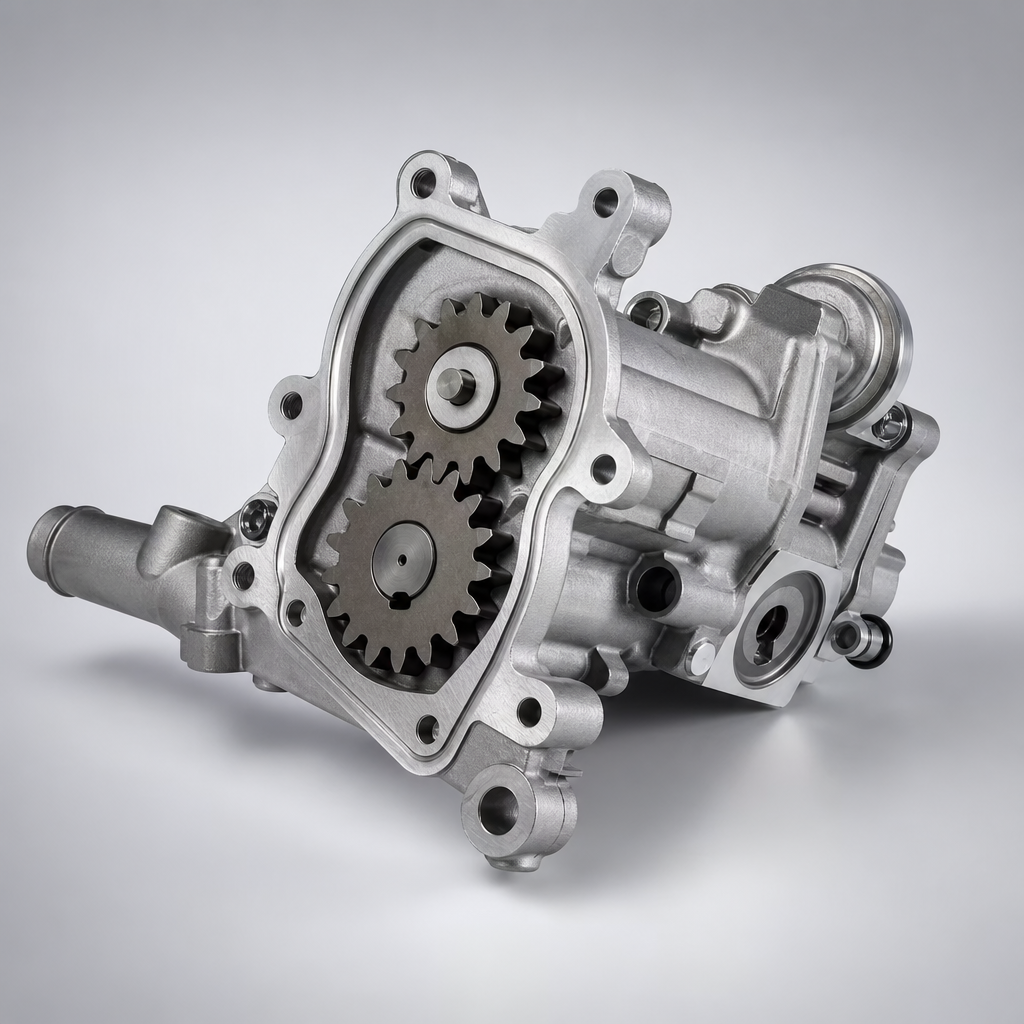
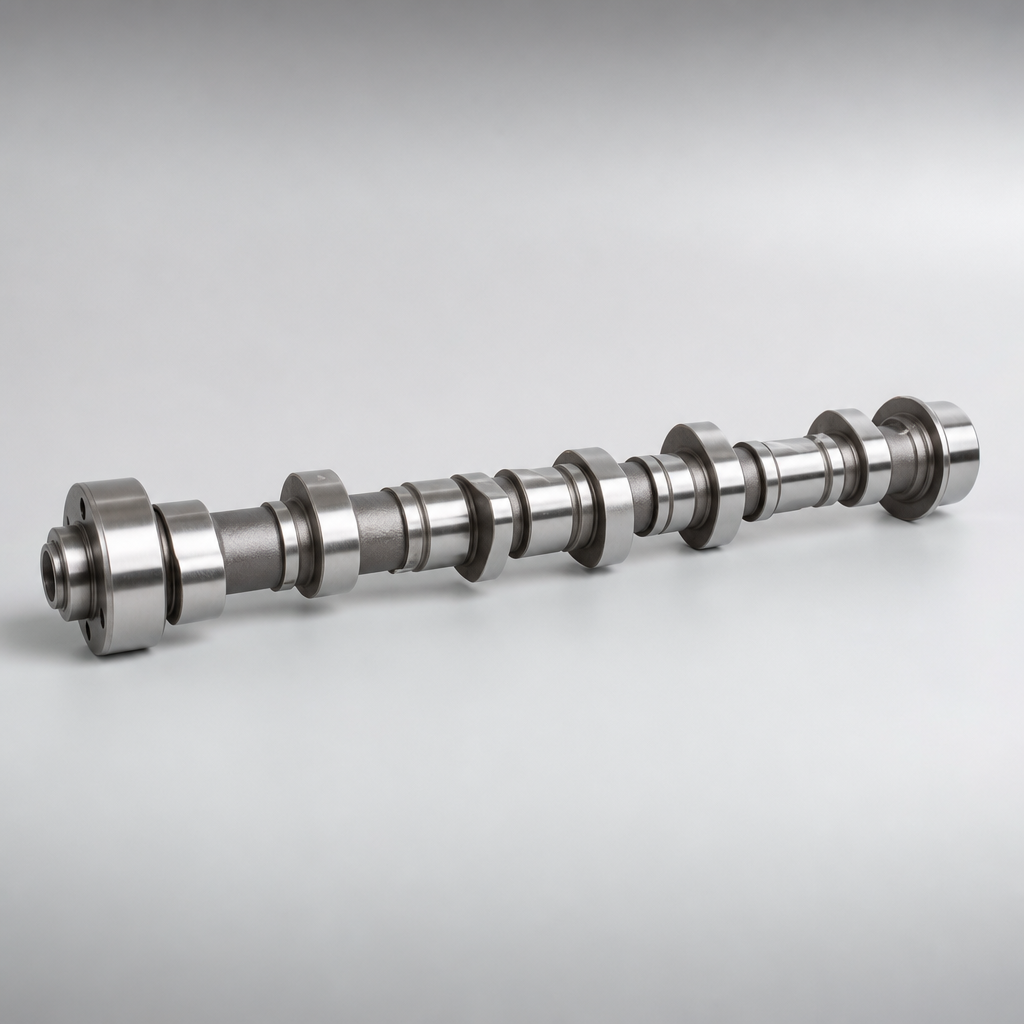
Buying a **camshaft phaser Porsche aftermarket replacement** should not start with price or catalogue fitment. It should start with risk. For distributors, engine rebuilders, workshop groups, and import buyers, the real question is simple: will this unit behave like the original once oil is hot, tolerances stack up, and the engine is back in service?
That is where many aftermarket programs go wrong. A phaser can bolt on correctly yet still cause phase drift, internal leakage, lock-pin hesitation, startup rattle, or repeat fault codes. The visible part is rarely the problem; control stability is. This article breaks the evaluation into the checks that actually matter: how to judge OE-equivalent claims, where failures usually come from, what test data is worth asking for, which manufacturing details affect service life, and how to set up a lower-risk purchasing process. It also covers the documentation buyers should expect under IATF 16949:2016 and ISO 9001:2015, along with compliance points relevant to EU and UK importers. Driventus is an independent aftermarket manufacturer; any brand references are for fitment identification only.
Decision framework: what makes an OE-equivalent phaser credible
For Porsche-fitment engines, a replacement phaser should be approved on evidence, not wording. Terms like "OE quality" or "matches original" mean very little unless the supplier can show how the unit was measured, tested, and controlled.
A credible aftermarket part has to match the original in three areas:
Dynamic behavior: stable advance and retard response across the intended oil-pressure and temperature range
Durability: resistance to wear, varnish, internal leakage, and rotor-to-housing scoring over repeated cycles
That leads to a practical buying question: what proof should a supplier be able to produce right now? Usually, the minimum pack includes:
Dimensional inspection report against drawing or approved sample
Material declaration for critical metal and elastomer parts
Leakage and actuation test data at controlled oil temperature
Traceability by batch, heat, or production lot
Process-control records within an audited quality system
The strongest suppliers do not stay at the claim level. They give numeric controls. Typical first-article discussion points include:
Mounting face flatness within 0.03-0.05 mm
Pilot diameter tolerance within ±0.02 mm unless the print requires tighter
Overall stack height within ±0.05 mm
Oil-port positional tolerance within ±0.10 mm relative to datum features
Rotor-to-housing running clearance commonly in the 0.03-0.08 mm range depending on design
Locking-pin engagement and release repeatability verified over multiple cycles
Functional phase-angle deviation around ±1 crank degree or the supplier's OE-comparison bench limit
These are not universal Porsche service specs. They are the sort of control windows serious buyers should ask suppliers to define and defend. If the supplier cannot state target tolerances for critical features, it becomes hard to judge process capability, sample quality, or incoming inspection needs.
Commercially, OE-equivalent also means the quote explains what is included. Buyers should ask whether pricing covers:
100% end-of-line leakage testing or sampling only
Batch traceability only or fixture/cavity-level traceability
VCI bag, rust inhibitor, and export carton protection
Neutral pack, custom label, or full private-label packaging
Sample-cost reimbursement after first bulk order
That is the real standard for a camshaft phaser Porsche aftermarket replacement: not just fit on day one, but predictable behavior at operating temperature and consistent output from lot to lot.
Failure modes first: the checks that prevent expensive sourcing mistakes
The easiest way to review an aftermarket phaser is to ask what usually goes wrong in the field. Most warranty noise comes from a short list of failure modes: oil misrouting, internal leakage, slow actuation, poor lock release, wear at the torque interface, or inconsistent production batches.
Seen that way, the approval process becomes much sharper.
Checkpoint
Failure it helps prevent
Typical procurement evidence
Mounting face flatness
Misalignment, sealing issues, installation stress
CMM or flatness report
Oil port position
Wrong fill behavior, unstable control response
Drawing comparison or fixture check
Rotor-to-housing clearance
Excess leakage, weak response speed
Capability or clearance data
Surface hardness
Spline wear, vane damage, locking-element wear
Hardness test record
Seal material compatibility
Hot-oil degradation, leakage over time
Material specification
Torque interface accuracy
Installation damage, slip, loosening
Gauge inspection record
</tr></thead><tbody> </tbody></table>### Visual match is not functional proof
Two phasers can look almost identical and still behave differently once installed. That difference usually shows up in leakage rate, vane stop accuracy, lock-pin release, or control stability under hot oil. Dimensional inspection at room temperature matters, but it is only half the picture.
A stronger sourcing checklist combines geometry with function. Typical approval items include:
Bolt-hole true position within 0.08-0.12 mm to datum pattern
Spline major/minor diameter within print tolerance, often ±0.015-0.03 mm on critical fit features
Runout within 0.04 mm TIR or better
Vane stop angle consistency within ±0.5-1.0°
Leakage rate at hot oil and specified pressure within the supplier's validated OE-comparison limit, for example <8-15% deviation from a reference unit
Actuation time from park to target angle under defined oil pressure and viscosity, such as <300-500 ms depending on phaser size and test rig
Buyers do not need generic numbers for the sake of it. They do need the supplier to declare the actual limits being used. Otherwise every later claim becomes a debate instead of a comparison to agreed data.
Compatibility decisions affect claim rates
Phasers do not work in isolation. Control valves, timing chains, guides, seals, and oil-fed interfaces all influence how the final repair performs. A new actuator can still look bad in service if surrounding parts are worn or contaminated.
If you are building a broader timing-system program, it often helps to link the phaser with related parts in our catalog or the wider /products/engine-components.html range. Buyers frequently reduce warranty noise by sourcing matched control valves or repair kits instead of replacing the actuator alone.
A common commercial path looks like this:
Samples: 2-10 pcs for fitment and bench review
Pilot lot: 30-100 pcs for workshop validation
First stock order: 200-500 pcs for regional distribution
Annual program: 1,000+ pcs with private label, dedicated packaging, and forecast replenishment
For a camshaft phaser Porsche aftermarket replacement, the smart approval route is to screen likely failure modes before launch, not after the first return batch arrives.
Spec deep-dive: which validation data is actually worth asking for
Good validation data answers a practical question: how will this phaser behave with real oil, real temperature, and repeated cycling? Weak validation data only proves the part looked acceptable once on a bench.
A useful approval pack usually includes:
Actuation response testing at controlled oil pressure in cold-start and hot-oil conditions
Internal leakage testing at defined phase positions
Locking mechanism function testing where a park or lock feature is used
Cycle durability testing through repeated advance and retard movement
Corrosion assessment for exposed surfaces where relevant
Metallurgical verification of critical load-bearing features
Ask suppliers to state the test conditions, not just the result. Helpful parameters include:
Oil temperature points: ambient, 80°C, 100°C, and where relevant 120°C
Oil pressure range: roughly 1.0-5.0 bar to represent idle through higher-speed operation
Target phase positions: 0%, 50%, and 100% travel
Leakage hold time: 10-30 s at each position with measured flow loss or pressure decay
Response time measurement from command signal to target-angle attainment
Cycle durability: commonly 50,000-200,000 cycles depending on validation depth and budget
Salt spray exposure: 48-96 h when logistics or storage corrosion risk is being checked
The difference between useful and weak evidence is usually context. A single passing sample at room temperature tells very little. A report showing 5 pcs tested at 100°C oil with repeatable response and leakage values is much more persuasive.
Relevant system and compliance references may include:
IATF 16949:2016 for automotive quality management discipline
ISO 9001:2015 for documented process control and corrective action
REACH (EC) No 1907/2006 for material and coating compliance into the EU
Not every aftermarket program needs a full PPAP package. But buyers should still expect process flow, control plan, inspection standard, traceability method, and a nonconformance procedure. Those documents help answer an important question: does production control exist beyond the first sample set?
If the supplier also offers custom manufacturing, it is usually easier to align validation protocol, packaging requirements, labeling rules, and private-label documentation. That matters when a camshaft phaser Porsche aftermarket replacement is being introduced into a workshop chain or controlled distribution network.
Lead time should also be tied to validation stage. A realistic sequence often looks like this:
Existing-tool sample supply: 2-4 weeks
Buyer review and bench/fitment feedback: 1-3 weeks
Pilot lot production: 3-5 weeks
Bulk order after approval: typically 30-45 days ex works for stable materials and standard packaging
Private-label packaging or label approval: add 7-14 days if artwork or barcode format is not final
The best validation data is not the longest report. It is the report that predicts field behavior.
Inside the part: manufacturing details that decide service life
Phasers live in hot oil, under fluctuating pressure, with contamination risk and repeated transient loading. In this category, service life is not decided by a single material callout. It is decided by the full manufacturing route.
The main production factors are:
Base material consistency for housing and rotor parts
Precision machining of hydraulic chambers and oil passages
Heat-treatment control for splines, locking features, and other wear-critical areas
Surface finishing that limits burrs and premature scoring
Clean assembly conditions to protect hydraulic performance
End-of-line testing to catch out-of-spec units before packing
Buyers should go beyond the alloy name and ask how the part is actually made. A meaningful technical review may include:
Housing/rotor material: forged or machined steel with chemistry declaration and heat-lot traceability
Hardness range on wear interfaces, for example HRC 50-60 where design requires hardened features
Surface roughness on hydraulic sealing faces, commonly around Ra 0.4-0.8 μm on critical machined areas
Burr control at oil passages with visual standard or borescope criteria
Cleanliness level after washing, such as gravimetric residue limit per piece or retained-particle checks on periodic samples
Coating thickness where anti-corrosion treatment is used, for example 5-15 μm depending on process type
Contamination control deserves special attention. Residual particles inside the actuator can create immediate field problems once oil starts circulating. This is easy to miss during receiving inspection and expensive to discover in service.
A capable supplier should be able to explain a real process sequence such as:
1. Rough machining of housing and rotor 2. Heat treatment of designated wear features 3. Finish machining and grinding or honing of hydraulic interfaces 4. Deburring of oil galleries and edge-sensitive features 5. Ultrasonic or multi-stage washing 6. Drying and protected transfer into clean assembly 7. Controlled assembly torque or press-fit operations 8. End-of-line actuation and leakage verification 9. Rust-prevention packing and traceability labeling
This is why two suppliers can quote similar material grades yet deliver very different results in the field. The difference often comes from machining capability, washing discipline, fixture control, or heat-treatment repeatability rather than the raw material itself.
Packaging is part of quality protection, not just logistics. For export orders, buyers often require:
Individual oil-resistant bag or VCI bag
Partition or formed tray to prevent tooth or spline impact damage
Desiccant where ocean transit or humid storage is expected
Inner label with part number, lot number, production date, and quantity
Outer carton compression standard suitable for 5-10 kg net load depending on pack count
Pallet label matched to ASN or buyer ERP format
For a camshaft phaser Porsche aftermarket replacement, the manufacturing review should treat the part as a precision hydraulic assembly from machining through packing.
Step-by-step sourcing plan: how to lower warranty exposure before volume release
Most replacement-phaser warranty problems can be traced to one of three causes: wrong application mapping, unstable timing performance, or inconsistent production output. The best way to reduce risk is to structure the purchase process in stages.
Start with this checklist before committing to stock:
Confirm exact engine-family and application mapping with the supplier
Request dimensional and functional sample approval before mass production
Review traceability format on the part, inner box, and outer carton
Agree incoming inspection criteria for key interfaces and visible defects
Define packaging, corrosion protection, and pallet-label requirements
Set a corrective-action route for field returns before first shipment
For distributor programs and repair-network supply, pilot orders are especially useful. They create a buffer between promising samples and full market release. Workshop feedback can still drive changes in machining control, washing process, packaging, or labeling before the next batch ships.
A practical risk-reduction path usually looks like this:
Stage 2: pilot order — 30-100 pcs, limited release, serial or lot traceability, workshop feedback
Stage 3: first production release — 200-500 pcs with agreed AQL, label format, and claim process
Stage 4: rolling stock program — forecast orders, stable lead time, quarterly quality review, agreed replenishment MOQ
Incoming inspection should stay focused on high-risk items instead of broad cosmetic sorting. Typical controls include:
AQL level for visual defects and packaging, such as 0.65-1.5 depending on program risk
Critical dimension spot checks on 3-5 pcs per lot or carton group
Traceability verification against PO, lot, and date code
Corrosion and transit-damage checks after receipt
Functional recheck on retained samples from each bulk lot where the category justifies it
Buyers should also ask what is made in-house and what is outsourced. That affects process ownership, lead-time stability, and how quickly root-cause analysis can be completed if claims appear.
Price should be read the same way. In this category, it usually moves with:
Existing tooling versus fixture modification
100% end-of-line testing versus sample-based testing
Annual demand level, such as <100 pcs, 100-500 pcs, or 1,000+ pcs
Neutral export packaging versus private-label retail packaging
Air shipment for launch orders versus sea freight for replenishment
Very low quotes often exclude the controls that matter later: validation, traceability, packaging protection, and claim support.
Before first shipment, agree the field-issue response path in writing:
Initial containment within 48-72 hours
Preliminary 8D or corrective-action response within 5 working days
Root-cause confirmation after returned-part analysis
Sorting, replacement, or debit process defined in advance
Driventus supports engine and powertrain component sourcing through audited production controls and documented quality review. Buyers comparing timing-system components can start with our catalog and then request a quote for application review.
Frequently asked questions
Ask for dimensional inspection data, material declaration, functional test results, traceability format, and evidence of an audited system such as IATF 16949:2016 or ISO 9001:2015. For higher-volume programs, request the control plan, process flow, and the actual bench-test conditions used, including oil temperature, pressure range, sample quantity, and pass/fail limits.
No. External similarity does not confirm internal leakage performance, phase-angle accuracy, or lock function. Hot-oil functional testing and tolerance verification are more reliable approval criteria than appearance alone. Buyers should ask for numeric values such as running clearance, actuation time, leakage limit, and the phase-angle tolerance used in validation.
Yes, if the manufacturer can support controlled documentation, traceability, and validation. This is typically handled through custom manufacturing with agreed drawings, packaging specifications, and sample approval before volume release. Private-label projects work best when annual demand, MOQ, lead time, barcode format, and carton specifications are settled before artwork approval.
If you are qualifying a replacement camshaft phaser supplier, we can review your application, documentation requirements, MOQ targets, and expected lead time. Contact Driventus to discuss fitment and sourcing details at /contact.html