Camshaft Phaser Opel Wholesale Sourcing Guide
Buying Opel camshaft phasers in volume is not a catalogue exercise. A phaser that looks correct can still create cold-start rattle, slow cam response, oil-pressure loss, timing deviation codes, or avoidable warranty claims if the interface, locking system, oil passages, or batch controls are weak. That is why serious wholesale sourcing starts with the failure modes, not the unit price.
For distributors, repair-chain buyers, and Tier-1 sourcing teams, the commercial decision should balance fitment coverage with validation evidence, lot traceability, packaging discipline, MOQ logic, replenishment stability, and change control across engine families. Driventus manufactures engine and powertrain components in Taizhou, Zhejiang, and exports to more than 60 countries. Our camshaft phaser programme is built for B2B buyers that need documented production controls, consistent cross-reference management, practical lead-time planning, and clear technical communication during sourcing projects. Driventus is an independent aftermarket manufacturer; vehicle brand names are referenced for fitment identification only.
Start With the Buying Decision, Not the Catalogue Line
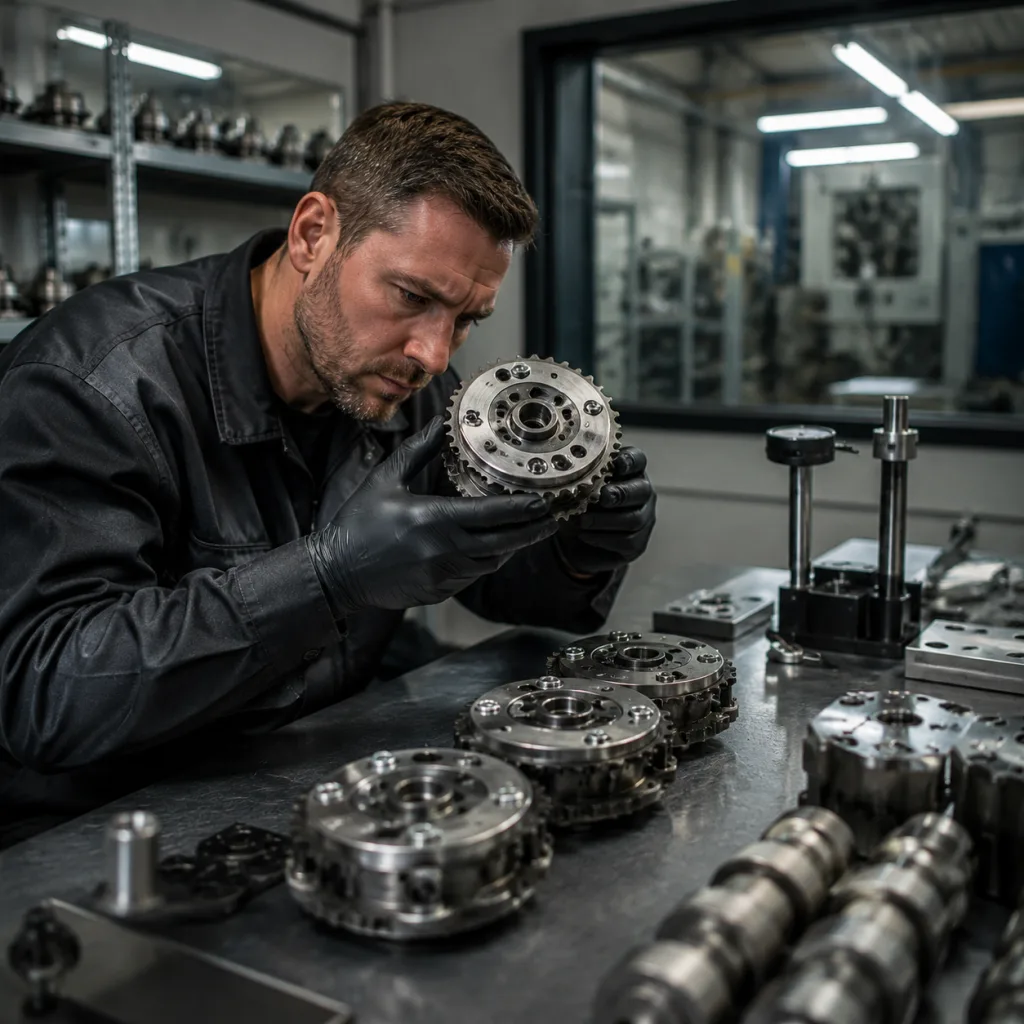
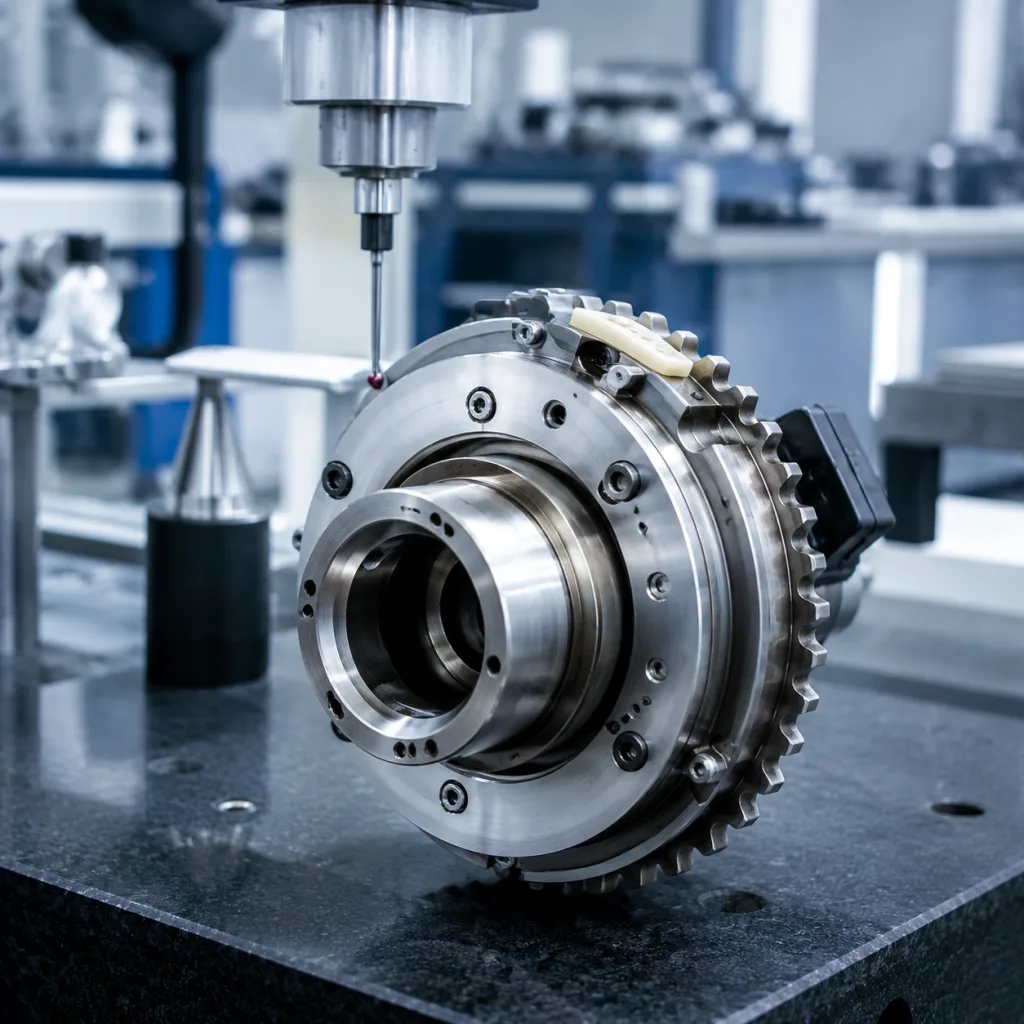
A camshaft phaser, also called a variable valve timing actuator, changes camshaft position within a controlled angular range using oil pressure and ECU command. For Opel aftermarket coverage, the part must match more than a model name. Buyers normally verify engine family, intake or exhaust position, bolt pattern, oil gallery layout, trigger or reluctor interface, timing-chain or timing-belt relationship, and oil-control valve strategy.
For camshaft phaser Opel wholesale sourcing, the decision framework is simple: protect fitment accuracy, protect functional consistency, and protect the channel from repeat returns. A low price becomes expensive if one batch releases the locking pin late, another leaks internally, and a third is mapped to the wrong engine code.
Set the programme rules before requesting price:
- Coverage: intake, exhaust, or paired phaser sets by engine code.
- Sampling: 2–5 pcs per reference for confirmation.
- Pilot order: usually 50–200 pcs before full replenishment.
- Replenishment rhythm: 30–60 day stock orders or consolidated quarterly shipments.
- Documentation: inspection report, traceability code, packaging photos, and conformity statement where required.
- Claims process: return sample rules, defect photos, mileage data, installation notes, and batch-code reporting.
The buying scenario matters. A regional distributor building timing repair kits needs coverage and carton discipline. A repair chain needs stable replacement behaviour and fewer comebacks. A private-label importer needs repeatable label, barcode, and packaging control. A Tier-1 or programme buyer may need audit files and stricter change approval. Driventus supports these programmes through consolidated sourcing across engine components listed in our catalog, including timing-related and lubrication-dependent parts. Where a buyer needs private-label packaging, a controlled label format, or a modified design, our custom manufacturing process can be reviewed during the RFQ stage.
Where Opel Phaser Programmes Usually Fail
Most camshaft phaser problems do not begin as obvious dimensional defects. They appear later as noise, unstable valve timing, diagnostic trouble codes, slow response, or inconsistent installation feedback from the market. That is why the purchasing specification must focus on failure modes as well as nominal dimensions.
| Failure mode | What to check | Practical control point |
|---|---|---|
| Camshaft interface error | Bore, keyway, spline, or locating geometry | Confirm against sample; critical bores commonly controlled within ±0.01–0.03 mm where design requires |
| Bolt-up mismatch | PCD, thread size, seating face, and bolt length | 100% fit check for new references before pilot release |
| Oil-port mismatch | Port position, sealing face, and gasket contact area | Port alignment verified; sealing face flatness typically reviewed at 0.03–0.05 mm level |
| Locking-pin sticking | Lock engagement, release pressure, and return behaviour | No sticking after repeated oil-pressure cycling; release pressure recorded by control plan |
| Wrong angular travel | Measured advance or retard range | Nominal travel in degrees confirmed against reference sample or drawing |
| Internal leakage | Oil-pressure holding and response stability | Test pressure, oil temperature, and cycle count defined in inspection plan |
| Wear or surface damage | Rotor, vane, locking feature, and contact areas | Heat-treatment record and hardness check where applicable |
| Runout or eccentric rotation | Cam bore to outer timing interface | Key characteristic control to reduce timing noise and unstable rotation |
| Transit corrosion or impact | Anti-corrosion bag, cavity protection, carton strength | Machined faces protected; export carton and pallet rules agreed before production |
| Supply situation | Typical MOQ logic | Lead-time logic |
|---|---|---|
| Stocked or active reference | 20–50 pcs per SKU may be possible for trial orders | 7–15 days after order confirmation, subject to stock and inspection |
| Scheduled production reference | 50–200 pcs per SKU, depending on batch plan | 25–45 days for machining, assembly, testing, and packing |
| Private-label package | Usually 100–300 pcs per SKU or carton-artwork minimum | Add 7–15 days for artwork approval, label setup, and packaging confirmation |
| New development or modified design | MOQ based on tooling, validation, and material lot | 60–90+ days depending on sample, testing, and approval cycle |
| Stage | Buyer input | Output |
|---|---|---|
| RFQ review | Cross-reference list, annual volume, target market | Price range, MOQ, lead-time estimate |
| Sample confirmation | 2–5 pcs sample order or reference sample | Dimensional, visual, and functional confirmation |
| Pilot order | 50–200 pcs, packaging artwork, label rules, shipping terms | Controlled first batch with inspection records |
| Repeat supply | 3- to 6-month rolling forecast and defect feedback | Stable production planning and replenishment pricing |