Procurement teams sourcing a camshaft phaser Jeep aftermarket replacement need more than a matching part description. The key checks are OE cross-reference, tooth count, oil control geometry, phasing range, connector style where applicable, and validation under thermal and oil-pressure conditions. Driventus supplies engine and powertrain components for B2B buyers who need dimensional consistency and repeatable quality across lots. We manufacture in Taizhou, Zhejiang, and support aftermarket distributors, OEM / Tier-1 customers, and multi-location repair networks. Driventus is an independent aftermarket manufacturer; brand names are referenced for fitment only. For buyers comparing suppliers, the most useful documents are test records, dimensional reports, material confirmation, and packaging controls. This article outlines what to verify before placing a replacement order, how to reduce mis-shipment risk, and which standards and test methods are commonly used when qualifying camshaft phasers for export markets.
What a replacement buyer should verify first
For a camshaft phaser Jeep aftermarket replacement, start with the identification data on the existing unit and the vehicle build information. Do not rely on model name alone.
Check these points before quoting:
OE cross-reference if available, for example OE 06A107065-style format when the platform uses that convention
Engine code, displacement, and cylinder count
Intake or exhaust application
Number of teeth and hub geometry
Oil passage position and locking-pin arrangement
Overall outside diameter, face width, and bolt pattern
Electrical connector or solenoid interface if the assembly includes an actuator module
If the part is being sourced for a fleet or workshop network, ask for VIN-level fitment confirmation and a sample inspection against a known-good core. That reduces the risk of mixing visually similar phasers with different phase angles or indexing features.
OE-equivalence is more than visual similarity
A replacement phaser must match the functional envelope of the original unit. Visual similarity is not enough.
Typical acceptance checks include:
Check item
Why it matters
Typical buyer evidence
Tooth count
Mismatch prevents correct timing
Inspection report or drawing
Phase travel range
Incorrect travel affects engine control
Functional test record
Locking position
Needed for safe start-up timing
Bench validation data
Oil gallery alignment
Controls hydraulic actuation
Sectional or dimensional check
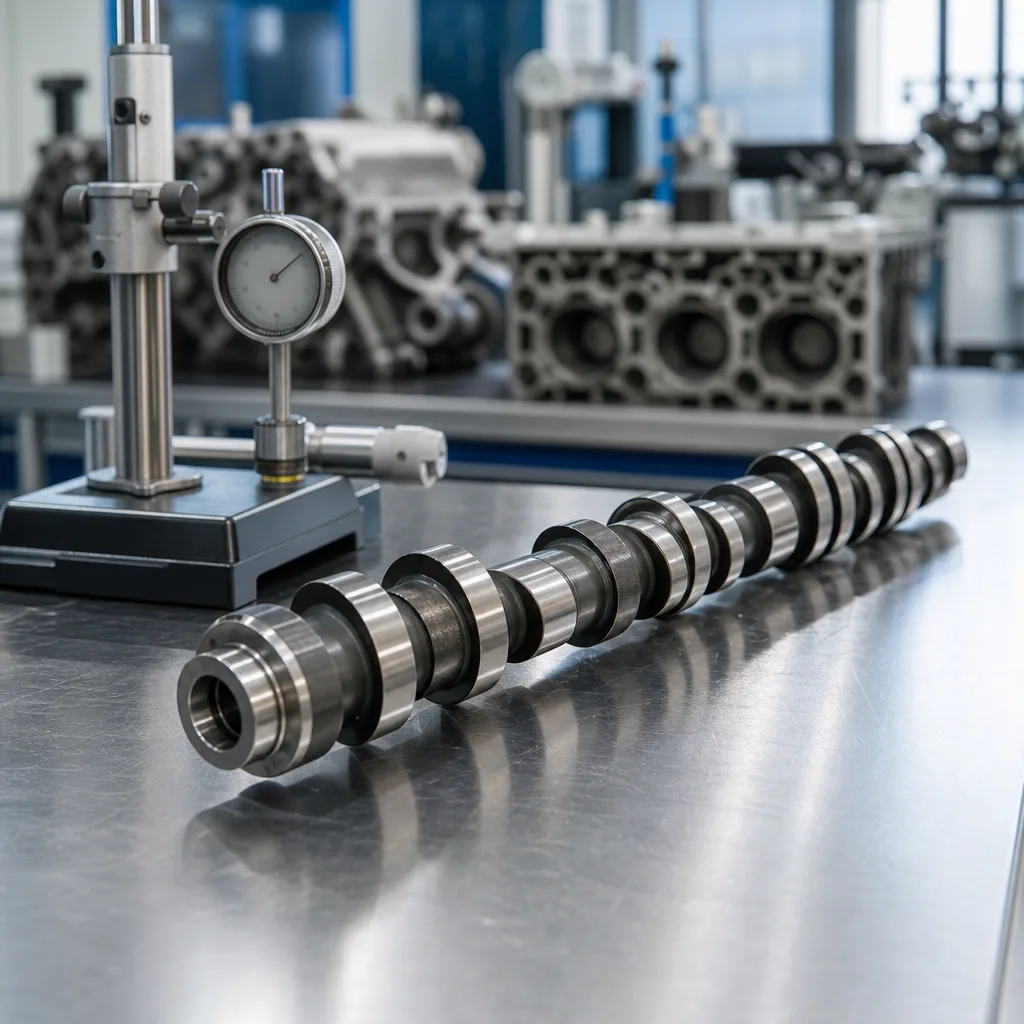
Runout and concentricity
Affects noise and durability
Measured inspection sheet
Material and heat treatment
Supports wear resistance
Material certificate or hardness data
</tr></thead><tbody> </tbody></table>For procurement, OE-equivalence means the replacement part fits, functions, and survives under the same operating envelope as the original application. It does not mean brand approval or endorsement. Driventus is an independent aftermarket manufacturer; brand names are referenced for fitment only.
Validation testing for export and fleet use
Replacement camshaft phasers should be verified with production-relevant tests, not only static dimensions. Buyers should request evidence that the unit has passed a defined test plan.
Common validation items include:
Oil pressure actuation test at controlled temperature
Cycle durability test with repeated advance/retard movement
Leakage and internal clearance inspection
Noise and rattle evaluation during start-up conditions
Cleanliness control for oil passages and internal vanes
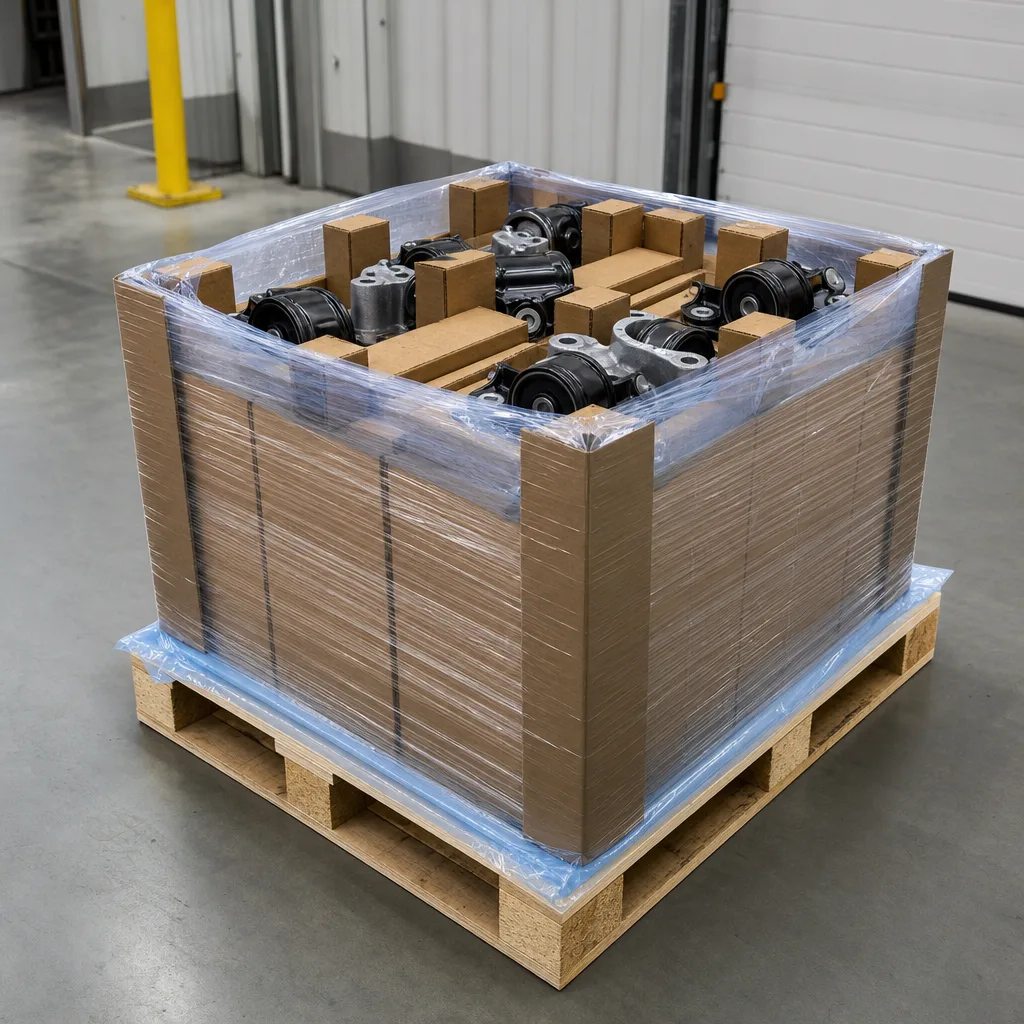
Packaging drop and corrosion protection checks for export handling
Published standards may apply to the overall quality system and compliance framework rather than the phaser alone. Buyers commonly look for IATF 16949:2016, ISO 9001:2015, REACH (EC) No 1907/2006 for substance control in the EU, and market-specific durability methods such as SAE J2527 where relevant to associated elastomer or surface exposure testing. For emissions-related fitment discussions, ECE R-83 may be referenced at system level, but it should not be treated as an approval for a replacement component unless the specific claim is documented.
Sourcing risks in Jeep replacement programmes
The most frequent sourcing problems are not machining defects. They are part-number confusion, mixed revisions, and incomplete application data.
Common risk points
1. Revision mismatch: a later OE revision may change a lock pin, vane profile, or oil control path. 2. Engine-family overlap: similar housings can fit multiple engines but differ in timing calibration. 3. Packaging errors: intake and exhaust units may be packed under similar cartons. 4. Core contamination: reman-like returns can introduce wear debris into the supply chain. 5. Inconsistent labelling: the same aftermarket part number may be used across multiple platforms without a clear OE reference.
To reduce risk, require an engineering drawing, sample approval, and lot traceability. Buyers working across multiple regions should also confirm label language, country-of-origin marking, and export carton configuration before release.
How Driventus supports procurement teams
Driventus manufactures engine and powertrain components for B2B buyers who need controlled repeatability. For camshaft phasers and related timing components, our process is built around dimensional consistency, traceable incoming material control, and batch-level inspection.
You can review our catalog for the current product range, including related engine components. Buyers who need a broader timing-system package can also review engine components.
What procurement teams can request
Drawing-based fitment confirmation
Sample comparison against OE reference or customer master sample
Material and hardness documentation where applicable
Packaging specification for distributor or workshop distribution
For suppliers, the most useful commercial document set is a clear scope statement, target annual volume, expected test plan, and launch schedule. That supports quoting without ambiguity and helps avoid redesign after first delivery.
Final checklist before you place the order
Use a short release checklist before approving a camshaft phaser Jeep aftermarket replacement purchase order:
Confirm OE cross-reference and engine code
Match intake/exhaust position and phase range
Verify dimensional drawing and key tolerances
Request quality documents and lot traceability
Confirm packaging, label, and carton quantity
Approve sample before mass shipment
Record any application notes for service teams
If you are comparing multiple suppliers, weigh repeatability and test evidence as heavily as unit price. A low-cost part that creates timing faults or returns will raise total landed cost quickly. For buyers needing a qualified source, request a quote and provide the OE reference, vehicle application, and annual demand.
Frequently asked questions
Yes, if the replacement matches the OE dimensions, tooth count, oil passages, locking position, and phase travel range. Buyers should still validate a sample against the target application before release.
Ask for a dimensional drawing, inspection report, material confirmation if relevant, lot traceability, and evidence of quality certification such as IATF 16949:2016 or ISO 9001:2015.
No. Brand names are used for fitment reference only. Driventus is an independent aftermarket manufacturer; brand names are referenced for fitment only.
If you need a fitment-checked replacement or a sourcing review for a specific application, send the OE reference and target annual volume through /contact.html.