Camshaft Phaser Cadillac Manufacturer China Sourcing Guide
A camshaft phaser isn’t a commodity sprocket—it’s a hydraulic timing actuator that lives in hot, pressurized oil and cycles thousands of times per drive. For Cadillac applications, the margin between a quiet 150,000-mile service life and a warranty claim often sits inside a 0.02 mm clearance. Driventus Auto Parts manufactures engine and powertrain components in Taizhou, Zhejiang, supplying aftermarket distributors, Tier-1 programs, and repair-chain groups across 60-plus countries. This guide moves beyond the generic RFQ checklist. It’s a decision framework for evaluating a camshaft phaser Cadillac manufacturer China option—structured around failure modes, spec deep-dives, and the commercial models that actually reduce landed cost and field returns. Driventus is an independent aftermarket manufacturer; brand names are referenced for fitment only.
Decision Framework: Is Your Cadillac Phaser Sourcing Built on a Catalogue or a Specification?
Most sourcing projects start with a part number. The ones that end cleanly start with a spec stack. A Cadillac camshaft phaser controls angular advance and retard through a rotor, vanes, a locking pin, and a return spring—all choreographed by engine oil pressure and an ECU-driven solenoid. Buy a phaser by vehicle name alone, and you inherit every ambiguity: intake vs. exhaust, bank 1 vs. bank 2, chain pitch, oil gallery count, and default lock position.
Before you ask for price, lock down the technical envelope:
- Engine family and displacement: GM HFV6 3.6L, LFX, LF3, LT4, L86—each has distinct phaser geometry.
- Position: intake only, exhaust only, or both. One SKU does not fit all four corners.
- Timing chain interface: tooth count (34–40 teeth), pitch (8 mm or 9.525 mm), sprocket profile (involute or modified).
- Rotor-to-housing angle range: typically ±25° to ±40°. The number matters for valve overlap and emissions compliance.
- Default locking position: full advance or full retard. Wrong lock = cold-start rattle.
- Oil gallery layout: 4- or 5-passage pattern, seal type (O-ring vs. metal gasket).
- Solenoid interface: if supplied as a kit, confirm connector pinout and coil resistance (8–12 Ω).
- OE cross-reference: formats like OE 06A… or OE 11251…—only when supported by buyer data, never assumed.
- Packaging: neutral carton, private-label, or bulk service-pack.
A supplier worth negotiating with will ask for samples, drawings, VIN ranges, or your existing cross-reference table before confirming interchange. A price that arrives in five minutes based on “Cadillac CTS” alone is a fitment dispute waiting to happen. It’s also inventory you can’t sell into multiple markets. Start with the spec stack, not the sticker price.
Inside the Factory: The Six Process Gates That Separate a Phaser from a Paperweight
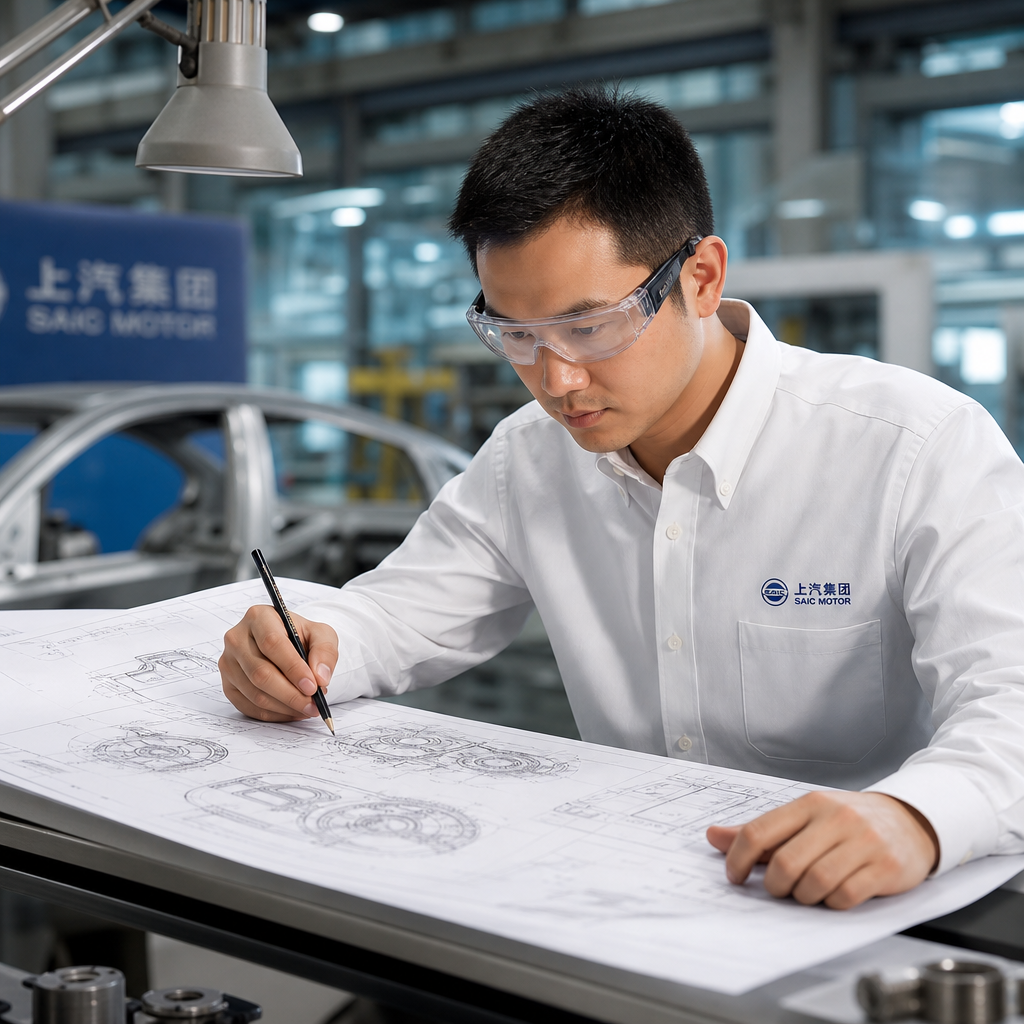
Driventus produces engine and powertrain components—pistons, crankshafts, gaskets, water pumps, turbochargers, and timing parts—under one quality system. For camshaft phasers, the difference between a part that lasts and one that fails at 20,000 miles lives in six manufacturing gates.
Gate 1: Incoming material verification. Steel (20CrMo, 40Cr) or powder-metal compacts arrive with mill certificates. Density for sintered parts must exceed 6.8 g/cm³. No cert, no entry.
Gate 2: CNC machining. Rotor and housing features are cut to ±0.01 mm on critical diameters. Sprocket teeth hit AGMA class 8 or better. Runout stays under 0.05 mm TIR. This is where vane clearance—0.02–0.05 mm—is won or lost.
Gate 3: Heat treatment. Rotors land at HRC 28–35. Sprocket teeth go harder: HRC 40–48. Batch records prove it. Shear strength on the locking pin exceeds 500 MPa.
Gate 4: Cleanliness. After deburring, parts pass through ultrasonic and spray washing. Target: less than 50 mg of particulate per part. Anything dirtier risks blocking an oil passage and delaying phaser response.
Gate 5: Sub-assembly and leak testing. Air decay at 0.3 MPa, maximum leakage 5 cc/min. Every part. Not a sample.
Gate 6: Functional test. Full-stroke angular movement in under 0.5 seconds at 300 kPa oil pressure. Lock engagement force above 50 N. Laser-etched batch code applied before final inspection.
| Procurement checkpoint | What to request | Why it matters |
|---|---|---|
| Machining capability | CNC process list, bore Ø tolerance ±0.01 mm, sprocket runout < 0.05 mm | Controls vane clearance, concentricity, timing accuracy |
| Material control | Steel grade cert (20CrMo, 40Cr) or PM density > 6.8 g/cm³ | Reduces fracture risk under cyclic torque up to 150 N·m |
| Heat treatment | Hardness range (rotor HRC 28–35, teeth HRC 40–48), batch record | Tooth durability, locking-pin shear strength > 500 MPa |
| Cleanliness | Ultrasonic + spray wash, particle count < 50 mg | Prevents oil blockage and sluggish response |
| Functional testing | Full-stroke time < 0.5 s, lock force > 50 N | Confirms hydraulic performance before boxing |
| Traceability | Unique serial per part, lot-to-inspection link | Enables targeted containment if a field issue surfaces |
| Stage | Buyer input | Timing driver |
|---|---|---|
| Cross-reference review | OE references, photos, application list | Part ID accuracy: 1–3 days |
| Feasibility check | Sample or drawing, volume forecast | Tooling/fixture need: 5–10 days |
| Quotation | MOQ, Incoterms, packaging, docs | Material and validation scope: 3–5 days |
| Prototype/sample build | Approved spec, deposit (30–50%) | Machining queue, test plan: 15–25 days |
| Sample validation | Buyer fitment and bench testing | Buyer-side approval: 10–20 days |
| Mass production | PO, packaging artwork | Component availability, lot size: 30–45 days |